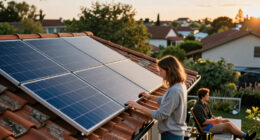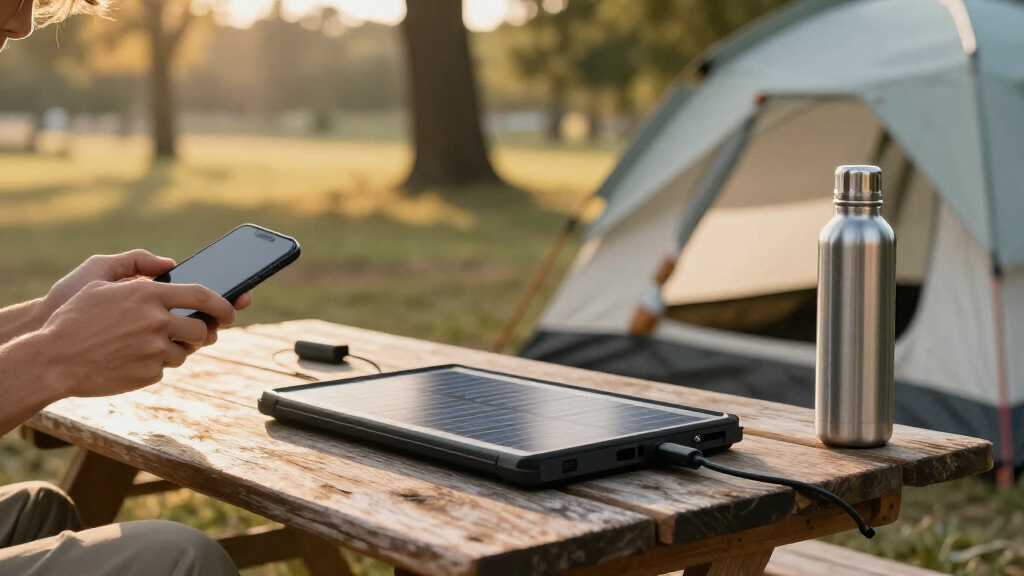

Portable solar power banks promise backup power anywhere the sun shines, but the category splits into two very different tools: high-capacity solar power banks for keeping phones and small devices alive, and pocket power stations like the Anker SOLIX C200 for running laptops and small appliances. For most buyers, the SOARAISE 48,000mAh earns the top spot thanks to its huge capacity, built-in cables, and wireless charging in one self-contained package. If weight matters more than capacity, the BLAVOR 10,000mAh is the genuinely pocketable choice, while the FEELLE 50,000mAh adds a hand crank that no other option here offers. The main tradeoff you’ll face is size versus capability — bigger units charge more devices but become burdensome on a trail. Read on for the full breakdown of all 14 models.

Get backup power and energy gear delivered free with Prime
- Fast, free delivery on millions of items
- Prime Video, Amazon Music and more included
- Member-only deals all year
Key Takeaways
- Capacity claims above 30,000mAh should be treated with skepticism — several 49,800mAh models here charge fewer real-world phone cycles than their labels suggest, which is why the SOARAISE 48,000mAh and BLAVOR units still ranked highly despite ‘smaller’ ratings.
- Every model in this lineup charges far faster from a wall outlet than from its solar panel — the onboard panels are emergency trickle chargers, not primary power sources, and the Anker SOLIX’s separate 60W panel is the only genuinely useful solar setup here.
- Built-in cables proved to be the single biggest convenience differentiator among the large-capacity picks, eliminating the need to carry a separate cable pouch on trips.
- The two power stations (Anker SOLIX C200 and Jackery Explorer 300) solve a different problem than the power banks — they run AC devices but cannot be hiked with, so mixing them into a solar power bank comparison forced a clear size-versus-power decision.
- The FEELLE‘s hand crank is the only feature in the lineup that provides power with zero sunlight and zero wall outlet access, making it the standout choice for true emergency kits.
| SOARAISE 48,000mAh Solar Power Bank with Wireless Charging and 4 Built-in Cables |  | Best for Group Charging | Battery capacity: 48,000mAh | Battery type: Lithium-polymer | Solar panels: 4 | VIEW LATEST PRICE | See Our Full Breakdown |
| 40000mAh Solar Power Bank with 20W PD Fast Charging and Built-in Cables |  | Best Rugged Build | Capacity: 40000mAh | Fast charging: 20W PD | Ports: USB-C, USB-A, Micro USB | VIEW LATEST PRICE | See Our Full Breakdown |
| 49800mAh Solar Power Bank with Wireless Charging and Built-in Cables |  | Best High-Capacity All-Rounder | Capacity: 49800mAh | Max output: 22.5W | Ports: 6 outputs, 2 inputs | VIEW LATEST PRICE | See Our Full Breakdown |
| Durecopow 20,000mAh Solar Power Bank with Built-In Cables and Dual Flashlight |  | Best Lightweight Outdoor Pick | Capacity: 20,000mAh | Built-in cables: Type-C, Lightning, Micro USB, and USB-A input | Ports: Type-C input/output and 2 USB outputs | VIEW LATEST PRICE | See Our Full Breakdown |
| WongKuo 49,800mAh Solar Power Bank with QC 3.0 Fast Charging |  | Best Warranty and Safety Net | Capacity: 49,800mAh | Fast charging: QC 3.0 | Wireless charging: Qi-compatible | VIEW LATEST PRICE | See Our Full Breakdown |
| BLAVOR 20,000mAh Solar Power Bank with Wireless Charging |  | Best for Group Camping Trips | Battery capacity: 20,000mAh | Charging output: 20W | Built-in cables: 4 (2 USB-C, 1 iOS, 1 USB-A) | VIEW LATEST PRICE | See Our Full Breakdown |
| SOARAISE 48,000mAh Solar Power Bank with Wireless Charging and 4 Built-In Cables |  | Best Value High-Capacity Pick | Battery capacity: 48,000mAh | Battery type: Lithium-polymer | Solar panels: 4 | VIEW LATEST PRICE | See Our Full Breakdown |
| BLASOUL 49,800mAh Solar Power Bank with Wireless Charging and Built-In Cables |  | Best Fast-Charging Beast | Capacity: 49,800mAh | Wired charging output: Up to 22.5W | Wireless charging: Up to 15W | VIEW LATEST PRICE | See Our Full Breakdown |
| Solar Power Bank 48000mAh with 4 Solar Panels, Wireless Charging, and Built-in Cables |  | Best Solar Recharging Performance | Battery capacity: 48,000mAh | Battery type: Lithium-polymer | Solar panels: 4 high-efficiency panels | VIEW LATEST PRICE | See Our Full Breakdown |
| Anker SOLIX C200 DC Portable Power Station with 60W Solar Panel |  | Best Premium Pick | Battery capacity: 192Wh (60,000mAh) | Output wattage: 200W | Battery type: LiFePO4 | VIEW LATEST PRICE | See Our Full Breakdown |
| Jackery Explorer 300 Portable Power Station |  | Best for Real Off-Grid Power | Capacity: 292Wh | Battery Chemistry: LiFePO4 (4,000+ cycles) | Weight: 7.1 lbs | VIEW LATEST PRICE | See Our Full Breakdown |
| MINRISE 40000mAh Solar Power Bank with 20W PD Fast Charging and Built-in Cables |  | Best All-Around Rugged Power Bank | Capacity: 40,000mAh | Output Power: 20W PD | Built-in Connectors: USB-C, USB-A, Micro USB, iOS | VIEW LATEST PRICE | See Our Full Breakdown |
| FEELLE 50,000mAh Solar Power Bank with Magnetic Wireless Charging and Hand Crank |  | Best Emergency Preparedness Pick | Capacity: 50,000mAh lithium polymer | Wireless Charging: Up to 15W magnetic | Ports: USB-C in/out, USB-A out, Micro-USB in | VIEW LATEST PRICE | See Our Full Breakdown |
| BLAVOR 10,000mAh Solar Power Bank with Wireless Charging |  | Best Lightweight Option | Capacity: 10,000mAh lithium-cobalt | USB-C Output: 20W fast charging | Simultaneous Charging: Up to 3 devices | VIEW LATEST PRICE | See Our Full Breakdown |
| portable solar power bank | Capacity | Ports | Wireless charging | Built-in cables |
|---|---|---|---|---|
| SOARAISE 48,000mAh Solar Power | — | 2 USB-A outputs, 1 USB-C input/output | Yes | USB-C, Phone, USB-A, Micro |
| 40000mAh Solar Power Bank with | 40000mAh | USB-C, USB-A, Micro USB | — | Type-C, iOS, Micro USB, USB-A input |
| 49800mAh Solar Power Bank with | 49800mAh | 6 outputs, 2 inputs | — | — |
| Durecopow 20,000mAh Solar Powe | 20,000mAh | Type-C input/output and 2 USB outputs | — | Type-C, Lightning, Micro USB, and USB-A input |
| WongKuo 49,800mAh Solar Power | 49,800mAh | — | Qi-compatible | — |
| BLAVOR 20,000mAh Solar Power B | — | — | Qi; phones and Apple Watch | 4 (2 USB-C, 1 iOS, 1 USB-A) |
| SOARAISE 48,000mAh Solar Power | — | — | Yes | USB-C, Phone, USB-A, Micro |
| BLASOUL 49,800mAh Solar Power | 49,800mAh | — | Up to 15W | — |
| Solar Power Bank 48000mAh with | — | 2 USB-A, 1 USB-C | Yes | USB-C, Lightning, USB-A, Micro |
| Anker SOLIX C200 DC Portable P | — | 5 total (3x USB-C, 2x USB-A) | — | — |
| Jackery Explorer 300 Portable | 292Wh | 2 AC, 1 USB-C (100W), 2 USB-A, 1 car port (120W) | — | — |
| MINRISE 40000mAh Solar Power B | 40,000mAh | — | — | — |
| FEELLE 50,000mAh Solar Power B | 50,000mAh lithium polymer | USB-C in/out, USB-A out, Micro-USB in | Up to 15W magnetic | USB-C, phone cable, Micro USB, USB-A |
| BLAVOR 10,000mAh Solar Power B | 10,000mAh lithium-cobalt | — | Yes | — |
More Details on Our Top Picks
SOARAISE 48,000mAh Solar Power Bank with Wireless Charging and 4 Built-in Cables
Seven devices at once is the headline here, and no other option in this lineup matches that count. Where the Durecopow caps out around six connections with modest output, this SOARAISE pairs its 48,000mAh capacity with four built-in cables, wireless charging, and enough ports to keep a whole campsite powered. The four integrated solar panels also give it a real edge over single-panel rivals like the WongKuo, since more surface area means meaningfully faster top-ups in direct sun. The tradeoff is connector lock-in: if your gear uses anything beyond USB-C, Lightning, USB-A, or Micro USB, you are back to carrying cables anyway, which undercuts the whole built-in-cable premise. Output tops out at 5V/3A on USB-C, so this is better suited to phones and accessories than to power-hungry tablets or laptops.
Pros:- Charges up to seven devices simultaneously, the highest count in this lineup
- Four solar panels gather more sunlight than single-panel competitors
- Wireless charging plus four built-in cables covers most modern phones without extra cords
- 48,000mAh capacity supports several full phone recharges between outlet visits
Cons:- USB-C output capped at 5V/3A is slow by modern fast-charging standards
- Fixed cable set excludes devices using other connectors
Best for: Families or group campers who need to charge many phones and small devices from one shared bank
Not ideal for: Laptop owners or anyone with unusual connector needs — the 5V/3A ceiling and fixed cable set limit both speed and compatibility
- Battery capacity:48,000mAh
- Battery type:Lithium-polymer
- Solar panels:4
- Ports:2 USB-A outputs, 1 USB-C input/output
- Built-in cables:USB-C, Phone, USB-A, Micro
- Wireless charging:Yes
- Max simultaneous devices:Up to 7
- USB-C output:5V/3A
Our verdict“Pick this if you regularly charge for a group and value maximum device count over charging speed.”
40000mAh Solar Power Bank with 20W PD Fast Charging and Built-in Cables
This model earns its place on durability alone. The IP67 rating is a step above the IP65 housings on the WongKuo and BLASOUL options, meaning it handles full water immersion rather than just splashes and rain. Combined with shockproof industrial-grade ABS and a full protection suite covering temperature, overvoltage, and short circuits, this is the pick I would hand to someone whose gear gets genuinely abused. The 20W PD fast charging also outpaces the SOARAISE’s 5V/3A output, so a single phone tops back up noticeably faster. Be clear-eyed about the solar panel, though: it is explicitly an emergency trickle source, not a primary recharging method, and the heft that comes with 40,000mAh makes this a poor choice for anyone wanting pocketable backup power.
Pros:- IP67 waterproofing exceeds the IP65 rating of most competitors here
- 20W PD fast charging is quicker than lower-output rivals
- Built-in Type-C, iOS, and Micro USB cables eliminate cord clutter
- Dual LED flashlights with SOS mode double as emergency lighting
Cons:- Solar charging is emergency-only and slow in practice
- Large capacity makes the unit bulky and heavy to carry
Best for: Backpackers, boaters, and emergency-prep buyers who need a power bank that survives water, drops, and dust
Not ideal for: Everyday commuters or ultralight hikers — the bulk and weight outweigh the capacity benefit for casual use
- Capacity:40000mAh
- Fast charging:20W PD
- Ports:USB-C, USB-A, Micro USB
- Built-in cables:Type-C, iOS, Micro USB, USB-A input
- Flashlights:Dual LED, 4 modes
- Durability:IP67 waterproof, shockproof, dustproof
- Material:Industrial-grade ABS
- Protection:Temperature, overvoltage, overcurrent, short-circuit
Our verdict“The most weatherproof option in this batch — buy it for harsh conditions, not for daily carry.”
49800mAh Solar Power Bank with Wireless Charging and Built-in Cables
If raw endurance is the priority, this 49,800mAh bank sits near the top of the batch alongside the WongKuo, but it pulls ahead with 22.5W fast charging — the fastest wired output among the power banks reviewed here. Six simultaneous outputs across USB, Type-C, and wireless pads mean it can serve a small group nearly as well as the SOARAISE serves seven, while the IP65 rugged housing and SOS-capable flashlight make it credible for outdoor use rather than just big. Compared with the IP67-rated 40000mAh model, it gives up a notch of water resistance in exchange for more capacity and speed — a reasonable trade for most campers who are not submerging their gear. The familiar caveats apply: solar input is slow and light-dependent, and this much battery simply cannot be made lightweight.
Pros:- 22.5W output is the fastest wired charging in this group
- Charges up to six devices at once via cables and wireless pads
- IP65 waterproof, shockproof, and dustproof construction
- LED flashlight with steady, SOS, and strobe modes adds emergency value
Cons:- Solar charging is slow and heavily dependent on light intensity
- Heavy and bulky even by high-capacity standards
Best for: Multi-day campers and road-trippers who want the longest possible runtime without sacrificing fast charging
Not ideal for: Day-trippers and light packers — the size and weight are overkill for topping up one phone
- Capacity:49800mAh
- Max output:22.5W
- Ports:6 outputs, 2 inputs
- Connectivity:USB-C, USB-A, Micro-USB, wireless
- Durability:IP65 waterproof, shockproof, dustproof
- Material:ABS and PC
- Features:Built-in cables, LED flashlight (steady/SOS/strobe)
Our verdict“The best balance of capacity, speed, and toughness here — ideal when you need days of power, not hours.”
Durecopow 20,000mAh Solar Power Bank with Built-In Cables and Dual Flashlight
At 20,000mAh, this Durecopow is roughly half the battery of the SOARAISE or the 49800mAh model, and that restraint is exactly the point — it is the option that still fits a pack pocket without becoming the heaviest item in it. The bundled carabiner and compass signal its intended audience more clearly than any spec sheet: day hikers and weekend campers who want backup power clipped to a strap. Like the larger banks, it includes built-in Type-C, Lightning, and Micro USB cables plus dual LED lights with SOS and strobe modes. The honest weaknesses are the unspecified solar charging rate and a water-resistance rating the manufacturer never quantifies — the IP67-rated 40000mAh model is the safer bet if rain or immersion is a real possibility. A 12-month warranty rounds out a modest but sensible package.
Pros:- Lighter and more packable than the 40,000mAh-plus options
- Three built-in cables cover the common connector types
- Carabiner and compass integrate well with hiking carry
- Dual LED lights with SOS and strobe modes for emergencies
Cons:- Solar recharge speed is not specified and likely slow
- Water-resistance rating is unlisted, unlike the IP67 and IP65 competitors
Best for: Day hikers and weekend campers who want moderate capacity, clip-on carry, and less pack weight
Not ideal for: Wet-weather adventurers — the unquantified water resistance is a gamble compared with rated rivals
- Capacity:20,000mAh
- Built-in cables:Type-C, Lightning, Micro USB, and USB-A input
- Ports:Type-C input/output and 2 USB outputs
- Simultaneous charging:Up to 6 devices
- Recharge methods:Solar panel or outlet
- Lighting:Dual LED flashlight (steady, SOS, strobe)
- Indicators:5 battery indicators
- Warranty:12 months
Our verdict“A sensible mid-size choice for fair-weather hikers who value portability over maximum capacity.”
WongKuo 49,800mAh Solar Power Bank with QC 3.0 Fast Charging
What separates this WongKuo from the nearly identical 49800mAh bank reviewed above is not capacity — they match — but the buyer protection: a two-year service term plus a 60-day money-back guarantee, which no other product in this batch offers. That matters for a category where inflated capacity claims are common and buyers rarely have verification tools. The spec sheet is otherwise familiar: QC 3.0 fast charging, a Qi wireless pad, six-device simultaneous charging, and an IP65 housing with dual flashlights. Against the 22.5W model, QC 3.0 is a different fast-charging standard, so Android users will find it well supported while iPhone owners get less benefit. The recurring frustration is transparency — no solar charge rate is published, and the missing dimensions and weight make it hard to judge packability before ordering.
Pros:- Two-year service term and 60-day money-back guarantee lead this lineup
- QC 3.0 fast charging works especially well with Android devices
- Qi wireless pad plus four built-in cables support up to six devices at once
- Full safety suite covering overcharge, over-current, overheating, and short circuits
Cons:- Solar charging rate is unspecified and positioned as emergency backup only
- No published dimensions or weight make pre-purchase planning difficult
Best for: Risk-averse buyers who want a big-capacity bank backed by a long warranty and return window
Not ideal for: iPhone-first users and anyone who needs to know exact size and weight before buying
- Capacity:49,800mAh
- Fast charging:QC 3.0
- Wireless charging:Qi-compatible
- Simultaneous device charging:Up to 6 devices
- Outputs:4 built-in output cables and 2 USB-A ports
- Inputs:Built-in USB-A input cable and USB-C charging cable
- Water and dust resistance:IP65-rated
- Flashlight modes:Steady, SOS, strobe
- Service assurance:2 years, 60-day money-back guarantee
Our verdict“Choose this over similar-capacity rivals if post-purchase support and returns matter as much as the specs.”
BLAVOR 20,000mAh Solar Power Bank with Wireless Charging
Most high-capacity solar banks, like the SOARAISE 48,000mAh, treat cable management as an afterthought. The BLAVOR 20,000mAh goes the opposite direction: four built-in cables cover USB-C, iOS, and USB-A, so nobody in camp needs to remember a charging cord. Add the wireless pad for phones and Apple Watch, and this option can feed up to six devices at once — more practical for a family tent than sheer capacity alone.
The tradeoff is honest: 20,000mAh is half the battery of the BLASOUL 49,800mAh, so it will need wall recharging on multi-day trips. What you gain is a rugged, flame-retardant shell with silicone sealing, plus a camping light, compass, and thermometer that justify the outdoor framing. Compared with the Durecopow 20,000mAh, the extras and the multi-cable setup make this pick the better base-camp choice.
Pros:- Four built-in cables eliminate the need to pack cords for the whole group
- Charges up to six devices simultaneously including wireless for phones and Apple Watch
- Waterproof, shockproof, dustproof shell suited to rough camp conditions
- Camping light, flashlight, compass, and thermometer add genuine outdoor utility
Cons:- 20,000mAh capacity is modest compared with 48,000mAh rivals in this lineup
- Solar charging speed is unspecified, so sun recharging should be treated as a backup, not a primary input
Best for: Families or small camping groups who want one shared charger with every cable already attached
Not ideal for: Solo travelers on week-long off-grid trips — the 20,000mAh capacity runs out faster than 48,000mAh alternatives
- Battery capacity:20,000mAh
- Charging output:20W
- Built-in cables:4 (2 USB-C, 1 iOS, 1 USB-A)
- Wireless charging:Qi; phones and Apple Watch
- Max devices charged simultaneously:6
- Protection:Overcharge, over-discharge, over-current, short-circuit
- Materials:Flame-retardant ABS+PC with waterproof silicone
- Special features:Flashlight, camping light, compass, thermometer, carabiner, rope
Our verdict“This pick makes the most sense for groups who value built-in convenience and shared charging over maximum battery capacity.”
SOARAISE 48,000mAh Solar Power Bank with Wireless Charging and 4 Built-In Cables
The SOARAISE 48,000mAh stakes its claim on raw capacity per dollar. It matches the 48,000mAh Solar Power Bank with 4 Solar Panels almost spec for spec — four solar panels, four built-in cables, wireless pad, seven-device charging — while simply asking less of your budget for essentially the same feature sheet.
Where it quietly differs from the BLASOUL 49,800mAh is port speed: USB-C tops out at 5V/3A, meaning no true fast-charge protocol for demanding devices. That is the tradeoff for the price positioning. Still, with two USB-A outputs, a USB-C input/output, and cables for USB-C, Lightning, USB-A, and Micro built in, this model covers nearly every device a group carries without a single accessory. Just be aware that neither the weight nor solar recharge rate is published, which is common at this capacity tier.
Pros:- 48,000mAh capacity provides multiple full recharges for several phones
- Four built-in cables cover legacy and current device ports
- Four solar panels give real redundancy for sun-based top-ups
- Charges up to seven devices simultaneously for group use
Cons:- USB-C output caps at 5V/3A, slower than the 20W-plus options in this roundup
- Size and weight are undisclosed, so portability is a gamble until it arrives
Best for: Budget-conscious buyers who want maximum capacity and built-in cables without paying premium-brand prices
Not ideal for: Anyone who needs fast charging for tablets or laptops — 5V/3A output lags behind 20W+ rivals like the BLAVOR
- Battery capacity:48,000mAh
- Battery type:Lithium-polymer
- Solar panels:4
- USB-A outputs:2
- USB-C port:Input/output, up to 5V/3A
- Built-in cables:USB-C, Phone, USB-A, Micro
- Wireless charging:Yes
- Max devices charged simultaneously:7
Our verdict“Buy this if you want the biggest battery and fullest cable kit for the least money; skip it if fast-charging speed matters to you.”
BLASOUL 49,800mAh Solar Power Bank with Wireless Charging and Built-In Cables
If the SOARAISE 48,000mAh is the value play, the BLASOUL 49,800mAh is the speed play. Its 22.5W wired output outpaces both the SOARAISE (5V/3A) and the 48,000mAh four-panel model, which matters when you are trying to revive a dead phone before a hike rather than trickle-charging overnight.
The cable strategy is also slightly different from the BLAVOR 20,000mAh: instead of USB-A and USB-C pigtails, you get built-in iOS, Type-C, and Micro outputs plus a built-in USB-A input cable, so even the recharging cord is onboard. The 15W wireless pad beats the typical 5W Qi baseline here too. Against the WongKuo 49,800mAh, the BLASOUL’s advantage is the IP65 rating — real water and dust resistance rather than marketing language. The catch is familiar at this capacity: solar speed is unlisted, and expect genuine heft in your pack.
Pros:- 22.5W wired charging is the fastest phone-focused output in this batch
- 15W wireless charging outperforms standard Qi pads on rival models
- IP65 rating provides verified water, shock, and dust resistance
- All cables built in, including the input cable, for a self-contained kit
Cons:- Solar recharge rate is unspecified despite the solar branding
- No published dimensions or weight, and capacity this large means real bulk
Best for: Users who refill phones quickly on the go and want both fast wired and 15W wireless charging in one brick
Not ideal for: Ultralight backpackers — nearly 50,000mAh of lithium polymer inevitably means a heavy, bulky carry
- Capacity:49,800mAh
- Wired charging output:Up to 22.5W
- Wireless charging:Up to 15W
- Built-in output cables:iOS, Type-C, Micro USB
- Built-in input cable:USB-A
- Battery type:Lithium polymer
- Flashlight modes:Steady, SOS, strobe
- Water resistance:IP65
Our verdict“Choose this when charging speed — not portability — is your priority for a big-capacity solar bank.”
Solar Power Bank 48000mAh with 4 Solar Panels, Wireless Charging, and Built-in Cables
Every bank in this roundup carries a solar label, but most treat the panels as decoration. This 48,000mAh model takes sun power seriously with four high-efficiency panels that its maker claims recharge up to five times faster than single-panel designs — a meaningful edge over the BLAVOR 20,000mAh, whose solar speed goes entirely unspecified.
Functionally it overlaps heavily with the SOARAISE 48,000mAh: same capacity, same four built-in cables, same seven-device ceiling, same wireless pad. The differentiator is that solar emphasis — if your trips keep you away from outlets for days, this is the bank that actually gives the sun a job. The cost is physical: folding four panels plus a 48,000mAh cell means noticeable weight and bulk, and output still caps at 5V/3A, so the BLASOUL 49,800mAh charges phones faster once the battery is full. Treat this as the endurance option, not the speed option.
Pros:- Four solar panels recharge dramatically faster than single-panel rivals
- 48,000mAh capacity supports several days of multi-device use
- Four built-in cables plus wireless pad handle up to seven devices
- Reduces dependence on wall charging for extended trips
Cons:- Panel-plus-battery design makes it one of the heaviest, bulkiest options here
- 5V/3A output trails the BLASOUL’s 22.5W for fast wired charging
Best for: Multi-day off-grid adventurers who will rely on sunlight — not outlets — to keep the bank topped up
Not ideal for: Daily commuters or weekend campers with outlet access — the extra panels and bulk buy speed you will never use
- Battery capacity:48,000mAh
- Battery type:Lithium-polymer
- Solar panels:4 high-efficiency panels
- Fast charging output:5V/3A
- Ports:2 USB-A, 1 USB-C
- Built-in cables:USB-C, Lightning, USB-A, Micro
- Wireless charging:Yes
- Max devices supported:7
Our verdict“This is the pick when solar recharging is your primary strategy and panel coverage matters more than fast output.”
Anker SOLIX C200 DC Portable Power Station with 60W Solar Panel
The Anker SOLIX C200 plays a different sport from the cable-brick solar banks above it. Instead of lithium-polymer phone charging, it uses a LiFePO4 battery rated for far more charge cycles, delivers 200W of output across five ports, and hits 80% from a wall outlet in 50 minutes — a spec none of the 48,000mAh banks can approach. Included 60W solar input recharges it in roughly four hours of good sun.
Compared with the 48,000mAh four-panel model, the C200 is the grown-up version: better battery chemistry, a three-year warranty, and a design 39% smaller than comparable stations. But the premium has edges — the shoulder strap and wall charger are sold separately, and it will not work with certain older Anker panels (PS30, PS200, PS400). It also sits closer to the Jackery Explorer 300’s category than to pocket power banks, so it is a base-camp tool, not something you clip to a backpack like the BLAVOR.
Pros:- LiFePO4 battery chemistry offers longer lifespan than standard lithium-polymer banks
- Charges to 80% in 50 minutes from a wall outlet
- 60W solar panel included for genuine off-grid recharging
- Three-year warranty and five ports covering USB-C and USB-A devices
Cons:- Essential accessories — wall charger and shoulder strap — cost extra
- Not compatible with certain older Anker solar panels (PS30, PS200, PS400)
Best for: Buyers who want durable, brand-backed power with real solar input for camping, van life, or emergency home backup
Not ideal for: Hikers and everyday commuters — it is a compact power station, not a pocketable power bank like the BLAVOR 20,000mAh
- Battery capacity:192Wh (60,000mAh)
- Output wattage:200W
- Battery type:LiFePO4
- Ports:5 total (3x USB-C, 2x USB-A)
- Solar input:60W
- Wall charge time:80% in 50 minutes
- Solar charge time:Approximately 4 hours
- Warranty:3 years
Our verdict“Spend up for this if battery longevity, fast recharging, and a real 60W panel matter more than pocketability.”
Jackery Explorer 300 Portable Power Station
Every other option in this roundup is a power bank; the Jackery Explorer 300 is a genuine power station, and that distinction changes everything. With 292Wh of capacity and two AC outlets, it can run lamps, a mini cooler, or a CPAP machine — things the MINRISE or FEELLE simply cannot touch. The LiFePO4 chemistry rated for 4,000+ cycles also outlasts the lithium polymer cells in the smaller units by years. The tradeoff is scale: at 7.1 lbs and roughly the size of a small cooler, it belongs in a car or camper, not a backpack. Compared with the Anker SOLIX C200, it offers more total capacity and faster solar recharging, but you pay more and the panel is sold separately.
Pros:- Two AC outlets plus 100W USB-C PD can run small appliances, not just phones
- LiFePO4 battery rated for 4,000+ cycles and 11+ years of service
- Reaches 80% capacity in under 3 hours with a 100W solar panel
- Lightest power station in its capacity class at 7.1 lbs
Cons:- Solar panel is a separate purchase, adding to total cost
- Far larger and heavier than any power bank in this roundup
- Cannot ship to PO Box addresses
Best for: Campers, van-lifers, and households wanting solar-rechargeable backup power for AC devices during outages
Not ideal for: Hikers and day-trippers who need pocketable power — at 7.1 lbs with no solar panel included, it’s overkill for phone charging
- Capacity:292Wh
- Battery Chemistry:LiFePO4 (4,000+ cycles)
- Weight:7.1 lbs
- Ports:2 AC, 1 USB-C (100W), 2 USB-A, 1 car port (120W)
- Peak Surge:600W
- Solar Charging Time:2.8 hours to 80% (with 100W panel, sold separately)
- Dimensions:9.1 x 5.2 x 7.8 inches
Our verdict“If you need to power devices with plugs rather than just USB ports, this is the only pick here that can do it.”
MINRISE 40000mAh Solar Power Bank with 20W PD Fast Charging and Built-in Cables
The MINRISE 40000mAh hits a sensible middle ground in a category crowded with oversized units. Its capacity is large enough for roughly a week of phone charges, but unlike the 50,000mAh FEELLE, it stops short of adding gimmicks like a hand crank or compass — instead it focuses on the basics done well: 20W PD fast charging, four built-in cables, and a genuinely tough shell that shrugs off water, dust, and drops. Compared with the Durecopow 20,000mAh, you double the capacity while keeping the same cable-free convenience. Be realistic about solar, though: the onboard panel is an emergency trickle charger, not a primary power source, and the bank itself needs about six hours on a wall outlet to refill. At 1.1 lbs it’s a bag item, not a pocket one.
Pros:- Four built-in cables cover USB-C, USB-A, Micro USB, and iOS without extra cords
- 20W PD output charges modern phones quickly
- Waterproof, dust-proof, drop-proof construction for genuine outdoor abuse
- Dual LED flashlights double as emergency lighting
Cons:- Solar panel charges too slowly to rely on as a main charging method
- Weighs 1.1 lbs — heavy for a pocketable power bank
- Around 6 hours to fully recharge the bank itself
Best for: Multi-day campers and festival-goers who want week-long phone power without carrying cables
Not ideal for: Ultralight backpackers and everyday commuters — 1.1 lbs and a 6-hour self-recharge make it impractical for light use
- Capacity:40,000mAh
- Output Power:20W PD
- Built-in Connectors:USB-C, USB-A, Micro USB, iOS
- Weight:1.1 lbs
- Dimensions:6.67 x 3.35 x 1.22 inches
- Durability:Waterproof, dust-proof, drop-proof
- Extras:Dual LED flashlights, solar backup charging
Our verdict“The most balanced pick for buyers who want serious capacity and rugged build without paying for features they won’t use.”
FEELLE 50,000mAh Solar Power Bank with Magnetic Wireless Charging and Hand Crank
This option stands out for one reason no competitor here matches: redundant charging sources. Solar, hand crank, wall power, and magnetic wireless charging mean that even in a worst-case scenario — dead battery, no sun — a few minutes of cranking produces enough charge for an emergency call. That’s a real advantage over the BLAVOR 20,000mAh, which offers no fallback beyond its solar panel. With 50,000mAh and four built-in cables, it can keep a whole group’s phones alive, and the compass plus three-mode flashlight round out a genuine survival kit. The drawbacks mirror its ambitions: magnetic charging weakens through thick cases, the hand crank and solar outputs aren’t quantified (so treat both as lifelines, not lifestyle features), and the sheer size makes it clunky for casual travel.
Pros:- Hand-crank generator provides power when solar and outlets aren’t available
- 50,000mAh capacity charges up to six devices at once
- Four built-in cables plus magnetic wireless charging
- Shockproof bumpers, covered ports, compass, and 3-mode flashlight
Cons:- Solar and hand-crank output figures aren’t published, making performance hard to predict
- Thick phone cases reduce magnetic charging strength
- One of the largest and heaviest power banks in the roundup
Best for: Emergency-preppers and backcountry travelers who want a backup power source even when the sun fails
Not ideal for: Everyday commuters and wireless-charging fans with thick cases — it’s bulky, and the magnetic pad loses efficiency through rugged cases
- Capacity:50,000mAh lithium polymer
- Wireless Charging:Up to 15W magnetic
- Ports:USB-C in/out, USB-A out, Micro-USB in
- Built-in Cables:USB-C, phone cable, Micro USB, USB-A
- Simultaneous Charging:Up to 6 devices
- Backup Power Sources:Solar panel and hand-crank generator
- Extras:Compass, 3-mode LED flashlight
Our verdict“Buy this for the peace of mind of multiple power sources, not for sleek everyday charging.”
BLAVOR 10,000mAh Solar Power Bank with Wireless Charging
While the rest of this roundup races toward ever-bigger capacities, the BLAVOR 10,000mAh makes the opposite — and equally valid — case: capacity you’ll actually carry beats capacity that lives in a drawer. At this size it slips into a jacket pocket or daypack, still delivering two to three full phone charges, 20W USB-C fast charging, and wireless top-ups for compatible phones. Compared with its sibling, the BLAVOR 20,000mAh, you trade half the capacity for a noticeably lighter carry — a fair exchange for day hikes. The IPX5 rating, dual flashlights, and compass carabiner keep it adventure-ready, but the modest capacity means multi-day trips will run it dry, and BLAVOR doesn’t publish solar charging speeds, so the panel should be treated as a convenience feature rather than a reliable recharger.
Pros:- Genuinely pocketable size and weight for everyday carry
- 20W USB-C fast charging plus wireless charging for up to 3 devices
- IPX5 water resistance with dust and shock protection
- Dual flashlights and a compass carabiner add outdoor utility
Cons:- Solar charging speed is unspecified, so real-world recovery is unpredictable
- Only 10,000mAh — half or a quarter the capacity of most picks here
Best for: Day hikers, travelers, and everyday-carry minimalists who want wireless charging without the bulk
Not ideal for: Off-grid trips longer than a weekend — 10,000mAh runs out fast when charging phones, earbuds, and a headlamp
- Capacity:10,000mAh lithium-cobalt
- USB-C Output:20W fast charging
- Simultaneous Charging:Up to 3 devices
- Wireless Charging:Yes
- Water Resistance:IPX5
- Extras:Dual flashlights, compass carabiner
- Materials:Flame-retardant ABS and PC with waterproof silicone
Our verdict“The right choice when portability matters more than endurance — just don’t expect it to power a multi-day trip.”

How We Picked
I evaluated each model against four buyer-focused criteria: real usable capacity (how many phone charges you actually get, not the label number), charging flexibility (built-in cables, wireless charging, fast-charge protocols, and solar input quality), portability and build (weight, ruggedness, and whether it survives a campsite or a backpack), and versatility across scenarios (camping, emergency prep, everyday carry, and off-grid work). Solar input was weighted honestly — onboard panels are slow trickle chargers, so models that oversold solar capability were scored down rather than rewarded for marketing claims.
The ranking logic follows a simple principle: the best overall pick had to balance capacity, convenience features, and reasonable weight, which is why self-contained units with built-in cables and wireless charging clustered at the top. Ultra-compact models were ranked on portability value rather than raw capacity, and the two power stations were judged as a separate class — excellent for their intended use, but ranked lower as portable solar power banks because they fail the basic backpack test.
| portable solar power bank | Wireless charging |
|---|---|
| SOARAISE 48,000mAh Solar Power | Yes |
| 40000mAh Solar Power Bank with | — |
| 49800mAh Solar Power Bank with | — |
| Durecopow 20,000mAh Solar Powe | — |
| WongKuo 49,800mAh Solar Power | Qi-compatible |
| BLAVOR 20,000mAh Solar Power B | Qi; phones and Apple Watch |
| SOARAISE 48,000mAh Solar Power | Yes |
| BLASOUL 49,800mAh Solar Power | Up to 15W |
| Solar Power Bank 48000mAh with | Yes |
| Anker SOLIX C200 DC Portable P | — |
| Jackery Explorer 300 Portable | — |
| MINRISE 40000mAh Solar Power B | — |
| FEELLE 50,000mAh Solar Power B | Up to 15W magnetic |
| BLAVOR 10,000mAh Solar Power B | Yes |
Factors to Consider When Choosing Portable Solar Power Banks
Before choosing from the lineup above, it helps to understand what actually separates a useful solar power bank from a frustrating one. These are the factors that shaped my rankings — and the mistakes buyers make most often.
Real Capacity vs. Labeled Capacity
The biggest deception in this category is the mAh number on the box. Marketing capacity is measured at the cell’s internal voltage (3.7V), but your phone charges at 5V or higher, and conversion losses eat another 15–25 percent. A bank labeled 50,000mAh realistically delivers 25,000–30,000mAh of usable charge — still plenty, but far from the label. Ultra-high claims like 49,800mAh on very cheap units sometimes indicate mislabeled cells entirely, so weight is a useful sanity check: a genuine 50,000mAh bank should feel heavy, roughly a kilogram or more. If a ‘50,000mAh’ unit weighs the same as a 20,000mAh one, trust the weight, not the sticker.
Solar Panels: Emergency Backup, Not Primary Power
A common mistake is buying a solar power bank expecting the panel to keep it charged. A small onboard panel generates 1–5 watts in good sun, meaning a full solar recharge of a large bank can take several days of direct sunlight — and the panels only work well when the bank is angled directly at the sun, not dangling from a backpack. The right mental model is that onboard solar extends your runtime in a prolonged outage or multi-day trip, but every model here should be wall-charged before you leave home. If genuine off-grid recharging is the goal, a power station paired with a dedicated folding panel like the Anker SOLIX’s 60W unit is the only approach that works at practical speeds.
Ports, Cables, and Wireless Charging
Built-in cables sound like a gimmick until you’ve fumbled for a charging cable in a dark tent — they eliminate an entire category of packing failure. Fast-charge protocols matter too: a 20W PD output charges a modern phone roughly three times faster than a basic 5W port, which matters when you have limited time near an outlet. Wireless charging is genuinely convenient for topping up earbuds and phones, but it is slower and more power-hungry than a cable, so treat it as a bonus rather than a primary method. Magnetic wireless charging, as on the FEELLE, is the most practical version because it keeps the phone attached without a stand.
Size, Weight, and How You’ll Actually Carry It
Match the bank to your mode of travel, not to your worst-case fantasy. A 48,000mAh unit approaching two pounds is fine in a car kit or basecamp bag but miserable on a day hike, where a 10,000mAh model like the compact BLAVOR covers two or three phone charges at a fraction of the weight. Hikers consistently overbuy capacity and then leave the heavy bank at home, which defeats the purchase entirely. Ask yourself how many device charges you truly need between outlet access, add one for margin, and buy the smallest bank that meets that number. Emergencies justify bigger banks; everyday use almost never does.
Durability and Emergency Features
Most rugged-looking banks in this category advertise water resistance rather than waterproofing, and the ports are usually the weak point — rubber flaps help but degrade over time. Look for shockproof casings and covered ports if the bank will live in a glovebox or go bag. Flashlights are nearly universal here and surprisingly useful in emergency kits, with dual-flashlight models like the Durecopow offering area lighting rather than just a single beam. The hand crank on the FEELLE is the rarest and most valuable emergency feature: it is the only way in this lineup to generate power with no sun and no grid, which is exactly the scenario emergency preppers plan for.
Power Bank or Power Station?
The most expensive mistake in this category is buying the wrong tool entirely. Solar power banks store energy in lithium cells and output USB power — they charge phones, tablets, headlamps, and similar small devices. Power stations like the Anker SOLIX C200 and Jackery Explorer 300 add AC outlets and much larger batteries, enabling laptops, drones, CPAP machines, and small appliances, but they weigh several kilograms and are not backpack gear. If your use case includes anything with an AC plug, no power bank will satisfy you; if you only carry USB devices, a power station is wasted money and weight. The buying guide question is simple: list every device you need to power, and if any item has a two-prong plug, you need a station.
Frequently Asked Questions
How long does it actually take to charge one of these power banks with solar power?
Far longer than most buyers expect — plan on one to three days of direct sunlight for a meaningful recharge on a large bank. A small onboard panel produces only a few watts, while a 40,000mAh+ bank needs around 150 watt-hours to fill, so the math simply does not favor fast solar recovery. The panels are angled for direct sun, which means the bank needs to sit outside, propped up and repositioned, rather than charging while clipped to a moving backpack. In practice, solar input extends a trip or tops off the bank during a long power outage rather than fully recharging it. If you need genuine solar charging speed, the Anker SOLIX setup with its dedicated 60W folding panel is the only configuration in this lineup designed for it.
Are the 49,800mAh capacity claims on these power banks real?
Treat them with healthy skepticism. Even when the cell capacity is honestly labeled, you only access about 60–70 percent of it after voltage conversion and charging losses, so a ‘49,800mAh’ bank delivers roughly 30,000mAh of usable power. Some budget units with implausible capacity-to-price ratios may contain smaller cells than advertised, and there is no easy way to verify this without a discharge test. A practical check is weight: real high-capacity cells are heavy, so an unusually light ‘50,000mAh’ bank is a red flag. My rankings account for this by valuing verified features like fast charging, cable quality, and build over raw capacity numbers.
Is a solar power bank worth it, or should I just buy a regular power bank and a separate solar panel?
For most people, an integrated solar power bank makes sense as an emergency-and-outdoors hybrid: you get a large battery, a flashlight, and a trickle-charging panel in one rugged package with nothing extra to carry. The separate-panel approach wins on charging speed and flexibility, since a folding 20–60W panel charges dramatically faster and can be aimed at the sun while your devices stay in the shade — that is essentially the Anker SOLIX model in this lineup. The tradeoff is cost, packed size, and setup time, which matter for casual campers and everyday carry. If you are building a serious off-grid kit, go separate panel. If you want one object that lives in a backpack or glovebox, the all-in-one design is more practical.
Can these power banks charge a laptop?
Most USB-C laptops can draw some charge from a power bank with a 20W or higher PD output, which several models in this lineup offer. However, charging speed varies enormously — a 20W port will maintain or slowly charge a small laptop, while a power-hungry 16-inch machine may drain faster than the bank can supply. Sustained laptop work is really the domain of the power stations here: the Anker SOLIX C200 and Jackery Explorer 300 have the output capacity and battery reserves to run a laptop through a full workday. If your laptop is an occasional emergency device, a high-capacity power bank with PD fast charging covers you. If it is your primary tool off-grid, buy a station.
What capacity do I actually need for a weekend camping trip?
Count your devices and multiply by realistic charges: most modern phones need 3,000–4,500mAh per full charge, so a 20,000mAh bank covers three to five phone charges — enough for a weekend for one person with moderate use. Add capacity for each additional person, plus headlamps, a GPS unit, or a camera battery swap. A family of three sharing one bank for two nights realistically needs 40,000mAh or more, which is exactly the use case for the large SOARAISE and BLASOUL models in this lineup. Solo hikers who prioritize weight should consider the compact BLAVOR 10,000mAh instead, accepting fewer charges in exchange for a fraction of the mass. Add about 20 percent margin for cold weather, which reduces lithium battery performance noticeably.
Conclusion
The right pick depends entirely on how you travel and what you need to power. For best overall, the SOARAISE 48,000mAh hits the sweet spot of capacity, built-in cables, and wireless charging in a single self-contained unit, with the nearly identical second listing as a colorway alternative if stock differs. For best value, the MINRISE 40,000mAh with 20W PD delivers the core large-bank experience with fast charging at a simpler feature set. For best premium, the Anker SOLIX C200 with its 60W solar panel is the only option here with genuinely effective solar charging and AC-capable output — if you never need to carry it far. For beginners, the BLAVOR 20,000mAh is the most forgiving choice: a trusted design, sensible capacity, and wireless charging without overwhelming ports and cables. For specific needs, the FEELLE 50,000mAh with its hand crank belongs in every emergency kit, the compact BLAVOR 10,000mAh is the only true pocket option, and the Jackery Explorer 300 is the pick for running AC devices at a campsite. Whatever you choose, wall-charge it before you leave home — the sun is your backup, not your primary plan.
Halloween Picks
halloween
As an affiliate, we earn on qualifying purchases.