Shopping for a home battery inverter means wading through a market where products that look similar on paper behave very differently in a garage. Some listings are for complete hybrid energy storage systems that include the battery, inverter, and charge controller in one package; others are bare power inverters that assume you already own batteries and just need DC-to-AC conversion. That distinction drives nearly every recommendation below.

Get backup power and energy gear delivered free with Prime
- Fast, free delivery on millions of items
- Prime Video, Amazon Music and more included
- Member-only deals all year
My top pick is the ECO-WORTHY Powermega, a 10kW hybrid system with 16.1kWh of usable LiFePO4 storage — the only option here sized for genuine whole-home backup. For smaller off-grid and RV setups, the SUMRY 4000W hybrid inverter earns the mid-range spot thanks to its built-in 140A MPPT controller, while the BELTTT 3000W and the 2000W ETL-listed inverter cover buyers who already have a 12V battery bank and want pure sine wave AC on a budget.
The main tradeoffs to weigh before buying: voltage compatibility (12V vs. 24V vs. 48V systems are not interchangeable), whether you need solar input (only the hybrid models accept PV), and surge capacity versus continuous wattage when running motors and compressors. I break all of this down in the reviews and buying guide that follow.
Key Takeaways
- The ECO-WORTHY Powermega is the only all-in-one pick — it includes a 16.1kWh LiFePO4 battery, 10kW hybrid inverter, and fire suppression, sized for whole-home backup.
- The SUMRY 4000W hybrid is the best middle ground for 24V solar setups, pairing a 140A MPPT controller with battery-optional operation.
- The BELTTT 3000W and the 2000W ETL-listed model are pure inverters only — they have no solar input and require you to already own a 12V battery bank.
- Voltage matching is the most common mistake: none of the 12V or 24V models can be used with a mismatched battery system, so confirm your bank voltage first.
- Surge ratings matter more than continuous wattage for refrigerators and well pumps — check each appliance’s startup draw against peak output before committing.
| ECO-WORTHY Powermega 48V 314Ah LiFePO4 Energy Storage System with 10kW Hybrid Inverter |  | Best Overall — the all-in-one whole-home pick | Battery Voltage: 51.2V (48V nominal) | Usable Energy: 16.1kWh (314Ah) | Inverter Output: 10,000W continuous | VIEW LATEST PRICE | See Our Full Breakdown |
| SUMRY 4000W Hybrid Solar Inverter, DC 24V to AC 120V Pure Sine Wave with MPPT Controller |  | Best for Solar-First Off-Grid Setups | System Voltage: 24V DC | AC Output: 120V pure sine wave, 60Hz | MPPT Controller: 140A built-in | VIEW LATEST PRICE | See Our Full Breakdown |
| BELTTT 3000W Pure Sine Wave Power Inverter, 12V DC to 120V AC, 6000W Peak |  | Best Value for High-Wattage 12V Systems | Continuous Power: 3000W | Peak Surge Power: 6000W | Input Voltage: 12V DC | VIEW LATEST PRICE | See Our Full Breakdown |
| 2000W Pure Sine Wave Power Inverter, 12V DC to 120V AC, ETL Listed to UL 458 |  | Best Compact Backup for Essential Circuits | Continuous Output: 2000W | Peak/Surge Output: 4000W | Input Voltage: 12V DC | VIEW LATEST PRICE | See Our Full Breakdown |
| home battery inverter | Input Voltage | Output | Outlets |
|---|---|---|---|
| ECO-WORTHY Powermega 48V 314Ah | — | — | — |
| SUMRY 4000W Hybrid Solar Inver | — | — | — |
| BELTTT 3000W Pure Sine Wave Po | 12V DC | 110–120V AC pure sine wave, 60Hz | Dual AC sockets, 20A outlet, 5V/2.1A USB, hardwire port |
| 2000W Pure Sine Wave Power Inv | 12V DC | 120V AC pure sine wave, 60 Hz | 2 AC outlets + 20A hardwire output |
More Details on Our Top Picks
ECO-WORTHY Powermega 48V 314Ah LiFePO4 Energy Storage System with 10kW Hybrid Inverter
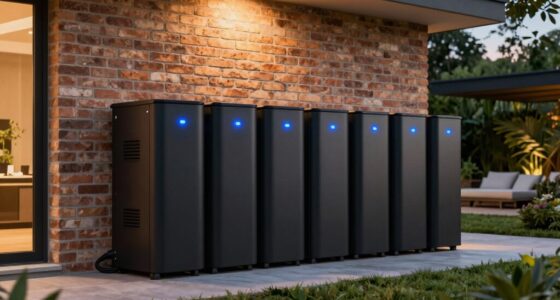
This option stands out for doing what the other three products in this lineup cannot: it ships as a complete energy storage system, pairing a UL 1973-certified 51.2V, 314Ah LiFePO4 battery (16.1kWh usable) with a 10kW hybrid inverter in one package. Where the BELTTT and the 2000W ETL unit leave you to source, wire, and manage a battery bank yourself, the Powermega arrives with the hard part already engineered — active balancing BMS, a built-in breaker, and even a fire suppression module with alarms. That level of integrated safety is genuinely rare at this price tier and is the single biggest reason it sits at the top of my list.
The 10kW split-phase 240V output is another differentiator. The other inverters here top out at 120V single-phase, which means they can’t run 240V appliances like well pumps, dryers, or central AC compressors. With 16.1kWh of storage and 9,000+ rated cycles at 80% depth of discharge, this system is built for daily cycling over a decade, not just occasional outage duty. The 99.9% MPPT efficiency and RS485/CAN/RS232 communication ports also mean it plays nicely with external solar arrays and monitoring platforms, and the WiFi/Bluetooth app plus onboard LCD give you real-time visibility the smaller units can’t match.
The tradeoffs are real, though. At 293 pounds, this arrives by truck freight, and multiple packages may show up on different days — plan installation around that. Some buyers report two inverter versions shipping randomly, so the appearance of the unit you receive may differ from listing photos. And compared with the SUMRY’s battery-optional flexibility, the Powermega is a committed 48V ecosystem; you’re buying into ECO-WORTHY’s platform rather than assembling a system from parts. For whole-home backup, that commitment is a feature. For a cabin or RV, it’s overkill.
Pros:- 16.1kWh of usable LiFePO4 storage with 9,000+ cycles — genuinely sized for whole-home backup
- 10kW split-phase 240V output runs appliances the 120V-only competitors can’t touch
- Multi-layer safety: active balancing BMS, built-in breaker, fire suppression module, and alarms
- WiFi/Bluetooth app monitoring plus LCD screen for real-time data
- 10-year warranty backs the long-cycle chemistry
Cons:- 293 lb weight requires truck freight delivery, and packages may arrive separately
- Two inverter versions ship randomly — appearance may vary from listing photos
- Locked into a 48V all-in-one ecosystem with no mix-and-match flexibility
Best for: Homeowners wanting true whole-home backup with integrated battery storage and 240V split-phase capability
Not ideal for: RV owners, cabin users, or anyone with an existing 12V/24V battery bank
- Battery Voltage:51.2V (48V nominal)
- Usable Energy:16.1kWh (314Ah)
- Inverter Output:10,000W continuous
- Waveform / Output:Pure sine wave, split-phase 240V / single-phase 120V, 60Hz
- Cycle Life:9,000+ cycles at 80% DoD
- MPPT Efficiency:99.9%
- Certifications:FCC, UL 1973
- Communication:RS485, CAN, RS232, WiFi, Bluetooth
- Warranty:10 years
Our verdict“If the goal is powering a house — not a campsite — this is the most complete and safest-integrated package in the comparison.”
SUMRY 4000W Hybrid Solar Inverter, DC 24V to AC 120V Pure Sine Wave with MPPT Controller
The SUMRY occupies a smart middle position in this lineup: it’s a true hybrid inverter with a built-in 140A MPPT charge controller accepting up to 5600W of solar input, but it skips the integrated battery of the ECO-WORTHY system, so you keep control over storage. For buyers who already own — or want to shop around for — a 24V battery bank, that flexibility matters. It supports AGM, Gel, lead-acid, lithium-ion, and LiFePO4 chemistries, which makes it far more forgiving than dedicated lithium platforms if your storage plans might change.
Its most distinctive trick is battery-optional operation: it can run loads directly from PV during daylight hours, which is useful for workshops, irrigation, or any daytime-only application where a battery would be wasted money. Output is 4000W rated with an 8000W peak — comfortably ahead of the BELTTT’s 3000W — and the 98% MPPT conversion efficiency is respectable for the class. The 6.25-inch LCD touchscreen behind a tempered glass cover is a nicer interface than the basic LCDs on the 12V units, and three cooling fans keep thermals in check under sustained load.
Two quirks deserve attention. First, if PV voltage drops below 120V and no battery is connected, the unit pulls power from the grid — a surprise for off-grid purists expecting solar-only behavior. Second, it’s a 24V-only design: it won’t work with a 12V van setup or a 48V home bank, which brackets it out of both the RV market (where the BELTTT shines) and whole-home duty (where the Powermega lives). Load calculation discipline is also needed, since stacking appliances near the 4000W ceiling leaves little room for surge events. Within its 24V lane, though, it’s the strongest solar value here.
Pros:- Built-in 140A MPPT controller handles up to 5600W of solar at 98% efficiency
- Works with or without a battery — great for daytime-only loads
- Supports five 24V battery chemistries from AGM to LiFePO4
- 4000W rated / 8000W peak output outmuscles the 12V competition
Cons:- Draws grid power when PV voltage falls below 120V without a battery attached
- 24V only — incompatible with 12V or 48V systems
- Careful load math required to avoid pushing past output limits
Best for: Off-grid builders running 24V battery banks who want solar charging and inverting in one box
Not ideal for: 12V RV/van owners and anyone wanting 240V output or integrated storage
- System Voltage:24V DC
- AC Output:120V pure sine wave, 60Hz
- MPPT Controller:140A built-in
- Max PV Input:5600W / 350VDC
- Max Conversion Efficiency:98%
- Compatible Batteries:AGM, Gel, lead-acid, lithium-ion, LiFePO4 (24V)
- Cooling:3 built-in fans
Our verdict“The best pick for a 24V solar-first system, offering hybrid charging flexibility the pure inverters can’t match.”
BELTTT 3000W Pure Sine Wave Power Inverter, 12V DC to 120V AC, 6000W Peak
Where the SUMRY assumes a 24V solar build, the BELTTT is aimed squarely at the large 12V ecosystem — big RV house batteries, truck electrical systems, and off-grid sheds running 12V banks. It delivers 3000W continuous with a 6000W peak surge, enough to start a refrigerator compressor or power tools while running general loads, and its over-93% conversion efficiency keeps wasted battery capacity to a minimum. As a pure inverter, it does one job and does it without asking you to also buy solar.
Compared with the 2000W ETL-listed model later in this list, the BELTTT trades away the safety certification and the featherweight 6.7-pound build in exchange for 50% more continuous power and a longer 23-foot remote cable that lets you mount the unit near the batteries and control it from the living space. The smart LCD showing input/output voltage and load status is on par with its smaller rival, and the safety suite — over/undervoltage, overload, over-temperature, short circuit, and reverse-connection protection — covers the failure modes that actually damage 12V installations. Dual AC sockets plus a 20A outlet, USB port, and hardwire terminal give it flexible wiring options the SUMRY matches but the smaller 2000W unit partially lacks.
The honest caveat: a 3000W draw at 12V pulls roughly 250 amps from the battery bank, which demands serious cabling, fusing, and amp-hour reserves. This isn’t a plug-and-play device — undersized wiring will cause voltage sag and nuisance shutdowns no matter how good the inverter is. And unlike the SUMRY, there’s no MPPT input, so solar charging has to be handled separately. For a correctly engineered 12V system, though, the power-per-dollar here is hard to beat.
Pros:- 3000W continuous with 6000W surge handles compressor and motor startups
- Pure sine wave output safe for TVs, laptops, and home theater gear
- 23-ft remote controller allows battery-side mounting with living-space control
- Comprehensive protection suite including reverse-connection and over-temperature cutoffs
Cons:- Requires a large 12V battery bank and heavy-gauge wiring to avoid voltage sag
- No solar input — charging must be handled by separate equipment
- Limited to 12V systems only
Best for: RV owners and off-grid builders with substantial 12V battery banks who need serious AC wattage
Not ideal for: Anyone wanting solar input, a 24V/48V system, or plug-and-play simplicity without wiring work
- Continuous Power:3000W
- Peak Surge Power:6000W
- Input Voltage:12V DC
- Output:110–120V AC pure sine wave, 60Hz
- Conversion Efficiency:>93%
- Outlets:Dual AC sockets, 20A outlet, 5V/2.1A USB, hardwire port
- Remote Cable:23 ft
- Housing:Aluminum and sturdy plastic
Our verdict“The strongest choice for high-wattage 12V builds, provided your wiring and battery capacity are up to the demand.”
2000W Pure Sine Wave Power Inverter, 12V DC to 120V AC, ETL Listed to UL 458
This model makes the most sense for buyers whose needs stop at essentials: a refrigerator, some lights, a laptop, a CPAP machine, maybe a television during an outage. At 2000W continuous and 4000W surge, it won’t run a household the way the ECO-WORTHY Powermega does — but at 6.7 pounds and roughly fifteen inches wide, it installs in minutes where the Powermega needs a truck delivery and a dolly. That portability gap is the whole story of this pick: it’s the inverter you can move between a truck, an RV, and a home backup battery without re-engineering anything.
Its standout credential is the ETL listing to UL 458, a certification none of the other units here carry on the inverter side. For anyone who cares about listed safety hardware — or whose insurer does — that matters more than raw wattage. The 8-point protection suite backs it up, and the 7.5W idle draw is remarkably low, meaning the unit won’t quietly drain a battery bank over a week of standby the way hungrier inverters can. The smart LCD showing live output wattage and battery status, plus the 10-foot wired remote and 20A hardwire output, round out a practical feature set.
Two frustrations to know about. The default-off startup requires holding the power button for about three seconds after any power event — fine once you’re used to it, annoying when the lights just came back on and you’re fumbling in the dark. And the surge ceiling demands honesty about appliances: a fridge with a hard-starting compressor plus other loads can brush against the 4000W peak, so verify startup wattage before trusting it with a freezer chest full of food. Compared with the BELTTT, you give up 1000W of continuous power and the longer remote in exchange for the certification and half the weight. For many buyers, that’s a fair trade.
Pros:- ETL Listed to UL 458 with 8 built-in safety protections — the strongest certification in this lineup
- Featherweight 6.7 lb build moves easily between vehicle and home backup duty
- Very low 7.5W idle draw preserves battery charge during standby
- Pure sine wave output with LCD monitoring and 10-ft wired remote
Cons:- Startup is off by default — requires holding the power button ~3 seconds after power events
- Surge headroom demands verifying appliance startup wattage before loading it up
- 2000W ceiling rules out running multiple major appliances simultaneously
Best for: Budget-conscious buyers wanting a certified, lightweight inverter for refrigerators, electronics, and essential backup circuits
Not ideal for: Households expecting to run multiple major appliances or anyone on a 24V/48V system
- Continuous Output:2000W
- Peak/Surge Output:4000W
- Input Voltage:12V DC
- Output:120V AC pure sine wave, 60 Hz
- Idle Draw:7.5W (0.55A at 13.6V)
- Outlets:2 AC outlets + 20A hardwire output
- Remote:10-ft wired remote
- Certification:ETL Listed to UL 458, RoHS
- Weight:6.7 lb
Our verdict“The safest and most portable way to keep essentials running during an outage, as long as your expectations match its 2000W ceiling.”

How We Picked
Because “home battery inverter” covers everything from a $150 DC converter to a $6,000 whole-home storage cabinet, I started by sorting these four products into the jobs they can actually do, then judged each against the demands of that job rather than against each other head-to-head. A 3000W 12V inverter and a 10kW 48V hybrid system aren’t competitors — they’re answers to different questions.
My criteria fell into five buckets. Output quality came first: every pick here produces a pure sine wave, which I treated as non-negotiable because modified sine wave units damage compressors, audio gear, and anything with a motor. Capacity and scalability mattered next — usable energy, continuous wattage, and surge headroom determine whether a unit runs a fridge or a house. Safety credentials carried real weight: UL 1973 certification on the battery side, ETL listing to UL 458 on the inverter side, and physical protections like breakers, fusing, and fire suppression modules separated serious hardware from commodity units. Monitoring and usability — apps, LCD displays, remote controls — affected day-to-day satisfaction. Finally, I weighed honest drawbacks: shipping weight, voltage lock-in, startup quirks, and hidden grid draw all factored into the rankings, because those are the details that frustrate owners after purchase.
Factors to Consider When Choosing Best Home Battery Inverters
Choosing between these four products comes down to answering three questions honestly before you click buy: what voltage system you’re running, whether solar is part of the plan, and how much of your home you actually need to power. Here’s how I’d work through it.Match the Voltage First
This is the mistake that generates most returns. 12V, 24V, and 48V systems are not interchangeable, and each inverter here is built for exactly one. The BELTTT and the 2000W ETL unit are 12V-only — right for RVs, vans, and trucks. The SUMRY is 24V-only, typical of mid-size off-grid cabins and shops. The Powermega lives at 48V, the standard for whole-home storage because higher voltage means lower current, thinner cables, and less conversion loss at scale. Check the label on your existing battery bank before anything else; if you don’t have a bank yet, let your load size pick the voltage for you.
Inverter-Only vs. Hybrid
A pure inverter (the BELTTT and the 2000W ETL model) converts stored DC to AC and nothing more — charging and solar must come from separate equipment. A hybrid inverter (the SUMRY and Powermega) adds solar charge control, and sometimes grid pass-through and battery management, into the same chassis. Hybrids cost more upfront but simplify wiring and usually monitor the whole energy flow in one interface. If you already own a quality charger and panels, an inverter-only unit may be the smarter buy. If you’re building from scratch, hybrid consolidation typically wins on cost and complexity.
Continuous Watts vs. Surge Watts
Every appliance with a motor — refrigerators, well pumps, furnaces, power tools — draws two to three times its running wattage at startup. A fridge that cruises at 150W may demand 900W for a split second. That’s why surge ratings exist, and why a 2000W inverter with 4000W peak can run appliances that seem within budget but still trip on startup. Add up the startup draws of everything you want running simultaneously, not the running draws, and compare that total against peak output with at least 20% headroom. Whole-home loads with 240V appliances are a different conversation entirely — only split-phase units like the Powermega apply.
Safety Certifications and Chemistry
On the battery side, look for UL 1973 (which the Powermega carries) for stationary storage safety, and prefer LiFePO4 chemistry for home use given its thermal stability and cycle life. On the inverter side, an ETL listing to UL 458 signals the unit passed independent testing rather than self-declared compliance. These credentials don’t guarantee performance, but they meaningfully reduce fire and failure risk — worth weighing whether the installation is inside your living space, in an attached garage, or bolted under an RV bed.
Monitoring and Installation Reality
Real-time data changes how you use a system. The Powermega’s WiFi/Bluetooth app lets you watch charge states from your couch; the SUMRY’s touchscreen is the friendliest onboard interface here; the two 12V units offer capable LCDs with remotes. Installation weight and logistics matter too: a 293-pound cabinet means freight delivery, a helper, and a plan for placement, while a 6.7-pound inverter mounts with four screws. Budget your time and tools accordingly.