
TL;DR

Get backup power and energy gear delivered free with Prime
- Fast, free delivery on millions of items
- Prime Video, Amazon Music and more included
- Member-only deals all year
A House Beautiful report recommends reusing raked leaves instead of sending them to landfill, with seven options for lawns, garden beds, compost and winter plant protection. The advice includes conditions such as keeping whole leaves for wildlife cover and using shredded leaves for mulch and soil.
House Beautiful has outlined seven ways to reuse raked leaves rather than bagging them for disposal, including mowing them into lawns, leaving them as wildlife cover, and using them as mulch or compost. The guidance gives homeowners practical ways to put autumn yard waste to use, while noting that the best method depends on the amount and condition of the leaves.
For lawns, the report says leaves can be mowed in place when the layer is less than one inch thick. It recommends letting them dry as much as possible before mowing. A mulching mower can cut leaves into small pieces; with a standard mower, a second pass at a right angle can help break them down. The report advises checking the mower model to see whether it can use mulching blades.
Leaves can also be moved intact into garden beds to provide winter cover for wildlife. The National Wildlife Federation says leaf litter can shelter beneficial insects, spiders, turtles, toads and small mammals, while some moths and butterflies remain in chrysalis form in underbrush. For that purpose, the report advises keeping leaves whole rather than shredding them.
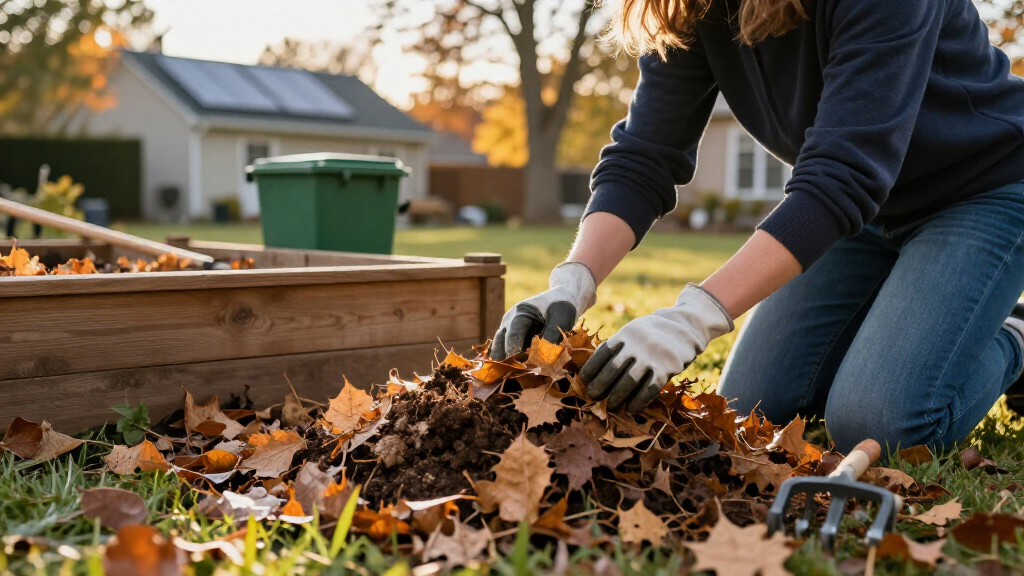
For garden care, shredded leaves can be spread around shrubs and perennials as mulch. Citing the University of Delaware, the article recommends a two- to three-inch layer to help suppress weeds and reduce soil erosion; it can also insulate roots and help limit plants being pushed out of the ground during freeze-thaw cycles. Other suggestions are working shredded leaves into garden beds, adding them to a compost pile as “browns,” using them for garden paths, and piling them around cold-season greens and perennial herbs.
How Leaves Can Support a Garden
Reusing leaves can turn a seasonal cleanup task into soil cover, garden mulch and compost material, instead of treating all fallen foliage as waste. The methods can also serve different needs: leaf litter can provide shelter for wildlife, while chopped leaves can be worked into soil or placed around plants.
The advice is not one-size-fits-all. A thick layer left on a lawn is not the same as a thin layer suitable for mowing, and whole leaves can mat or become slippery when used on paths. Choosing the right use matters for both plant care and safe movement around the yard.
As an affiliate, we earn on qualifying purchases.
Seven Uses for Fall Leaves
The seven options in the House Beautiful report are mowing leaves into a lawn, leaving whole leaves for wildlife, making mulch, tilling leaves into garden beds, composting, forming a garden path, and insulating edible plants and herbs. For beds, the article says shredded leaves work best, though small amounts of whole leaves can be used. They can be turned into soil in fall or spread on the surface and worked in during early spring with a garden fork or spade.
For compost, the article suggests saving a bag of leaves to add as “browns” during the growing season, alongside green materials. It also notes that people without yard space can check with their municipality: some towns and cities collect leaves and yard debris, then make compost available to residents. The source does not specify which municipalities offer that service.
For a path, shredded leaves are preferable because whole leaves can become slippery and mat down. To protect Swiss chard and herbs such as sage, parsley and oregano, the report suggests piling three to five inches of leaves around and over plants, with small chicken-wire cages to hold the cover in place.
“A two- to three-inch layer is sufficient to keep down weeds and reduce soil erosion.”
— House Beautiful, citing the University of Delaware
As an affiliate, we earn on qualifying purchases.
Choosing the Right Leaf Method
The report does not give advice for every yard condition, including how to handle leaves affected by disease or how specific soil and climate conditions might change the recommendations. It also does not identify which municipalities provide leaf pickup or free finished compost, so residents would need to check local services.
The suggested methods describe general yard practices rather than guaranteed results. How well leaf mulch, compost or winter plant protection works will depend on the plants, weather and amount of leaf material available.
As an affiliate, we earn on qualifying purchases.
What Homeowners Can Do This Fall
Homeowners can sort leaves by their intended use: keep some whole for wildlife shelter, shred others for mulch or soil, and save a portion for compost browns. Before mowing, check that the lawn’s leaf layer is thin enough for the method described in the report. Those with limited space can contact their local municipality to ask about leaf and yard-waste collection.
The article offers seasonal recommendations, not a schedule for future updates. Its immediate takeaway is to decide how leaves can be reused before bagging them for disposal.
As an affiliate, we earn on qualifying purchases.
Key Questions
Can I mow leaves into my lawn?
Yes, if the leaf layer is less than one inch thick, according to the House Beautiful report. Let leaves dry as much as possible first; a mulching mower is recommended, or make a second pass at a right angle with a standard mower.
Should leaves be shredded before using them as mulch?
The report recommends shredded leaves for mulch around shrubs and perennials and suggests a two- to three-inch layer. Keep leaves whole when using them as winter cover for wildlife.
How can leaves help wildlife in winter?
Whole leaves in garden beds can provide shelter for insects and other animals, according to the National Wildlife Federation guidance cited by House Beautiful. Some moths and butterflies also spend winter in underbrush as chrysalises.
Can leaves be used to protect herbs and greens?
The report suggests placing three to five inches of leaves around and over plants such as Swiss chard, sage, parsley and oregano, then using small chicken-wire cages to keep the leaves in place.
What if I do not have room to compost leaves?
Check with your municipality about leaf and yard-debris collection. The report says some towns and cities collect this material and turn it into compost, but availability varies by location.
Source: rss
Fall Picks
fall essentials
As an affiliate, we earn on qualifying purchases.