
TL;DR

Get backup power and energy gear delivered free with Prime
- Fast, free delivery on millions of items
- Prime Video, Amazon Music and more included
- Member-only deals all year
A homeowner in south-central Minnesota is planning to use a mini-split as a primary heat source and has asked how to orient its outdoor unit on an exposed north wall. The source describes the proposed location and cites a Mitsubishi manual’s guidance for high-wind settings, but provides no answer or manufacturer-specific assessment for this installation.
A homeowner in south-central Minnesota is seeking guidance on where to point and how to shield a mini-split outdoor condenser planned for an exposed north side of the house. The homeowner expects the system to serve as a primary heat source in a cold-climate location identified as zone 6B, making dependable operation a central concern; the source does not provide a final orientation recommendation or report that the unit has been installed.
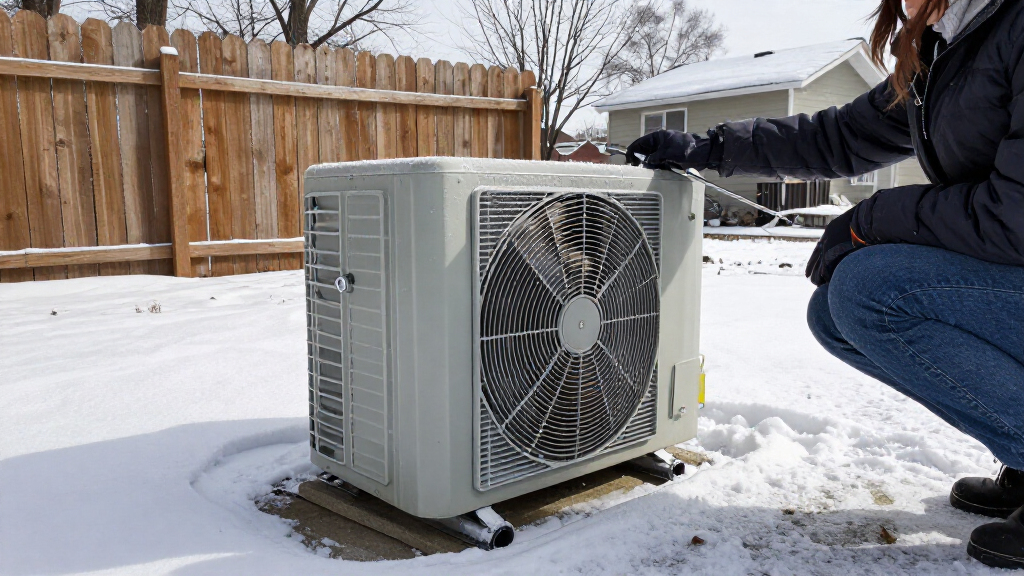
The homeowner said the condenser’s north-side location reflects the building layout and a desire not to see the equipment from inside the house. The site currently has full wind exposure and no tree cover to serve as a windbreak. The question asks whether the unit should be installed in its standard orientation or turned 180 degrees, and whether a separate barrier would help.
The proposed support includes galvanized strut channel and a concrete pad. The homeowner also described plans to add another course to a retaining wall, fill its interior with clean rock and place the condenser mount on top. These are the homeowner’s stated plans; the source does not provide an engineering review of the support, the retaining-wall work or the final equipment clearances.
In explaining the concern, the homeowner cited a Mitsubishi manual that, according to the post, recommends reversing the unit and installing it behind a secondary windbreak in high-wind environments. The question also notes that neighbors have standard-orientation units on north-facing walls. Neither observation establishes what configuration is suitable for this particular model or site.
Reliability at an Exposed North Wall
The placement decision matters because the homeowner intends the mini-split to provide primary heating, rather than occasional supplemental warmth. If wind exposure affects operation or service access, the consequences could extend beyond comfort to the home’s heating reliability during cold weather. The source, however, does not document a performance problem or establish that a north-facing installation will fail.
A unit’s orientation and any added barrier should be evaluated against the specific equipment instructions and the actual conditions at the site. A windbreak that is too close or otherwise conflicts with required airflow or service clearances could create a separate problem. The homeowner’s question therefore concerns more than which direction the unit faces: it also involves manufacturer requirements, unobstructed airflow, mounting and the exposure expected at the location.
Products Worth Considering

Philips Hue Festavia Globe Outdoor String Lights, 8 Bulbs, 22 ft

Hisense 85 U7 Mini-LED ULED 4K UHD Smart Google TV (85U7SG, 2026)

LG 85-Inch QNED73B Mini LED 4K Smart TV (2026)
As an affiliate, we earn on qualifying purchases.
The Manual and Neighboring Installations
The GreenBuildingAdvisor post frames the issue around a tension between a reported manufacturer recommendation and nearby examples. The homeowner says the Mitsubishi manual advises a reversed installation behind a secondary windbreak in high-wind environments, while nearby homes have condensers in standard orientation on north-facing sides. The post does not identify the exact equipment model, quote the manual’s full passage or establish whether the neighbors’ systems are comparable.
The planned location also has practical constraints: the homeowner wants the condenser out of view from indoors and says the building layout points to the north side. The proposed rock-filled retaining-wall area and elevated mount are part of the described design, not evidence that the installation has been approved or completed. These details make the question specific to one site, rather than a general finding about all mini-split installations in Minnesota.
“Planning to use the mini split as a primary heat source and want good and reliable performance.”
— The homeowner, in the question published by GreenBuildingAdvisor
Model and Site Details Still Missing
The source does not identify the condenser model, provide the relevant manual passage in full or include a manufacturer or installer response. It is therefore unclear whether the cited 180-degree orientation guidance applies to the planned unit and the site’s particular wind conditions. The post also does not supply wind measurements, the direction of prevailing exposure, required clearances or an assessment of how a proposed fence or privacy blanket would affect airflow.
There is no reported installation outcome, heating-performance data or confirmation that the retaining-wall and mount design meets applicable product instructions or local requirements. The neighbors’ installations are not documented in enough detail to serve as a comparison. The source does not establish whether a windbreak is necessary, what type would be appropriate, or whether standard orientation is acceptable at this location.
Confirm the Exact Installation Guidance
The next step described by the available information is not a confirmed construction milestone: the homeowner is seeking an answer about orientation and wind protection before proceeding. A decision would depend on checking the installation manual for the exact model and obtaining site-specific guidance from the manufacturer or a qualified mini-split installer. The source does not say whether that consultation has occurred or when installation is planned.
Until those details are verified, the question leaves open whether the unit will face standard or reversed orientation and whether a secondary windbreak will be built. The final arrangement also needs to account for the proposed mount, airflow and manufacturer-specified access and clearance requirements; no approved design or completed installation is reported.
Key Questions
Where does the homeowner plan to install the condenser?
The proposed location is on the north side of a south-central Minnesota home, where the homeowner says the site is currently exposed to wind and has no tree windbreak.
Has a final orientation been recommended?
No. The source reports the homeowner’s question and summary of a Mitsubishi manual, but does not include a final recommendation for the specific unit and site.
Is a fence or privacy blanket windbreak confirmed as necessary?
No. The homeowner asks whether to build a windbreak, but the source does not establish that one is needed or specify a suitable design. Any barrier would need to be checked against the equipment’s airflow and clearance requirements.
Is the installation complete?
The source does not say. It describes a planned mount and retaining-wall work, but gives no confirmation that construction or installation has been completed.
Source: greenbuildingadvisor.com