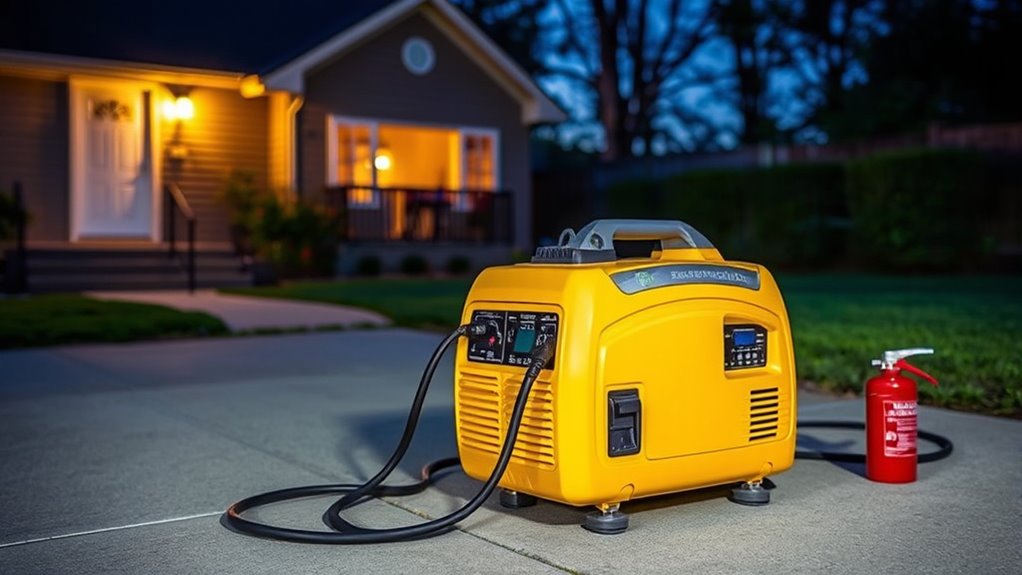

To stay safe with your portable generator, always operate it outdoors at least 20 feet away from your home, vents, and windows to prevent carbon monoxide buildup. Never run it inside or in enclosed spaces, and make certain exhaust is directed away from living areas. Use proper extension cords, avoid overloading, and verify grounding. Before refueling, turn it off and let it cool. Following these precautions helps you avoid CO poisoning and electrical hazards—discover more to keep safe every step of the way.

Get backup power and energy gear delivered free with Prime
- Fast, free delivery on millions of items
- Prime Video, Amazon Music and more included
- Member-only deals all year
Key Takeaways
- Operate generators outdoors, at least 20 feet from the home, and away from vents to prevent CO buildup indoors.
- Never run a generator inside or in enclosed spaces; always place exhaust away from doors and windows.
- Regularly inspect cords for damage, use GFCI extension cords, and avoid overloading outlets to prevent electrocution risks.
- Turn off the generator and let it cool before refueling to avoid fires or fuel spills.
- Perform routine maintenance, including checking for leaks and keeping the area clear of debris, to ensure safe operation.
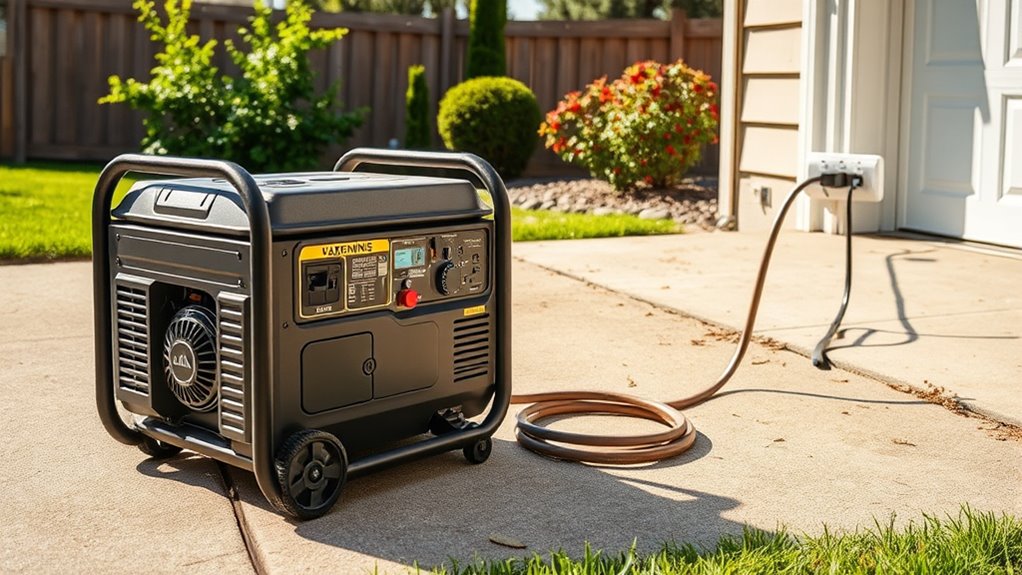
Portable generators are valuable tools during power outages, but they can pose serious safety risks if not used properly. One of the most critical aspects of safe operation is regular generator maintenance. Proper maintenance ensures your generator runs efficiently and reduces the risk of malfunctions that could lead to dangerous situations. Before each use, check for fuel leaks, inspect the cords, and ensure the unit is clean and free of debris. Regularly changing the oil, replacing filters, and following the manufacturer’s guidelines can prevent engine failure and reduce the chance of carbon monoxide (CO) buildup. Keeping your generator in good shape is an essential part of emergency preparedness, helping you avoid unexpected breakdowns during critical moments.
When it comes to preventing CO poisoning, proper placement is key. Never operate a generator indoors or in enclosed spaces like garages, basements, or sheds—even if doors and windows are open. CO is a colorless, odorless gas that can quickly accumulate and cause severe health issues or death. Always position your generator outdoors, at least 20 feet away from your home and vents, and direct the exhaust away from windows and doors. This simple step can save lives by preventing dangerous CO buildup inside your living space.
Electrocution risks are just as serious and require careful attention. Always verify that your generator is properly grounded before use. Using an extension cord with a ground fault circuit interrupter (GFCI) protects you from electrical shock if a fault occurs. Never overload the generator; check the wattage ratings to ensure you don’t draw more power than it can handle. Keep cords dry, and avoid running them through puddles or snow, as water can conduct electricity and increase shock risk. When plugging in appliances, connect only one device per outlet to prevent overloads. Additionally, always turn off the generator and disconnect the appliances before refueling to prevent fires or explosions caused by spilled fuel igniting from hot engine parts.
GFCI extension cords for generators
As an affiliate, we earn on qualifying purchases.
As an affiliate, we earn on qualifying purchases.
Frequently Asked Questions
Can Portable Generators Be Safely Used Indoors?
You shouldn’t use portable generators indoors because proper indoor ventilation isn’t feasible, which can lead to dangerous carbon monoxide buildup. Always place your generator outdoors, away from windows and vents, to prevent CO from entering your home. Guarantee good generator placement by keeping it on a flat surface, away from doors and windows, and never run it inside garages or enclosed spaces, even if doors are open.
What Are the Signs of Carbon Monoxide Poisoning?
You should be aware of symptoms of carbon monoxide poisoning, like headache, dizziness, weakness, nausea, or confusion. If you notice these signs, act quickly by moving to fresh air and seeking emergency response. Recognizing symptoms early can save lives, so stay alert and guarantee proper ventilation when using generators. Always prioritize safety to prevent CO poisoning, especially during power outages or indoor use.
How Often Should I Perform Maintenance on My Generator?
You should perform generator maintenance regularly, ideally every 50 to 100 hours of use or at least once a season. Follow your safety checklist to inspect for fuel leaks, loose connections, and proper oil levels. Regular maintenance guarantees your generator runs safely and efficiently, reducing risks of carbon monoxide buildup and electrical hazards. Always consult your manufacturer’s guidelines for specific maintenance intervals to keep your generator in top condition.
Is It Safe to Connect Multiple Generators Together?
Connecting multiple generators isn’t recommended because only certain models are designed for it, ensuring generator compatibility. Statistically, improper connections can cause electrocution risks or damage to your units, with accidents increasing by 30% when users connect generators incorrectly. To stay safe, avoid connecting multiple units unless specifically approved by the manufacturer, and always follow the manufacturer’s instructions for connecting generators safely.
What Personal Protective Equipment Is Recommended During Setup?
When setting up your generator, you should wear protective gloves to prevent cuts or burns and eye protection to guard against debris or sparks. Always handle cords carefully and avoid touching hot surfaces. Make sure your hands are dry and clean, and keep a safe distance from moving parts. Wearing the right gear enhances safety, reduces injury risks, and helps you operate the generator confidently and securely.
portable generator grounding kit
As an affiliate, we earn on qualifying purchases.
As an affiliate, we earn on qualifying purchases.
Conclusion
By following these safety tips, you’ll keep your energy source from turning into a hidden trap. Portable generators are like loyal but unpredictable friends—you need to respect their power and handle them with care. Always operate them outdoors, keep vents clear, and never overload outlets. Think of safety as your guiding compass, steering you away from danger’s stormy waters. With caution and awareness, you’ll guarantee your home stays bright and safe, never caught in the dark of preventable accidents.
As an affiliate, we earn on qualifying purchases.
generator exhaust extension pipe
As an affiliate, we earn on qualifying purchases.
As an affiliate, we earn on qualifying purchases.
Halloween Picks
halloween
As an affiliate, we earn on qualifying purchases.