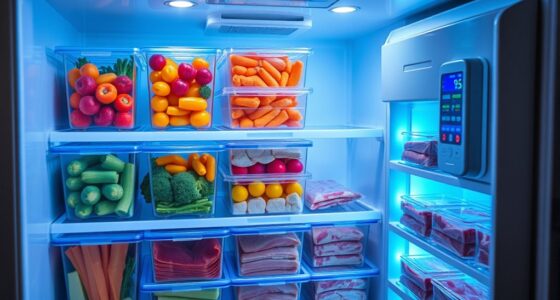
During extended blackouts, you should prioritize consuming perishable foods early and keep fridge and freezer doors closed to retain cold. Use coolers with ice packs for additional refrigeration and transfer perishables if power isn’t restored soon. Properly identify spoiled foods to prevent health risks, and leverage preservation techniques like canning or drying for long-term storage. Managing food waste carefully helps stay safe and conserve supplies—learn more ways to handle this effectively as you continue.
Key Takeaways
- Prioritize consuming perishable foods early before spoilage occurs during the blackout.
- Use ice packs and coolers to extend refrigeration of perishable items as long as possible.
- Implement food preservation methods like drying or canning to prolong shelf life and reduce waste.
- Regularly check for signs of spoilage and discard unsafe foods to prevent health risks.
- Plan meals strategically to minimize opening refrigerators and freezers, maintaining cold temperatures longer.
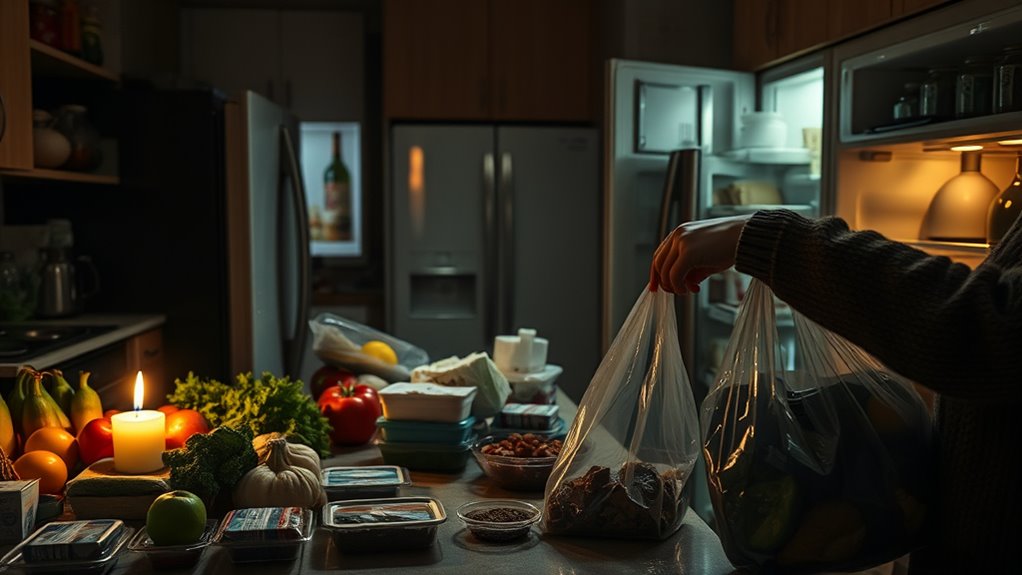
During extended blackouts, managing your food supply becomes a critical challenge. Without electricity, your ability to keep perishable items fresh diminishes rapidly, increasing the risk of food spoilage and waste. To avoid unnecessary loss, you need to prioritize food preservation techniques that don’t rely on power. This might include methods like canning, drying, or fermenting foods beforehand, especially if you anticipate prolonged outages. Proper emergency planning becomes essential, helping you stock up on non-perishable supplies and implement strategies that extend the life of your food. Having a plan ensures you’re prepared to manage your resources efficiently and reduces the stress of unexpected shortages.
Manage food supplies during blackouts with preservation methods like canning, drying, and planning ahead to reduce waste and spoilage.
One of the first steps in emergency planning is evaluating what foods you already have and understanding their shelf lives. Store items that require minimal or no refrigeration, such as canned goods, dried fruits, nuts, and grains. Invest in coolers with ice packs for short-term refrigeration needs, but remember that without power, these will only last a limited time. To maximize your food preservation, consider investing in hand-crank can openers, coolers, and other tools that don’t depend on electricity, so you can access and manage your food supplies effectively. Learning how to safely preserve food at home before a blackout occurs can make a significant difference in reducing waste and maintaining nutrition.
You should also plan for how to keep perishable food safe during a blackout. Freeze large quantities of water or ice to help maintain cold temperatures in your fridge or freezer for as long as possible. When the power goes out, keep the fridge and freezer doors shut to preserve cold air and slow spoilage. If the outage lasts longer than a day or two, consider transferring perishable items into coolers with ice packs or using a generator if available. Additionally, designate specific foods for consumption early on to prevent spoilage, and learn the signs of food that’s gone bad to avoid health risks. Incorporating food preservation techniques into your emergency planning not only minimizes waste but also ensures you have nourishing options during extended blackouts. With proper preparation, you can manage your food supply more effectively and reduce the frustration and danger of spoiled food. Stay informed about safe food handling practices, keep a well-stocked emergency kit, and regularly review your plan to adapt to changing circumstances. By doing so, you’ll be better equipped to handle extended blackouts confidently, preserving your food and your peace of mind.
Top picks for "manag food waste"
As an affiliate, we earn on qualifying purchases.
Frequently Asked Questions
How Can I Tell if Frozen Food Is Still Safe to Eat?
You can tell if frozen food is still safe by checking for signs of spoilage, such as a bad odor, discoloration, or freezer burn. If the food has been stored during a blackout, rely on freezer monitoring; if the power was out for more than 48 hours and the food has thawed, it’s safer to discard it. Always prioritize food safety to prevent health risks.
Are There Environmentally Friendly Ways to Dispose of Spoiled Food?
Imagine you’re living in the Jetsons era, but your spoiled food needs eco-friendly disposal. You can compost it if it’s plant-based, turning waste into nutrient-rich soil. For non-compostable items, opt for biodegradable disposal options like compostable bags or biodegradable trash bags. These methods reduce landfill waste and environmental impact, making sure your food waste is managed responsibly without harming the planet.
What Are the Best Practices for Repurposing Leftover Perishable Items?
You can repurpose leftover perishable items by practicing food preservation techniques like freezing or pickling. Get creative with recipes—blend wilted vegetables into soups, make smoothies from overripe fruit, or transform stale bread into croutons or bread pudding. These methods help extend the life of your food, reduce waste, and turn leftovers into delicious meals. Staying inventive guarantees you minimize waste during extended blackouts and make the most of your perishables.
How Do I Prevent Attracting Pests During a Blackout?
To prevent pests during a blackout, store your food in pest-proof containers, ensuring they’re sealed tightly. Keep perishable items in a cool, shaded outdoor storage area if possible, away from direct sunlight and pests. Regularly check these containers for any openings or damage, and clean up crumbs or spills immediately. This approach minimizes attracting pests, keeps your food safe, and helps maintain order during extended power outages.
Can I Donate Food That’s Nearing Its Expiration During a Blackout?
You can’t donate food nearing expiration during a blackout. The risk of foodborne illness skyrockets when power’s out, making adhering to expiration guidelines essential. Food donation programs require items to be safe and within expiration dates, which aren’t guaranteed during extended blackouts. Don’t gamble with your health or others’; instead, focus on safely using or disposing of perishable foods before they spoil or become unsafe.
Conclusion
When the lights go out for a long while, think of your fridge as a quiet garden at dusk, softly fading but still holding promise. By planning ahead and making mindful choices, you help the natural cycle continue gracefully. Instead of letting food go to waste, you nurture a gentle balance, giving items a chance to shine in other ways. Embrace these moments as an opportunity to respect the world around you, even in darkness.