To stay safe at home, it’s important to understand fire extinguisher classes. Each class is designed for specific types of fires: Class A for ordinary combustibles like wood and paper, Class B for flammable liquids, and Class C for electrical fires. Using the correct extinguisher prevents making the fire worse or causing hazards. Knowing these classes helps you choose and use the right equipment quickly. Keep exploring to learn more about how to protect yourself and your home effectively.
Key Takeaways
- Fire extinguishers are classified into types (A, B, C, D) based on the fire they are designed to extinguish.
- Knowing fire classes helps select the appropriate extinguisher for household hazards, ensuring effective safety measures.
- Class A extinguishers are suitable for common combustibles like wood and paper, common in homes.
- Class B extinguishers target flammable liquids such as gasoline or oil, which may be present in garages or kitchens.
- Proper training on extinguisher classes improves response safety and prevents worsening fires during home emergencies.
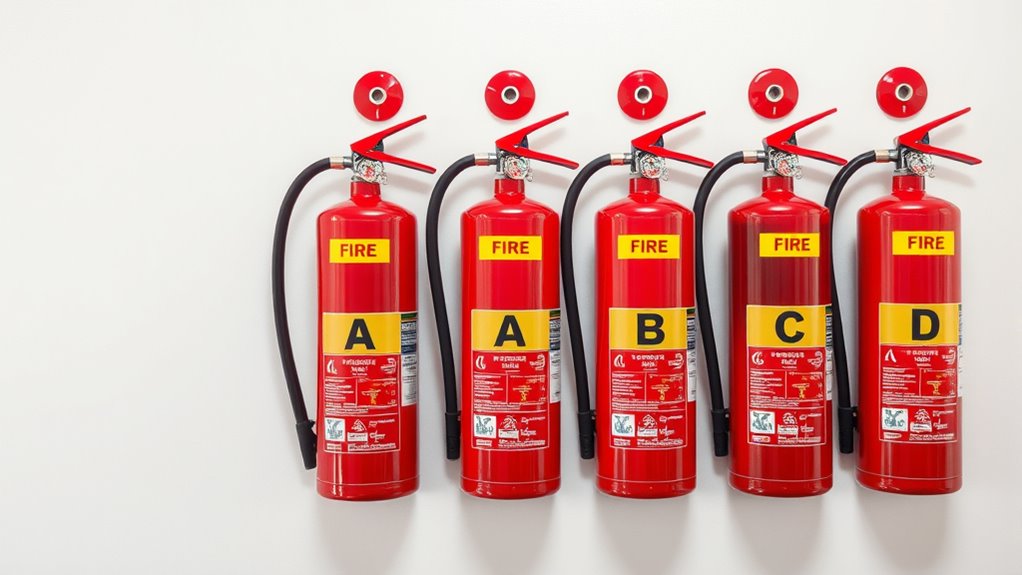
Have you ever wondered how to choose the right fire extinguisher for different types of fires? It’s crucial because using the wrong kind can be ineffective or even dangerous. Fire extinguishers come in various types, each designed to combat specific classes of fires. For example, you’ll find ABC extinguishers, which are versatile and suitable for common household fires, and specialized extinguishers like CO2 or Class D for specific hazards. Knowing the different types of fire extinguishers helps you respond swiftly and effectively during an emergency. But it’s not just about having the right extinguisher; proper usage techniques are equally important. When you know how to operate a fire extinguisher correctly, you increase your chances of putting out a fire safely and efficiently.
First, familiarize yourself with the extinguisher’s label, which clearly indicates the classes of fires it’s designed for. For instance, Class A extinguishers work on ordinary combustibles like wood, paper, and cloth. Class B extinguishers target flammable liquids such as gasoline or oil, while Class C extinguishers are for electrical fires. Using the wrong type on a specific fire can make the situation worse, so always check the label before grabbing it. When you need to use it, remember the PASS technique: Pull the pin, Aim the nozzle at the base of the fire, Squeeze the handle, and Sweep from side to side. This method ensures you direct the extinguishing agent precisely where it’s needed and maintain control throughout the process. Additionally, understanding candles and their safe use can help prevent accidental fires in your home.
Proper usage techniques also involve safety precautions. Keep a safe distance from the fire—usually about six to eight feet—and never turn your back on the flames. If the fire is too large or spreading rapidly, it’s safer to evacuate and call emergency services instead of risking injury. Regularly inspecting your fire extinguishers is crucial; ensure they are fully charged, unobstructed, and within their expiration date. Training or practicing with a fire extinguisher can boost your confidence and improve your response times in real emergencies.
Understanding fire extinguisher classes and mastering proper usage techniques empower you to act decisively when fire strikes. By choosing the right extinguisher for each fire type and knowing how to operate it correctly, you create a safer environment for yourself and your loved ones. Remember, preparedness is key—being informed and ready can make all the difference in protecting your home and preventing a small fire from becoming a disaster.

Kidde FA110G Multi Purpose Fire Extinguisher, Wall Mount, for Home/Office/Dorm/Residential, 1A10BC
Reliable Fire Protection: Stop basic home fires involving trash, wood, paper, liquids, gases, and electrical equipment
As an affiliate, we earn on qualifying purchases.
As an affiliate, we earn on qualifying purchases.
Frequently Asked Questions
How Often Should I Replace or Recharge My Fire Extinguisher?
You should replace or recharge your fire extinguisher based on its maintenance schedule and inspection frequency. Generally, check it monthly for damage or pressure loss, and have it professionally inspected annually. Replace or recharge if it’s been used, damaged, or if the pressure gauge indicates low pressure. Also, replace every 5 to 15 years, depending on the extinguisher type, to make certain it’s ready when needed.
Can I Use a Multi-Class Extinguisher on Different Fires?
Yes, you can use a multi-class extinguisher on different fires because they are designed for fire class compatibility. Multi-class extinguishers, such as ABC types, are effective on various fires like wood, paper, liquids, and electrical fires. Always check the label to verify it covers the specific fire class you’re facing. Using the right extinguisher reduces risk and increases safety during emergencies.
What Is the Proper Way to Operate a Fire Extinguisher?
Imagine you’re a firefighter in your own home. To operate a fire extinguisher properly, remember the PASS technique: Pull the pin, Aim at the base of the fire, Squeeze the handle, and Sweep side to side. Always follow safety precautions—keep a safe distance and never turn your back on the fire. Proper technique guarantees you fight fires effectively while keeping yourself safe. Stay calm and act quickly.
Are There Fire Extinguishers Suitable for Electronic or Electrical Fires?
Yes, there are fire extinguishers suitable for electrical fires, known as electrical fire extinguishers or Class C extinguishers. You should employ these specifically designed extinguishers because they contain non-conductive agents like CO2 or dry chemicals that safely suppress electrical fires without risking electrocution or damage to electronic equipment. Always make certain your home has a Class C extinguisher accessible, especially near areas with electronics or wiring.
How Can I Tell if My Fire Extinguisher Is Still Effective?
Ever wonder if your fire extinguisher is still effective? You can tell by performing regular extinguisher maintenance and a simple visual inspection. Check the pressure gauge—if it’s in the green zone, it’s good to go. Look for any signs of damage, corrosion, or leakage. Make certain the pin and seal are intact. When in doubt, have it professionally inspected or replaced to stay prepared for emergencies.
Kidde FA110G Multi Purpose Fire Extinguisher, Wall Mount, for Home/Office/Dorm/Residential, 1A10BC
Reliable Fire Protection: Stop basic home fires involving trash, wood, paper, liquids, gases, and electrical equipment
As an affiliate, we earn on qualifying purchases.
As an affiliate, we earn on qualifying purchases.
Conclusion
Knowing the different fire extinguisher classes is like having a toolbox for safety—you’re prepared for any fire that pops up. By understanding which extinguisher to use, you can act quickly and confidently, potentially saving lives and property. Think of it as having a secret weapon in your home’s safety arsenal. Stay informed, stay prepared, and remember: just like a superhero, your quick action can make all the difference in a fire emergency.

Amerex 322 CO2 Class B C Fire Extinguisher, 5 lb.
Carbon dioxide, Class B:C Extinguisher
As an affiliate, we earn on qualifying purchases.
As an affiliate, we earn on qualifying purchases.

USKITS DOT OSHA ANSI Compliant Kit with Shield USA Made 2.5lb 1A10BC Fire Extinguisher – Ideal for Commercial Trucks, Vans, Pickup Trucks, and Delivery Vehicles – USA Made Kit!
Made in USA 2.5LB Shield ABC Fire Extinguisher, Model 2.5D-ABC
As an affiliate, we earn on qualifying purchases.
As an affiliate, we earn on qualifying purchases.