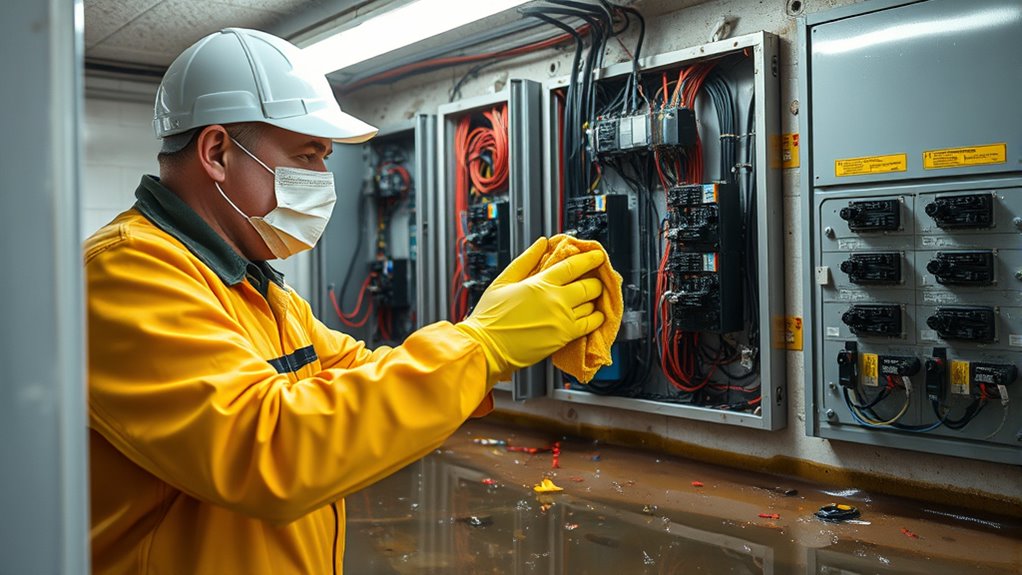
After a flood, turn off the main power before inspecting your electrical panel. Carefully open it and look for water damage, corrosion, or debris. Use a dry, non-abrasive cloth to wipe away moisture, and gently clean stubborn dirt with a soft brush or vacuum. Confirm all parts are completely dry and free of corrosion before restoring power. For safety, consider hiring a professional if you’re unsure; further tips await to help you stay safe.

Get backup power and energy gear delivered free — and shop member deals
- Fast, free delivery on millions of items
- Access to Prime Big Deal Days deals on October 6–7
- Prime Video, Amazon Music and more included
Key Takeaways
- Turn off power at the main breaker before inspecting or cleaning the electrical panel.
- Wear protective gear like insulated gloves, goggles, and rubber shoes to ensure safety.
- Use dry, non-abrasive cloths and soft brushes to remove moisture and debris; avoid liquids on electrical parts.
- Apply specialized electrical contact cleaner to corrosion and thoroughly dry all components before re-energizing.
- Have a licensed electrician evaluate the panel for hidden damage or residual moisture before restoring power.
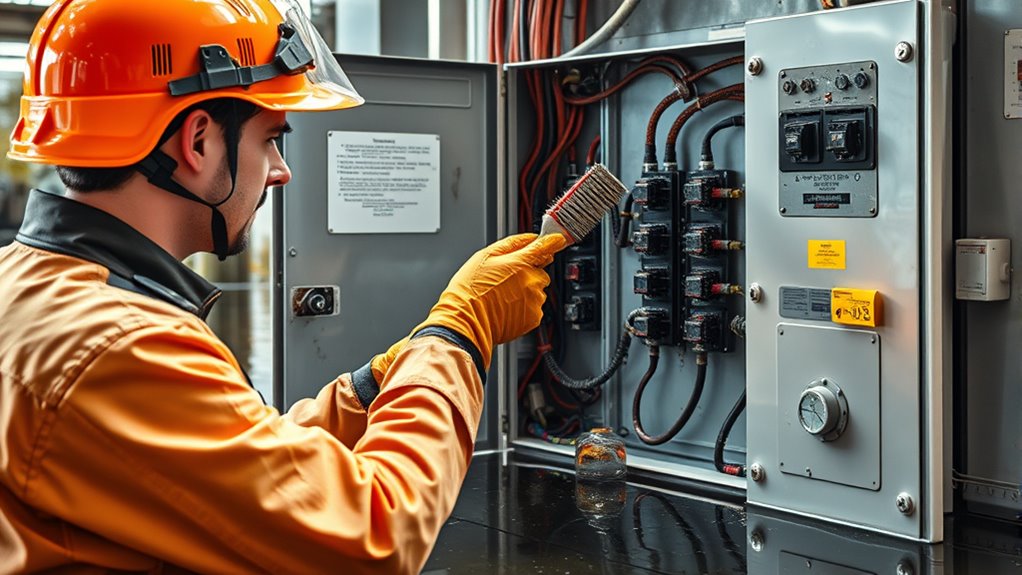
Have you ever wondered why regular cleaning of electrical panels is essential for safety and efficiency? After a flood, this becomes even more critical. Water damage can severely compromise your electrical system, increasing the risk of short circuits, fires, or electric shocks. When floodwaters invade your property, they often bring moisture into areas that are normally dry, including your electrical panels. Left unaddressed, this moisture can corrode components, cause rust, and create dangerous electrical conditions. That’s why thorough cleaning after flooding isn’t just about aesthetics; it’s a key safety precaution to prevent accidents and maintain your system’s integrity.
Regular cleaning after flooding prevents corrosion, electrical hazards, and system failures.
Before you start cleaning, make sure you take the right safety precautions. First and foremost, turn off the power supply to the electrical panel at the main breaker. Never attempt to clean or inspect the panel while it’s still energized. Wear protective gear, such as insulated gloves, safety goggles, and rubber-soled shoes, to shield yourself from potential electrical shocks or debris. If you’re unsure about handling electrical components, it’s best to hire a licensed electrician. Remember, water damage can hide underlying issues, so a professional assessment might be necessary to ensure your system is safe to restore. Electrical safety protocols are crucial to prevent accidents during the cleaning process.
Once the power is off, carefully open the panel and inspect the components for signs of water damage, corrosion, or mold. Use a dry, non-abrasive cloth to remove any visible moisture, dust, or debris. For stubborn moisture, a soft brush or vacuum with a brush attachment can help dislodge dirt without damaging delicate parts. Avoid using water or liquid cleaners on electrical components—they can worsen the damage or cause further short circuits. Instead, if corrosion is present, a specialized electrical contact cleaner can be applied cautiously. It’s essential to ensure all parts are thoroughly dry before restoring power to prevent future water-related issues.
After cleaning, check all connections and wiring for corrosion or damage. Damaged components should be replaced immediately to maintain safety and system reliability. Once everything is dry, and you’re confident there’s no residual moisture or corrosion, you can restore power safely. Remember, if you notice any lingering signs of water intrusion or damage, consult a professional. Water damage isn’t always visible on the surface, and hidden issues can pose serious risks if left unaddressed.
electrical contact cleaner for corrosion
As an affiliate, we earn on qualifying purchases.
As an affiliate, we earn on qualifying purchases.
Frequently Asked Questions
When Should I Call a Professional Electrician After a Flood?
You should call a professional electrician immediately after a flood if you notice any signs of electrical safety hazards, such as exposed wires or damaged panels. It’s essential to get a thorough flood damage assessment before attempting any cleaning or repairs. Don’t risk electrical shock or further damage—let an expert handle the situation safely, ensuring your electrical system is properly inspected and restored after flood damage.
Are There Specific Safety Gear Requirements for Cleaning Electrical Panels?
Yes, you need to wear proper electrical safety gear when cleaning electrical panels. Make sure to use personal protective equipment like insulated gloves, safety goggles, and rubber-soled shoes to prevent shocks and injuries. Always disconnect power before starting, and never work on live panels. Using the right electrical safety gear decreases risks, keeps you safe, and ensures you handle the cleaning process responsibly.
How Long Should Electrical Panels Dry Before Inspection?
Like waiting for paint to dry, you should permit electrical panel drying for at least 24 to 48 hours after flood damage assessment. This ensures all moisture evaporates, reducing the risk of electrical hazards. Before inspecting, confirm the panels are completely dry to prevent short circuits or corrosion. Rushing this step can compromise safety and equipment integrity, so patience is key for a thorough and safe flood damage assessment.
Can I Test Electrical Panels for Functionality After Cleaning?
Yes, you can test electrical panels for functionality after cleaning, but only after ensuring safety precautions are in place. Perform electrical testing with a properly rated tester while wearing insulated gloves and using insulated tools. Turn off the power supply before testing to avoid electric shock. If you’re unsure about the process, it’s best to consult a professional. Always prioritize safety to prevent accidents during electrical testing.
What Are Common Signs of Electrical Damage Post-Flood?
You should look for signs like water intrusion inside the electrical panel, which can cause corrosion indicators such as rust or discoloration. Unusual burning smells, buzzing sounds, or visible corrosion suggest damage. If you notice water marks or corrosion, don’t overlook them. These signs indicate electrical damage from floodwaters. Always have a professional inspect the panel to prevent hazards and ensure safe operation before restoring power.
insulated gloves for electrical work
As an affiliate, we earn on qualifying purchases.
As an affiliate, we earn on qualifying purchases.
Conclusion
So, after all that, you’d think flooding would teach us to be more cautious around electrical panels. But no, here you are, risking it all just to save a few bucks or time. Ironically, the real cost isn’t just the panel’s safety—it’s your own. So next time, maybe skip the shortcuts, and remember: flooding might be a mess outside, but mixing water and electricity inside is a disaster waiting to happen.
As an affiliate, we earn on qualifying purchases.
flood damage electrical panel cleaning tools
As an affiliate, we earn on qualifying purchases.
As an affiliate, we earn on qualifying purchases.
Fall Picks
fall essentials
As an affiliate, we earn on qualifying purchases.