
TL;DR

Get backup power and energy gear delivered free with Prime
- Fast, free delivery on millions of items
- Prime Video, Amazon Music and more included
- Member-only deals all year
California has put reliability and data-sharing rules in place for EV charging projects receiving state or regulated-utility funding, following laws passed in 2022 and 2023. The requirements include OCPP 2.0.1 support for publicly funded fast chargers installed from Sept. 28, while industry experts say missing diagnostic data and coordination problems still complicate repairs.
California has put new reliability and data-sharing rules in place for electric-vehicle chargers supported by state agencies or regulated utilities, after laws passed in 2022 and 2023 directed the California Energy Commission to set standards. The rules seek to make publicly funded charging more dependable, but industry experts say gaps in diagnostic information and coordination between equipment and software still make failures difficult to fix.
One requirement applies to publicly funded direct-current fast chargers installed on or after Sept. 28: they must support OCPP 2.0.1, a version of the Open Charge Point Protocol. The standard lets chargers and network-management systems made by different vendors communicate. The intended benefit, according to Obrie Hostetter, director of fleet decarbonization programs at the Center for Sustainable Energy, is to reduce the risk that equipment and drivers are left stranded if a manufacturer or network operator goes out of business.
The commission’s rules also require covered projects to share performance data. A charging-network employee quoted in the report called the requirements “largely an onerous data-reporting exercise” and questioned whether they would improve reliability. Hostetter acknowledged those concerns but said publicly funded projects should reliably serve the public, and that collecting performance information helps establish whether they are doing so.
California is also supporting work to test charging technology before it is deployed. The commission awarded $4 million to the Capital Charge Yard, a Sacramento testing lab that opened in August and involves companies including ABB, ChargePoint, EVgo, Hubject, Rivian and Tesla. Orville Thomas, chief executive of the nonprofit California Energy, Power, and Innovation Collaborative, which manages the site, said it can help check that chargers work as expected when first plugged in. The organization also runs training for EV and charger technicians.
Making Public Charging More Dependable
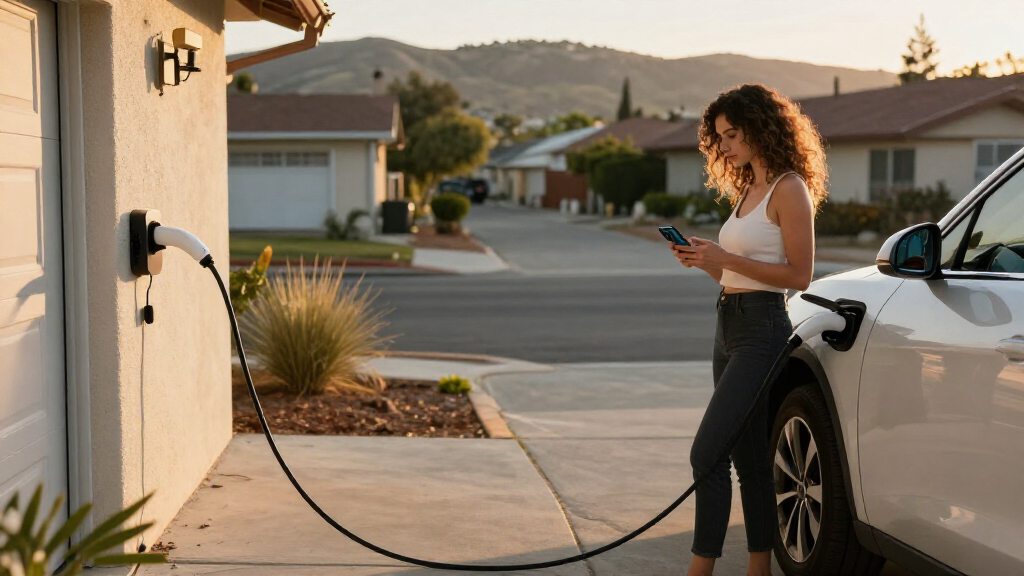
Unreliable public chargers can undermine confidence in electric vehicles, particularly for drivers who depend on public networks rather than charging at home. California has more EVs than any other state, according to the report, making charger performance a substantial public concern as well as a condition for making state-supported charging investments useful.
The rules address two parts of that problem: accountability for publicly funded projects through performance data, and the ability of equipment from different vendors to communicate. OCPP 2.0.1 could make it easier to change software providers if a network operator exits the market. But a technical standard and reporting requirements cannot by themselves guarantee that a charger will work or that a repair crew will quickly identify a fault.
The testing lab represents another approach: giving companies a place to check how their products work together before widespread deployment. Together, regulation and testing may help reduce failures, though the report does not establish how much the new rules have improved charger uptime.
Products Worth Considering

Ring Wired Doorbell Plus (2nd Gen) and Chime (3rd Gen), Nickel Silver and White

Shark Navigator Lift-Away Upright Vacuum Cleaner, NV356E

Ring Battery Doorbell 2K Plus (2nd Gen) and Spotlight Cam Plus Battery Bundle
As an affiliate, we earn on qualifying purchases.
From Federal Standards to State Rules
Federal policy helped bring charger reliability into focus. The Biden administration attached reliability requirements to its $5 billion EV-charger program, according to the report. It says federal leadership later weakened under the Trump administration, leaving states to take on more of the work.
California’s laws in 2022 and 2023 directed the Energy Commission to set reliability and data-sharing standards for charging installations that receive public support from state agencies or regulated utilities. The rules took years to arrive. The report describes their implementation as a long process, with disagreement over whether the resulting requirements will produce practical reliability gains or mainly add reporting obligations.
Operational problems remain broader than equipment standards. Kameale Terry, chief executive and co-founder of ChargerHelp, a company that repairs chargers, said repair crews still lack some of the information needed to diagnose faults. She also said there are no clear rules requiring hardware and software companies to manage handoffs among charger diagnostics, vehicle communications and payment authorization—any of which can disrupt a charging session.
“Largely an onerous data-reporting exercise”
— A charging-network employee quoted in the report
Whether Rules Reduce Charger Failures
The report provides no measured before-and-after results showing whether California’s rules have increased charger uptime or shortened repair times. It is also unclear how consistently the new data requirements will expose failures, or what consequences apply when a funded project does not meet reliability expectations.
Experts also point to problems the standards do not fully resolve: limited diagnostic information, unclear responsibility for system handoffs, and the practical difficulty of migrating chargers between software providers. The report does not quantify how often these issues cause failed charging sessions or how many chargers fall under each requirement.
Testing and Rule Implementation
The next steps are implementation of the commission’s requirements and continued work at the Capital Charge Yard. The lab is positioned to test equipment and support technician training, while the new data rules give agencies information they can use to review publicly funded charging projects.
Whether these efforts lead to more reliable charging will depend on how the standards work in practice and whether companies can address the information and coordination gaps described by repair providers. The report does not give a timeline for further rule changes or identify a specific date for an assessment of the rules’ effects.
Key Questions
Which EV chargers are covered by California’s new rules?
The rules apply to EV-charging installations receiving funding from state agencies or regulated utilities. One specific provision covers publicly funded DC fast chargers installed on or after Sept. 28, which must support OCPP 2.0.1.
What is OCPP 2.0.1?
OCPP 2.0.1 is a version of the Open Charge Point Protocol, a communications standard that allows EV chargers and network-management systems from different vendors to work together. The stated aim is to make it easier to change software providers if needed.
Will the rules guarantee that public chargers work?
No guarantee is established in the report. The rules set requirements for covered projects, but repair experts say missing diagnostics and poor coordination among systems remain problems. The report does not provide performance results showing how much charger reliability has changed.
What is the Capital Charge Yard?
It is a Sacramento testing lab that opened in August with a $4 million California Energy Commission grant. The nonprofit managing it says the site can test charging equipment and train EV and charger technicians.
Source: canarymedia.com