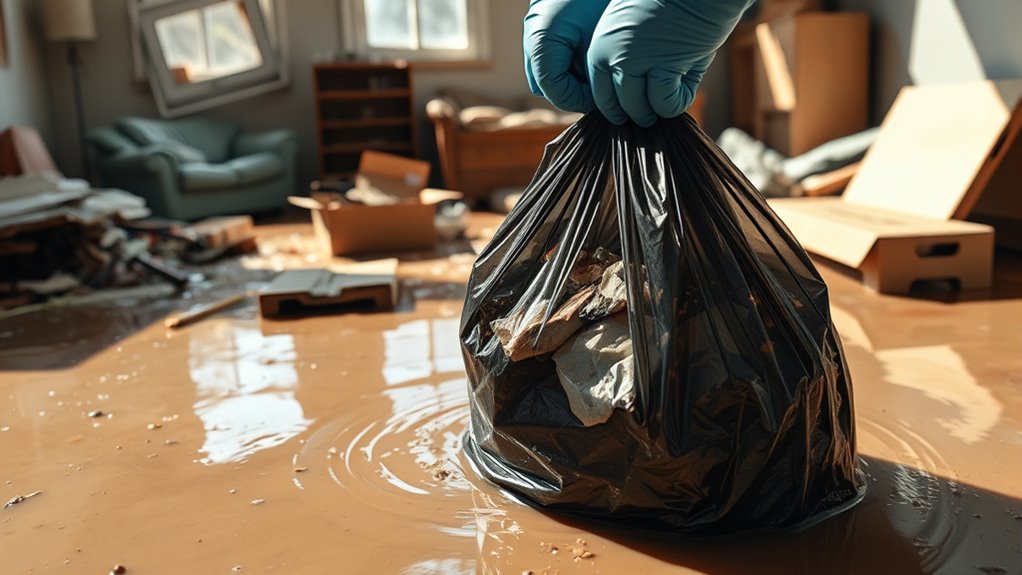

After floods, handle contaminated household waste carefully by wearing protective gear like gloves, masks, and boots. Use sturdy tools to avoid direct contact and double-bag waste in heavy-duty plastic, clearly labeling it as contaminated. Keep it separate from regular trash and store it in a secure area until professional disposal. Always rely on licensed waste services and follow local regulations. Proper hygiene, like washing hands and disinfecting tools, is essential. For detailed steps, you’ll find helpful tips to stay safe throughout the process.
Key Takeaways
- Always wear protective gloves, masks, and boots when handling flood-damaged household waste.
- Double-bag contaminated materials in heavy-duty plastic, sealing tightly to prevent leaks.
- Segregate contaminated waste from regular trash and store it securely away from living areas.
- Rely on licensed professionals for proper disposal, following local regulations for hazardous waste.
- Wash hands thoroughly and disinfect tools and clothing after handling flood debris to prevent infection.
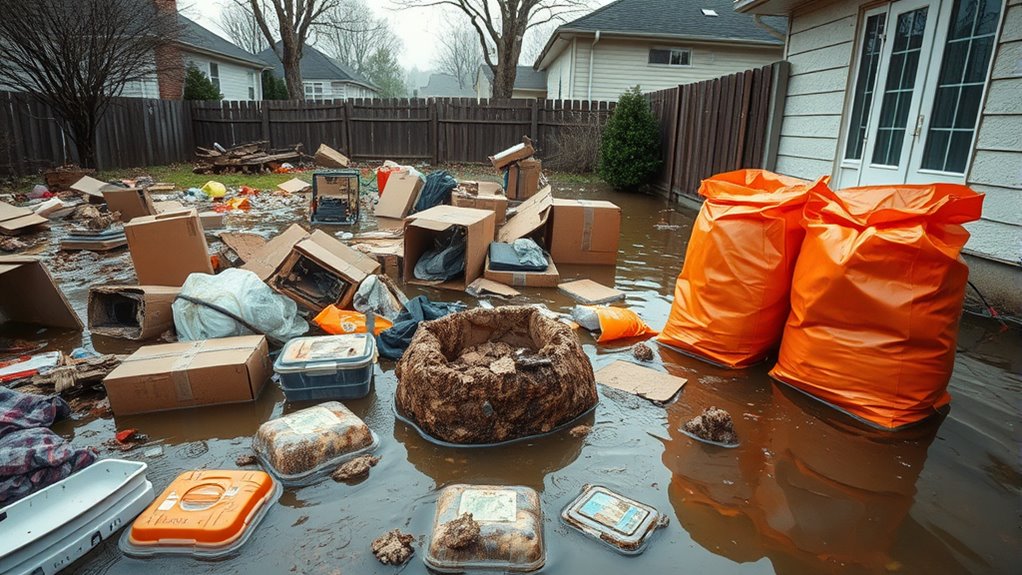
Have you ever wondered how to safely manage household waste after a flood? The aftermath can be overwhelming, especially when it comes to handling contaminated waste. Proper disposal safety is vital to prevent further health hazards and environmental damage. Floodwaters often carry bacteria, viruses, chemicals, and other pollutants that contaminate household debris. Moving this waste without caution can expose you and others to serious contamination risks. To keep yourself safe, it’s essential to follow strict safety protocols when dealing with flood-related waste. Always wear protective gear like gloves, masks, and boots before touching any debris. This gear acts as a barrier against contaminants and reduces the chance of infection. Avoid direct contact with flood-damaged items, especially porous materials like upholstery, carpets, and insulation, which tend to trap contaminants. When handling debris, use sturdy tools such as shovels or rakes to minimize contact, and keep waste separate from regular trash. It’s advisable to double-bag contaminated waste in heavy-duty plastic bags, sealing them tightly to prevent leaks and the spread of pollutants. Label these bags clearly as contaminated to alert sanitation workers and prevent accidental exposure. If possible, store contaminated waste in a designated, secure area away from living spaces until it can be collected by professionals. It’s also important not to attempt to clean or disinfect heavily contaminated items yourself, as improper handling can increase contamination risks. Instead, rely on licensed waste disposal services experienced in managing flood-related debris. They have the expertise and equipment to handle hazardous waste safely and dispose of it according to local regulations. Additionally, understanding hazardous waste management protocols can help you navigate proper disposal procedures more effectively. They have the expertise and equipment to handle hazardous waste safely and dispose of it according to local regulations. Don’t forget to wash your hands thoroughly after handling any flood debris, even if you wore gloves, and disinfect tools and clothing that may have come into contact with contaminated waste. Proper disposal safety isn’t just about protecting yourself; it’s about safeguarding your community and environment from potential health threats. Always stay informed about local guidelines for flood debris removal, as procedures can vary depending on your area. If in doubt, consult local health departments or environmental agencies for advice. Remember, handling contaminated household waste after a flood requires caution, awareness, and adherence to safety protocols. By doing so, you minimize contamination risks and help ensure a safer recovery process for everyone involved. Your vigilance can make a significant difference in preventing the spread of harmful pathogens and pollutants, making the cleanup safer and more effective.

Hefty Strong Lawn & Leaf Trash Bags, 39 Gallon, 38 Count
LARGE LAWN & LEAF GARBAGE BAGS-This package contains 38 Hefty Strong large, black, unscented, 39 gallon lawn &…
As an affiliate, we earn on qualifying purchases.
As an affiliate, we earn on qualifying purchases.
Frequently Asked Questions
How Can I Identify Hazardous Household Waste After Floods?
You can identify hazardous household waste after floods by looking for items with chemical hazards, such as cleaning chemicals, paints, and pesticides, which may leak or spill. Also, watch for biological contamination signs like mold, sewage, or spoiled food. Always handle suspicious materials with gloves, avoid direct contact, and store them separately. If uncertain, contact local authorities or waste management services to safely assess and dispose of these hazardous items.
Are There Any Local Disposal Centers for Flood-Contaminated Waste?
Nearly 80% of flood-affected households find local disposal centers essential for waste management. You should check with your city’s waste management department or local environmental agency for designated flood-contaminated waste disposal centers. Follow proper disposal procedures by segregating hazardous from non-hazardous waste, and ensure contaminated materials are securely packed. This helps protect public health and accelerates cleanup efforts, making your community safer and cleaner faster.
What Personal Protective Equipment Is Recommended During Cleanup?
You should wear protective gear like gloves, masks, goggles, and boots to ensure safety during cleanup. Safety precautions are vital to prevent exposure to contaminants and mold. Make sure to use sturdy gloves to handle debris, a mask to avoid inhaling harmful particles, and eye protection. Wearing proper protective gear helps minimize health risks and keeps you safe as you work through flood-contaminated waste.
How Long Should Contaminated Items Be Quarantined Before Disposal?
You should quarantine contaminated items for at least 24 to 48 hours before disposal, following safety protocols to prevent the spread of mold and bacteria. During this period, keep items in a secure, well-ventilated area away from living spaces. This quarantine duration helps verify that any potential hazards are minimized, and proper handling reduces health risks. Always wear personal protective equipment when managing these items.
Can I Donate Flood-Damaged Household Items?
Think of flood-damaged items like spoiled food—you wouldn’t gift them, right? Donation considerations mean avoiding contaminated household items, as they pose health risks. Instead, focus on ethical disposal by safely discarding or recycling what’s unsafe. Your kindness is better directed toward donating undamaged items or supporting charities that aid flood victims. Always prioritize safety and integrity to make sure your donations help, not harm, those in need.
personal protective equipment flood cleanup
As an affiliate, we earn on qualifying purchases.
As an affiliate, we earn on qualifying purchases.
Conclusion
After a flood, handling contaminated household waste carefully is vital for your health and safety. Remember, over 50% of flood debris can contain harmful bacteria and chemicals, so always wear gloves and double-bag waste. By following proper disposal methods, you reduce health risks for yourself and your community. Stay vigilant, and don’t underestimate the significance of safe waste management—your actions can make a big difference in recovery efforts and preventing disease spread.

GORILLA SUPPLY 500 BPA Free Premium Disposable Gloves Poly PE LDPE Plastic for Kitchen Food Handling Food Prep Latex & Powder Free (500 Count, Medium)
✅ FOOD SAFE GRADE & BPA FREE – Great for food handling and hospitality industries, such as party…
As an affiliate, we earn on qualifying purchases.
As an affiliate, we earn on qualifying purchases.

PureWay 1.2 Gallon MailBack Sharps Disposal Container – Secure Needle Box for Safe Medical Waste & Used Syringe Disposal | Sharps Container for Home Use, Travel, Clinics, and Professional Settings
PREPAID RETURN & COMPLETE DISPOSAL – Sharps container mail back kit includes a 1.2 gallon sharps disposal container,…
As an affiliate, we earn on qualifying purchases.
As an affiliate, we earn on qualifying purchases.