TL;DR

Get backup power and energy gear delivered free with Prime
- Fast, free delivery on millions of items
- Prime Video, Amazon Music and more included
- Member-only deals all year
Octopus Energy is developing the Cosy Cooler, an add-on intended to provide room cooling through existing Cosy heat-pump pipework. The company says it is targeting a 2027 launch and an estimated retail price of £500–£600; final specifications, pricing and availability have not been confirmed.
Octopus Energy is developing the Cosy Cooler, an add-on designed to bring room cooling to homes with the company’s existing Cosy heat pumps. The UK launch is planned for 2027, and Octopus says the unit is expected to cost about £500–£600 and connect to existing system pipework rather than requiring a separate air-conditioning system.
The Cosy Cooler is intended to remove heat from indoor air and transfer it through a heat exchanger connected to the home’s radiator loop. Octopus says that loop would be kept at a constant 18°C; the heat would then travel through the heating pipework and be rejected outdoors by the existing Cosy heat pump. The design uses the heat pump already serving the home rather than adding a standalone outdoor air-conditioning unit.
According to the report by Cooling Post, Octopus expects the add-on to cost around £500–£600 and take about three hours to install. The company says installation would not require major building work. Those figures are company estimates for a product still in development, not confirmed final retail terms or a guaranteed installation time.
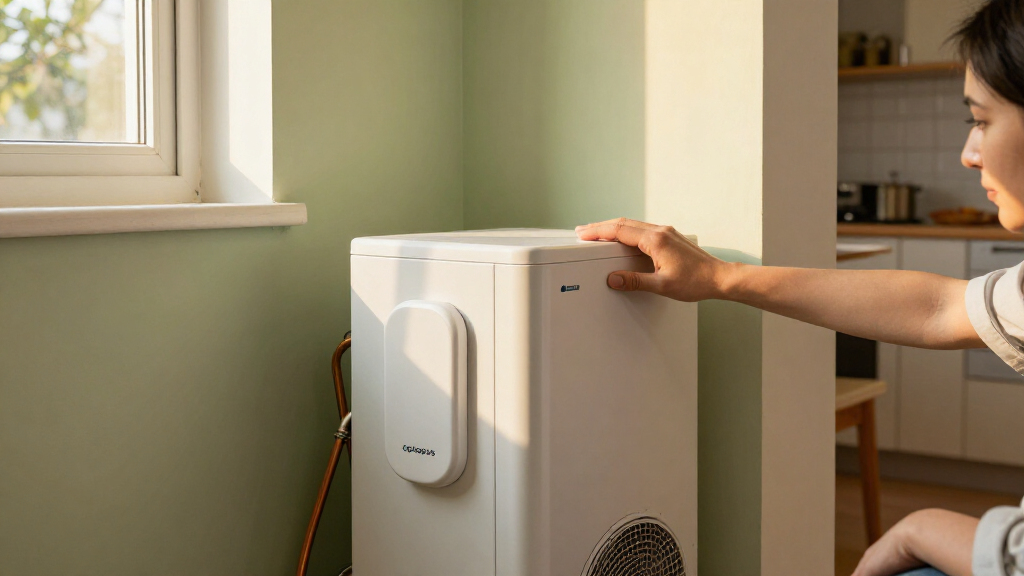
The system is intended to cool one room or, depending on the Cosy heat-pump model, operate two or three units in different rooms. Dimensions reported for the current prototype are about 722mm high, 430mm wide and 358mm deep, with a weight of roughly 28kg. These specifications describe the prototype and could change before launch.
Cooling Without a Separate AC System
If the product reaches the market near the proposed price, it could offer some Cosy heat-pump owners a lower-cost route to cooling than buying a separate air conditioner. Its use of existing pipework may also limit the amount of additional equipment and building work needed. That could matter to households seeking occasional summer cooling but reluctant to install a second, independent system.
The proposal is also an expansion of what an existing heating system can do: the Cosy heat pump would be used to reject heat removed from indoor rooms, while the cooler units circulate that heat through the home’s pipework. However, the announced price and installation estimate alone do not establish how the system will perform, what it will cost to run, or whether it will suit every property. Those details will shape its practical value for customers.
As an affiliate, we earn on qualifying purchases.
How the Cosy Cooler Is Designed
The Cosy Cooler is being developed as an accessory for Octopus Energy’s Cosy heat pumps, not as a general-purpose cooler stated to work with all heat-pump brands. The reported design links each indoor cooling unit to the existing heating pipework and uses the outdoor heat pump to discharge the heat. The system’s proposed operation therefore depends on the home having a compatible Cosy installation and on the particular heat-pump model supporting the intended number of units.
The product remains a prototype. Cooling Post reported that Octopus is targeting a 2027 launch and described the current prototype’s expected size, weight and operation. The report does not provide independent performance testing or a final product specification. Its estimates should be treated as development-stage information rather than a complete offer currently available to consumers.
“The add-on is expected to retail for around £500–£600.”
— Octopus Energy, as reported by Cooling Post
As an affiliate, we earn on qualifying purchases.
Price, Compatibility and Performance
Final specifications and pricing have not been announced. It is not yet clear when in 2027 the Cosy Cooler will go on sale, whether the projected £500–£600 price will include installation, or how much fitting will cost in different homes. Octopus has described installation as taking about three hours, but the report does not set out conditions or exceptions for that estimate.
The available information also does not give measured cooling capacity, energy use, noise levels, operating costs or performance in different room sizes and weather conditions. Compatibility is another open point: the report says the number of units depends on the Cosy heat-pump model but does not identify supported models or explain whether existing installations need modifications. The prototype’s dimensions may change before production.
As an affiliate, we earn on qualifying purchases.
Details Expected Before 2027
Octopus has set 2027 as its planned launch year. Before a purchase decision is possible, prospective customers will need the company’s final product specifications, confirmed pricing, installation terms and a clear list of compatible Cosy heat-pump models. Information on cooling output, energy consumption, noise and the number of rooms supported by each model would also help buyers compare the add-on with standalone air conditioning.
For now, the development is an announcement about a prototype rather than a product available to order. Whether the planned price, installation time and multi-room operation carry through to the retail version remains to be confirmed.
indoor cooling heat pump accessory
As an affiliate, we earn on qualifying purchases.
As an affiliate, we earn on qualifying purchases.
Key Questions
What is the Cosy Cooler?
It is a cooling add-on in development for Octopus Energy’s Cosy heat pumps. The design uses a heat exchanger and existing heating pipework to move heat from indoor air outdoors.
When is the Cosy Cooler expected to launch?
Octopus is targeting a 2027 launch. The report does not give a specific date or confirm that the product is available to order.
How much is it expected to cost?
The reported projected retail price is around £500–£600. This is an estimate for a product still in development, and it is not clear whether installation would be included.
Can it cool more than one room?
The design is intended to cool a single room or run two to three units in different rooms, depending on the Cosy heat-pump model. Octopus has not published a complete compatibility list.
Will it work with other heat-pump brands?
The available report describes the Cosy Cooler as an add-on for Octopus Energy’s Cosy heat pumps. It does not confirm compatibility with other manufacturers’ systems.
Source: rss
Fall Picks
fall essentials
As an affiliate, we earn on qualifying purchases.