TL;DR

Get backup power and energy gear delivered free with Prime
- Fast, free delivery on millions of items
- Prime Video, Amazon Music and more included
- Member-only deals all year
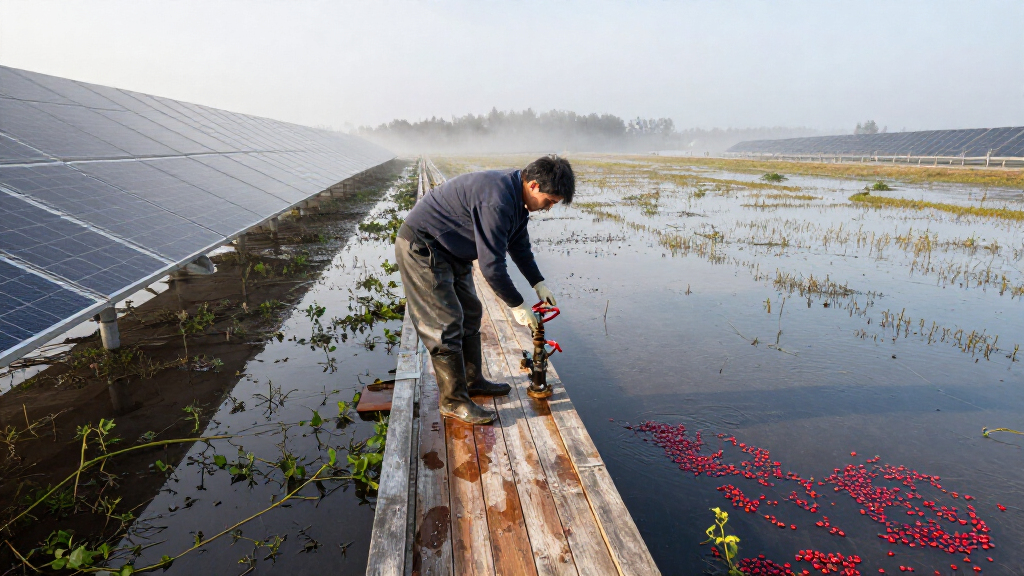
Two cranberry farms in Kingston and Plymouth, Massachusetts, have completed a second harvest beneath operating solar panels. The projects pair cranberry production with community solar, offering one approach to siting renewable energy on agricultural land while keeping it in use.
Two cranberry farms in Kingston and Plymouth, Massachusetts, have harvested berries for a second season beneath operating solar panels, an unusual pairing of agriculture and renewable energy. The projects combine active bogs with community solar, offering a local example of how solar development can share land with farming rather than displace it.
The Kingston installation has a 4.4-megawatt solar array and a 13.5-megawatt-hour battery; the Plymouth site has a 1-megawatt array. Distributed Energy Infrastructure built both projects, while Greenbacker Renewables bought the land from farmers who were ready to leave the cranberry business. Solar consultant and longtime grower Iain Ward manages the cranberry operations.
The arrays are designed to let farm work continue below them. Panels sit about 10 feet above the ground and can tilt to track the sun. The support pilings are spaced farther apart than on standard arrays so harvesting equipment can pass through. Because the wet ground could not accommodate buried wiring, the electrical lines were hung overhead.
Both sites use a community solar model, selling their electricity to customers seeking renewable power and lower prices, according to the report. The projects are described as the first operating installations in the country—and possibly the world—to grow cranberries beneath solar panels, though that broader distinction is not independently established in the source material.
The projects address a persistent challenge in Massachusetts: finding places to build solar in a densely populated, heavily wooded state where rooftop and parking-lot installations can cost more, while proposals on undeveloped land often face local and environmental opposition. Using farmland for energy can also raise concerns about removing acres from production. These bogs instead put electricity generation above an ongoing crop.
Cranberry farms have particular land constraints. The report notes that bogs are protected wetlands and cannot be developed for housing or commercial uses even if cranberry production stops. For bogs with suitable grid connections, solar may provide another source of income and help keep agricultural activity viable. Ward described the model as “a farm viability opportunity.” The projects show a possible use for some bogs, but do not establish that every cranberry farm can support solar or benefit financially.
Products Worth Considering

eufy Security Essential 7-Piece Alarm System

Bose SoundLink Flex Bluetooth Speaker (2nd Gen) – Portable Outdoor Speaker with Hi‑Fi Audio, Waterproof and Dustproof, USB‑C, Up to 12 Hours

Bose TV Speaker Compact Soundbar with Bluetooth and HDMI-ARC, Black
As an affiliate, we earn on qualifying purchases.
Massachusetts’ Dual-Use Solar Incentives
Massachusetts has encouraged agrivoltaics—solar installations combined with active agriculture—as part of its broader clean-energy policy. The state became the first to offer a financial incentive for dual-use solar in 2018, according to the report. Its solar incentive program pays a set rate for each kilowatt-hour generated; the report gives a current base rate of 23.17 cents per kilowatt-hour for arrays with capacity from 1 to 5 megawatts, plus an additional 9 cents for qualifying agrivoltaic projects.
The Kingston and Plymouth farms were cranberry operations for decades before Greenbacker bought the land. The specialized design required deeper pilings than typical solar arrays because stable ground lay farther below the bog surface. The sites also reflect a wider effort by developers to adapt solar equipment to working farms. Distributed Energy Infrastructure has pursued other agricultural projects, including arrays at an apple orchard, a cattle pasture and a Christmas tree farm, the report says.
““We are literally proving it can be done.””
— Prateek Tare, co-founder and executive vice president of Distributed Energy Infrastructure
Costs, Yields and Wider Applicability
The report does not provide figures comparing cranberry yields beneath the panels with yields from conventional bogs, nor does it detail project costs, farm revenues or the financial returns to the landowners and operators. It is also unclear how the panels affect growing conditions over time. The claim that these are the first such farms nationally—and possibly globally—is presented in the report but is not accompanied by a wider survey.
Not every bog is positioned to connect to the electricity grid, a limitation the report identifies. The account does not specify how many farms meet the technical and financial requirements for similar projects, or whether the added state incentive is sufficient for other sites. Results from two farms cannot establish that the model will work everywhere.
More Bog Projects Under Consideration
Preliminary work is underway on another cranberry bog project, according to the report. A separate development in nearby Carver could also resume: solar arrays were built there several years ago and cranberries are growing beneath them, but the company behind the project went bankrupt before the installations began operating. Ward said the new bog owner has “every intention to finish them.”
No completion date or operating plan for the Carver project is given. For the Kingston and Plymouth sites, continued harvests will provide further experience with how the elevated, movable panels and wider equipment lanes perform across growing seasons. The report does not state a timetable for additional projects or provide new figures on crop yields and electricity production.
Key Questions
Where are the operating cranberry-solar farms?
They are in Kingston and Plymouth, in southeastern Massachusetts.
Are cranberries still being grown beneath the panels?
Yes. The farms have harvested cranberries beneath operating solar installations for a second season, according to the report.
How are the arrays designed for farming?
The panels are mounted about 10 feet off the ground, and the pilings are spaced to allow harvesting equipment through. Wiring is hung overhead rather than buried in bog soil.
Do the projects supply power to nearby customers?
Both use a community solar model, selling electricity to customers, according to the report. It does not specify the number of customers or the amount of power delivered.
Will other cranberry bogs add solar?
Another bog project is in preliminary work, and a stalled project in Carver may be completed by its new owner. The report gives no completion dates, and grid access may limit which bogs can support solar.
Source: canarymedia.com