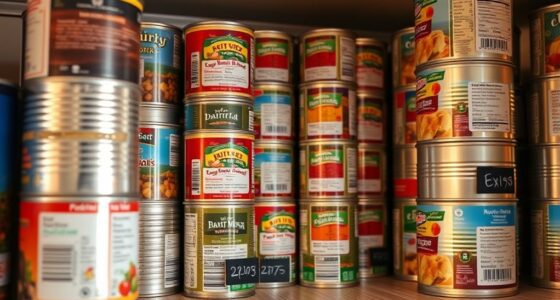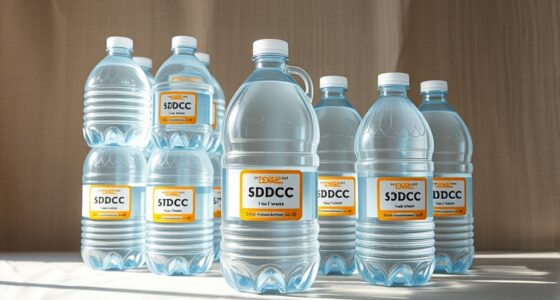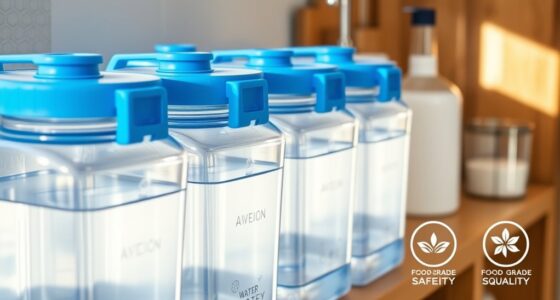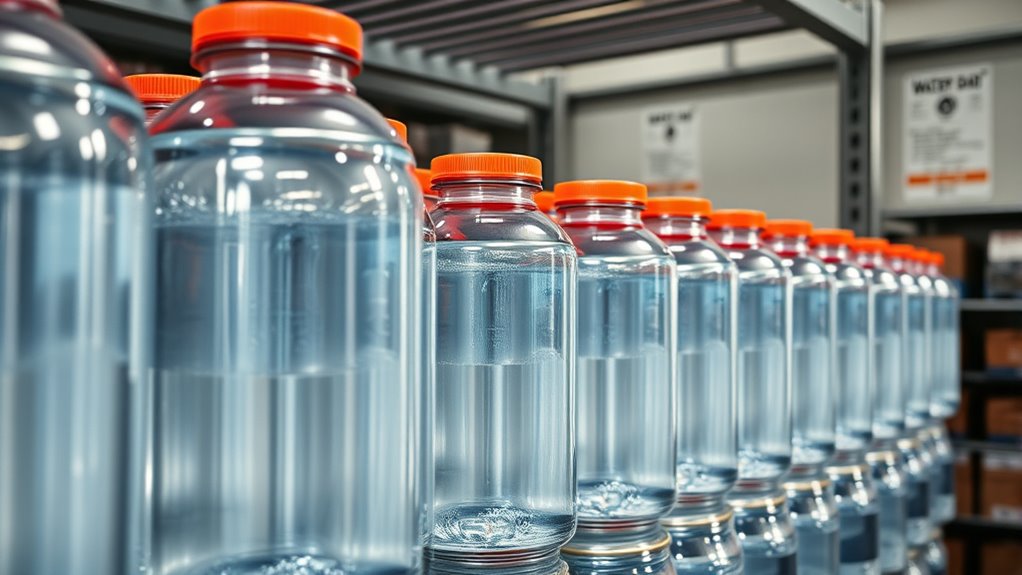

Canned water is an excellent choice for long-term emergency storage because it offers a durable, sealed container that keeps water safe and maintains quality over time. Its airtight, opaque cans protect against contamination, light, and environmental factors, making them reliable and easy to store in various conditions. Plus, they’re sturdy and space-efficient for your emergency kit. To learn how to best prepare and store canned water, continue exploring essential tips and strategies.
Key Takeaways
- Canned water’s long shelf life and airtight packaging ensure water remains safe and uncontaminated over extended storage periods.
- Verify water quality before storage; use purification methods if necessary to eliminate bacteria or contaminants.
- Cans are durable, resistant to environmental factors, and easy to stack, making them suitable for various storage conditions.
- Opaque cans block light, preventing algae growth and preserving water quality during long-term storage.
- Canned water provides a reliable, space-efficient option for emergency preparedness, easily transportable and protected from damage.
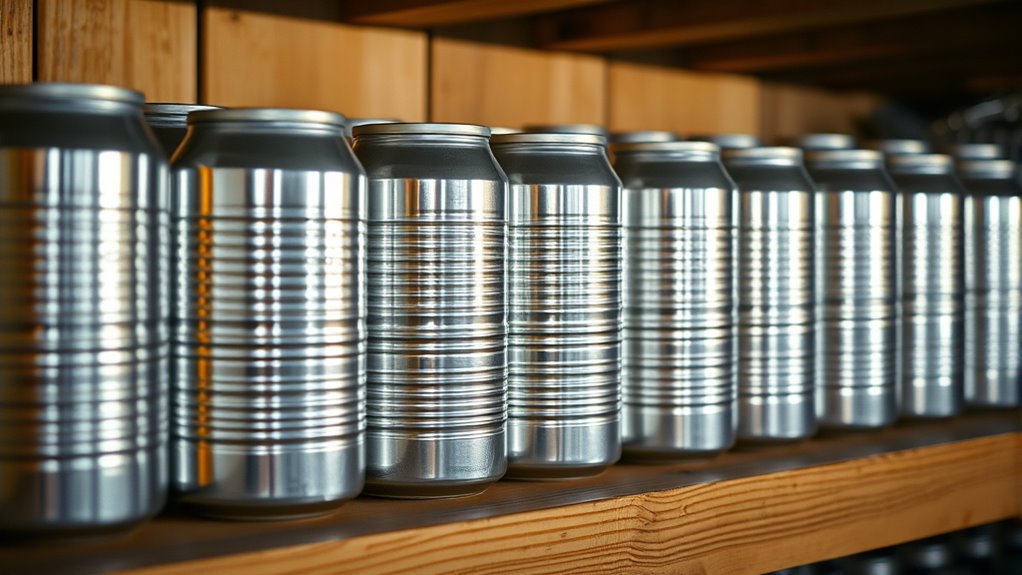
When preparing for emergencies, many people overlook canned water as a reliable storage option. They often focus on bottled water or large tanks, but canned water offers unique advantages that shouldn’t be ignored. One of the key benefits is its long shelf life, which makes it an ideal choice for long-term storage. Unlike many other water storage containers, canned water is sealed in airtight, durable cans that prevent contamination and spoilage. This sealed environment helps preserve the water quality over time, ensuring it remains safe to drink when you need it most. Additionally, incorporating automation’s role in managing storage can help track expiration dates and monitor conditions to maintain water safety.
To maximize the effectiveness of canned water, you need to contemplate proper water purification methods before storage. While canned water is generally clean, it’s wise to verify its quality, especially if you’re repurposing canned goods. If there’s any doubt, you can use water purification techniques such as boiling, using water purification tablets, or employing filtration systems. This extra step guarantees that the stored water remains safe from bacteria, viruses, or other contaminants, providing peace of mind during emergencies.
When choosing storage containers for your emergency supplies, canned water stands out because it doesn’t require complex packaging or special handling. The cans are sturdy and designed to withstand rough conditions, which makes them suitable for stacking and storing in various environments. Unlike traditional plastic bottles, canned water doesn’t degrade or leach chemicals over time, ensuring the water inside stays pure. Additionally, canned water’s compact shape allows you to efficiently utilize storage space, whether in a basement, closet, or emergency kit.
Another advantage of canned water is its resistance to light and environmental factors that can compromise other types of containers. Since cans are opaque, they shield the water from sunlight, which can promote algae growth or degrade water quality. This makes canned water an excellent choice for long-term storage, especially if your storage area is exposed to varying temperatures or light. Plus, canned water is easy to transport—if you need to evacuate or relocate your supplies, cans are more durable than plastic bottles, reducing the risk of leaks or breakage.

Honeywell 22kW Home Standby Generator
PrecisionPower Technology delivers best-in-class power quality with less than 5 percent total harmonic distortion for clean, smooth operation...
As an affiliate, we earn on qualifying purchases.
Frequently Asked Questions
Can Canned Water Be Reused After Opening?
You can’t really reuse canned water after opening because it’s sealed for long-term storage and not designed for water recycling. Once opened, the water may become contaminated or develop bacteria, making reuse unsafe. If you want to reuse water, consider refilling clean containers instead. Canned water isn’t intended for repeated use, so it’s best to use it only once and then dispose of it properly to guarantee safety.
How Long Does Canned Water Last Unopened?
Unopened canned water typically lasts 5 to 10 years, depending on the can’s quality and storage conditions. To maximize shelf life, store cans in a cool, dark, and dry place away from sunlight, chemicals, and extreme temperatures. Regularly check for dents, rust, or leaks. Following these storage tips guarantees your canned water remains safe and fresh for emergency use when needed.
Is Canned Water Safe for Cooking and Drinking?
Canned water is safe for cooking and drinking, provided it maintains good water purity and taste consistency. The sealed cans prevent contamination, so you can trust the safety. Just check for any signs of damage or bad odor before use. Keep in mind, canned water can sometimes develop a metallic taste over time, but it remains safe and suitable for most culinary needs and drinking in emergency situations.
What Are the Best Storage Conditions for Canned Water?
You should store canned water in a cool, dark place with a consistent temperature between 50-70°F. Keep the container material, typically metal or sealed cans, free from rust and damage. Avoid direct sunlight, extreme heat, or freezing temperatures, as these can jeopardize the can’s integrity. Proper storage ensures the water remains safe, fresh, and ready for emergency use whenever you need it.
Does Canned Water Taste Different From Bottled Water?
Canned water usually tastes different from bottled water because of packaging differences. You might notice a slightly metallic or tin-like taste due to the can’s material, especially if the water sits for a long time. Bottled water, stored in plastic, often has a cleaner, crisper flavor. Your taste comparison depends on storage duration and how well the can is sealed, but overall, canned water can have a distinct flavor than bottled water.
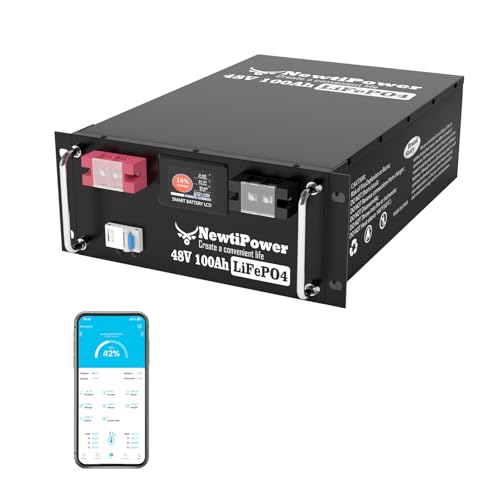
48V 100Ah Server Rack Lithium LiFePO4 Battery with Monitor and 200A BMS Grade A Cells,10000+ Cycles,Perfect for RV,Home Storage,Solar Power System
【Reliable Quality & Grade A Cells】: We have a professional lithium battery research and production factory, using A-grade...
As an affiliate, we earn on qualifying purchases.
Conclusion
While some might worry about the taste or preservatives in canned water, it’s a practical choice for emergency storage. Canned water offers a durable, long-term solution that’s easy to store and handle, ensuring you’ll have safe drinking water when you need it most. With proper rotation and storage, canned water remains a reliable resource. Don’t overlook it—sometimes, the simplest options are the smartest for your emergency preparedness plan.

Joinfworld Power Distribution Box,50A 125V/250V NEMA SS2-50 CS6375 Inlet, 30A Circuit Breaker, Individually Controllable Sockets, Heavy - Duty Waterproof Enclosure with Cooling Fan
UL-Certified - The power distribution box is UL-certified, featuring 1 50A socket, 5 NEMA 5-20 GFCI sockets, NEMA...
As an affiliate, we earn on qualifying purchases.

Power Assemblies Power Distribution Box with 50A 125/250V CS6375 Inlet, 50A 125/250V CS6369 Outlet, & 6 20A 125V Duplex GFCI Receptacles
High-Performance Power Distribution Box: Includes (1) 50A CS6375 twist-lock inlet, (1) 50A CS6375 outlet, and (6) 20A GFCI-protected...
As an affiliate, we earn on qualifying purchases.