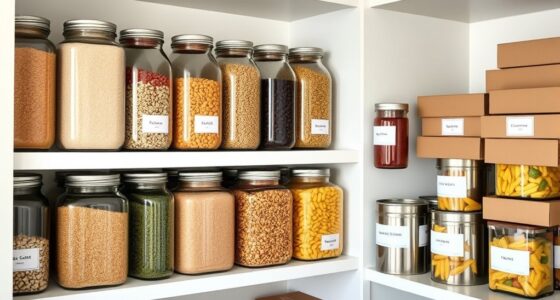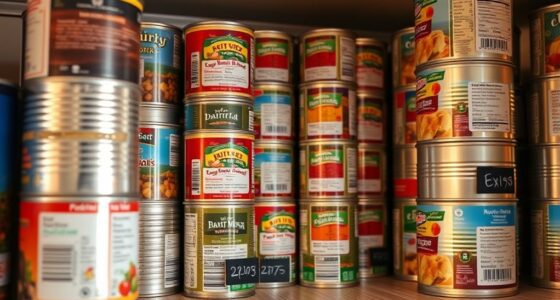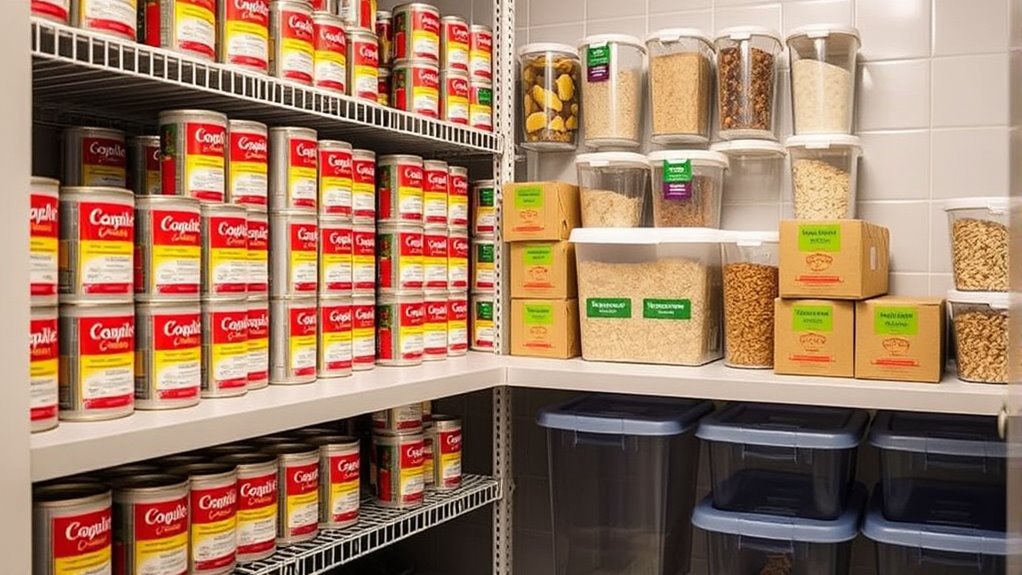
To store non-perishable foods for long-term power outages, keep supplies in airtight, sealed containers like vacuum-sealed bags or properly stored cans. Place them in a cool, dark, dry space away from direct sunlight and moisture to prevent spoilage. Rotate your stock regularly to ensure freshness, and prioritize sturdy, moisture-resistant packaging for longevity. Properly stored foods stay safe and nutritious longer, and if you continue exploring, you’ll learn even more tips for effective long-term storage.
Key Takeaways
- Store non-perishable foods in airtight, moisture-proof containers in cool, dark, dry locations to extend shelf life.
- Use proper canning and preservation techniques to ensure safety and nutrient retention during long-term storage.
- Organize supplies regularly, rotating older items to prevent spoilage and maintain freshness.
- Incorporate dehydration and vacuum-sealing methods to reduce storage space and prolong food quality.
- Keep storage areas consistent in temperature and humidity to prevent food degradation over extended periods.
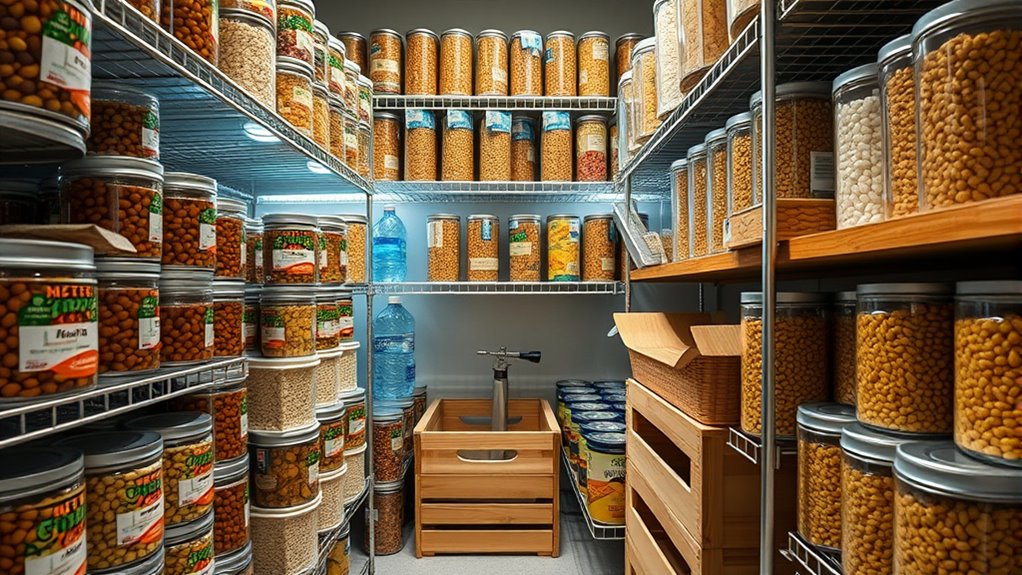
Storing non-perishable food properly is essential to maintaining its freshness and ensuring it remains safe to eat over time. When preparing for long-term power outages, your goal is to maximize shelf life while preserving the food’s nutritional value. One effective way to do this is by mastering canning techniques, which allow you to process and seal foods securely, preventing spoilage and contamination. Proper canning maintains the integrity of fruits, vegetables, and meats, ensuring they stay safe for months or even years. When done correctly, canning also helps preserve the original nutrition of the food, so you’re not sacrificing health benefits for convenience.
Proper canning preserves food safety, nutrition, and extends shelf life during emergencies.
To start, choose high-quality ingredients and follow tested canning recipes to avoid foodborne illnesses. Using the right canning techniques—such as proper sterilization of jars and lids, correct processing times, and appropriate pressure or water bath methods—ensures a reliable seal and prevents microbial growth. This not only extends the shelf life but also protects the food’s nutritional content. For example, quickly processing fruits and vegetables at the right temperature helps retain vitamins and minerals, making sure your stored foods remain as nutritious as fresh produce.
In addition to canning, storing foods in airtight containers helps prevent exposure to moisture, light, and air—all of which can degrade both the food and its nutritional profile. Keep your supplies in cool, dark, and dry locations to further prolong shelf life. Consider organizing your pantry so that older items are used first, reducing waste and ensuring you consume your stored foods before their quality declines.
While canned goods are an excellent option, don’t overlook other preservation methods like dehydration or vacuum-sealing. These techniques also help maintain nutrition and extend shelf life, especially when combined with proper storage conditions. For instance, dehydrated fruits retain most of their nutrients and are lightweight, making them ideal for emergency preparedness. Vacuum-sealing reduces oxygen exposure, which slows down oxidation and spoilage, keeping your food fresher longer.
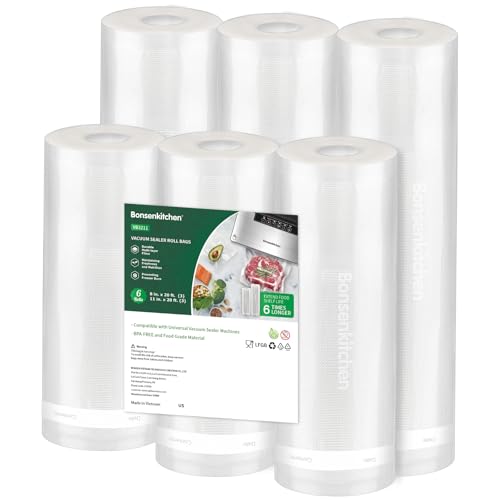
Bonsenkitchen Vacuum Sealer Rolls Bags, 6 Pack 3 Rolls 11" x 20' + 3 Rolls 8" x 20' Commercial Grade BPA Free Bag Rolls, Durable Customized Size Food Vac Bags for Storage and Sous Vide Cooking VB3211
BPA FREE: Bonsenkitchen vacuum food sealer roll bags can be microwaved, frozen, re-used, washed, boiled and dishwasher safe….
As an affiliate, we earn on qualifying purchases.
As an affiliate, we earn on qualifying purchases.
Frequently Asked Questions
How Often Should I Rotate My Stored Non-Perishable Food?
You should rotate your stored non-perishable food every 6 to 12 months, following a regular rotation schedule. Check expiration dates during each rotation and use older items first to prevent waste. Replacing expired or near-expiry items keeps your supply fresh and reliable. Keep track with a calendar or inventory list, so you stay on top of your rotation schedule and always have safe, edibile food available during emergencies.
What Are the Best Containers for Storing Bulk Food?
A stitch in time saves nine, so choose the best containers for storing bulk food wisely. Opt for airtight containers to keep pests out and maintain freshness, and select BPA-free storage options to guarantee health safety. Clear, durable plastic or glass containers with tight-fitting lids are ideal because they’re reusable and easy to monitor. Investing in quality containers now helps protect your supplies for the long haul and keeps your food safe.
How Can I Prevent Pests From Contaminating Stored Food?
To prevent pests from contaminating your stored food, use pest-proof containers that seal tightly and keep bugs out. Regularly inspect your storage area and clean it thoroughly. You can also incorporate natural repellents like bay leaves, cloves, or dried chili peppers around your storage to deter pests. Keep the storage area dry and cool, and avoid leaving food exposed, ensuring your supplies stay safe and pest-free for the long term.
Is It Safe to Store Canned Food in a Garage?
Storing canned food in a garage isn’t ideal because garages often lack proper temperature control, which can cause the cans to spoil or corrode. Extreme heat or cold can compromise the safety and quality of your food. If you must store cans there, guarantee the garage stays cool, dry, and stable in temperature. Consider using a climate-controlled space or insulated storage to keep your canned food safe and long-lasting.
What Are the Signs of Spoiled Non-Perishable Food?
You’ll know non-perishable food has spoiled if you notice bulging cans, foul odors, or mold. Check expiration labels regularly, as they indicate freshness. Poor storage conditions, like excessive heat or moisture, can cause food to spoil faster, so keep cans in a cool, dry place. Discard any food that shows signs of leaks, discoloration, or an off smell to stay safe.

400cc Oxygen Absorbers for Food Storage – 100 Count (20x Packs of 5) – for Long Term Food Storage & Survival, Mylar Bags, Canning, Harvest Right Freeze Dryer, Dehydrated, and Preserved Foods
NOTE – Bags may NOT shrink like a vacuum bag when the oxygen has been removed. Absorbers do…
As an affiliate, we earn on qualifying purchases.
As an affiliate, we earn on qualifying purchases.
Conclusion
Storing non-perishable food is your safety net when power goes out for the long haul. Think of it as planting a seed today that will grow into a reliable source of nourishment tomorrow. By preparing now, you guarantee your family’s well-being and turn uncertainty into confidence. Don’t wait for the storm to hit—lay your groundwork and keep your pantry stocked, so you’re ready to weather any blackout like a seasoned captain steering through dark waters.
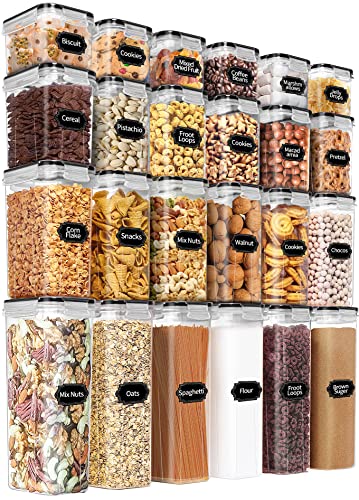
PRAKI Airtight Food Storage Containers Set with Lids – 24 PCS, BPA Free Kitchen and Pantry Organization, Plastic Leak-proof Canisters for Cereal Flour & Sugar – Labels & Marker
Bundle Set: This kitchen & pantry organizers and storage set comes with 24 containers, they are inlaid together,…
As an affiliate, we earn on qualifying purchases.
As an affiliate, we earn on qualifying purchases.

Augason Farms Sweetened Banana Chips Emergency Food Supply, 31 Servings, 10 Year Shelf Life, Great for Cooking, Baking, and Snacks – Dehydrated Meals, Survival Food Camping Essentials Can
22 servings
As an affiliate, we earn on qualifying purchases.
As an affiliate, we earn on qualifying purchases.