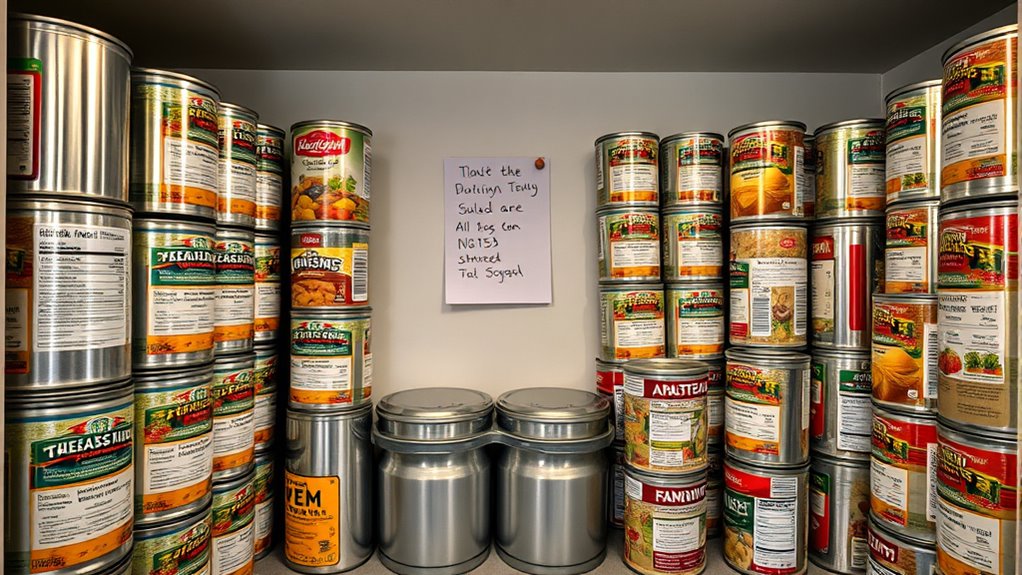

To store canned foods for long-term emergencies, keep them in a cool, dark, and dry place at 50-70°F, away from heat, humidity, and direct sunlight. Use sturdy, food-grade containers and leave space between cans to prevent damage. Regularly inspect for dents, rust, or leaks, discarding compromised cans. Proper shelving, labeling, and rotation help maintain freshness. If you’re ready for more tips, there’s much more to guarantee your canned food stays safe and effective over time.
Key Takeaways
- Store cans in a cool (50-70°F), dark, dry, and well-ventilated location to prevent spoilage.
- Use sturdy, food-grade containers and label them with contents and purchase or expiration dates.
- Regularly inspect cans for dents, leaks, rust, or bulging lids; discard compromised ones immediately.
- Keep cans organized with proper spacing when stacking to avoid damage and facilitate rotation.
- Avoid storing in garages or sheds with temperature fluctuations to preserve can integrity and prolong shelf life.
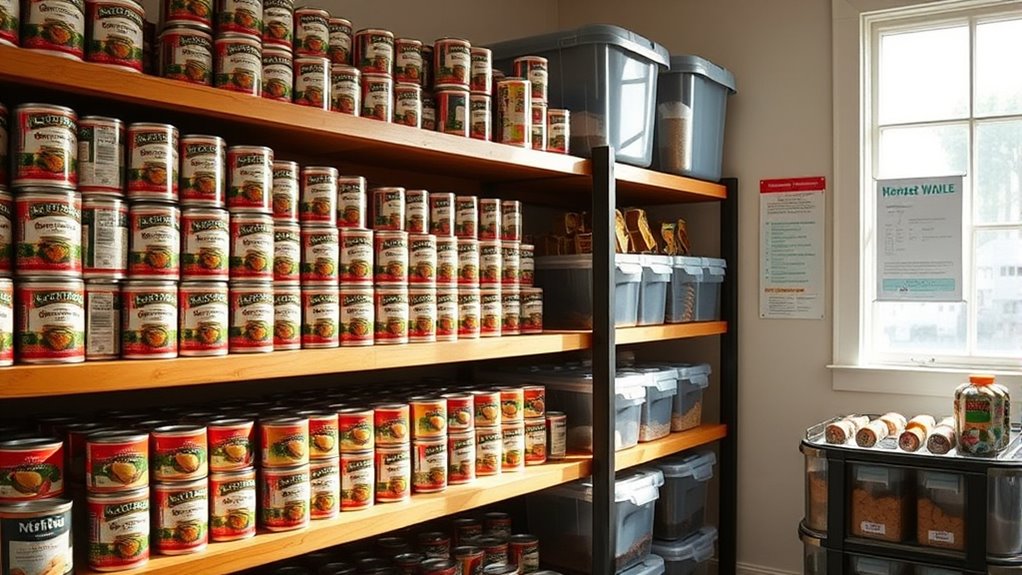
Proper storage of canned foods is essential to keep them safe and maintain their quality. When you’re preparing for long-term emergencies, understanding how to preserve your canned foods ensures they stay edible and nutritious when you need them most. Food preservation begins with choosing the right storage containers and keeping the cans in ideal conditions. While cans are designed to last, improper storage can lead to spoilage or compromised safety. To maximize shelf life, focus on storing your canned foods in cool, dark, and dry places, away from direct sunlight, heat sources, or humidity, which can degrade the contents and weaken the cans over time.
Properly store canned foods in cool, dark, dry places to ensure safety and quality over time.
You should use sturdy storage containers to organize your canned foods efficiently. While cans are built for preservation, storing them in secondary containers can provide extra protection against dents, leaks, or rust. Plastic bins with tight-fitting lids work well, especially if they are made from food-grade materials that won’t contaminate your supplies. When stacking cans, ensure there’s enough space between them to prevent crushing or damage. It’s also wise to label your containers clearly, noting the contents and purchase or expiration dates, so you can rotate your stock easily.
Maintaining consistent temperature conditions is vital for food preservation. Ideal storage temperatures are between 50 and 70 degrees Fahrenheit. Avoid storing canned foods in garages or sheds where temperature fluctuations are common, as extreme heat can cause cans to expand and contract, increasing the risk of leaks or spoilage. Similarly, avoid damp areas that could promote rust or mold growth. Proper ventilation is also essential; good airflow helps prevent moisture buildup that could damage your stored cans. Additionally, understanding the importance of contrast ratio in packaging materials can help select containers that better protect against environmental factors.
Inspect your canned foods regularly, checking for any signs of damage, such as bulging lids, leaks, or rust spots. If you notice any compromised cans, dispose of them immediately to prevent contamination of your other supplies. Remember, even if the can looks intact, the integrity of the seal is key to food safety. When handling canned foods for storage, use clean hands or utensils to avoid introducing bacteria or other contaminants. This simple step supports food preservation and helps your supplies stay safe over extended periods.

Honeywell 22kW Home Standby Generator
PrecisionPower Technology delivers best-in-class power quality with less than 5 percent total harmonic distortion for clean, smooth operation...
As an affiliate, we earn on qualifying purchases.
Frequently Asked Questions
How Often Should I Rotate Canned Food Supplies?
You should rotate canned food supplies every 6 to 12 months, following your rotation schedules. Check expiration dates regularly, and plan to use older cans first to prevent spoilage. By doing so, you guarantee your emergency stock remains fresh and safe to eat. Keep track of dates on a calendar or label cans, making rotation easier and maintaining a reliable supply for emergencies.
What Temperature Is Ideal for Storing Canned Foods?
You should store canned foods at a temperature between 50-70°F for maximum longevity. Maintaining proper temperature control prevents spoilage and extends shelf life. Keep humidity levels low to avoid rust and corrosion, which can compromise the cans. Avoid areas with temperature fluctuations or direct sunlight. A cool, dark, and stable environment helps guarantee your canned foods stay safe and fresh for emergencies.
Can Canned Foods Be Stored Outdoors Safely?
Storing canned foods outdoors isn’t recommended because outdoor humidity can cause rust and compromise can integrity, risking spoilage. While some believe cans can withstand outdoor conditions, canning safety standards emphasize a cool, dark, stable environment. If you must store cans outside, make certain they’re in a shaded, dry spot, and regularly check for rust or damage. Proper storage indoors remains the safest way to preserve canned foods long-term.
How Do I Identify Spoiled Canned Foods?
You can identify spoiled canned foods by checking for food spoilage signs like a bulging or leaking can, foul odor, or strange color. Look out for mold growth around the lid or seam, which indicates contamination. If the can’s surface is rusted or the contents look unusual, discard it immediately. Trust your senses—if anything seems off, it’s safest to throw the food away to avoid health risks.
Are There Specific Containers Better Than Cans for Storage?
Storing your food is like choosing a reliable partner—you want the best. Reusable containers, especially BPA-free options, are better than cans for long-term storage because they prevent chemical leaching. They’re also more eco-friendly and easier to reseal, keeping your food fresh longer. Look for airtight lids and durable materials to guarantee your emergency supplies stay safe and tasty. This way, you’re prepared with smarter, safer storage solutions.

Champion Power Equipment 201222 22 kW aXis Home Standby Generator with 200A Whole House Switch
Up to 20% more fuel efficient than leading competitors, this 22-kilowatt generator provides 22,000 watts of continuous power...
As an affiliate, we earn on qualifying purchases.
Conclusion
Remember, a wise person once said, “Prepare for the worst, hope for the best.” Storing canned foods properly guarantees you’re ready for emergencies and can provide peace of mind when times get tough. Keep your supplies in a cool, dark place, check on them regularly, and rotate stock to keep everything fresh. By staying proactive, you’ll be better equipped to handle unexpected situations—because in preparedness, a little effort goes a long way.

Joinfworld Power Distribution Box,50A 125V/250V NEMA SS2-50 CS6375 Inlet, 30A Circuit Breaker, Individually Controllable Sockets, Heavy - Duty Waterproof Enclosure with Cooling Fan
UL-Certified - The power distribution box is UL-certified, featuring 1 50A socket, 5 NEMA 5-20 GFCI sockets, NEMA...
As an affiliate, we earn on qualifying purchases.

Power Assemblies Power Distribution Box with 50A 125/250V CS6375 Inlet, 50A 125/250V CS6369 Outlet, & 6 20A 125V Duplex GFCI Receptacles
High-Performance Power Distribution Box: Includes (1) 50A CS6375 twist-lock inlet, (1) 50A CS6375 outlet, and (6) 20A GFCI-protected...
As an affiliate, we earn on qualifying purchases.