
To build a DIY battery backup with solar panels, you’ll need to select suitable energy storage components like lithium-ion or deep-cycle lead-acid batteries and make certain they have enough capacity for your household needs. Use a charge controller to regulate power flow and prevent overcharging, and an inverter to convert stored DC power into usable AC. Properly sizing your system and monitoring its performance will keep everything running smoothly. Keep exploring to discover how to connect all these components effectively.
Key Takeaways
- Select appropriate energy storage batteries (lithium-ion or lead-acid) based on capacity, cost, and lifespan for your backup system.
- Install a charge controller to safely regulate solar power flow and prevent battery overcharging.
- Properly size the battery bank by assessing household energy needs and potential outage durations.
- Integrate an inverter to convert stored DC energy into reliable AC power for household appliances.
- Use monitoring tools to track system performance, battery health, and optimize power usage for long-term reliability.

If you want to guarantee a dependable power source during outages, building a DIY battery backup with solar panels is an effective solution. This approach gives you control over your energy storage and allows you to harness renewable power efficiently. By designing your system carefully, you make certain that your home remains powered even when the grid goes down. The key to this lies in understanding how energy storage and power management work together to create a seamless backup system.
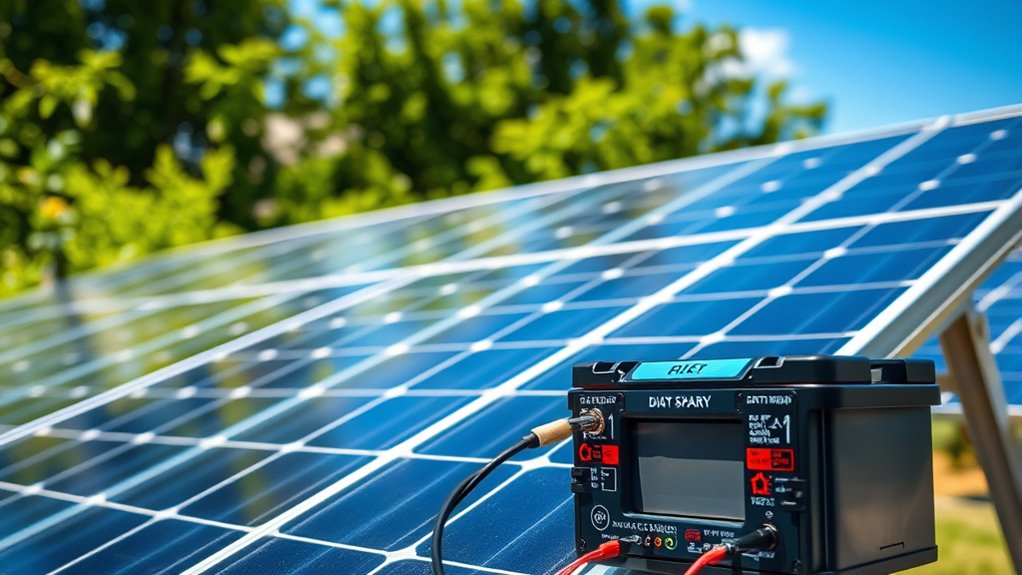
First, you’ll need to select the right batteries for your setup. Lithium-ion batteries are popular because they offer high energy density and longer lifespan, but deep-cycle lead-acid batteries can also work if you’re on a budget. The goal is to store enough energy to meet your household needs during an outage. You’ll connect these batteries to your solar panels through a charge controller, which regulates the power flow and prevents overcharging. Proper power management here is essential; it ensures that your batteries are charged safely and efficiently, avoiding damage and extending their life.
Next, you need to plan your energy storage capacity. Think about your typical power usage—how many devices you want to keep running during an outage and for how long. This will determine the size of your battery bank. Keep in mind that oversizing can be beneficial, providing extra buffer for cloudy days or increased energy demands. Once your batteries are set up, you’ll integrate an inverter that converts the stored DC power into AC power usable by your appliances. The inverter also plays a critical role in power management, ensuring a stable and clean power output suitable for sensitive electronics.
Effective energy management doesn’t stop with hardware. You should also incorporate monitoring systems that give you real-time data on battery health, energy consumption, and system performance. This way, you can make informed decisions about when to draw power from your batteries and when to conserve energy. Battery capacity is crucial for ensuring your system can meet your needs during extended outages, and smart power management ensures your system operates at peak efficiency, prolonging battery life and maximizing your backup power during outages.
Building your own DIY battery backup with solar panels requires some initial effort and planning, but the payoff is substantial. You gain a resilient power source that’s environmentally friendly, cost-effective over time, and tailored to your household needs. By focusing on proper energy storage solutions and robust power management strategies, you create a reliable backup system that keeps your essential devices running smoothly, no matter what happens to the grid.
Frequently Asked Questions
How Long Can a DIY Solar Battery Backup Power My Home?
Your DIY solar battery backup can power your home for several hours, depending on its Battery capacity and the Power duration needed. If you have a larger capacity, it’ll last longer during outages. Typically, a well-designed system might run essential appliances for 4-8 hours. To extend Power duration, consider increasing Battery capacity or adding more solar panels for continuous energy supply.
What Safety Precautions Are Necessary During Installation?
You need to prioritize safety during installation to prevent fire hazards and guarantee proper electrical wiring. Always wear protective gear and turn off power sources before working. Use insulated tools and double-check connections to avoid shorts. Keep your workspace dry and well-ventilated, and follow local electrical codes. Remember, rushing can lead to dangerous mistakes—so take your time, stay cautious, and consult a professional if unsure about any step.
Can I Expand My Battery Capacity Later?
Yes, you can expand your battery capacity later. Your system’s storage scalability depends on the type of batteries and inverter you choose initially. To facilitate battery expansion, make certain your setup supports additional batteries and that your inverter can handle increased capacity. Planning for future battery expansion allows you to increase storage as needed, giving your solar backup system greater flexibility and longer backup times when you need it most.
What Is the Estimated Cost of Building This System?
The cost estimation for building a DIY battery backup with solar panels typically ranges from $500 to $2,500, depending on system size and components. That’s a significant investment, but it’s worth considering for reliable power during outages. You should prioritize budget planning by researching prices for batteries, panels, and inverters. Keep in mind, expanding capacity later is feasible but may increase costs, so plan your system accordingly.
How Do I Maintain and Troubleshoot the Battery Backup?
To maintain your battery backup, regularly check the battery terminals for corrosion and keep them clean. Monitor the battery’s voltage and electrolyte levels if applicable. Troubleshooting techniques include testing the system with a multimeter, inspecting wiring for loose connections, and ensuring your charge controller functions properly. Consistent battery maintenance helps prevent failures, and promptly addressing issues like uneven charging or overheating keeps your backup system reliable during outages.
Conclusion
Now that you’ve built your DIY battery backup with solar panels, you’re ready to enjoy reliable power during outages. Remember, even Benjamin Franklin would agree that harnessing the sun’s energy is a smart move for independence. Keep your system maintained and monitor your batteries like a true pioneer. With your new setup, you’re not just surviving—you’re thriving, proving that in the age of smartphones, old-school ingenuity still rules the day.

Jackery Explorer 300 Portable Power Station,292Wh
- Lightweight Design: Only 7.5 lbs with 292Wh capacity
- Portable Handle: Integrated handle for easy carrying
- Multiple Device Charging: 2 AC outlets, USB-C, USB-A, car port
As an affiliate, we earn on qualifying purchases.