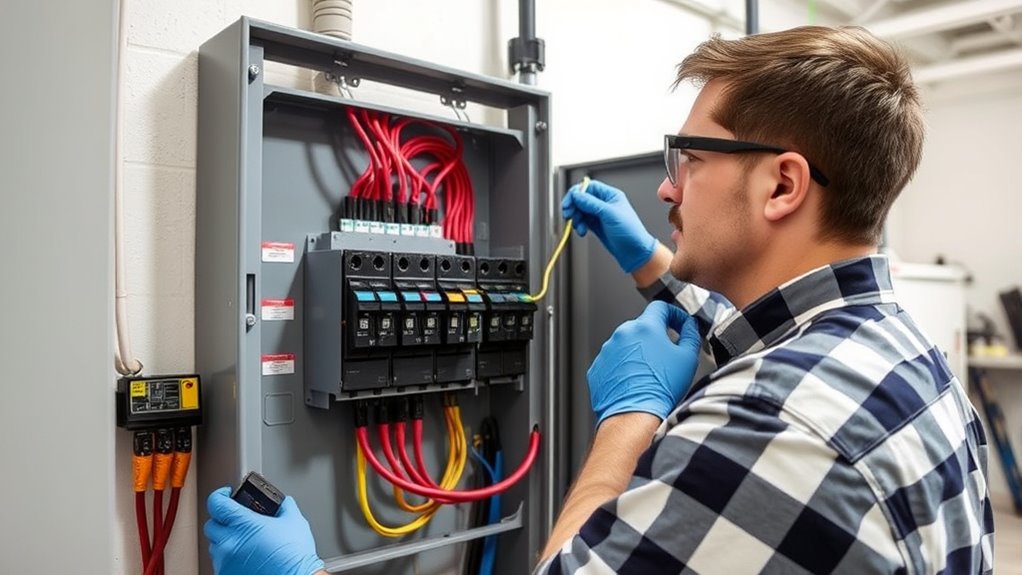

To install a transfer switch yourself, start by turning off your main power to guarantee safety. Verify no current flows with a voltage tester, then carefully follow the manufacturer’s instructions to connect the switch to your main panel and generator. Use UL-listed wiring and double-check all connections for tightness and insulation. Proper wiring prevents hazards and ensures your system works smoothly. Keep safety in mind, and if you’re curious about the detailed steps involved, there’s more to learn ahead.
Key Takeaways
- Turn off main power and verify no current before beginning installation to ensure safety.
- Select a transfer switch compatible with your generator’s wattage and existing electrical panel.
- Follow manufacturer instructions carefully, connecting the switch securely to the circuit breaker and main panel.
- Use UL-listed wiring and connectors, ensuring all connections are tight and properly insulated.
- Test the transfer switch after installation by switching between utility and generator power to confirm proper operation.

Installing a transfer switch yourself can be a practical way to guarantee your backup system operates smoothly during power outages. When you take on this project, it’s essential to prioritize circuit safety from the start. Properly understanding your home’s electrical system helps prevent dangerous mishaps or damage. Before beginning, turn off the main power supply and verify that no current flows through the circuits you’ll be working on. Use a voltage tester to double-check, ensuring everything is safe to handle. This step is critical, as working on live circuits can lead to severe injury or equipment damage.
Prioritize circuit safety by turning off power and verifying circuits before starting installation.
Next, you need to consider switch compatibility. Not all transfer switches fit every generator or household electrical setup. You should select a switch rated for your generator’s wattage and compatible with your existing electrical panel. Check the manufacturer’s specifications and ensure that the switch matches your system’s amperage and voltage requirements. Using an incompatible switch can cause malfunction, electrical faults, or even fire hazards. Once you’ve chosen the right transfer switch, carefully follow the manufacturer’s instructions for installation, paying close attention to how the switch connects to your circuit breaker and main panel.
Installing the switch involves connecting it to your household circuits without compromising circuit safety. Typically, this means wiring the transfer switch so that it can safely switch between utility power and backup power without backfeeding the grid. Proper wiring ensures that power flows only where it’s supposed to, avoiding accidental energization of the utility lines, which could endanger line workers or damage your equipment. Use high-quality, UL-listed wiring and connectors, and make sure all connections are tight and insulated. If you’re uncertain about any step, consulting a professional electrician might be the safest move.
Throughout the installation, double-check that all connections adhere to local electrical codes. This not only ensures safety but also helps prevent future inspection issues. Additionally, understanding your home’s electrical system and the importance of proper transfer switch installation enhances system reliability. Remember, a transfer switch is a critical safety device; it must be installed correctly to prevent dangerous situations such as electrical shocks or fires. Once everything is wired, restore power and test the system thoroughly. Test the transfer switch by switching between utility power and generator power—observe that it operates smoothly and isolates circuits properly. If you notice any irregularities or if the switch doesn’t function as intended, disconnect power and re-examine your wiring.

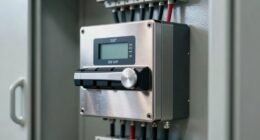
100A Generator Transfer Switch,24000W General-Duty Double-Throw Safety Switch,120/240-Volt Transfer Switches,Stronger Stability Manual Transfer Switches,NEMA 3R Standards for Outdoor and Indoor
This 100 amp generator transfer switch perfect to switch the power from the electric company to an auxiliary…
As an affiliate, we earn on qualifying purchases.
As an affiliate, we earn on qualifying purchases.
Frequently Asked Questions
Can I Install a Transfer Switch Without Electrical Experience?
You shouldn’t install a transfer switch without electrical experience because it involves complex wiring and safety risks. Always follow safety precautions, such as turning off power and using insulated tools. Review detailed wiring diagrams carefully before starting. If you’re unsure, it’s best to hire a licensed electrician. Proper installation guarantees safety and compliance with code, preventing potential hazards or damage during power outages.
What Permits Are Required for Transfer Switch Installation?
You need to check your local codes to determine if a permit is required for installing a transfer switch. The permit process varies depending on your location, but it generally involves submitting an application and possibly paying a fee. Contact your local building department or electrical inspector to confirm specific requirements. Ensuring you follow the permit process is essential for safe and code-compliant installation.
How Long Does a Typical Transfer Switch Installation Take?
You’re eager to know how long a transfer switch installation takes, but don’t rush—this process can vary. Typically, it spans from a few hours to a full day, depending on your experience and the complexity of your setup. Prepare your required tools beforehand, such as screwdrivers and wire strippers, to streamline the installation timeline. Patience and proper planning ensure a safe, efficient process without unexpected delays.
Are There Specific Brands Recommended for DIY Installation?
You should look for brand recommendations that prioritize quality considerations, like Generac, Eaton, or Reliance Controls. These brands are known for reliable, easy-to-install transfer switches suitable for DIY projects. When choosing, make certain the product meets your power capacity needs and has good reviews. Investing in reputable brands helps prevent issues down the line, making your backup system safer and more dependable during power outages.
What Maintenance Is Needed After Installing a Transfer Switch?
After installing your transfer switch, you need to perform regular maintenance to guarantee it functions flawlessly. Start with routine transfer switch inspections, checking for signs of wear, corrosion, or loose connections. Troubleshoot common issues like malfunctioning controls or faulty wiring promptly. Keep the unit clean and test it periodically by simulating power outages. This proactive approach prevents surprises during an emergency, guaranteeing your backup system stays reliable when you need it most.

Connecticut Electric Series 2 Backup Power Manual Transfer Switch Kit, 50 Amp, 10 Circuits, with 25' Cord & Outdoor Rated 50A Inlet (Transfer Switch Kit – 25 ft Cord)
HIGH-CAPACITY POWER SOLUTION: Designed for residential or small business applications with substantial power requirements, this robust transfer switch…
As an affiliate, we earn on qualifying purchases.
As an affiliate, we earn on qualifying purchases.
Conclusion
While installing transfer switches yourself can be a rewarding experience, it’s wise to approach with care and respect for the complex dance of electrical work. By taking your time and following safety guidelines, you’ll create a reliable backup system that quietly supports your home when needed most. Remember, sometimes the most beautiful harmony comes from understanding your limits and knowing when to invite a professional to ensure everything flows smoothly and safely.

CircleRiver UL Listed 50 Amp 15Feet Generator Cord and Power Inlet Box Combo Kit NEMA 14-50P Male to SS2-50R STW 6/3+8/1 AWG 125/250V Twist Locking with Inlet Box for Generator to House
UL & ETL Listed: UL certified for the generator cord and ETL certified for the box. Safe and…
As an affiliate, we earn on qualifying purchases.
As an affiliate, we earn on qualifying purchases.

DuroMax XP13000EH 13,000-Watt Dual Fuel Portable Generator – Gas & Propane, Electric Start, Whole Home Backup Power, Transfer Switch Ready, RV & Emergency Ready
With 13,000 watts of power, the XP13000EH Dual Fuel generator will keep your whole home running during a…
As an affiliate, we earn on qualifying purchases.
As an affiliate, we earn on qualifying purchases.