A sump pump backup options glossary helps you understand how different devices protect your home from flooding. Key terms include battery backups, which provide power during outages, and generators, offering longer-lasting solutions. Other essential components are alarms and transfer switches that guarantee reliable operation. Knowing these options and their features lets you choose the right protection for your needs. Stay with us to discover detailed insights that can keep your basement dry in any storm.
Listen free for 30 days with Audible
Thousands of audiobooks and originals — cancel anytime.
As an affiliate, we earn on qualifying purchases.
Key Takeaways
- Sump pump backups include battery systems, generators, and standby units, ensuring operation during power outages.
- Battery backups are compact, automatically activate, and provide reliable power for hours.
- Generators offer longer-lasting backup power, with portable and standby options that start automatically.
- Essential components include alarms, transfer switches, and durable wiring to ensure system reliability.
- Regular maintenance, testing, and proper installation are vital for effective backup performance during floods.
Understanding Sump Pumps and Their Role in Flood Prevention

A sump pump is an essential device designed to protect your basement or crawl space from flooding. It works by removing excess water that accumulates from heavy rain or rising groundwater, preventing damage and mold. During storms, water often flows into your yard and can enter through the storm drain system, increasing flood risk. Properly functioning sump pumps help manage this water, reducing the chance of flooding inside your home. Flood barriers can complement sump pumps by blocking water entry points, offering extra protection during severe storms. Understanding how these systems work together ensures you stay dry and minimize property damage. Regular maintenance of your sump pump and awareness of flood barriers can make all the difference in flood prevention strategies. Additionally, integrating whole-house water filtration systems can help improve overall water quality and protect your home’s plumbing during flood events.
Common Types of Backup Power Sources for Sump Pumps
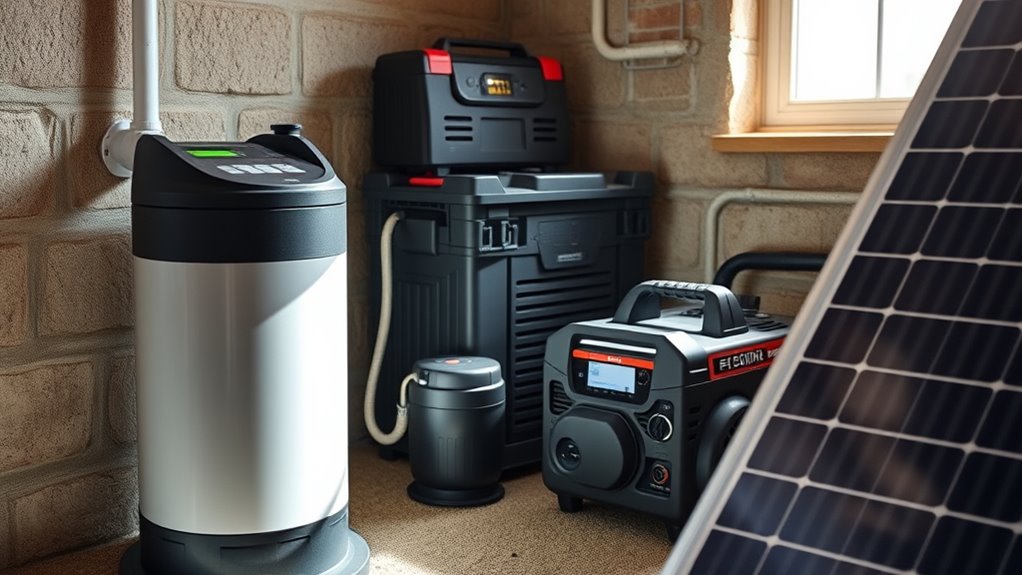
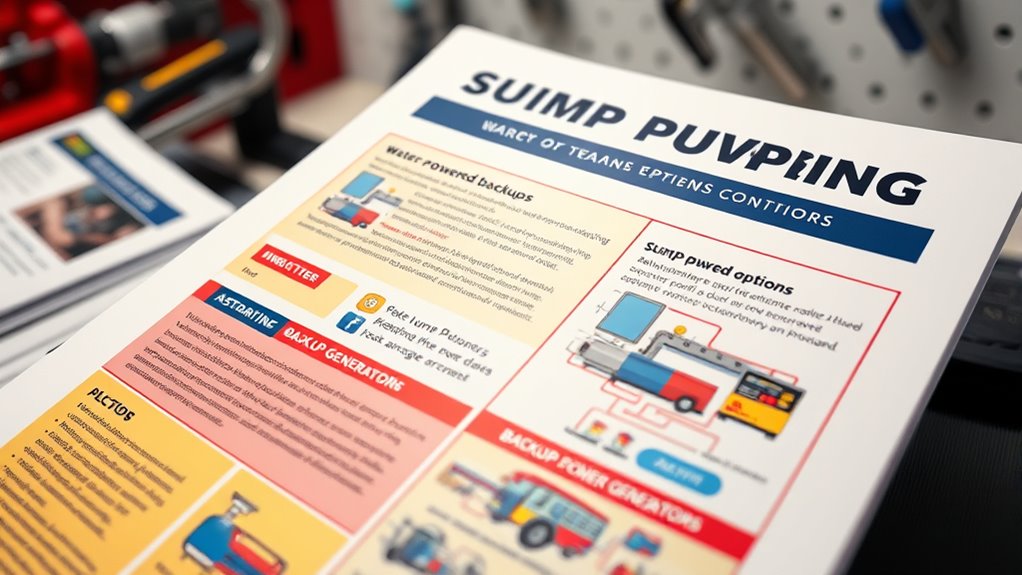
When a storm causes a power outage, your sump pump could stop working just when you need it most. To prevent flooding, many homeowners opt for backup power sources like battery backups or generator options. Battery backups are compact and automatically activate when the power goes out, providing reliable operation for several hours. They’re easy to install and maintain, making them a popular choice. Generator options, on the other hand, offer longer-lasting power and can run on either portable or standby generators. Standby generators connect directly to your home’s electrical system and start automatically during an outage. Both backup types guarantee your sump pump continues functioning, protecting your basement from flooding even when the grid is down. Reliable backup systems ensure continuous protection and peace of mind during severe weather events.
Key Components and Features of Backup Systems
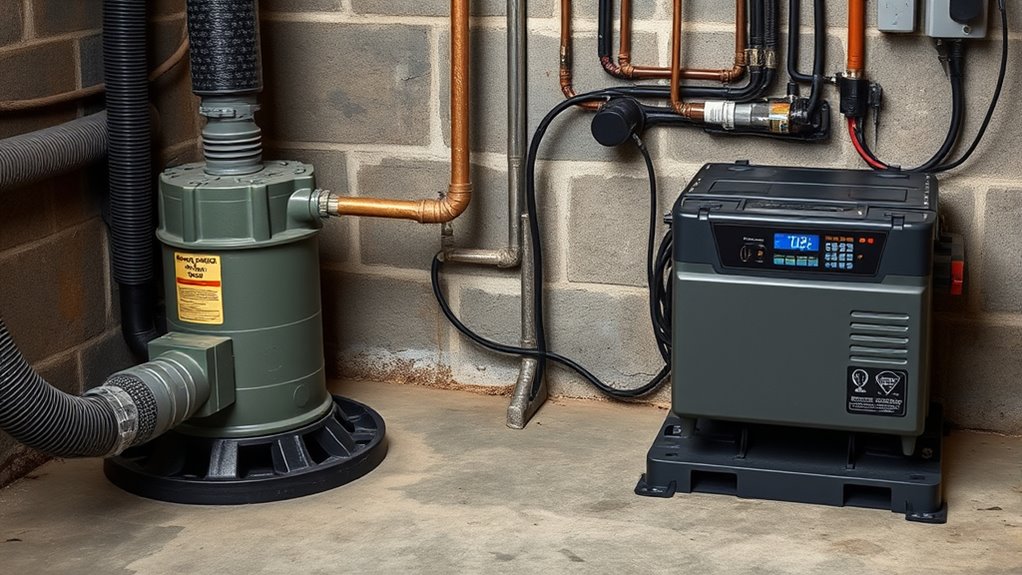
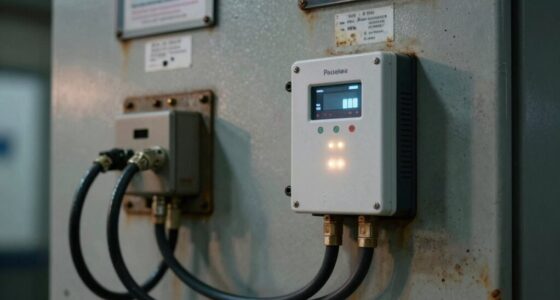
Backup sump pump systems rely on several key components that guarantee reliable operation during power outages. The most essential is the battery backup, which provides power when the main supply fails. Look for systems with deep-cycle batteries designed for continuous use, ensuring your sump pump keeps running. Alarm systems are equally important; they alert you to issues like low battery levels, system failures, or flooding risks, giving you time to respond. Some systems feature automatic transfer switches that switch seamlessly between main power and backup. Additionally, robust wiring and durable pump components improve reliability. Proper maintenance and regular testing of backup systems are crucial to ensure all parts function correctly when needed. Together, these features assure your backup system remains operational when you need it most, safeguarding your home from water damage during outages.
Installation Considerations and Maintenance Tips

Proper installation and regular maintenance are vital to guarantee your backup sump pump system functions effectively during power outages. When installing, prioritize safety by following manufacturer instructions and ensuring all electrical connections are secure and dry. Proper placement of the battery is critical for easy access and peak performance; this also helps maximize battery longevity. Check the battery regularly for corrosion, leaks, and charge levels, replacing it when necessary to prevent system failure. Keep the sump area free of debris and test the backup system monthly to confirm it activates correctly. Ensure ventilation around the battery to prevent overheating. Conducting these maintenance tasks and adhering to safety precautions will help your backup system operate reliably when you need it most. Additionally, understanding heat pump features can help you select the most reliable and efficient backup options for your home.
Choosing the Right Backup Solution for Your Home
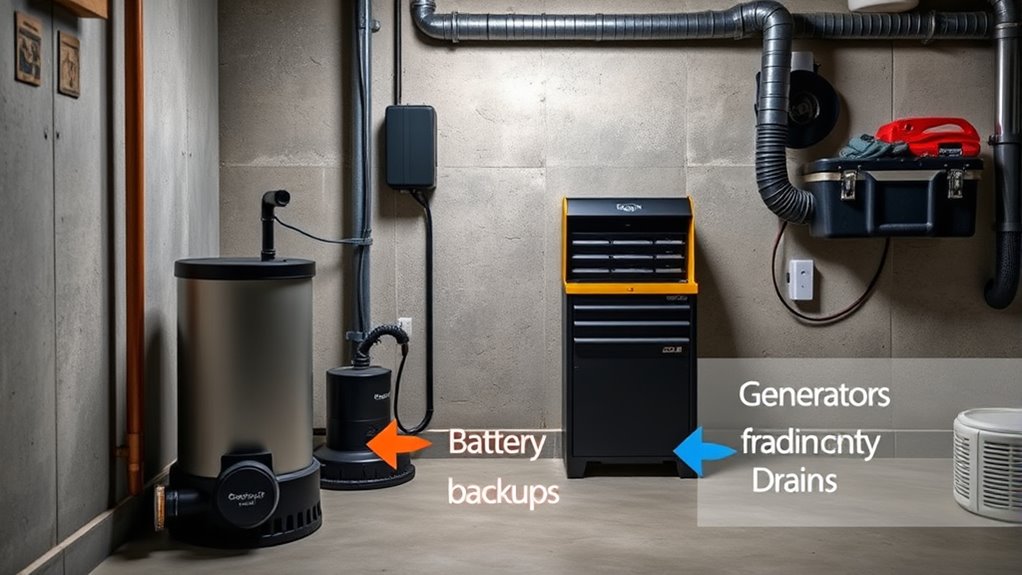
Choosing the right backup sump pump solution depends on your home’s specific needs, budget, and the level of protection you desire. Start by evaluating your sump pump size to ensure the backup can handle your home’s water flow during heavy rains. A larger sump pump may require a more powerful backup system, like a battery backup, to keep up during outages. If you experience frequent power failures, a battery backup becomes essential, providing peace of mind during storms. Consider your home’s vulnerability to flooding and choose a backup that matches those risks. Keep in mind that installing a reliable battery backup can prevent basement flooding even when the main pump fails or loses power. Additionally, understanding the behavior of narcissistic partners can help you recognize warning signs and respond effectively. Ultimately, selecting the appropriate backup ensures your home stays dry and protected, no matter the circumstances.
Frequently Asked Questions
How Long Do Backup Sump Pump Batteries Typically Last?
Backup sump pump batteries usually last about 3 to 5 years, depending on usage and maintenance. You should expect to replace them every few years to guarantee reliable backup during power outages. Regularly check the battery’s lifespan and capacity, especially if the pump runs often. Proper maintenance and timely replacements keep your sump pump system functioning smoothly, giving you peace of mind when storms strike or power fails.
Can Backup Systems Operate During a Power Outage Automatically?
Yes, backup systems can operate during a power outage automatically if they’re compatible with your generator or have a reliable battery. You don’t need to manually switch them on, but it’s important to take into account generator compatibility and maintenance requirements. Regularly check and maintain your backup system to guarantee it works seamlessly when needed. Proper maintenance and compatible power sources keep your sump pump running during outages without hassle.
What Are the Environmental Impacts of Different Backup Options?
Different backup options impact the environment in various ways. Battery backups produce minimal greenhouse gas emissions during use but require manufacturing and disposal processes that generate pollution. Water-powered backups rely on existing water sources, reducing pollution, but may strain local water supplies. Solar-powered backups are eco-friendly, with low pollution and pollution reduction benefits, though their manufacturing involves some environmental impact. Overall, choosing renewable options helps minimize your environmental footprint.
Are There Any Government Rebates for Installing Sump Pump Backups?
Back in the day, government incentives and rebate programs often support sump pump backup installations. You might find local or state rebates that help offset costs, especially if your system improves energy efficiency or flood resilience. Check with your city or utility provider’s website to see current programs. These incentives aim to encourage homeowners to protect their property, making it more affordable to upgrade your sump pump backup system today.
How Do I Determine the Right Backup Capacity for My Home?
To determine the right backup capacity for your home, consider your sump pump’s current flow rate and your area’s flood risk. You should also factor in battery maintenance, ensuring your backup system has enough power during outages. Keep in mind backup system costs, which vary based on capacity. Opt for a system that offers sufficient runtime and reliability, balancing your needs with your budget for effective protection.
Conclusion
Think of your sump pump backup system as a safety net beneath a tightrope walker. When storms hit and power fails, your backup keeps things steady, preventing flooding from catching you off guard. By understanding your options and maintaining your system, you’re ensuring peace of mind—like having a reliable safety net in place. Stay proactive, and your home will stay dry, rain or shine.
Fall Picks
fall essentials
As an affiliate, we earn on qualifying purchases.