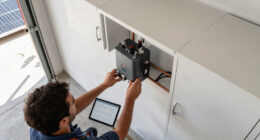
To prepare your home’s electrical panel for emergencies, start by having a professional inspect your system regularly for wear, corrosion, or damage. Upgrade outdated panels and add surge protectors—whole-house and individual units—to guard against voltage spikes. Clearly label circuit breakers for quick shutdowns during emergencies. Make certain your system meets safety standards, and consider upgrades if issues arise. Staying proactive protects your home and appliances; keep exploring to learn more about enhancing your electrical safety.

Get backup power and energy gear delivered free with Prime
- Fast, free delivery on millions of items
- Prime Video, Amazon Music and more included
- Member-only deals all year
Key Takeaways
- Regularly inspect your electrical panel for signs of damage, corrosion, or overheating.
- Upgrade outdated or damaged circuit breakers and panels to meet current safety standards.
- Install whole-house surge protectors and ensure individual devices are protected against voltage spikes.
- Clearly label circuit breakers for quick shutdown during emergencies or maintenance.
- Consult a professional electrician for system assessments, upgrades, and safety compliance verification.

Emergencies can strike your home unexpectedly, making it essential to ensure your electrical panel is ready to handle sudden power surges or outages. Your electrical panel is the heart of your home’s power system, and proper preparation can prevent damage or dangerous situations. One of the key aspects of this preparation is focusing on circuit breaker safety. Your circuit breakers act as the first line of defense, instantly shutting off power when they detect an overload or short circuit. Regularly inspecting your circuit breakers is indispensable; look for signs of wear, corrosion, or tripped breakers that haven’t reset properly. Knowing how to safely reset a breaker is critical—never force a breaker back on if it trips repeatedly. If you notice persistent issues, it’s time to call an electrician, as faulty circuit breaker safety can lead to electrical fires or damage to your appliances.
Another essential component to safeguard your electrical system is surge protection. Power surges, caused by lightning strikes, fallen power lines, or sudden grid fluctuations, can fry your electronics and damage your wiring. Installing surge protectors at your main electrical panel provides an added layer of security. These devices absorb and divert excess voltage, preventing it from reaching your sensitive devices. For maximum protection, consider a whole-house surge protector, which works in tandem with individual surge protectors on high-value appliances. Proper surge protection not only prolongs the lifespan of your electronics but also reduces the risk of electrical fires caused by transient voltage spikes. Additionally, understanding the importance of projector technology can help you better plan your home’s electrical capacity for future upgrades.
Preparing your electrical panel for emergencies also involves making sure your system is up to date and compliant with safety standards. An outdated panel might not support modern surge protection devices effectively, or its circuit breakers may not trip reliably. If your panel is old or shows signs of damage—burn marks, rust, or frequent tripping—consult an electrician for an upgrade. They can install new circuit breakers designed for better safety and compatibility with surge protection systems. Additionally, labeling your circuit breakers clearly helps you quickly shut off the right circuits during an emergency, minimizing damage and preventing accidents.
As an affiliate, we earn on qualifying purchases.
Frequently Asked Questions
How Often Should I Schedule Electrical Panel Inspections?
You should schedule electrical panel inspections at least once every 3 to 5 years to guarantee safety and maintain home insurance coverage. Regular inspections are essential for emergency preparedness, helping you identify potential hazards before they cause problems. Staying proactive protects your home and ensures you’re prepared for emergencies. Don’t wait for issues to arise—routine check-ups keep your electrical system safe and compliant with insurance requirements.
Can I Upgrade My Electrical Panel Myself?
You shouldn’t upgrade your electrical panel yourself—that’s a disaster waiting to happen. DIY safety is vital because handling high voltage can cause serious injury or fires. Always hire a licensed electrician to upgrade your panel, and make sure they properly label it for safety and future inspections. Attempting this task alone risks electrical shocks and code violations. Protect your home by trusting the pros with this essential upgrade.
What Signs Indicate My Panel Needs Immediate Replacement?
If your electrical panel shows signs like corrosion or you hear unusual buzzing, it’s time to replace it immediately. Corrosion indicates moisture damage, risking electrical failure or fire. The buzzing sound suggests overloaded circuits or loose connections, which can be dangerous. Don’t ignore these signs—call a professional electrician to inspect and replace your panel promptly, ensuring your home stays safe and electricity runs smoothly.
How Do I Identify a Faulty Circuit Breaker?
Did you know that about 15% of electrical failures are caused by faulty circuit breakers? To identify a faulty breaker, you should look for symptoms like frequent tripping, a breaker that won’t reset, or visible burn marks. Conduct circuit breaker testing by flipping the switch off and on, and observe if it stays in the correct position. Recognizing faulty breaker symptoms early helps prevent electrical hazards and potential fires.
Are Surge Protectors Necessary for Electrical Safety?
Yes, surge protectors are essential for electrical safety. They protect your devices from lightning strikes and power surges that can cause damage or fires. When you plug your electronics into a surge protector, it diverts excess voltage away, preventing costly damage. Especially during thunderstorms or unstable power supplies, using surge protectors gives you peace of mind and helps keep your home safe from unexpected electrical issues.
As an affiliate, we earn on qualifying purchases.
Conclusion
By taking these simple steps to prepare your electrical panel, you’re not just safeguarding your home — you’re anchoring your peace of mind amid chaos. Think of it as building a sturdy fortress against unexpected storms. Don’t wait for disaster to strike; act now and ensure your home’s electrical system is ready to weather any emergency. After all, isn’t peace of mind worth a little effort today?
As an affiliate, we earn on qualifying purchases.
home electrical safety inspection
As an affiliate, we earn on qualifying purchases.
As an affiliate, we earn on qualifying purchases.
Fall Picks
fall essentials
As an affiliate, we earn on qualifying purchases.