
To organize home evacuation drills for all ages, plan and practice multiple escape routes from each room, considering potential obstacles. Test alarms, practice staying low, and encourage everyone to feel doors for heat. Involve children with age-appropriate guidance and assist seniors or mobility-limited family members with alternative methods. Review and improve your plan regularly, ensuring safety measures are in place. Keep these tips in mind to create a thorough, effective evacuation routine for your entire family.
Key Takeaways
- Develop age-appropriate explanations and participate in drills to ensure understanding for children and seniors.
- Create multiple, accessible escape routes tailored to mobility needs and potential household obstacles.
- Assign specific roles to family members to assist children and elderly during evacuations.
- Use visual aids, alarms, and realistic scenarios to engage all ages and reinforce safety procedures.
- Regularly review and adapt evacuation plans based on feedback and changing household circumstances.
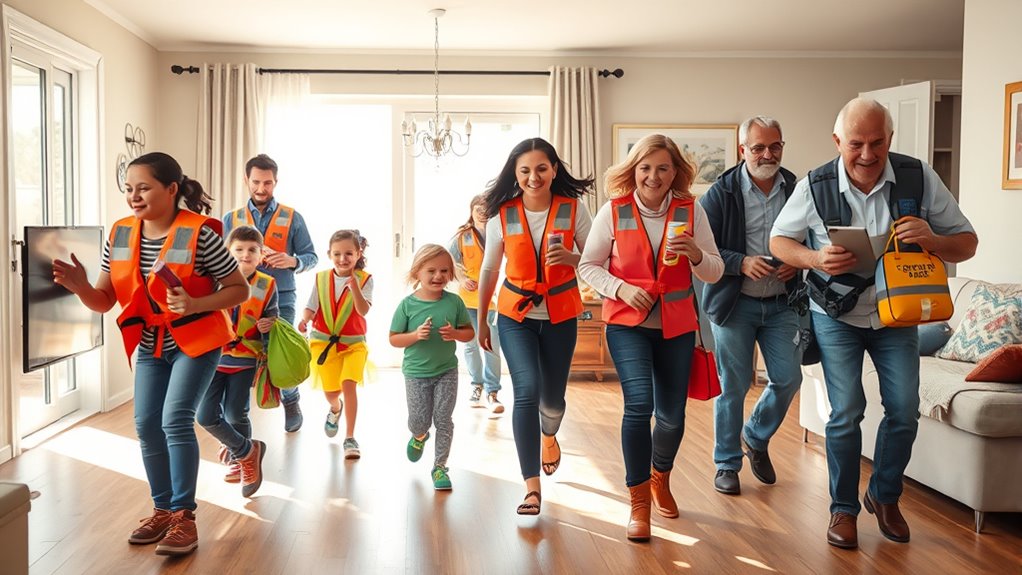
Organizing home evacuation drills is an essential step to guarantee your family’s safety during emergencies. When you prioritize these drills, you reinforce fire safety and improve your family’s emergency preparedness. Knowing what to do when a fire breaks out or another crisis occurs can make all the difference between chaos and a quick, organized response. It’s *imperative* to involve every family member, from young children to seniors, so everyone understands their role during an emergency. By practicing evacuation routines regularly, you help reduce panic and confusion, ensuring everyone knows how to exit safely and where to gather outside the home.
Start by setting a clear plan that includes multiple exit routes from each room. Walk through your home and identify the safest, quickest ways out, considering potential obstacles or hazards. Make sure everyone understands these routes and practices them during drills. You can also assign roles, such as who will help children or assist elderly family members, so each person knows their responsibility. Incorporate fire safety tips into your drills, like testing smoke alarms beforehand and discussing how to stay low to avoid smoke inhalation. Remind everyone not to open hot doors and to feel the door for heat before opening it. These small steps are *essential* parts of emergency preparedness and can save lives. Additionally, understanding the importance of projector contrast ratio can help you create a safe and comfortable environment for family activities, including emergency planning sessions.
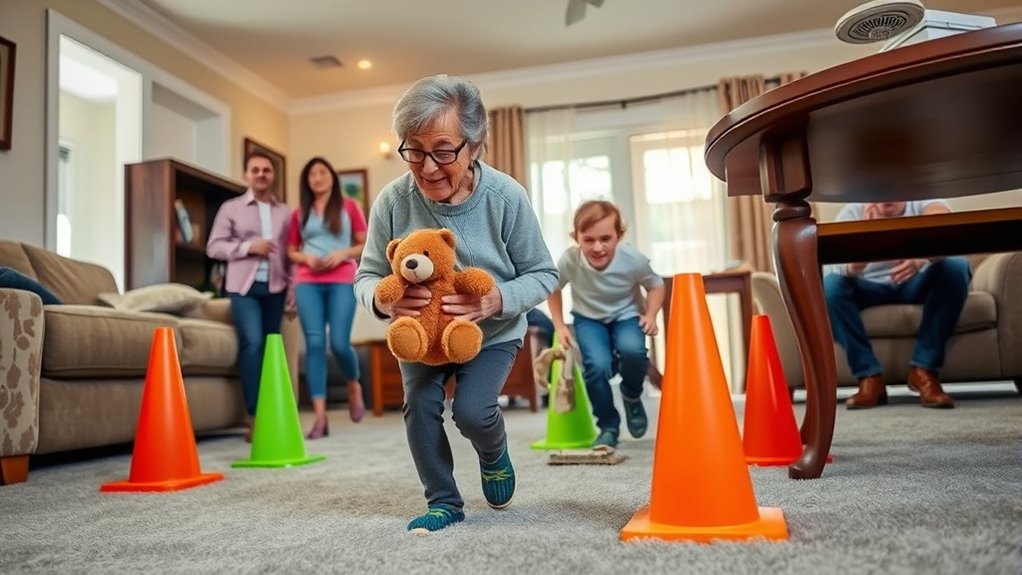
Timing your drills at different times of the day helps everyone get accustomed to responding under various conditions. Keeping the drills realistic increases their effectiveness—use alarms to signal the start and simulate real-life scenarios. After each practice, gather everyone outside and review what went well and what could be improved. This feedback loop helps you refine your plan and address any gaps or uncertainties. Make sure to involve children in age-appropriate ways, explaining why the drills are important and encouraging questions. For seniors or family members with limited mobility, practice alternative methods of evacuation, such as using mobility aids or calling for help.

Kidde Fire Escape Ladder, 2-Story Rope Ladder, Extends to 13-Feet, Anti-Slip Rungs
Easy to use fire ladder – attaches quickly to most common windows (up to 11 inches deep &…
As an affiliate, we earn on qualifying purchases.
As an affiliate, we earn on qualifying purchases.
Frequently Asked Questions
How Often Should Evacuation Drills Be Conducted at Home?
You should conduct home evacuation drills at least twice a year to guarantee fire safety and preparedness. Regular practice helps you and your family stay calm during emergencies, so make sure to review emergency supplies and escape routes each time. Incorporate drills for all ages, practicing different scenarios like fires or natural disasters. Consistent drills keep everyone ready, confident, and aware of safety procedures when it matters most.
What Are the Best Times to Schedule Evacuation Drills?
You should schedule evacuation drills during times that consider seasonal planning and daily routines. Aim for mornings or early evenings when everyone’s home and alert, avoiding busy or stressful periods like holidays or weekends. Timing considerations also include weather conditions—pick clear days to practice safely. Regularly vary the schedule to keep everyone prepared, and coordinate with all household members to guarantee full participation during these critical drills.
How Can I Include Pets in Evacuation Plans Effectively?
To include pets in your evacuation plans effectively, prioritize pet safety and plan for pet evacuation by having a dedicated pet emergency kit ready. Train your pets to respond to commands and keep leashes, carriers, and food accessible. During drills, practice evacuating with your pets to ensure they’re comfortable and familiar with the process. This preparation helps reduce stress and increases the chances of a safe, smooth evacuation for your furry companions.
What Communication Methods Should Be Practiced During Drills?
Think of communication as the lifeline during emergencies. You should practice clear, concise emergency communication and drill communication strategies like using cell phones, walkie-talkies, or designated signals. Guarantee everyone knows how to activate these methods quickly, so messages flow smoothly. Rehearse these strategies regularly, emphasizing calm, direct instructions. This builds confidence and ensures everyone stays informed and safe, turning chaos into coordinated action during actual emergencies.
How Do I Adapt Drills for Children With Special Needs?
You adapt drills for children with special needs by incorporating sensory accommodations, like reducing loud noises or bright lights, to prevent overwhelm. Use visual supports such as picture cards or social stories to clearly explain evacuation steps. Be patient, offering one-on-one guidance when needed, and allow extra time for children to process and respond. Tailoring these approaches helps make certain all children understand and participate safely during drills.

First Alert Combination Smoke & Carbon Monoxide Alarm, Battery Operated Detector with Test & Silence Button, SMCO100, 1-Pack,White
First Alert's Precision Detection advanced sensing technology complies with new industry standards to reduce cooking nuisance alarms and…
As an affiliate, we earn on qualifying purchases.
As an affiliate, we earn on qualifying purchases.
Conclusion
By regularly practicing home evacuation drills, you prepare everyone for emergencies, reducing panic and confusion. Some believe that frequent drills can create anxiety, but evidence shows they actually boost confidence and safety awareness. When you involve all ages, you build a resilient household ready to act swiftly. Remember, prevention and preparation often mean the difference between chaos and calm during real emergencies. So, keep practicing—you’re investing in everyone’s safety and peace of mind.

Safety Technology International, Inc. STI-6400 Exit Stopper Multifunction Door Alarm, Helps Prevent Unauthorized Exits or Entries Through Emergency Doors
Highly visible "stop sign" design acts as a deterrent
As an affiliate, we earn on qualifying purchases.
As an affiliate, we earn on qualifying purchases.

Folding Ambulance Chair, Evacuation Aid, Mobility Aid, Up/Down Stairs, Person Transfer Folding Chair, for Elderly or Disabled
Materials and wear resistance:Constructed from high-strength aluminium alloy and waterproof PVC,it is resistant to wear,rust and dust. It…
As an affiliate, we earn on qualifying purchases.
As an affiliate, we earn on qualifying purchases.