TL;DR

Get backup power and energy gear delivered free with Prime
- Fast, free delivery on millions of items
- Prime Video, Amazon Music and more included
- Member-only deals all year
An ESS News reviewer tested a pre-release Anker Solix S5000 in Northern California, including during a real three-day power outage. The review measured 120 V charging and solar performance; it did not test 240 V charging, and some advertised features and specifications remain unverified by the reviewer.
ESS News published a hands-on review of Anker’s Solix S5000 on October 25, reporting tests of the 5,024 Wh wheeled power station during charging, solar use and a real three-day power outage in Northern California. The reviewer used a pre-release unit and measured charging from a standard 120 V outlet, but did not test 240 V charging or independently verify every manufacturer specification.
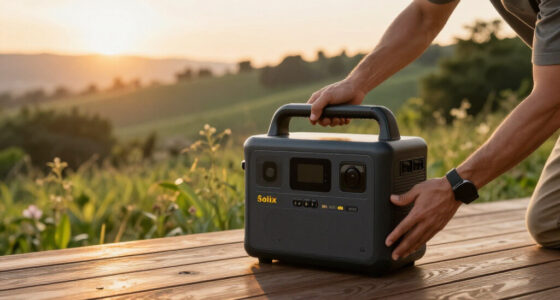
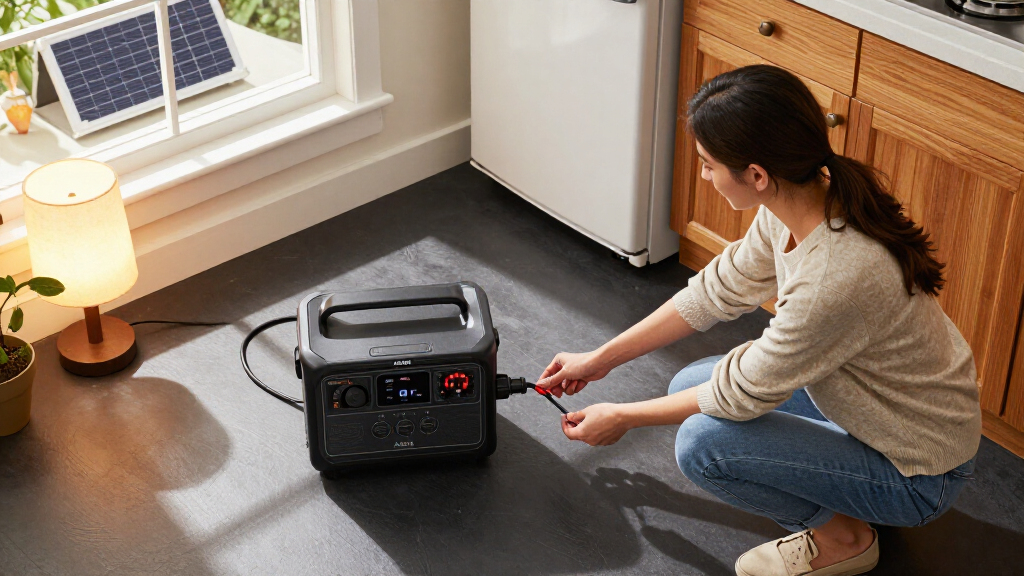
The S5000 pairs 5,024 Wh of LFP battery storage with a rated 4,500 W continuous inverter that can supply 120 V and 240 V. Anker lists a peak output of 8,000 W, a five-year warranty and capacity expansion up to 30 kWh. The unit weighs 44 kg (97 lb) and has wheels. Those figures are manufacturer specifications cited by the reviewer, not all independently tested results.
For two full charges from a 120 V outlet, the reviewer measured 6.24 kWh over 3 hours 40 minutes at the app’s 1,800 W setting, and 6.13 kWh over 6 hours 3 minutes at 1,000 W. At the higher setting, the wall draw held near 1.79 kW for about 2 hours 49 minutes before stepping down to roughly 1.43 kW. The review says Anker’s specifications limit the higher 120 V charging rate to less than three hours when current exceeds 12 A.
Solar testing used two Anker Solix PS400 panels, each rated at 400 W, wired in series. Their output peaked at 680 W on a sunny October day, or 85% of their combined 800 W rating, according to the reviewer. The S5000 has two solar inputs rated for 3,000 W combined, but this test used only the pair of panels described. The reviewer also tested the unit during a three-day outage; the source describes the household backup test but does not provide a full load-by-load account in the supplied material.
What the Outage Test Shows
The review offers practical data on a large battery system in settings that matter to prospective buyers: how long a home outlet takes to recharge it, how much energy the charging process draws from the wall, and what a pair of solar panels produced in real conditions. These measurements help distinguish the product’s rated capacity and input limits from performance observed in a specific test.
A three-day outage test also puts the S5000’s backup role in a household setting rather than relying only on specification sheets. But the results should not be read as a promise that the unit can power any home for three days. Runtime depends on which appliances are connected, their power demand, battery state and any recharging during the outage. The supplied review details do not establish performance for every household or load.
Products Worth Considering

Bose SoundLink Flex Bluetooth Speaker (2nd Gen), Portable Waterproof Speaker, Black

Levoit Core 400S-P Smart Air Purifier for Large Rooms

Hisense 85 U6 Pro Series Mini-LED ULED 4K UHD HDR Gaming AI Smart Fire TV (85U6SF Pro)
As an affiliate, we earn on qualifying purchases.
Anker’s S5000 Test Setup
Anker announced the S5000 on October 9, 2026. The October 25 ESS News review was based on a pre-release unit tested in Northern California by an engineer and home-energy enthusiast. The reviewer focused on charging, usable capacity, idle consumption, portability and backup use. The article also refers to earlier tests of Anker’s Solix E10 and S2000, but those products are separate from this S5000 test.
The S5000 provides four NEMA 5-20R outlets, a TT-30R outlet and an L14-30R 240 V outlet, along with USB ports. Anker lists a 3,000 W combined solar input, AC charging up to 1,800 W at 120 V or 4,500 W at 240 V, and a UPS switchover time of up to 10 milliseconds. The reviewer tested 120 V AC and solar charging, not 240 V charging. Anker’s claim that the L14-30R can continue supplying 240 V while the unit charges from a 120 V outlet or generator was also not tested.
“The S5000 is a wheeled power station with 5,024 Wh of LFP storage and a 4,500 W inverter that supplies both 120 V and 240 V.”
— ESS News reviewer
Limits of the Reported Tests
The supplied report does not provide a complete account of the outage’s appliance loads, total energy use or remaining charge, so the three-day backup result cannot be translated into a general runtime estimate. The reviewer also did not test 240 V AC charging, the claimed 240 V pass-through behavior, or charging through Anker’s Smart Generator and vehicle alternator.
The review reports that the app and display showed less charging input than the wall meter, with a larger gap at the higher charging setting. The reviewer says the measurement point in the power path is unknown, so the difference cannot be attributed specifically to charger losses. The reviewer did not measure the unit’s noise, despite Anker listing it as under 30 dB, and the supplied material does not give a measured idle-consumption result. Testing a pre-release unit also leaves open whether retail units or final software will behave identically.
Retail Testing Still Needed
The review gives an early account based on a pre-release sample; the next useful evidence would come from tests of retail units and additional operating modes. That would include 240 V charging and pass-through performance, more detailed outage load and runtime data, and charging through the generator and alternator inputs. The supplied source does not specify a retail availability date or report a follow-up test, so those developments remain unconfirmed.
Key Questions
How much battery capacity does the Anker Solix S5000 have?
Anker lists the S5000 at 5,024 Wh using LFP cells. The reviewed unit was a pre-release sample.
How long did 120 V charging take in the review?
The reviewer recorded 3 hours 40 minutes at the 1,800 W setting and 6 hours 3 minutes at the 1,000 W setting. The wall meter measured 6.24 kWh and 6.13 kWh, respectively, for the full charges.
How much power did the solar panels produce?
Two 400 W Anker Solix PS400 panels wired in series peaked at 680 W on a sunny October day, according to the reviewer. That was 85% of their combined 800 W nameplate rating in that test.
Did the review establish that the S5000 can power a home for three days?
No general three-day runtime was established. The reviewer used the S5000 during a specific three-day outage, but the supplied report does not give a complete load-by-load account. Runtime varies with connected appliances and energy use.
Which advertised features were not tested?
The reviewer did not test 240 V charging, the claimed 240 V output while charging from 120 V, Smart Generator charging or vehicle-alternator charging. The review also did not independently measure the listed noise level.
Source: rss