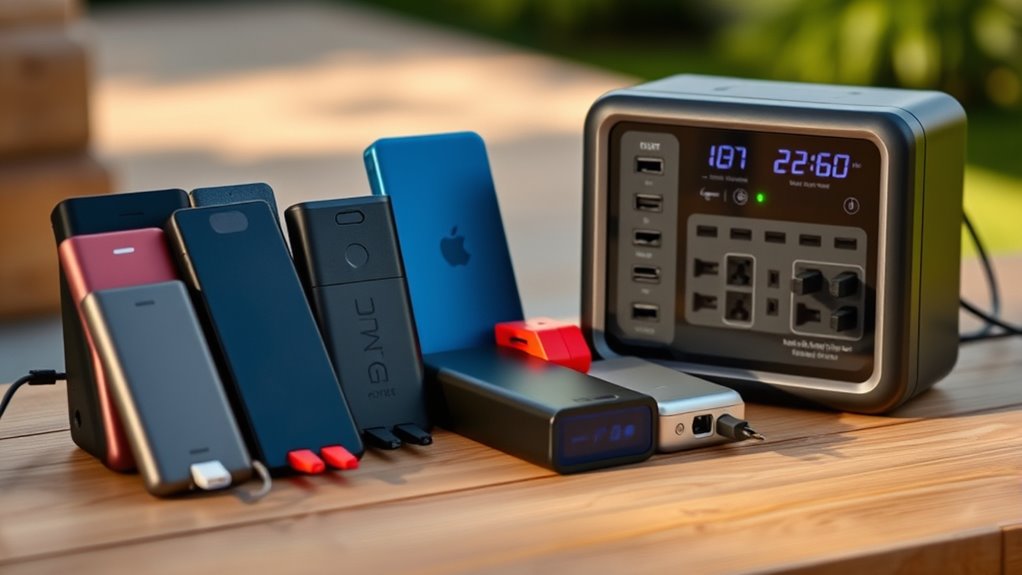

When choosing between power banks and power stations, understand that power banks are small, portable devices perfect for quick smartphone charges and outdoor use, while power stations are larger, offer more power, and can run bigger appliances. Consider your device needs, portability preferences, and how much power you require. For a deeper understanding of their differences and best uses, explore further details—this guide will help you make the right choice.
Key Takeaways
- Power banks are compact, portable devices for quick charging small gadgets; power stations are larger, suited for powering multiple devices long-term.
- Choose a power bank for everyday use and emergency backup; opt for a power station for off-grid camping, work sites, or extended power needs.
- Power stations generally have higher capacity, more outlets, and better suitability for larger electronics like laptops.
- Power banks are lightweight and ideal for on-the-go charging; power stations are heavier but provide more power and versatility.
- Long-term value, capacity, and intended usage determine whether a power bank or power station is the better investment.

Honeywell 22kW Home Standby Generator
PrecisionPower Technology delivers best-in-class power quality with less than 5 percent total harmonic distortion for clean, smooth operation...
As an affiliate, we earn on qualifying purchases.
What Is a Power Bank and How Does It Work?
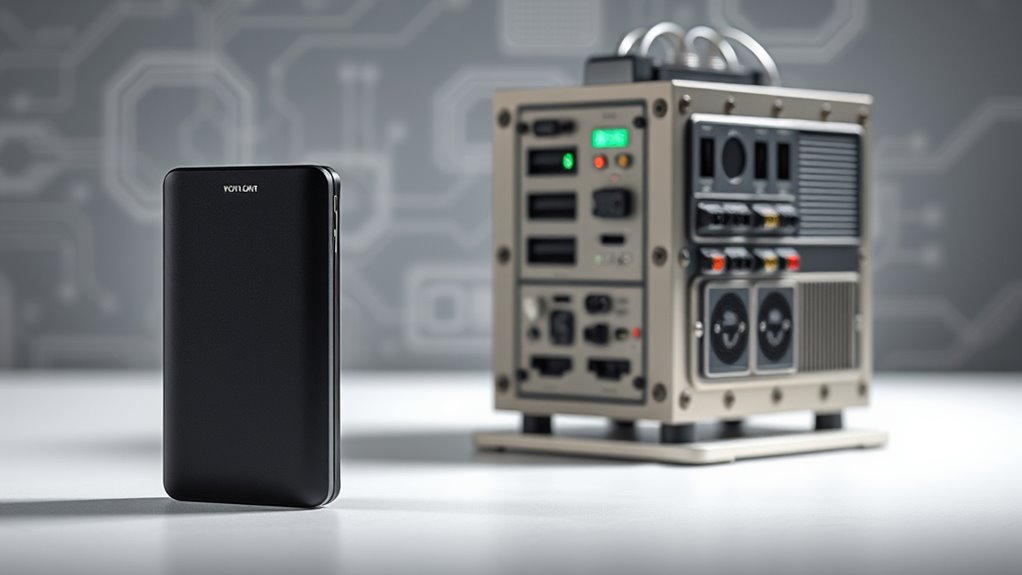
A power bank is a portable device that stores electrical energy to charge your smartphones, tablets, and other gadgets on the go. Its battery capacity determines how much power it can hold, usually measured in milliamp-hours (mAh). A higher capacity means you can charge your device multiple times before needing a recharge yourself. Charging technology is key, as it affects how quickly your devices get powered up; some power banks use fast-charging methods to save you time. When you connect your device, the power bank transfers energy efficiently through its internal circuitry. This makes it a convenient backup option during travel or power outages. Understanding the battery capacity and charging technology helps you choose a power bank that fits your needs perfectly. Additionally, knowing the differences between various power bank types, such as portable chargers and larger power stations, can help you make an informed decision based on your energy needs.

Champion Power Equipment 201222 22 kW aXis Home Standby Generator with 200A Whole House Switch
Up to 20% more fuel efficient than leading competitors, this 22-kilowatt generator provides 22,000 watts of continuous power...
As an affiliate, we earn on qualifying purchases.
What Is a Power Station and When Should You Use One?
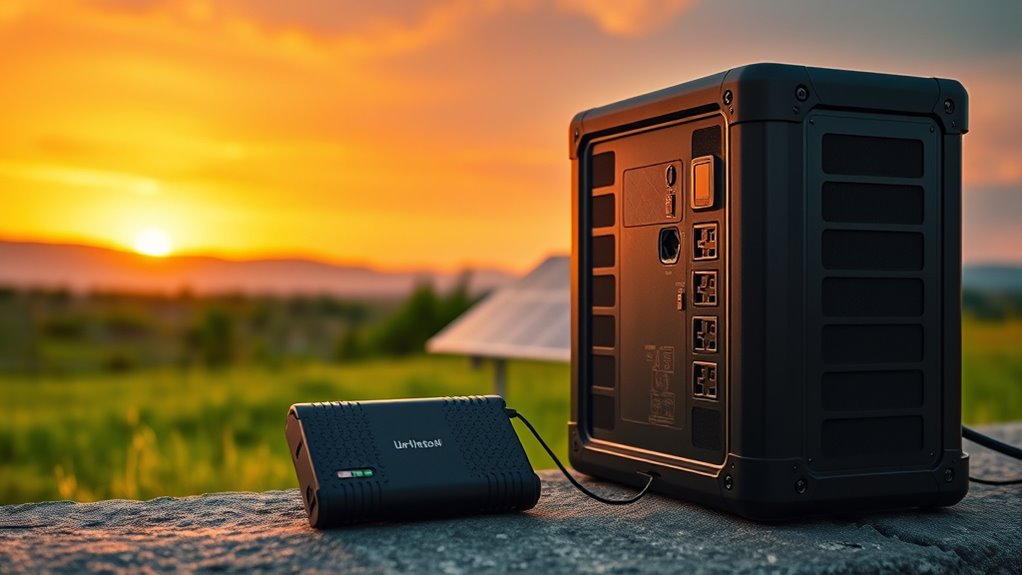
Power stations are large, portable devices that generate and store significant amounts of electricity to power multiple devices simultaneously. They’re ideal when you need reliable power for outdoor adventures, work sites, or emergencies. You can recharge them using portable solar panels, making them eco-friendly and useful off-grid. Use a power station when you require a versatile energy source, such as powering appliances, charging phones, or running small tools during extended outages. They’re perfect for:
- Emergency backup during power outages
- Off-grid camping or remote work sites
- Charging multiple devices simultaneously
Additionally, many power stations incorporate Kia Tuning features, allowing for enhanced performance and customization options when used with compatible devices or vehicles.

Generac Guardian 24kW Home Standby Generator - Automatic Whole House Backup Power for Storms, Emergencies, and Outages, WiFi Enabled, Runs on Natural Gas or Liquid Propane, Quiet Operation
Remote Monitoring Anywhere: With Generac 7209 24kW Mobile Link Wi-Fi connectivity, effortlessly track generator performance from anywhere. Stay...
As an affiliate, we earn on qualifying purchases.
How Do Power Banks and Power Stations Differ in Size and Portability?
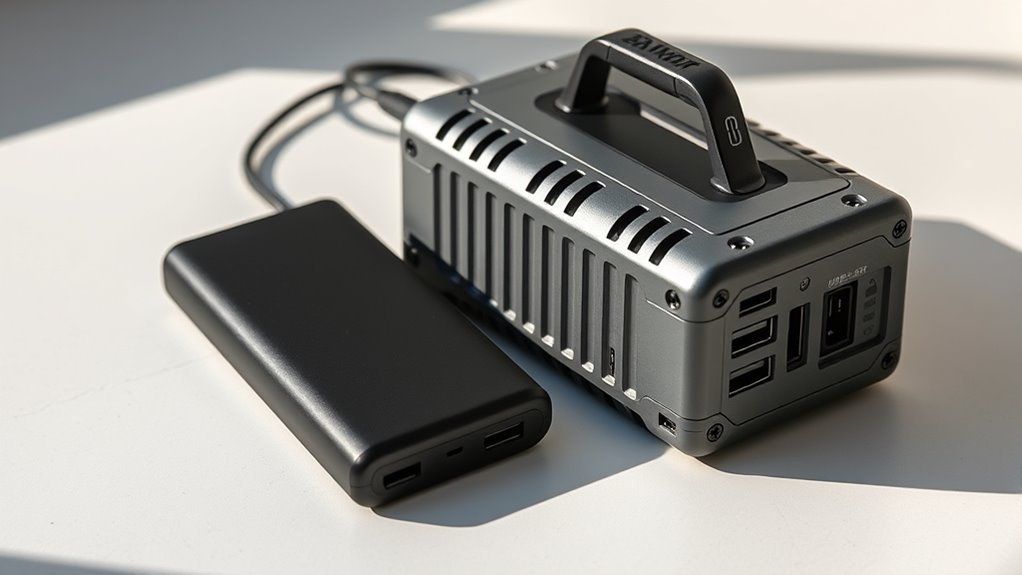
While both power banks and power stations are portable sources of electricity, they differ considerably in size and ease of transport. Power banks are compact, often small enough to fit in your pocket or bag, making them ideal for quick, on-the-go charging. Their lightweight design means you barely notice them in your daily routine. Power stations, on the other hand, are larger and heavier due to their bigger batteries and multiple outlets. They can weigh anywhere from a few pounds to over 50 pounds, which makes them less convenient to carry long distances. If portability is your priority, a power bank’s small size and light weight make it easier to handle. Power stations suit situations where you need more power and don’t mind the extra weight for extended use. Additionally, the versatility of hybrid bikes demonstrates how different tools are designed for specific needs, just like choosing between a power bank and a power station based on your power requirements.

Generac Guardian 24kW Home Standby Generator with 200 Amp Transfer Switch - Automatic Whole House Backup Power for Storms, Emergencies, and Outages, WiFi Enabled, Runs on Natural Gas or Liquid Propane
Remote Monitoring Anywhere: With Generac 7210 24kW Mobile Link Wi-Fi connectivity, effortlessly track generator performance from anywhere. Stay...
As an affiliate, we earn on qualifying purchases.
What Are the Typical Uses for Power Banks Versus Power Stations?
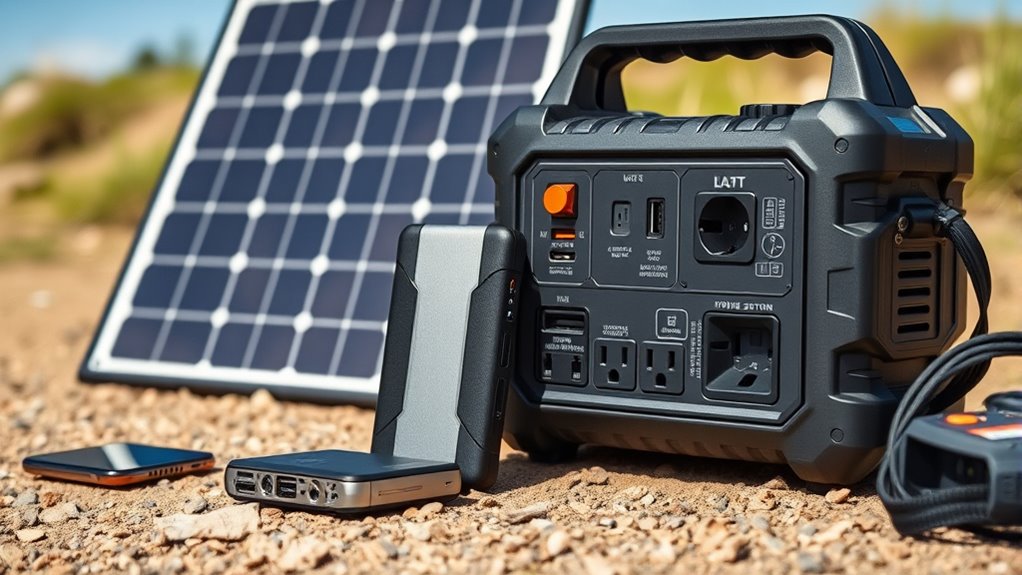
Power banks are best suited for quick, everyday charging needs, such as topping up your smartphone or small gadgets during outings or travel. They’re portable solar compatible, allowing you to harness sunlight for recharging on the go. Power banks excel as emergency backup power sources for essential devices when outlets aren’t available. You might use them for:
- Charging smartphones or tablets during outdoor activities
- Providing emergency backup during power outages
- Recharging small gadgets like fitness trackers or Bluetooth headphones
- Their small size and lightweight design make them highly portable, ideal for on-the-go use.
Because of their compact size, they’re perfect for short-term use and portability. Power stations, on the other hand, are better for larger power demands, longer-term use, or powering multiple devices simultaneously. They’re ideal for camping, RV trips, or backup during extended outages.
How Much Power Do You Need for Your Devices?
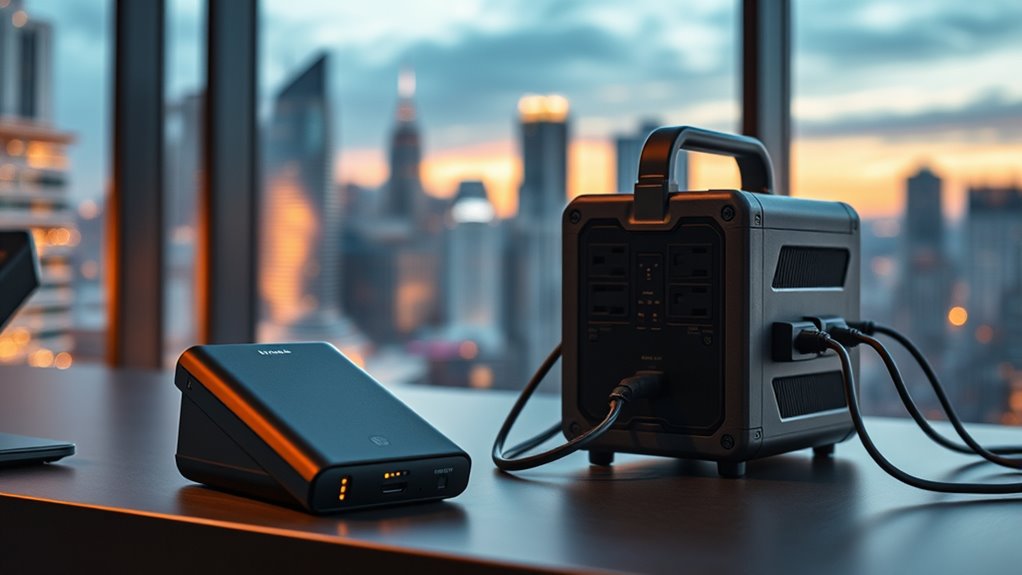
To determine how much power you need, consider your devices’ power requirements and how quickly you want them to charge. Think about whether you’ll expand your device collection in the future, which could increase your power needs. Knowing these factors helps you choose the right power bank or station for your situation. Additionally, understanding your overall energy needs supports your decision to choose healthy and efficient charging solutions.
Device Power Requirements
Wondering how much power your devices actually need? To determine that, you should consider their battery capacity and how many charging cycles they typically endure. Devices with larger batteries, like tablets or laptops, require more power, meaning you’ll need a power station or bank with higher output.
Keep in mind:
- Smaller devices like smartphones often need less power and can be charged multiple times from a single full charge.
- Battery capacity influences how long your device can run before needing a recharge.
- Charging cycles impact the long-term durability of your device’s battery, so selecting the right power source helps maintain peak performance over time.
Knowing your device’s power requirements ensures you choose the right backup power solution for your needs.
Charging Speed Needs
Understanding how quickly your devices need to recharge helps determine the right backup power solution. If you rely on fast-charging devices like smartphones or tablets, look for power banks or power stations with higher charging speeds and outputs, such as PD (Power Delivery) ports. A solar panel can also influence your charging speed by providing renewable energy, especially during extended outdoor use. When choosing, consider your device’s battery capacity—larger batteries require more power and longer recharge times. For quick recharges, opt for a portable power station with higher wattage outputs or a power bank with fast-charging capabilities. Balancing your device’s charging speed needs with the available power source guarantees you stay powered without unnecessary delays or inconvenience.
Future Device Expansion
Anticipating how your device needs might grow guarantees you select a power source that can handle future expansions. Consider your current battery capacity needs and whether you’ll add more devices later. A power station with higher battery capacity offers flexibility for increased device compatibility, ensuring you won’t outgrow your power source quickly. To plan effectively, think about potential new gadgets, such as larger smartphones, tablets, or small appliances. Additionally, understanding whole-house water filtration systems can help you appreciate the importance of scalability and long-term performance in your power solutions.
What Are the Charging Capabilities and Output Options?

Power banks typically offer a range of output options, including USB-A, USB-C, and sometimes dedicated fast-charging ports, allowing you to charge smartphones, tablets, and even some laptops on the go. Many modern power banks feature USB-C output, which supports faster charging and can often serve as a power source for compatible devices. When choosing a power bank, consider its solar panel compatibility if you plan to recharge via sunlight; this can be essential for outdoor adventures. The variety of output options ensures you can connect multiple devices simultaneously, making them versatile for everyday use or emergencies. Keep in mind that higher wattage outputs generally mean quicker charging, especially for power-hungry gadgets. Always check the output specifications to match your device’s charging requirements efficiently. Additionally, understanding different charging technologies can help you select a power bank that best fits your needs.
Which Device Offers Better Value and Longevity?
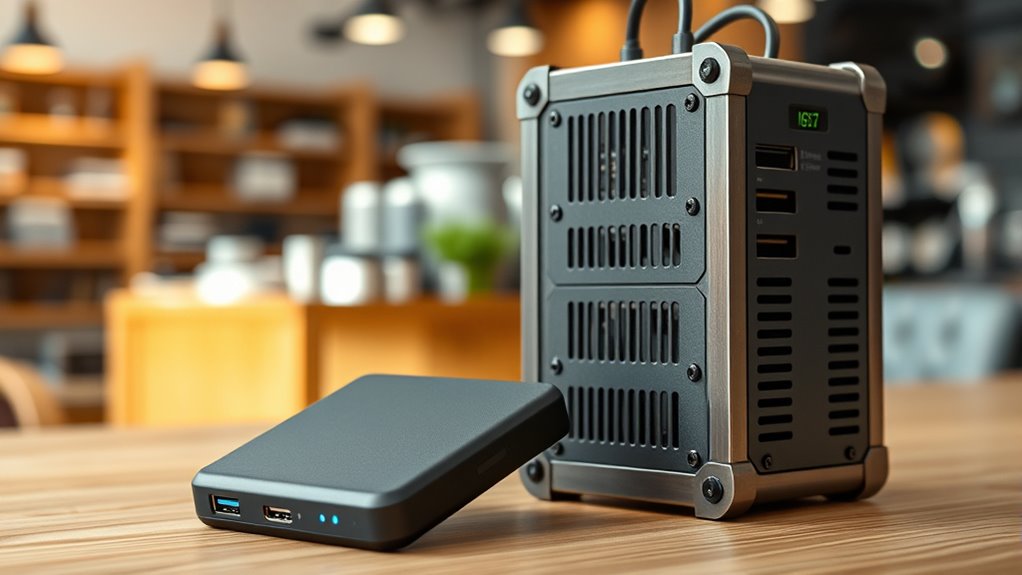
When comparing power banks and power stations, you’ll find that power stations generally offer better value and longevity for those needing reliable, long-term power solutions. They typically have higher battery capacity, which means you can run multiple devices over extended periods. Although power stations often come with a higher initial cost, their durability and ability to handle larger loads make them more cost-efficient over time. Consider these factors:
- Larger battery capacity ensures prolonged use without frequent recharging
- Higher build quality extends device lifespan, reducing replacement costs
- Greater versatility means you can power various devices, increasing overall value
- Power stations often feature robust technology and improved safety features, enhancing reliability and user confidence
Ultimately, if you prioritize long-term savings and dependability, a power station provides superior value and longevity compared to a standard power bank.
How to Choose Between a Power Bank and a Power Station for Your Needs?

Choosing between a power bank and a power station depends on your specific needs and usage scenarios. If you mainly need to charge smartphones or tablets on the go, a compact power bank with sufficient battery capacity will suffice. However, if you’re planning extended trips or need to power larger devices like laptops or small appliances, a power station provides higher battery capacity and more versatile outlets. Portability considerations are vital—power banks are lightweight and easy to carry, while power stations tend to be heavier but offer greater power output. Assess how much energy you require and how portable your device needs to be. By matching your power demands with device features, you’ll select the best option for your situation. Additionally, understanding the varieties of tableware can help you better appreciate the importance of choosing reliable power sources for your electronic devices.
Frequently Asked Questions
Can Power Banks Charge Devices While Simultaneously Being Charged Themselves?
Yes, many power banks can charge devices while being charged themselves, but it depends on the device compatibility and design. Look for models with pass-through charging features for better charging efficiency. Keep in mind that some power banks may experience slower charging speeds or reduced capacity when used this way. Always check the specifications to verify the power bank supports simultaneous charging without compromising performance.
Are Power Stations Suitable for Off-Grid or Emergency Power Backup?
Of course, power stations are the superheroes of off-grid and emergency backup power—ready to save your day with solar compatibility and portability considerations in mind. They’re designed for rugged outdoor adventures or sudden blackouts, providing reliable energy when traditional sources fail. Whether you’re camping deep in the woods or facing a power outage, these portable giants deliver enough juice, making them the perfect emergency companion, no cape required.
How Do Weather Conditions Affect the Performance of Power Stations?
Weather conditions profoundly impact your power station’s performance. Extreme temperatures can reduce battery life and affect solar efficiency, making your device less reliable. High heat causes overheating, while cold weather hampers energy flow. To guarantee temperature stability, store your power station in a cool, dry place and avoid prolonged exposure to direct sunlight or freezing conditions. Proper care helps maintain peak performance and prolongs your device’s lifespan.
What Is the Typical Lifespan of a Power Bank Compared to a Power Station?
You can expect a power bank to last around 300 to 500 charging cycles before battery degradation noticeably reduces its capacity. In contrast, a power station typically endures 1,000 or more cycles, thanks to its larger battery and better build quality. Regular use and proper maintenance extend both devices’ lifespans, but power stations generally offer longer-lasting performance, making them a more durable choice for long-term power needs.
Are There Any Safety Concerns or Precautions When Using Large Power Stations?
When using large power stations, you should prioritize battery safety and be aware of fire hazards. Always read the manufacturer’s instructions, avoid overloading the system, and keep it in a well-ventilated area. Don’t expose it to extreme temperatures or moisture, and regularly inspect for damage. Taking these precautions helps prevent accidents, protects your investment, and guarantees safe, reliable use of your power station.
Conclusion
Choosing between a power bank and a power station depends on your needs, but don’t let initial complexity overwhelm you. If you mainly charge phones or tablets on the go, a power bank is simple and affordable. For larger devices or outdoor adventures, a power station offers more power and versatility. Remember, investing in the right device saves you time and stress—so assess your usage carefully and pick what truly fits your lifestyle.