
During power outages, you should keep children away from electrical equipment, cords, and generators to prevent shocks or burns. Always place generators outside, away from windows, and make sure they are grounded properly. Teach children that outlets and cords can still carry electricity even when the power is out, and supervise them closely. Unplug all appliances before reconnecting power and develop a safety plan to protect your family. Keep going to learn more tips to ensure safety during outages.
Key Takeaways
- Keep children away from generators, cords, and electrical outlets during outages to prevent shocks and burns.
- Educate children about the dangers of live electrical equipment, even when power is out.
- Unplug appliances and keep cords out of children’s reach to prevent tampering or accidents.
- Always supervise children around electrical devices and ensure generators are operated safely outside.
- Develop and communicate a safety plan emphasizing electrical hazards during power outages.
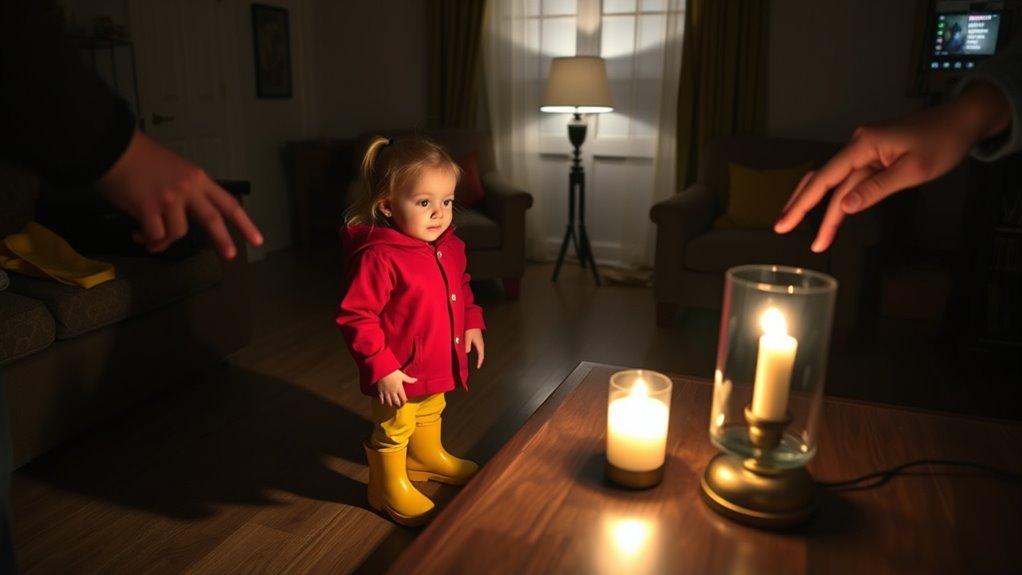
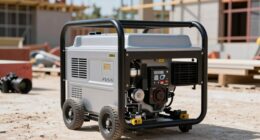
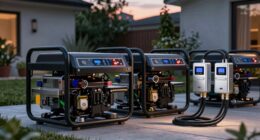
Have you ever wondered how to keep your children safe during a power outage? It’s a common concern, especially when you’re faced with the unpredictable nature of electrical failures. One of the most important steps you can take is understanding generator safety. If you use a portable generator during an outage, it’s essential to operate it properly to prevent accidents or harmful fumes. Always place the generator outside, away from windows and vents, to avoid carbon monoxide poisoning. Never run it indoors or in enclosed spaces, even if you think the garage is open. Keep children away from the generator at all times, because the engine can become very hot and cause burns if touched. Also, make sure that the generator is grounded correctly and that extension cords are heavy-duty and rated for outdoor use to avoid electrical fires or shocks.
In addition to generator safety, appliance precautions play an important role in protecting your children. When the power is out, it’s tempting to try to use household appliances with portable generators, but this can be dangerous if not done carefully. Never connect appliances directly to the generator outlets unless you have a transfer switch installed by a professional. Doing so can cause back-feeding into the power lines, putting utility workers and your family at risk. Always unplug appliances before connecting or disconnecting the generator, and avoid overloading it, as this can cause electrical fires or damage the appliances. Keep children from tampering with cords, switches, or any electrical devices during an outage. It’s best to keep all appliances unplugged until the power is restored and it’s safe to use them again. Additionally, understanding electrical safety guidelines can help you better prepare for emergencies.
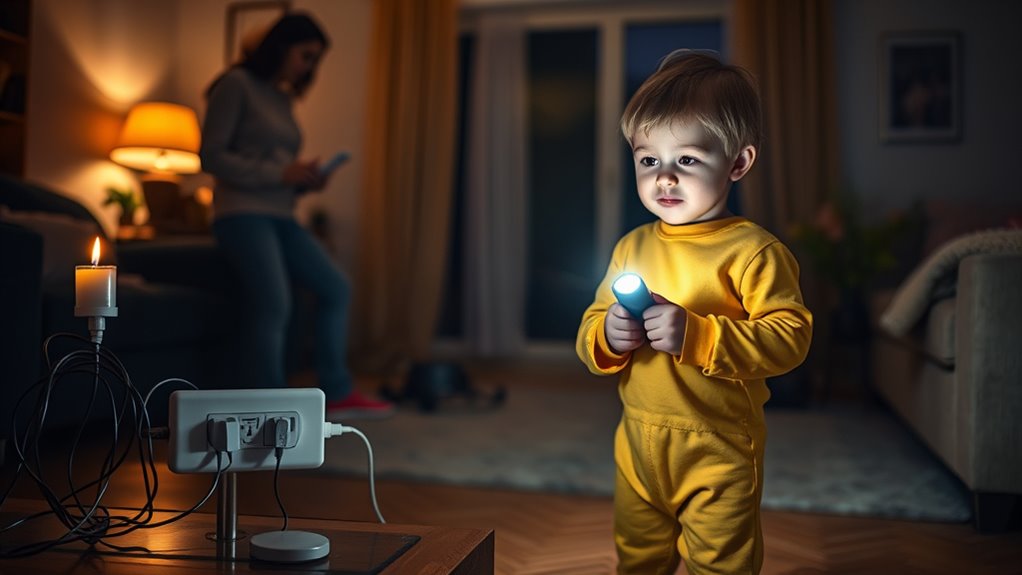
Furthermore, you should educate your children about the dangers of electricity during a blackout. Explain that outlets, cords, and appliances can still carry electric charges even if the power is out, especially if backup power sources like generators are in use. Teach them to stay away from electrical equipment and never touch or attempt to move cords or devices. Keep all electrical supplies out of reach, and supervise children closely when you’re handling generator operations or plugging in appliances. Creating a safety plan and making sure your kids understand the importance of staying safe around electrical devices can greatly reduce the risk of accidents during outages. Taking these precautions helps guarantee that everyone in your family remains safe and that you’re prepared to handle the situation responsibly.

Honeywell 22kW Home Standby Generator
PrecisionPower Technology delivers best-in-class power quality with less than 5 percent total harmonic distortion for clean, smooth operation...
As an affiliate, we earn on qualifying purchases.
Frequently Asked Questions
How Can I Teach My Child About Electrical Safety Effectively?
You can teach your child about electrical safety effectively by having a safety demonstration, showing them how to avoid electric shock prevention hazards. Explain the importance of staying away from outlets, cords, and electrical appliances, especially during power outages. Use simple language, encourage questions, and set a good example. Reinforce these lessons regularly so your child understands and remembers the safety measures, keeping them safe around electricity.
Are There Child-Proof Outlets or Devices for Power Outage Situations?
Yes, you can use child-proof outlets or safety covers designed specifically for power outage safety. These devices prevent children from inserting objects into outlets, reducing risk during outages. Look for child-proof outlets with built-in covers or tamper-resistant features. Keep portable surge protectors and backup power sources out of children’s reach. Educate your kids about electrical hazards, and always supervise them around power sources during outages to guarantee their safety.
What Emergency Supplies Should I Keep Accessible for Children During Outages?
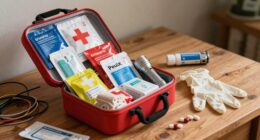
Think of your home as a fortress, and your emergency supplies as your secret treasure chest. Keep an accessible emergency kit with flashlights, batteries, first aid supplies, and snacks for your children. A power backup like a portable charger or generator guarantees devices stay on. These supplies protect your little explorers during outages, helping them feel safe and secure while you manage the situation calmly and effectively.
How Do I Prevent Children From Accessing Potentially Dangerous Electrical Equipment?
You prevent children from accessing dangerous electrical equipment by child proofing outlets with safety covers and ensuring electrical cords are neatly managed. Use outlet plugs to block unused outlets and keep cords out of reach or hidden behind furniture. Regularly check that safety covers are secure and cords are organized. This minimizes the risk of accidental shocks or injuries during power outages, keeping your children safe around electrical hazards.
What Are Signs of Electrical Hazards That Children Might Notice?
Spotting signs of electrical hazards helps prevent harm. Watch for flickering lights, sizzling sounds, or sparks, which could signal a fire risk. Unusual odors like burning smell or buzzing noises may indicate dangerous electrical issues. Kids might notice exposed wires, warm outlets, or discolored sockets. These signs suggest potential electric shock or fire hazards. Always respond swiftly, keep children away, and call a professional to inspect and fix the problem.

Joinfworld Power Distribution Box,50A 125V/250V NEMA SS2-50 CS6375 Inlet, 30A Circuit Breaker, Individually Controllable Sockets, Heavy - Duty Waterproof Enclosure with Cooling Fan
UL-Certified - The power distribution box is UL-certified, featuring 1 50A socket, 5 NEMA 5-20 GFCI sockets, NEMA...
As an affiliate, we earn on qualifying purchases.
Conclusion
Remember, during power outages, you’re the lighthouse guiding your children safely through the storm. Keep outlets covered, cords out of reach, and stay vigilant to prevent accidents. Think of your home as a fortress of safety, where each precaution is a shield against unseen dangers. By staying alert, you turn darkness into a safe haven, ensuring your little ones can weather any storm with confidence and care. Your vigilance lights the way to safety.

Power Assemblies Power Distribution Box with 50A 125/250V CS6375 Inlet, 50A 125/250V CS6369 Outlet, & 6 20A 125V Duplex GFCI Receptacles
High-Performance Power Distribution Box: Includes (1) 50A CS6375 twist-lock inlet, (1) 50A CS6375 outlet, and (6) 20A GFCI-protected...
As an affiliate, we earn on qualifying purchases.

GXELZK Temporary Distribution Box, It has Both 50A and 30A inlets, six 120V CFGI duplexes, one L14-30R Outlet, one L6-30R, and one TT-30R,Safe and Reliable Power on Any Construction site (Yellow)
The temporary socket distribution box is equipped with ETL-certified L6-30R sockets and L14-30R sockets on one side, and...
As an affiliate, we earn on qualifying purchases.