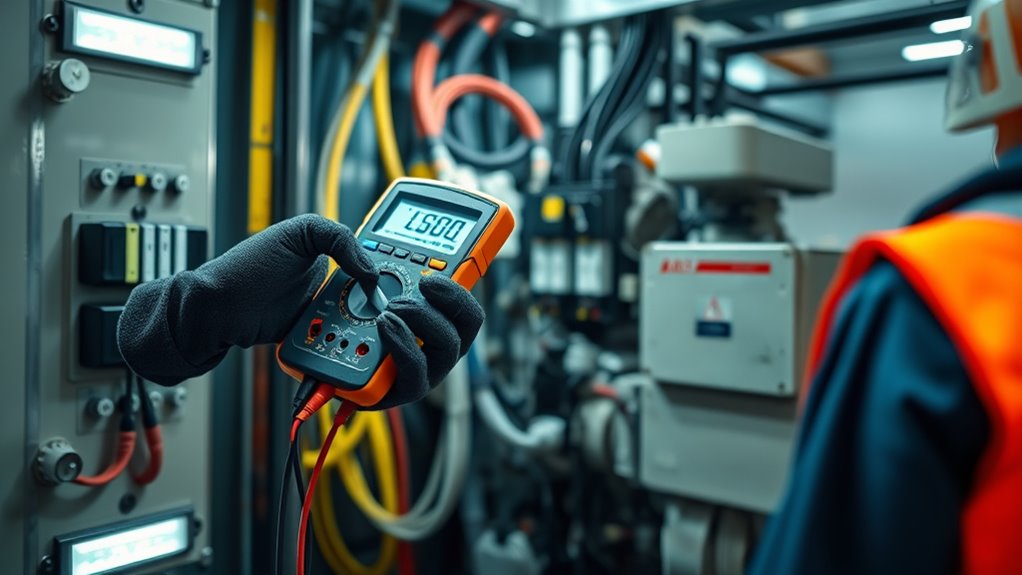

Before using your generator, you should conduct a thorough electrical safety inspection to prevent hazards like shocks, fires, or equipment damage. Check that the grounding system is secure, verify circuit breakers and fuses work properly, and examine cords and outlets for damage. Test safety devices such as GFCIs and ensure the transfer switch is correctly installed and labeled. Following a detailed checklist helps guarantee safety and compliance—keep going to discover more key safety tips.
Key Takeaways
- Conduct a thorough electrical safety inspection to identify hazards and ensure compliance with safety standards before using a generator.
- Verify proper grounding of the generator, including grounding rods, wires, and connections, according to local codes and manufacturer guidelines.
- Check all electrical connections, circuit breakers, and fuses for proper operation and signs of wear or damage.
- Test safety devices such as GFCIs and transfer switches to confirm they function correctly and are properly installed.
- Inspect power cords, outlets, and safety features like HEPA filters for damage, ensuring all components are secure and in good condition.

Electrical safety inspections are indispensable for preventing fires, electrical shocks, and equipment failures in your home or business. Before you start using a generator, it’s essential to ensure that your electrical system meets all safety standards. One key aspect is understanding grounding requirements. Proper grounding helps prevent electrical shocks and protects your equipment from damage caused by power surges or faults. During an inspection, you’ll want to verify that the generator is correctly grounded according to local codes and manufacturer specifications. This often involves inspecting grounding rods, grounding wires, and connections to ensure they are secure, intact, and correctly installed. Failure to meet grounding requirements can lead to dangerous electrical hazards, so don’t overlook this step.
Proper grounding is vital for safety and equipment protection during generator inspections.
An effective inspection checklist simplifies the process, making sure you don’t miss any critical safety points. Your checklist should include a review of the generator’s grounding system, ensuring that grounding wires are properly connected and corrosion-free. Check that all electrical connections are tight and that there are no signs of wear, damage, or corrosion that could compromise safety. Confirm that circuit breakers and fuses are functioning correctly, and confirm your generator’s grounding electrode system is compliant with local codes. You should also verify that the generator’s power cords and outlets are in good condition, with no frayed wires or cracks, which could lead to shorts or shocks. Additionally, inspecting the HEPA filtration and other safety features of your electrical setup can help ensure comprehensive safety during operation.
Another essential aspect on your inspection checklist is verifying that the generator’s transfer switch is functioning properly. This device ensures your generator’s power is safely transferred to your home or business without backfeeding into the grid, which can be dangerous for utility workers and others. Make sure the transfer switch is tested regularly and correctly installed. Additionally, check for clear labeling and instructions to ensure proper operation during emergencies.
Beyond the physical equipment, verify your electrical system has proper safety devices such as ground-fault circuit interrupters (GFCIs) where necessary. These devices cut off power quickly if a ground fault is detected, preventing shocks. Also, review your local codes and manufacturer guidelines to confirm that your setup complies with current standards. If you’re unsure about any part of the inspection, consulting with a licensed electrician can help identify potential issues before you rely on your generator.

Honeywell 22kW Home Standby Generator
PrecisionPower Technology delivers best-in-class power quality with less than 5 percent total harmonic distortion for clean, smooth operation...
As an affiliate, we earn on qualifying purchases.
Frequently Asked Questions
How Often Should Electrical Safety Inspections Be Scheduled Before Generator Use?
You should schedule electrical safety inspections before generator use at least annually, or more often if recommended by the manufacturer. Regular inspection frequency guarantees your generator remains safe and reliable. Use an exhaustive safety checklist during each inspection to identify potential hazards like damaged cords or loose connections. By staying consistent with inspections, you reduce risks of electrical faults, ensuring safe operation whenever you need your generator.
Are There Specific Certifications Required for Inspectors Performing Safety Checks?
You should verify inspectors have proper certification requirements and meet specific qualifications. Look for certified electrical inspectors with credentials from recognized organizations, such as the National Institute for Certification in Engineering Technologies (NICET) or similar. Their inspector qualifications should include experience in electrical systems and generator safety standards. Verifying these credentials guarantees a thorough safety check, reducing risks and ensuring your generator operates safely and efficiently.
What Are Common Signs of Electrical Issues in Generators?
You should look for common signs of electrical issues in your generator, like frayed or burnt wiring during visual inspection, which indicates damage or wear. Also, perform electrical testing to check for abnormal voltage fluctuations, loose connections, or corrosion. These issues can cause malfunction or safety hazards. Regular inspections help spot problems early, ensuring your generator runs safely and efficiently when you need it most.
Can Safety Inspections Be Performed by Non-Electrician Personnel?
You can perform DIY safety inspections if you have proper inspection training and understand electrical safety protocols. However, it’s essential to recognize your limits and know when to call a licensed electrician. Non-electrician personnel should avoid complex tasks like testing circuits or inspecting internal components. Focus on visual checks for obvious issues, guarantee safety gear is used, and follow safety procedures diligently to prevent accidents during generator inspections.
What Should Be Done if a Generator Fails an Electrical Safety Inspection?
If your generator fails an electrical safety inspection, you should immediately stop using it and arrange for professional generator repair. Don’t attempt to fix issues yourself unless you’re qualified. Once repairs are complete, verify the generator undergoes a re-inspection for safety certification. This step guarantees it meets all safety standards, reducing risks of hazards or failures during operation. Always prioritize safety and certified repairs before resuming generator use.

Joinfworld Power Distribution Box,50A 125V/250V NEMA SS2-50 CS6375 Inlet, 30A Circuit Breaker, Individually Controllable Sockets, Heavy - Duty Waterproof Enclosure with Cooling Fan
UL-Certified - The power distribution box is UL-certified, featuring 1 50A socket, 5 NEMA 5-20 GFCI sockets, NEMA...
As an affiliate, we earn on qualifying purchases.
Conclusion
Think of electrical safety inspections as your trusted lighthouse before launching your generator into the storm. Just as a lighthouse guides ships safely through treacherous waters, these inspections steer you clear of hidden hazards and potential failures. By taking this essential step, you’re anchoring your safety in a firm foundation, ensuring your power journey remains steady and secure. Remember, a well-inspected generator is your beacon of reliability amidst the unpredictable currents of electricity.

Power Assemblies Power Distribution Box with 50A 125/250V CS6375 Inlet, 50A 125/250V CS6369 Outlet, & 6 20A 125V Duplex GFCI Receptacles
High-Performance Power Distribution Box: Includes (1) 50A CS6375 twist-lock inlet, (1) 50A CS6375 outlet, and (6) 20A GFCI-protected...
As an affiliate, we earn on qualifying purchases.

GXELZK Temporary Distribution Box, It has Both 50A and 30A inlets, six 120V CFGI duplexes, one L14-30R Outlet, one L6-30R, and one TT-30R,Safe and Reliable Power on Any Construction site (Yellow)
The temporary socket distribution box is equipped with ETL-certified L6-30R sockets and L14-30R sockets on one side, and...
As an affiliate, we earn on qualifying purchases.