
To prevent backfeed hazards, guarantee you install a transfer switch by a qualified electrician, which isolates your generator from utility lines and keeps power flow safe. Always turn off the main breaker before connecting your generator and follow all safety protocols, including proper grounding and secure connections. Regular inspections and adherence to local electrical codes are essential. If you keep these safety measures in mind, you’ll protect yourself, others, and repair crews from dangerous electrical accidents. Keep going to know more.
Key Takeaways
- Always install a properly rated transfer switch by a licensed electrician to isolate the generator from utility lines.
- Regularly inspect and test all connections, grounding, and safety devices before each generator use.
- Turn off the main utility breaker before connecting the generator to prevent backfeed into the grid.
- Follow manufacturer instructions and adhere to local electrical codes and safety standards during installation and operation.
- Stay informed about current electrical regulations and safety practices to ensure ongoing compliance and safety.
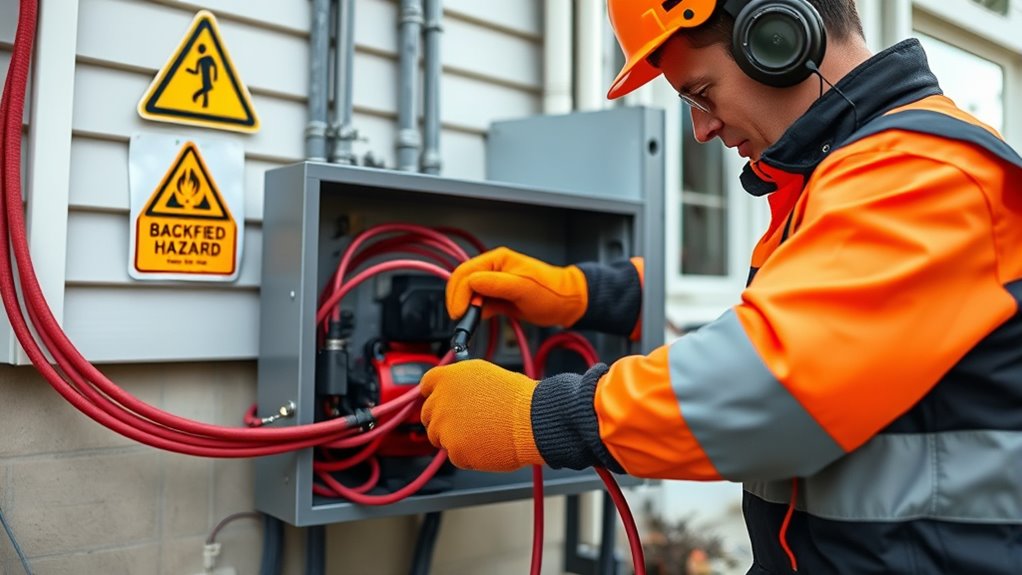
When you’re using a generator during a power outage, preventing backfeed hazards is vital for your safety and that of utility workers. Backfeed occurs when electricity from your generator flows back into the utility lines, posing serious risks of electric shock, fire, or injury to repair crews working on the grid. To avoid these dangers, you need to follow strict safety protocols that align with established electrical standards. These standards are designed to guarantee safe generator operation and protect everyone involved.
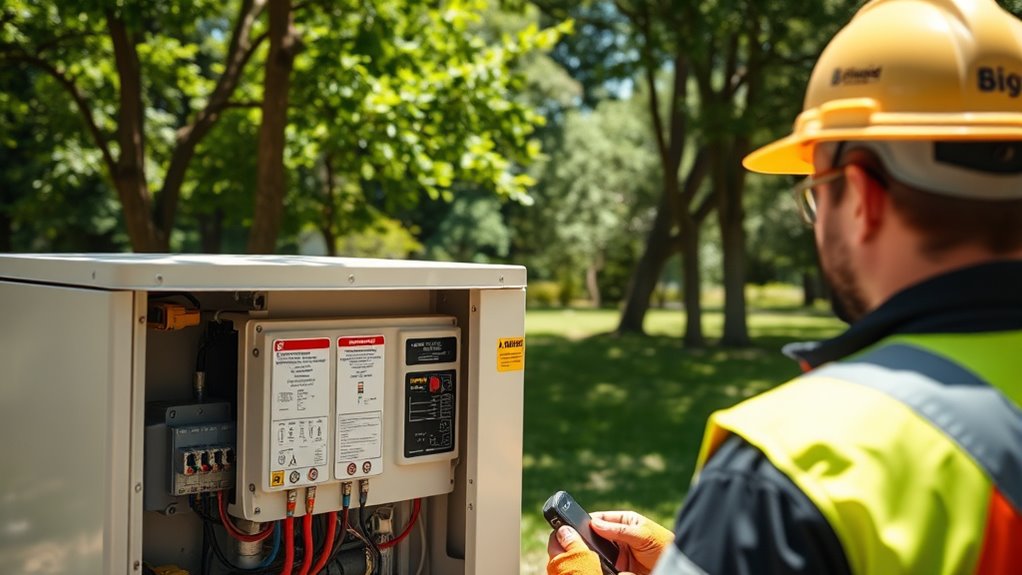
First, always use a transfer switch installed by a qualified electrician. A transfer switch isolates your generator from utility lines, preventing any possibility of backfeed. It ensures that your generator power is directed only to your home’s circuits without feeding electricity back into the grid. Skipping this step or using improper connections can lead to dangerous backflow, risking electric shock and damage to your equipment. Make sure the transfer switch complies with local electrical codes and standards, which are set to guarantee safe installation and operation.
Always use a qualified electrician to install a transfer switch for safe generator operation.
Next, adhere to safety protocols that include regular inspections and testing of your generator setup. Before each use, verify that all connections are secure and that the generator is properly grounded according to electrical standards. Proper grounding helps prevent electrical faults that could cause backfeed or other hazards. Use grounded outlets and avoid daisy-chaining extension cords, which can create unsafe conditions. Always follow the manufacturer’s instructions and local electrical codes when setting up and operating your generator. Additionally, be aware that freshly maintained equipment reduces the risk of malfunctions that could lead to hazards.
It’s also vital to turn off the main breaker before connecting your generator to your home’s electrical system through a transfer switch. This step guarantees that your generator doesn’t energize utility lines, which could put utility workers at risk of electrocution. Never attempt to bypass safety mechanisms or make makeshift connections because doing so violates electrical standards and puts everyone in danger. Always work with a licensed electrician if you’re unsure about the setup or if local regulations require inspection or permits.
Finally, stay informed about safety updates and electrical standards related to generator use. Local codes may evolve, and manufacturers might release new safety features or guidelines. Regularly reviewing these standards and following recommended safety protocols helps you operate your generator safely, prevent backfeed hazards, and ensure compliance with legal requirements. By taking these precautions, you protect yourself, your family, and the utility workers who keep the power grid safe during outages. Safety isn’t just a recommendation—it’s a responsibility that requires discipline, knowledge, and adherence to electrical standards.

100A Generator Transfer Switch, 24000W Heavy Duty Double Throw Safety Design, 120/240V Transfer Switch for Installation Outdoor and Indoor,Stronger Stability,Enlarged NEMA 3R Enclosure for Easy Wiring
【100 Amp Generator Transfer Switch】This transfer switch is perfect for shifting power from the utility grid to an…
As an affiliate, we earn on qualifying purchases.
As an affiliate, we earn on qualifying purchases.
Frequently Asked Questions
How Do I Identify if My Generator Backfeeds Into the Grid?
You can identify if your generator backfeeds into the grid by checking the power flow. If you notice power coming from your generator when it’s supposed to be off, it’s backfeeding. Always follow safety protocols by installing proper transfer switches and voltage detectors. Regularly inspect your setup and consult a professional if unsure. Ensuring correct connections helps prevent backfeed hazards and keeps everyone safe.
What Are the Legal Requirements for Generator Backfeed Prevention?
Are you aware of the legal requirements for generator backfeed prevention? You must guarantee compliance with local electrical codes and safety standards, which often mandate the installation of transfer switches or interlock devices. These measures prevent backfeeding, protecting utility workers and your property. Always follow manufacturer instructions and consult a licensed electrician to meet legal compliance, safeguarding everyone involved and avoiding potential fines or legal issues.
Can Inverter-Based Generators Reduce Backfeed Risks?
Inverter-based generators can reduce backfeed risks due to their advanced inverter technology, which helps control power flow and prevents unwanted backfeed into utility lines. These generators typically include built-in backfeed prevention features, making them safer during power outages. By integrating inverter technology, you guarantee safer operation and compliance with safety standards, minimizing risks associated with backfeeding. Always verify your generator’s features to ensure it has proper backfeed prevention capabilities.
How Often Should Backfeed Prevention Devices Be Inspected?
Think of your backfeed prevention device as the unsung hero in your emergency plan. You should inspect it at least once a year, following your maintenance checklist to guarantee it functions properly. Regular inspections help catch any issues early, preventing dangerous backfeed hazards. During each check, look for signs of wear, corrosion, or damage, and test the device’s operation. Staying vigilant keeps your system safe and reliable.
Are There Specific Codes for Residential Generator Backfeed Safety?
Yes, there are specific codes for residential generator backfeed safety, such as the NEC (National Electrical Code) guidelines. You should follow these codes to guarantee generator safety and proper backfeed prevention. Local regulations may also have additional requirements. Always consult a licensed electrician for installation and inspections, and ensure your equipment complies with all relevant codes to prevent backfeed hazards effectively and maintain safe operation during power outages.

CYANTEKOMS Portable Ground Rod with 4ft 12AWG UL Listed Grounding Wire with Crocodile Clip,Great for Electric Fences,Antennas,Generator (Grounding Rod with 4ft Wire)
One Set Include:1/2” diameter 18” long ground rod.One green 4ft 12AWG UL Listed Tinned Copper Wire electric fence…
As an affiliate, we earn on qualifying purchases.
As an affiliate, we earn on qualifying purchases.
Conclusion
By following proper safety protocols, you can prevent generator backfeed hazards and protect yourself and others. Imagine a world where every generator is correctly installed and switched off during outages—accidents become rare. While some believe backfeeding is harmless if done carefully, the truth is that even small mistakes can cause serious injuries or fires. Stay vigilant, double-check your connections, and always prioritize safety—it’s the best way to keep everyone safe during power emergencies.
generator backfeed prevention device
As an affiliate, we earn on qualifying purchases.
As an affiliate, we earn on qualifying purchases.

Generator Interlock Kit for Square D QO or Homeline 150 or 200 amp Panel – Generator Lockout Kit, Interlock Switch – 1 3/8" Spacing Between Main and Generator Breaker
PREMIUM MATERIALS – M35 Cobalt Drill Bit, Inox 304 Screws and Nuts, and high-quality Alloy Aluminum ensure long-lasting…
As an affiliate, we earn on qualifying purchases.
As an affiliate, we earn on qualifying purchases.