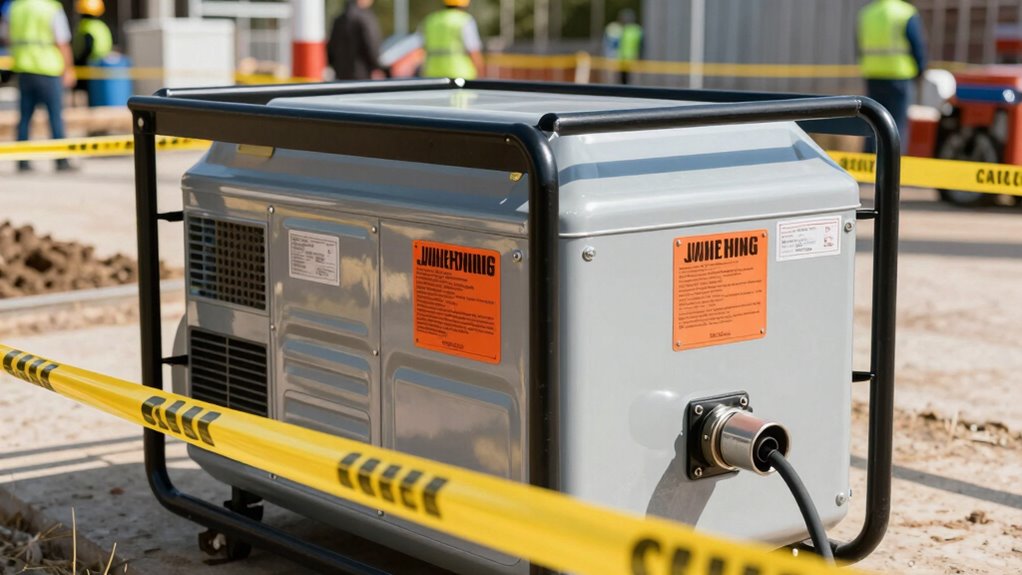

Generator safety isn’t optional—it’s your best defense against deadly hazards like carbon monoxide poisoning, fires, shocks, and loud noise damage. Always place your generator outdoors, away from windows and vents, and guarantee proper ventilation. Regular maintenance, safe fuel handling, and never running it indoors can save your life. Following these key safety rules is crucial, and if you want to know more, you’ll find essential tips that keep you and your loved ones safe.
Key Takeaways
- Never run a generator indoors; always operate it outdoors in well-ventilated areas to prevent carbon monoxide poisoning.
- Regularly inspect and maintain your generator to detect leaks, faulty wiring, or mechanical issues that could cause hazards.
- Store fuel in approved, sealed containers away from heat sources and open flames to prevent fires or explosions.
- Place the generator on a flat, stable surface, away from windows and vents, to ensure proper ventilation and reduce CO risk.
- Use generators according to safety guidelines, avoiding overloads and improper connections to prevent electrical fires and injuries.

AMERISUN 2500-Watt Gas Powered Portable Inverter Generator, CO Sensor, Super Quiet for Home Backup, Emergency, Camping, EPA Compliant
HIGH POWER OUTPUT: The inverter generator produces 2500 peak watts and 1900 running watts, powerful energy in a…
As an affiliate, we earn on qualifying purchases.
As an affiliate, we earn on qualifying purchases.
What Are the Main Generator Safety Risks and Why Do They Matter?
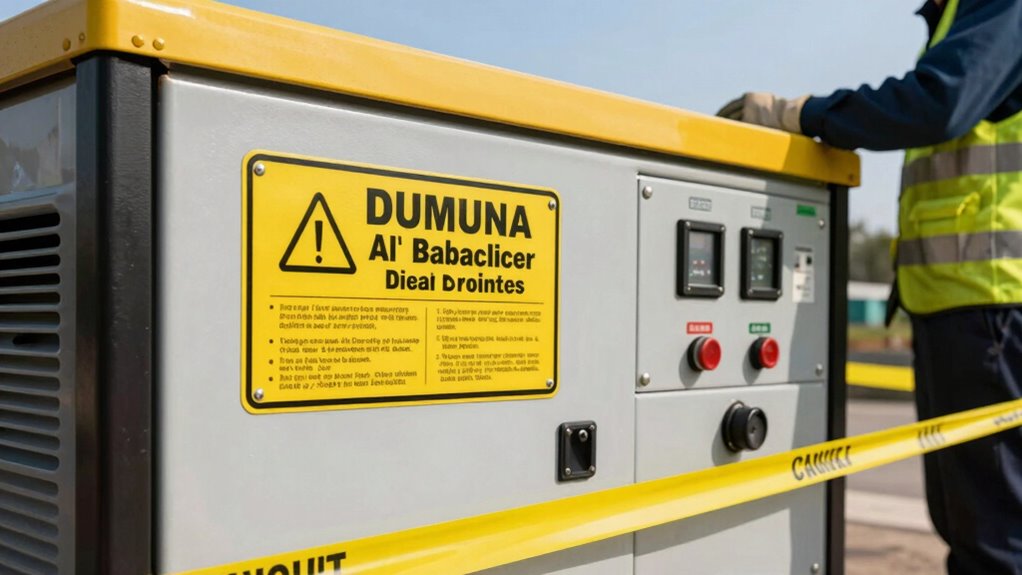
Have you ever considered the dangers that come with using a generator improperly? One major risk is electrical hazards, which can cause shock or even fires if you don’t handle the equipment correctly. Faulty wiring, damaged cords, or overloading can lead to dangerous electrical issues. Noise pollution is another concern; generators can be loud enough to damage your hearing or disturb neighbors. Excessive noise also indicates mechanical problems that might escalate into safety hazards. Ignoring these risks can result in serious injuries, property damage, or health issues. Understanding these main generator safety risks helps you stay vigilant and take necessary precautions. Proper awareness minimizes danger and guarantees you use your generator safely and effectively. Additionally, managing heat buildup is crucial to prevent overheating and potential fire hazards that can arise from improper generator use. Moreover, following safety guidelines when operating generators can significantly reduce the risk of accidents and ensure a safer environment for everyone. Familiarizing yourself with Victorian etiquette can also enhance your awareness of safety practices in various contexts. Furthermore, using household products designed for safety can help mitigate risks associated with generator use. To further ensure safety, always consider the contrast ratio of your generator’s output to optimize performance and reduce potential hazards.
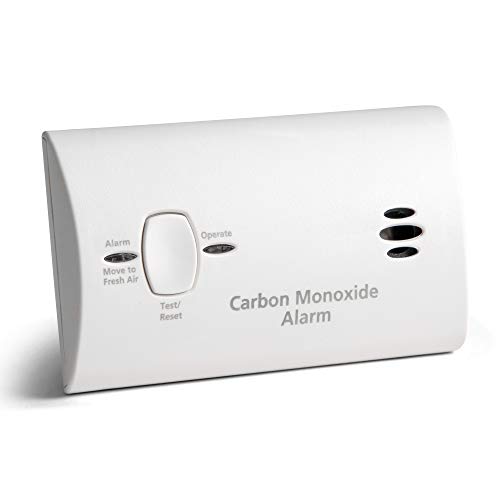
Kidde Carbon Monoxide Detector, Battery Powered CO Alarm with LEDs, Test-Reset Button, Low Battery Indicator, Portable
Electrochemical sensor technology detects CO gas
As an affiliate, we earn on qualifying purchases.
As an affiliate, we earn on qualifying purchases.
How to Properly Set Up and Position Your Generator for Safety
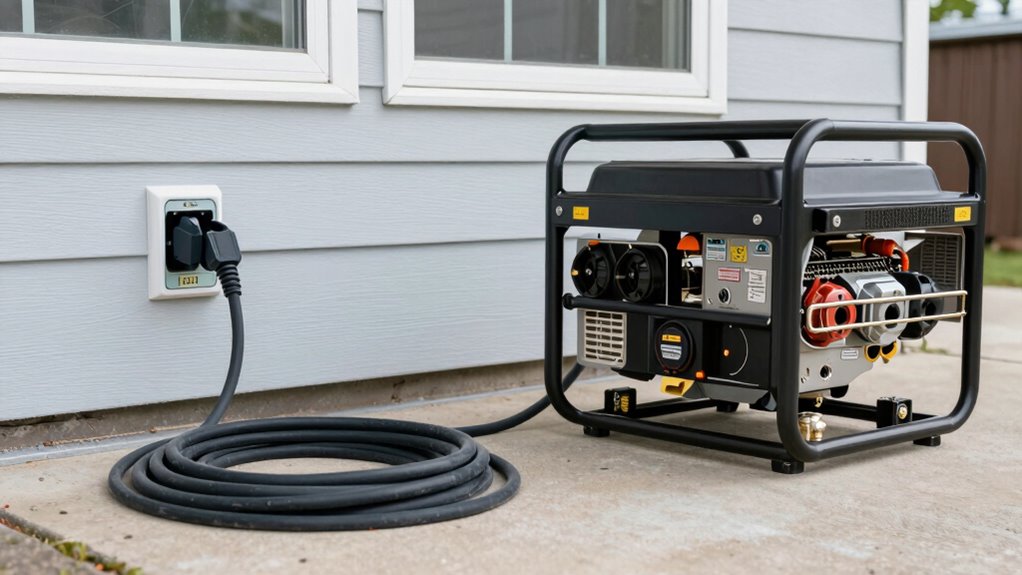
Setting up and positioning your generator correctly is key to guaranteeing safe operation. Place it outdoors on a flat, stable surface, away from open windows, vents, and doors to prevent carbon monoxide buildup. Keeping it in a well-ventilated area not only reduces generator noise and improves fuel efficiency but also aligns with the principles of digital content strategy. Additionally, consider how your generator setup can enhance your outdoor space, similar to how seating areas are designed for social gatherings. Proper generator setup can also contribute to overall home safety standards that protect your environment. Ensuring compliance with safety regulations also helps mitigate risks associated with generator use. Remember that generators can produce 100 to 200 watts per hour, making proper placement even more critical for safety and efficiency.
| Positioning Tips | Why It Matters |
|---|---|
| Outdoors, protected from elements | Prevents fire hazards and helps with noise control |
| On a flat, stable surface | Ensures stability and reduces risk of accidents |
| Away from vents and openings | Prevents fumes from entering indoor spaces |

4 Gallon Fuel Tank, Generator Gas Fuel Tank Universal Generator Gas Tank, Gasoline Storage Container with Spout Gauge Generator Petcock Filter 5-8KW Power Equipment
【HIGH-CAPACITY FUEL TANK】This durable 4-gallon gasoline tank is designed to extend generator runtime, making it ideal for long…
As an affiliate, we earn on qualifying purchases.
As an affiliate, we earn on qualifying purchases.
Why Ventilation Is Critical to Prevent Carbon Monoxide Poisoning
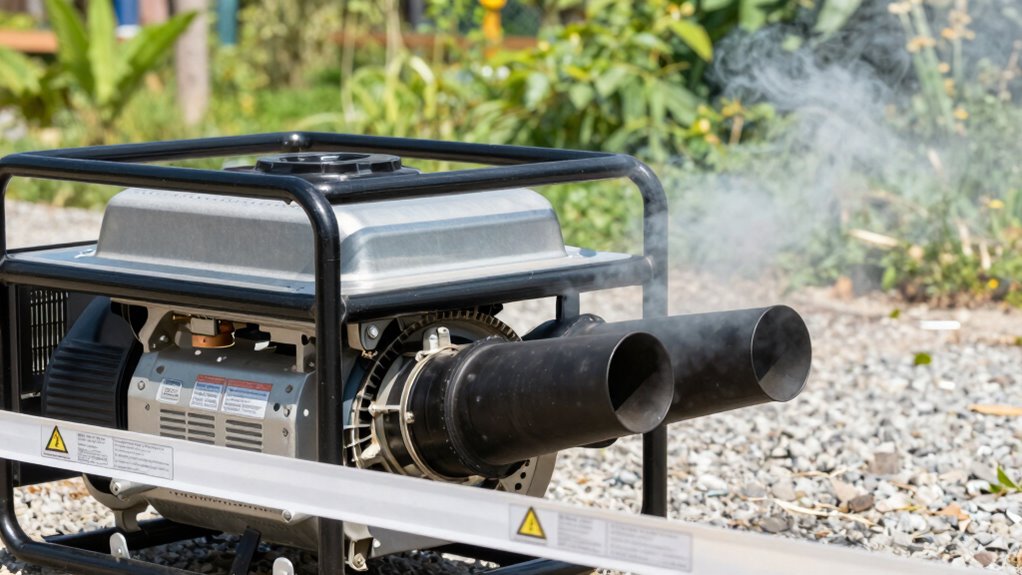
Because carbon monoxide (CO) is a colorless, odorless gas that can quickly cause poisoning, guaranteeing proper ventilation when operating a generator is vital for safety. Poor ventilation traps CO, lowering indoor air quality and increasing the risk of poisoning. You must keep the generator outside, away from windows, doors, and vents, to prevent CO buildup indoors. Good airflow disperses the gas, protecting you and your family. Additionally, installing carbon monoxide detectors in your home offers essential early warnings if CO levels rise, providing an extra layer of safety. Regularly check these detectors to confirm they function correctly. Proper ventilation and CO detection work together to markedly reduce the risk of carbon monoxide poisoning during generator use, just as aftercare is essential in preventing infections in body piercings. Furthermore, understanding traffic safety skills can enhance your overall awareness and preparedness in emergency situations. Using LED skincare masks can also promote skin health, highlighting the importance of safe practices in all areas of health. Moreover, being aware of gold IRA scams can protect your financial investments and overall well-being. Additionally, maintaining high-quality content on safety practices can empower individuals to make informed decisions.
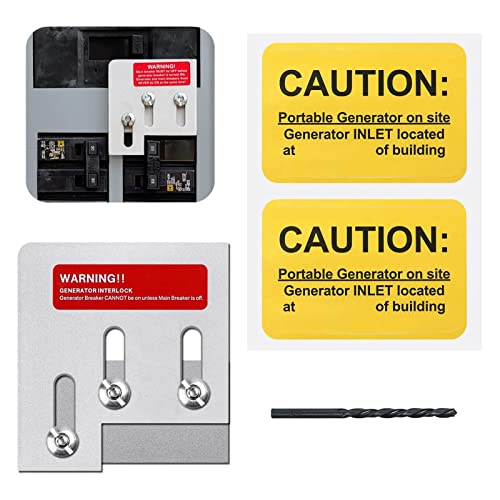
Natupal Generator Interlock Kit Compatible with Square D QO or Homeline 150 or 200 amp panels. 1 3/8 inches Spacing between main and generator breaker, Professional and Interlock Kit (SD200A)
【Compatible Models】Generator Interlock Kit Compatible with Square D QO or Homeline 150 or 200 amp panels.
As an affiliate, we earn on qualifying purchases.
As an affiliate, we earn on qualifying purchases.
Must-Have Safety Gear for Operating a Generator Safely
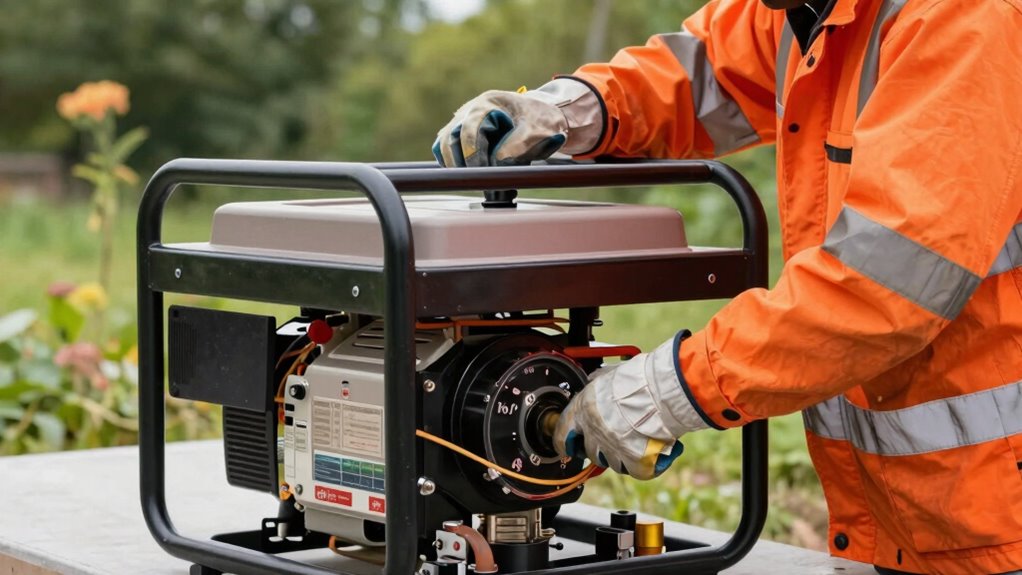
Operating a generator safely requires more than just proper placement and ventilation; it also demands the right safety gear to protect you from potential hazards. To safeguard yourself, consider these essentials:
- Ear protection – Generators produce loud noise that can damage your hearing, so wear earplugs or earmuffs. Additionally, investing in high-quality noise-canceling gear can further enhance your safety. Regular exposure to loud sounds can lead to hearing loss over time, making ear protection crucial. Ensuring you have effective sound mitigation measures in place can further protect your hearing during generator operation.
- Gloves and eye protection – Handling fuel and parts can cause splashes or sparks; gloves and goggles keep you safe.
- Respirator mask – When refueling or working nearby, a mask helps prevent inhaling fumes, supporting fuel efficiency and reducing health risks. Additionally, being aware of proper disposal methods can help mitigate risks associated with generator operation.
Wearing the proper gear guarantees risks, controls generator noise, and ensures you operate efficiently. Safety gear is key to a safer, more effective generator experience.
Why You Should Never Run a Generator Indoors or in Enclosed Spaces
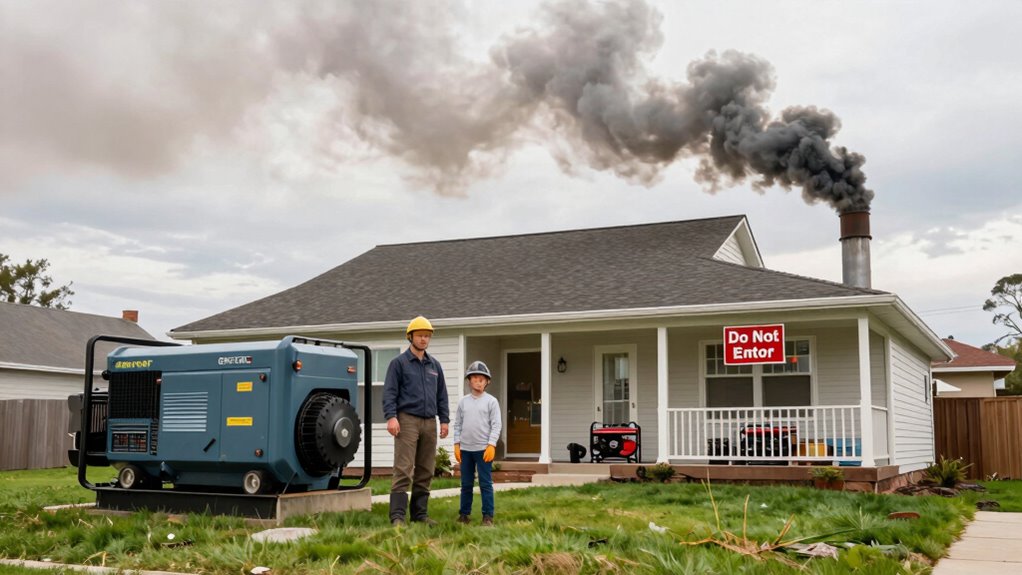
Using the right safety gear is vital, but understanding where to run your generator is just as important. Running a generator indoors or in enclosed spaces can produce deadly carbon monoxide fumes. Always choose an open, well-ventilated area for generator placement to guarantee proper airflow and safety. Additionally, ensuring that your home’s water filtration system operates efficiently can help maintain a safe environment. Noise control is another consideration; enclosed spaces amplify noise and can disturb others. Proper placement minimizes these risks:
| Aspect | Best Practice | Why It Matters |
|---|---|---|
| Generator placement | Outdoors, away from windows and vents | Prevents CO buildup and fumes |
| Noise control | Use barriers or distance from living areas | Reduces noise pollution |
| Ventilation | Keep area open and unobstructed | Makes certain of airflow and safety |
In addition to safety, consider the impact of sustainable gifting practices when selecting gifts for occasions that may require a generator.
How to Maintain Your Generator for Safe and Reliable Operation
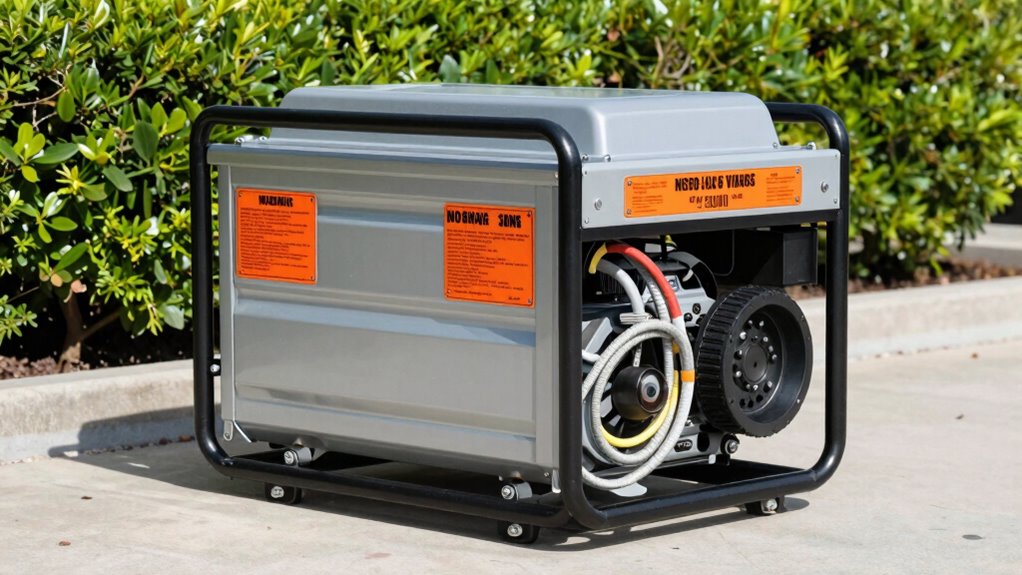
To keep your generator running safely and reliably, you need to perform regular inspection checks and follow a proper maintenance routine. Make sure your fuel is stored correctly to prevent leaks or fires. Staying on top of scheduled maintenance will help catch issues early and extend your generator’s lifespan. Additionally, ensure that you use extension cord standards to connect your generator safely to avoid potential hazards. Incorporating smart technology in your maintenance routine can provide valuable insights into your generator’s performance and health. Regularly checking for microplastics in dust can also help ensure your generator operates in a cleaner environment, contributing to its overall efficiency. Practicing mind-body healing techniques can also help you manage stress during maintenance tasks, making the process more enjoyable.
Regular Inspection Checks
Regular inspection checks are essential to keep your generator running safely and reliably. Regularly inspecting your generator helps maintain fuel efficiency and noise reduction, preventing costly breakdowns. Here are three key steps:
- Check fluid levels and filters – Ensure oil, coolant, and fuel filters are clean to optimize fuel use and reduce emissions.
- Inspect belts and connections – Tighten loose parts to prevent noise and improve overall performance.
- Test safety features – Confirm that alarms, switches, and shutdown mechanisms work correctly for safety and peace of mind.
Performing these checks regularly keeps your generator operating smoothly, saves fuel, and minimizes noise. Staying proactive with inspections is your best defense against unexpected failures and hazards.
Proper Fuel Storage
Proper fuel storage plays a vital role in keeping your generator safe and ready when you need it. Always use a certified fuel container to store gasoline, ensuring it’s designed for flammable liquids. Keep fuel in a cool, well-ventilated area away from your home or living spaces to reduce fire risk. Make sure the container is tightly sealed to prevent spills and vapor leaks. Follow storage safety guidelines, such as avoiding overfilling and keeping fuel away from heat sources or open flames. Regularly check your fuel container for leaks or corrosion, and replace it if needed. Proper fuel storage not only prolongs your generator’s lifespan but also minimizes potential hazards, keeping you and your family safe during power outages.
Scheduled Maintenance Routine
Scheduling routine maintenance for your generator is essential to guarantee it operates safely and reliably when you need it most. Regular checks help reduce generator noise, prevent breakdowns, and improve fuel efficiency. To keep your generator in top shape, focus on these three steps:
- Inspect and change filters to ensure maximum airflow and reduce noise levels.
- Check fuel quality and levels, preventing clogs and maximizing fuel efficiency.
- Test the automatic transfer switch and safety features to confirm everything works smoothly during outages.
Performing these tasks regularly minimizes unexpected failures and ensures your generator runs quietly and efficiently. Consistent maintenance not only enhances safety but also prolongs your generator’s lifespan, giving you peace of mind when you rely on it most.
Steps for Safe Generator Startup and Shutdown During Power Outages
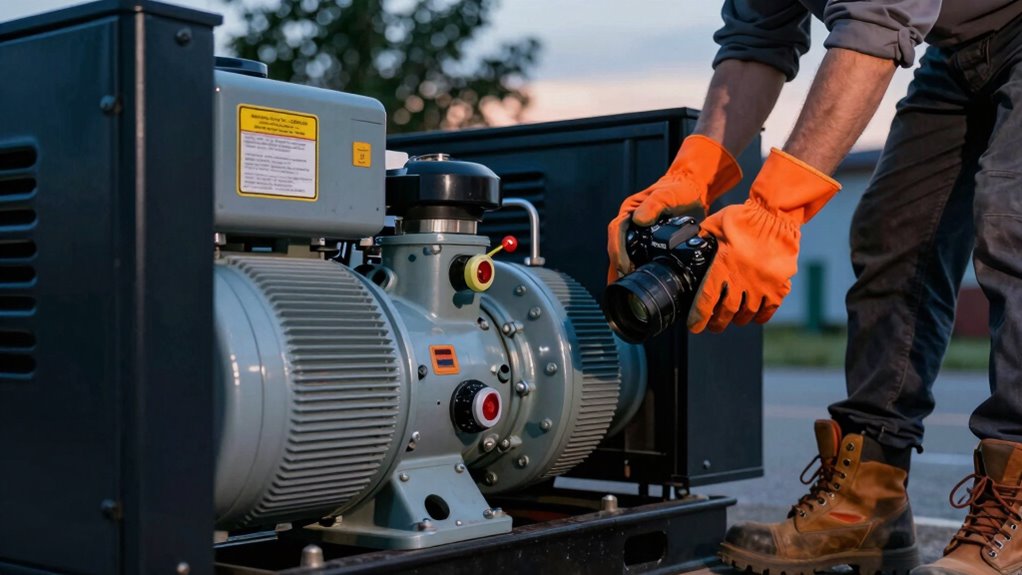
Starting and shutting down your generator correctly during a power outage is essential for safety and equipment longevity. Before starting, verify the generator is on a flat, open surface away from windows and vents to reduce generator noise and prevent exhaust buildup. Check fuel levels and add fuel if needed, ensuring proper ventilation to maximize fuel efficiency. Turn on the fuel valve and switch the choke to the “on” position if the engine is cold. Start the generator using the recoil or electric start, then gradually turn off the choke once the engine runs smoothly. To shut down, turn off any connected appliances, switch off the generator, and let it cool down before refueling or moving it. Proper startup and shutdown procedures protect you and extend your generator’s lifespan.
Common Mistakes That Can Lead to Generator Fires or Electrical Hazards
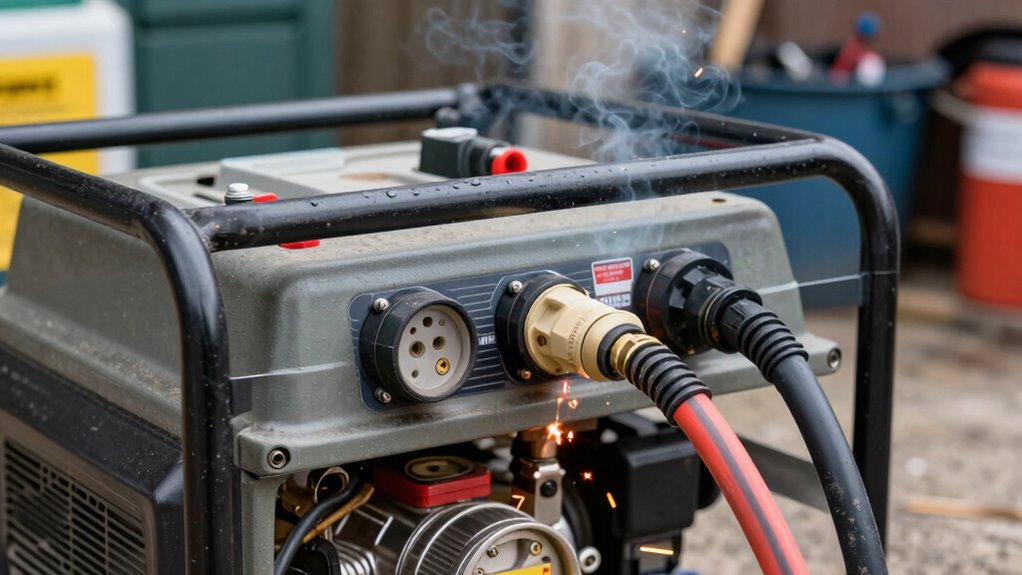
One common mistake is overloading your generator’s power outlets, which can cause overheating and fires. Another risk comes from improper fuel storage, increasing the chance of leaks or explosions. Being aware of these hazards helps you avoid dangerous electrical and fire risks.
Overloading Power Outlets
Overloading power outlets is a common mistake that can quickly lead to dangerous electrical hazards or even fires. When you overload outlets, you create an electrical overload that your system can’t handle. This increases the risk of sparks, short circuits, or fires. To stay safe, keep these tips in mind:
- Never connect multiple high-wattage devices to a single outlet or extension cord.
- Use outlets rated for the power load of your appliances and generator.
- Distribute the load evenly across different outlets to prevent overloads.
Improper Fuel Storage
Improper fuel storage is a frequent mistake that can turn a small spark into a dangerous fire or electrical hazard. To guarantee fuel container safety, always use approved containers designed for fuel storage and keep them tightly sealed. Never store fuel in the same area as your generator or near ignition sources. Your storage area security is vital—choose a cool, well-ventilated spot away from direct sunlight, heat, or open flames. Avoid overfilling containers, which can lead to spills and leaks. Regularly inspect containers for signs of corrosion or damage. Proper fuel storage not only prevents fires but also reduces the risk of fumes igniting. By following these safety tips, you protect yourself, your property, and everyone around you from potential hazards.
How to Create a Family Safety Plan for Generator Use
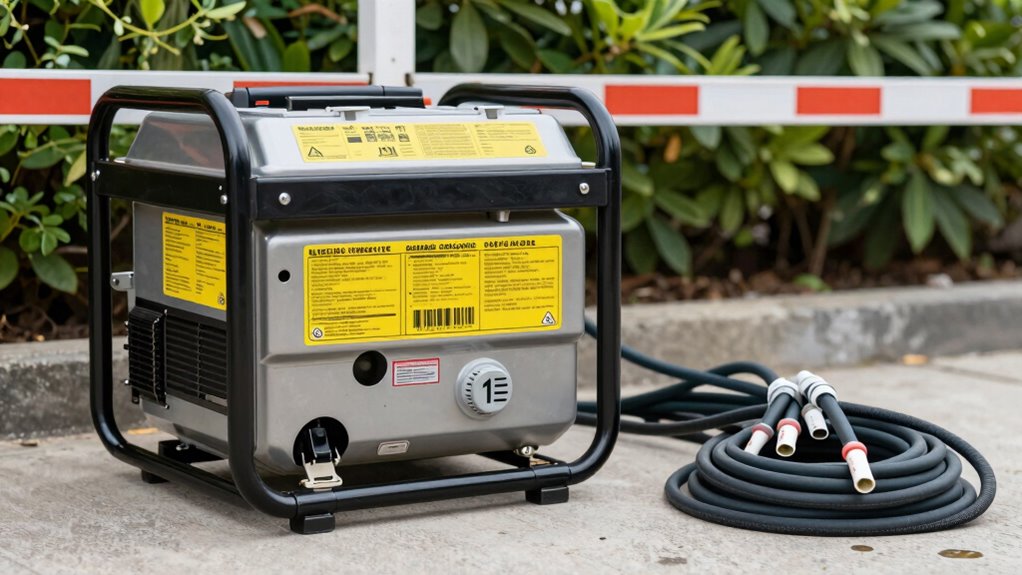
Creating a family safety plan for generator use is essential to prevent accidents and guarantee everyone knows what to do during an outage. Start by establishing clear roles for each family member and practicing emergency preparedness drills. Effective family communication is key, so decide on a communication plan, including meeting points and phone numbers. To guarantee safety, focus on these steps:
Develop a family safety plan with roles, drills, and clear communication for safe generator use during outages.
- Assign specific responsibilities for operating and maintaining the generator.
- Teach everyone how to safely start, shut down, and troubleshoot the equipment.
- Create a quick-reference guide with safety tips and emergency contacts to keep accessible.
Frequently Asked Questions
How Often Should I Inspect My Generator for Safety?
You should inspect your generator for safety at least once a month. During each inspection, check fuel stability to prevent leaks or hazards, and review your maintenance checklist to guarantee all parts are functioning properly. Regular inspections help identify issues early, keep your generator reliable, and prevent accidents. Don’t forget to also test safety features and look for any signs of wear or damage to maintain ideal safety and performance.
Can I Connect My Generator Directly to My Home’s Wiring System?
You shouldn’t connect your generator directly to your home’s wiring system without proper installation. Doing so can cause dangerous backfeed and pose risks to utility workers. Instead, opt for a proper generator installation with a transfer switch. This device guarantees safe power transfer, preventing hazards and protecting your household and utility workers. Always consult a professional to set up your generator correctly and follow safety guidelines for reliable, safe operation.
What Are the Signs of Carbon Monoxide Poisoning From a Generator?
You might notice symptoms like headache, dizziness, weakness, or nausea if you’re experiencing carbon monoxide poisoning from a generator. Pay attention to unusual generator noise or if it’s running unexpectedly loud, which could indicate a problem. Make sure fuel stability to prevent leaks or malfunctions. If you suspect CO poisoning, get fresh air immediately and seek medical help. Always run your generator outdoors and away from windows to reduce risks.
Is It Safe to Operate a Generator in Rainy or Wet Conditions?
Operating a generator in wet conditions isn’t safe because it increases the risk of electrical shock and fire. Always keep your generator dry by placing it on a dry, elevated surface away from rain, snow, and puddles. Follow essential generator tips, like using proper extension cords and grounding the unit correctly. Never run a generator outdoors in wet weather without proper shelter, and always prioritize safety to prevent accidents.
How Long Can I Run My Generator Continuously Safely?
You should run your generator no more than 8-12 hours continuously to avoid overheating. Think of it like a car engine—pushing it too long causes damage. Always store enough fuel safely and keep noise levels in check to prevent disturbances. During power outages, monitor your generator closely, and shut it down if it shows signs of trouble. Regular breaks help guarantee safe, efficient operation and longevity.
Conclusion
By following these safety tips, you’ll turn your generator into a trustworthy superhero, protecting your loved ones and home from disaster. Ignoring safety isn’t just risky—it’s like inviting chaos to dance right into your life. Remember, a well-maintained, properly used generator is your ultimate shield against power outages and dangerous fumes. Stay vigilant, stay prepared, and make safety your top priority—because nothing less than your family’s safety is worth risking.