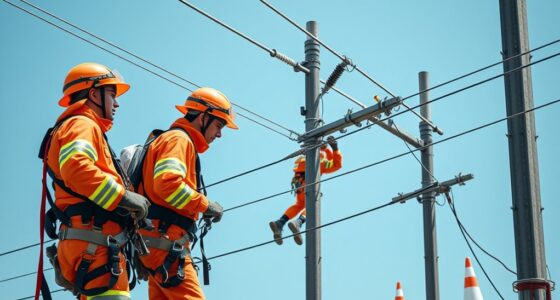
When handling live wires and electrical hazards, always wear protective gear like insulated gloves, goggles, and boots to prevent shocks. Check insulation carefully for cracks, tears, or damage before touching any wires, and replace or repair them immediately if needed. Use tools rated for the voltage to avoid accidents and keep a safe distance from energized parts. Following proper insulation techniques and safety protocols keeps you protected; learning more can help you stay safer in risky situations.
Key Takeaways
- Always wear properly rated insulating gloves, goggles, and protective gear before handling live wires.
- Turn off power and disconnect the circuit before beginning any work on live electrical components.
- Use insulated tools designed for electrical work to minimize the risk of shock or short circuits.
- Inspect wires for damaged insulation and repair or replace them before handling to prevent contact hazards.
- Follow established safety protocols and maintain a safe distance from energized parts to avoid accidental contact.

Electricity is vital in our daily lives, but handling live wires and electrical hazards can be dangerous if you’re not careful. When working with or near live wires, your safety depends largely on understanding and applying proper insulation techniques. Insulation acts as a barrier, preventing accidental contact with energized parts. Using high-quality insulation materials, such as rubber or plastic covers, helps guarantee that electricity doesn’t escape and cause shocks. Always inspect wires for damage or wear before handling them. Damaged insulation exposes live conductors, increasing the risk of electrical shock or short circuits. If you notice any frayed or cracked insulation, avoid touching the wire and replace or repair it immediately. To enhance your safety, consider using insulating tapes or sleeves designed specifically for electrical repairs.
Equipping yourself with suitable protective gear is equally important. Wearing insulated gloves provides a layer of defense against accidental contact with live wires. Make sure your gloves are rated for electrical work, and always check for tears or punctures before use. Safety goggles or face shields protect your eyes from sparks or debris, especially when cutting or stripping wires. Never underestimate the importance of protective footwear—insulated boots can prevent electrical shocks if you accidentally step on a live wire. When working in environments with potential electrical hazards, don’t rely solely on your judgment; always wear protective gear to minimize injury risks. Proper insulation techniques and protective measures are essential for preventing accidents and ensuring safety around electrical hazards. When using tools, always inspect them for damage and ensure they are properly rated for the voltage you’re working with.

Solar Rechargeable Table Lamp, Portable Desk Light for Indoor Outdoor
- Power Source: Solar and rechargeable battery
- Color Options: Warm white and RGB colors
- Adjustable Brightness: Dimmable for various needs
As an affiliate, we earn on qualifying purchases.
Frequently Asked Questions
What Are the Common Signs of Electrical Faults?
You’ll notice common signs of electrical faults like frequent circuit overloads, which cause breakers to trip often, and ground faults, where you might see sparks or a mild shock. Flickering lights, burning smells, or scorch marks also indicate potential issues. If you experience these signs, it’s vital to stop using the affected circuit and get a professional electrician to inspect and fix the problem promptly.
How Often Should Electrical Systems Be Inspected?
You should inspect your electrical systems at least once a year, as studies show regular inspections reduce electrical accidents by 30%. Keep to a consistent maintenance schedule, especially if your system is older or heavily used. Frequent inspections help identify potential issues early, preventing hazards. Depending on your setup, more frequent checks might be necessary. Staying proactive guarantees safety and keeps your electrical system functioning efficiently.
Can DIY Repairs Be Safe for Minor Electrical Issues?
DIY repairs can be safe for minor electrical issues if you follow proper DIY safety guidelines. Always turn off the power before starting any electrical repair, and use insulated tools. If you’re unsure or the problem seems complex, it’s best to call a professional. Remember, quick fixes may save time but could pose risks if not done correctly. Prioritize safety to prevent injury or further damage during your electrical repair.
What Protective Gear Is Recommended When Working Near Live Wires?
When working near live wires, you should wear insulating gloves and safety goggles. Did you know electrical shocks can cause burns or even stop your heart? Insulating gloves protect your hands from electric shocks, while safety goggles shield your eyes from sparks or unexpected arcs. Always check that your protective gear is rated for electrical work, and never compromise safety—your life depends on it.
How to Safely Dispose of Damaged Electrical Equipment?
To safely dispose of damaged electrical equipment, you should follow proper disposal procedures. First, disconnect the device from power sources and avoid handling internal components directly. Then, take it to an authorized electrical recycling facility that handles electronic waste responsibly. Proper disposal helps prevent environmental contamination and electrical hazards. Remember, never throw damaged electrical devices in regular trash; always use electrical recycling options to guarantee safety and compliance with regulations.

Camping Fan Battery Powered & Solar Powered, Portable Solar Fan 10000mAh Rechargeable Outdoor Fans with Light, Quiet Cordless Fans for Tent, RV, Emergency, Hiking, Power Outage, Desk, Survival Kit
- Dual Power Sources: Solar and USB rechargeable
- Long Battery Life: Lasts 5-20 hours on a full charge
- Multiple Speed Settings: Adjustable low, medium, high speeds
As an affiliate, we earn on qualifying purchases.
Conclusion
Remember, live wires are like lurking shadows in your workspace—silent but dangerous. Stay alert, keep your distance, and always follow safety steps as your shield. Think of electrical hazards as storms you can calmly weather by being prepared and cautious. By respecting these invisible forces, you turn potential chaos into controlled safety. So, handle wires with care, and let your vigilance be the guiding light that keeps you safe from harm’s reach.

LED Camping Lantern Rechargeable, IPX4 Waterproof Solar Camping Light with Type-C Charging, 4000mAh Power Bank, 4-Panel Expandable Flashlight, 6 Modes for Hurricane Emergency, Power Outage, Hiking
- Versatile Lighting Modes: 6 modes including SOS and ambient light
- Waterproof and Durable: IPX4 rated with military-grade materials
- Dual Charging Options: Solar and Type-C charging capabilities
As an affiliate, we earn on qualifying purchases.

ZPQBEYE Solar Table Lamp, 7-Color Changing Touch Control Rechargeable Light
- 3-Way Dimmable Touch Control: Adjust color temperature and brightness
- 7-Color Changing Roses: Creates romantic, enchanting shadows
- Multiple Charging Options: Solar and USB charging modes
As an affiliate, we earn on qualifying purchases.