TL;DR

Get backup power and energy gear delivered free with Prime
- Fast, free delivery on millions of items
- Prime Video, Amazon Music and more included
- Member-only deals all year
A person preparing to move into a newly built Los Angeles apartment reported higher Temtop monitor readings after keeping the windows closed for about 48 hours: TVOC reached 0.38 mg/m³ and formaldehyde 0.08 mg/m³. The readings are the renter’s measurements, not laboratory results, and the source does not include an expert assessment or confirmed health finding.
A person preparing to move into a newly built apartment in Los Angeles reported that readings from a consumer air monitor rose after the windows were closed for about 48 hours, including a formaldehyde reading of 0.08 mg/m³. The report, published as a question to GreenBuildingAdvisor, records the renter’s measurements and concerns; it does not include laboratory confirmation or a professional finding that the apartment poses a health risk.
The renter said the apartment was completed a few months before the report and had a noticeable, though tolerable, chemical or new-construction smell during an initial tour. Before moving in, they kept the windows open for approximately three weeks, arranged post-construction cleaning and HVAC duct cleaning, and used a brief period of air scrubbing. They measured conditions with a Temtop LKC-1000S+, which they described as not laboratory-grade.
With the windows open, the monitor showed TVOC of 0.05 mg/m³, formaldehyde (HCHO) of 0.01 mg/m³, and PM2.5 of 3.7 µg/m³, with an AQI reading of about 15. After roughly 48 hours with the windows closed, the renter reported TVOC at 0.38 mg/m³, after a peak of 0.45 mg/m³ and a later reading of 0.36 mg/m³. The formaldehyde reading was 0.08 mg/m³, which the renter estimated at about 65 parts per billion; PM2.5 was 2.1 µg/m³.
The renter said the odor remained noticeable after the windows had been closed and asked whether the figures were typical, whether the monitor’s formaldehyde result could be trusted, and whether professional testing would be appropriate. They also disclosed severe health anxiety and OCD, and asked for evidence-based advice rather than speculation. Those concerns are part of the original report; no independent measurements, expert response, diagnosis, or confirmed exposure assessment were included in the material provided.
Why the Readings Need Verification
The report highlights a practical problem for renters: a consumer monitor can prompt concern, but a displayed number is not the same as a laboratory measurement or a determination that a space is unsafe. The renter’s readings changed substantially between the period with windows open and the period with them closed. That makes ventilation conditions relevant to interpreting the results, but the figures alone do not establish what compounds produced the TVOC value or whether occupants would face harmful exposure.
The issue matters because the person is deciding whether to move into the apartment and how to manage indoor air over time. A reliable assessment could help distinguish a persistent indoor-air problem from a reading affected by the monitor’s limitations or measurement conditions. Conversely, treating an unverified consumer reading as proof of danger could add distress without resolving the question. The source does not establish a health threshold comparison, and it provides no basis to conclude either that the apartment is hazardous or that the readings can be dismissed.
Products Worth Considering

Coway Airmega 250 Air Purifier for Large Rooms

Levoit Core 400S-P Smart Air Purifier for Large Rooms
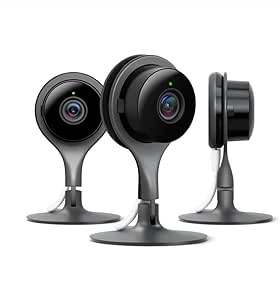
Google Nest Cam Indoor Security Camera, 3-Pack
As an affiliate, we earn on qualifying purchases.
Measurements Before Move-In
The renter took measurements before occupying the apartment, after several weeks of keeping its windows open. They then compared those readings with results after approximately two days with the windows closed. This is a report of a specific apartment and a limited set of readings, not a survey of new construction or a controlled study. The source does not identify the exact sampling locations, instrument calibration, measurement duration for each reading, or outdoor conditions during the test periods.
The renter suspected possible emissions from materials such as paint, flooring, adhesives, or cabinetry, but the report does not identify a confirmed source. It also does not provide product records or construction specifications. The reported odor may motivate further investigation, but the material supplied does not establish which substance caused it. The account’s central question is therefore unresolved: whether the readings reflect actual concentrations that merit action, measurement uncertainty, or a combination of factors.
“The chemical/new-building smell was still noticeable after those 48 hours with the windows closed.”
— The renter, in the GreenBuildingAdvisor question
What the Monitor Cannot Establish
The source gives no independent laboratory test, instrument validation, or indoor-air professional’s interpretation. It is therefore unclear how accurately the Temtop device measured formaldehyde at the reported level, what substances contributed to the TVOC reading, and whether the results were repeatable. No measurement protocol, calibration information, or comparison with outdoor air is provided.
It is also unclear whether the apartment’s readings would persist during normal occupancy or change with ventilation, temperature, or other conditions. The report does not establish a health effect, a regulatory violation, or the presence of a specific building-material emission. A further response from an industrial hygienist or indoor-air professional was not included in the supplied source material.
Independent Testing Could Clarify Results
The source does not report a final decision about moving in, further testing, or any response from the property owner. The renter asked whether professional laboratory testing would be justified and which sampling methods would be suitable for a residential apartment, but those questions remain unanswered in the material available.
If the renter pursues testing, the key next step would be an assessment by a qualified indoor-air professional who can select an appropriate method for the substances of concern and explain the results and limitations. Until a reliable assessment is available, the reported monitor readings should be described as unverified consumer-device measurements, not as proof of a health hazard or proof that the air is safe.
Key Questions
What readings did the renter report?
With windows open, the renter recorded TVOC at 0.05 mg/m³ and formaldehyde at 0.01 mg/m³. After about 48 hours with the windows closed, they reported TVOC at 0.38 mg/m³, after a peak of 0.45 mg/m³, and formaldehyde at 0.08 mg/m³. These are readings from the renter’s Temtop monitor, not laboratory-confirmed results.
Do the reported numbers prove that the apartment is unsafe?
No. The supplied report does not include laboratory confirmation, an expert assessment, or evidence of a health effect. The figures raise questions for the renter but do not, on their own, establish whether the apartment presents a health risk.
How certain is the formaldehyde reading?
The source does not provide validation or calibration data for the Temtop LKC-1000S+ under the conditions in the apartment. The renter described the device as not laboratory-grade, so the reported 0.08 mg/m³ should be treated as an unverified measurement rather than a confirmed concentration.
Did the renter arrange professional testing?
The report says the renter asked whether laboratory testing was warranted and what sampling methods would be appropriate. It does not say that professional testing took place or provide a later result.
Source: greenbuildingadvisor.com