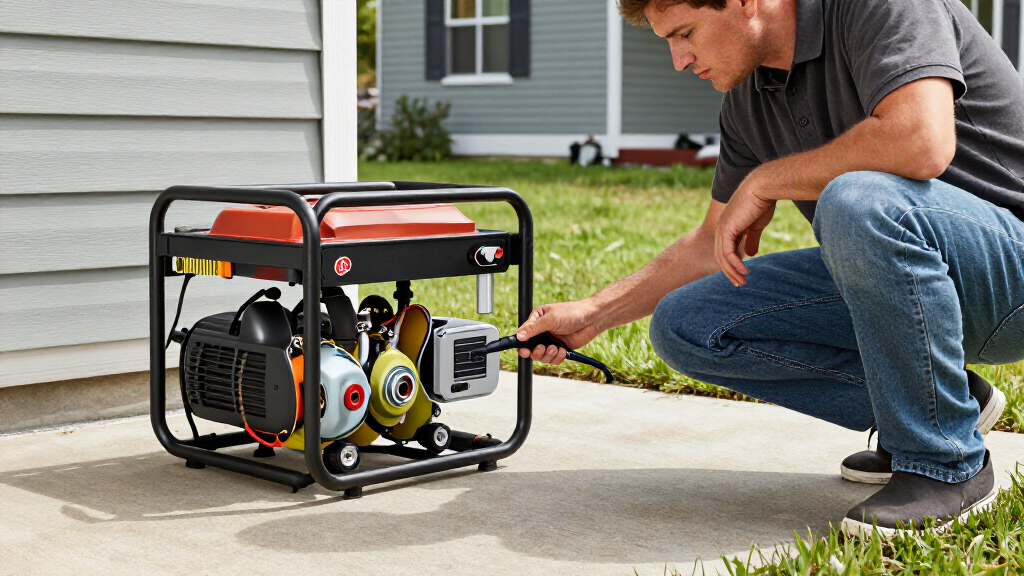

For most homes, I’d start with the Generac 22 kW Guardian for its high capacity and Wi-Fi monitoring; the Generac 24 kW is the stronger candidate for larger loads, while the Honeywell 14 kW suits buyers focused on a defined set of circuits. Choosing among home standby generators means balancing how much of the house you want powered against installation needs, transfer-switch configuration, and monitoring features. A larger unit may cover more demand, but only if the home’s electrical setup and fuel supply can support it. Smaller models can make better sense when you prioritize selected essentials over whole-house coverage. Continue reading for the full comparison and guidance on matching generator capacity to your backup plan.

Get backup power and energy gear delivered free with Prime
- Fast, free delivery on millions of items
- Prime Video, Amazon Music and more included
- Member-only deals all year
Complete the kit


Key Takeaways
- 22 kW models form the lineup’s middle ground: Generac offers several configurations at this capacity, so buyers can compare included transfer-switch and monitoring setups rather than capacity alone.
- The 24 kW Generac is the high-capacity pick, not automatically the right pick for every home: its advantage matters most when a load assessment points to greater demand.
- Transfer-switch details separate similar models: some listings specify a 200-amp or 16-circuit switch, while others emphasize generator capacity or connectivity instead.
- Generac’s 10 kW and 14 kW options serve a different backup plan: they make more sense for prioritizing selected essentials than assuming every household needs whole-home coverage.
- Monitoring is a recurring feature, but it does not replace installation planning: cellular or Wi-Fi capability may help with status checks, while safe placement, fuel availability, and correct sizing remain separate decisions.


| home standby generator | Voltage | Weight | Dimensions | Fuel |
|---|---|---|---|---|
| Generac 14kW Whole Home Genera | 240 volts | 391 pounds | 46.4 × 26.3 × 30.7 inches | Natural gas or propane |
| Generac Guardian 22 kW Home Ge | 240 volts | 466 pounds | — | Natural gas or LP gas |
| Generac 18kW Whole Home Genera | 240 volts | 426 pounds | 46.4 × 26.3 × 30.7 inches | Natural gas or propane |
| Generac 24 kW Whole-Home Stand | 240 volts | 461 pounds | 46.4 × 26.3 × 30.7 inches | Natural gas or liquid propane |
| Generac 18 kW Whole-Home Stand | 240 volts | 426 pounds | 46.4 × 26.3 × 30.7 inches | LP or natural gas |
| Generac 22 kW Whole-Home Stand | 240 V | 451 lb | 46.4 × 26.3 × 30.7 in | LP or natural gas |
| Generac 22 kW Whole-Home Stand | 240 V | 451 lb | 46.4 × 26.3 × 30.7 in | — |
| Generac 10kW Whole Home Genera | 120 V | 384 lb | 47.3 × 25.6 × 30.7 in | LPG or natural gas |
| Honeywell 14 kW Home Standby G | 120 V | — | 48 × 25 × 29 in | — |
| Generac 14 kW Whole-Home Stand | 240 V | 391 lb | 46.4 × 26.3 × 30.7 in | Natural gas or LP |
More Details on Our Top Picks
Generac 14kW Whole Home Generator, Cellular Capability
The 14 kW output makes this the lower-capacity choice among these five, a sensible fit for households prioritizing essential circuits rather than trying to run every large load at once. It starts automatically when utility power fails, and natural gas or propane operation gives homeowners flexibility to use an existing fuel supply. Compared with the Generac 18kW Whole Home Generator with Cellular Capability, it offers less electrical headroom, but its lighter listed weight may make site planning somewhat easier. Built-in cellular monitoring adds remote visibility, though full Mobile Link functionality requires a paid subscription. At 391 pounds, it still calls for careful installation planning, and buyers should have a qualified professional check the proposed load coverage rather than assume 14 kW will support every household circuit.
Pros:- Automatic outage detection and startup can restore backup power without manual operation.
- Dual-fuel support allows connection to natural gas or propane.
- Cellular connectivity supports remote monitoring through Mobile Link.
- Lower listed weight than the other products in this batch can ease equipment handling during installation.
Cons:- 14 kW provides less capacity than the 18 kW and 24 kW models for concurrent household loads.
- Full remote functionality requires a paid Mobile Link subscription.
- The 391-pound unit and large enclosure still require site and professional installation planning.
Best for: Homeowners who want automatic backup for essential household circuits and have a natural-gas or propane supply.
Not ideal for: Households seeking generous capacity for many simultaneous high-demand appliances; the 18 kW and 24 kW options offer more output.
- Fuel:Natural gas or propane
- Voltage:240 volts
- Frequency:60 hertz
- Connectivity:Built-in cellular; Mobile Link app
- Weight:391 pounds
- Dimensions:46.4 × 26.3 × 30.7 inches
Our verdict“Choose this model for automatic essential-circuit coverage on natural gas or propane, but opt for a higher-output unit if you expect to run more loads at once.”
Generac Guardian 22 kW Home Generator with Transfer Switch and Wi-Fi Monitoring
This package pairs 22 kW of output with a 200-amp NEMA 3R transfer switch, giving it a more complete whole-home setup than the 14 kW cellular model, which is better suited to a narrower load plan. Wi-Fi-connected Mobile Link monitoring can provide operating information and alerts remotely, while the listed five-year limited warranty adds defined coverage. Its G-Force 1000 Series engine is specified for natural gas or LP, so homeowners can match it to an available fuel supply. The main tradeoff is installation: at 466 pounds, this is the heaviest option in this group, and the product information calls for a licensed electrician. Buyers should also confirm actual load requirements with an installer; 22 kW is substantial capacity, but it does not remove the need to plan for large appliances and starting loads.
Pros:- 22 kW output offers more capacity than the 14 kW model for whole-home backup planning.
- Includes a 200-amp NEMA 3R transfer switch.
- Wi-Fi Mobile Link monitoring provides remote status and alerts.
- Listed five-year limited warranty.
Cons:- At 466 pounds, it is the heaviest unit among these five products.
- Licensed electrician installation adds planning and labor requirements.
- The included monitoring depends on Wi-Fi availability at the installation site.
Best for: Homeowners seeking a higher-capacity standby system with a 200-amp transfer switch and Wi-Fi monitoring in one package.
Not ideal for: Buyers who want a lighter unit or a simpler, lower-capacity setup; this model is heavy and needs licensed professional installation.
- Fuel:Natural gas or LP gas
- Voltage:240 volts
- Engine:Generac G-Force 1000 Series
- Engine displacement:999 cc
- Transfer switch:200-amp NEMA 3R
- Weight:466 pounds
- Warranty:5-year limited
Our verdict“Pick the Guardian when you want 22 kW capacity and an included 200-amp transfer switch, provided you can accommodate its weight and professional installation.”
Generac 18kW Whole Home Generator with Cellular Capability
At 18 kW, this model splits the difference between the 14 kW unit and the 22 kW Guardian: it offers more room for household loads than the smaller generator without stepping up to the largest output in this batch. Automatic outage detection and natural-gas or propane compatibility make it a practical standby choice for homes with an established fuel connection. Its built-in cellular link supports Mobile Link monitoring and control, while engine sensors and cold-start features are aimed at readiness in difficult conditions. Compared with the 18 kW Whole-Home Standby Generator with 200-Amp Transfer Switch, the listed product details here do not specify a transfer switch, so buyers should confirm exactly what the installation package includes. At 426 pounds, it is still a substantial piece of equipment, and full cellular monitoring requires a paid subscription.
Pros:- 18 kW output provides a middle ground between the 14 kW and 22 kW models.
- Automatic outage detection supports hands-off backup operation.
- Runs on either natural gas or propane.
- Cellular monitoring, engine sensors, and cold-start features support remote visibility and readiness.
Cons:- Full Mobile Link remote functionality requires a paid subscription.
- At 426 pounds, the generator requires substantial handling and installation planning.
- The supplied product details do not specify an included transfer switch.
Best for: Homeowners who need more capacity than a 14 kW system provides but do not need the 22 kW or 24 kW options.
Not ideal for: Buyers who require a clearly specified included 200-amp transfer switch or want to avoid subscription-based remote monitoring.
- Fuel:Natural gas or propane
- Voltage:240 volts
- Running wattage:18,000 watts
- Connectivity:Built-in cellular; Mobile Link app
- Weight:426 pounds
- Dimensions:46.4 × 26.3 × 30.7 inches
- Materials:Aluminum and stainless steel
Our verdict“Choose this 18 kW model for a middle-capacity automatic system with cellular monitoring, after confirming transfer-switch requirements and subscription costs.”
Generac 24 kW Whole-Home Standby Generator with Transfer Switch and Cellular Connectivity
The standout is 24 kW of output, the highest rating in this batch, paired with an automatic 200-amp transfer switch. That combination makes this the strongest fit here for homeowners whose load plan calls for more capacity than the 22 kW Guardian or either 18 kW model can provide. It runs on natural gas or liquid propane and includes built-in cellular connectivity for Mobile Link monitoring, along with a listed five-year limited warranty and 24/7 customer support. More capacity does not replace a proper load assessment, though: an installer should confirm that the generator and transfer arrangement suit the home’s actual circuits. At 461 pounds, it is heavy, and remote app monitoring requires a paid subscription. Buyers with modest essential-circuit needs may find the 14 kW or 18 kW options a closer match.
Pros:- Highest stated output in this group at 24 kW.
- Includes an automatic 200-amp transfer switch.
- Supports natural gas or liquid propane.
- Lists cellular monitoring, a five-year limited warranty, and 24/7 customer support.
Cons:- At 461 pounds, it requires careful delivery, placement, and installation planning.
- Mobile Link remote monitoring requires a paid subscription.
- Its higher capacity may be unnecessary for homes whose backup plan covers only essential circuits.
Best for: Owners of larger homes or homes with higher planned electrical demand who want a 24 kW unit and included automatic transfer switch.
Not ideal for: Households with modest backup needs or buyers who want remote cellular monitoring without a paid subscription.
- Fuel:Natural gas or liquid propane
- Voltage:240 volts
- Transfer switch:Automatic 200-amp
- Connectivity:Built-in cellular; Mobile Link app
- Weight:461 pounds
- Dimensions:46.4 × 26.3 × 30.7 inches
- Warranty:5-year limited
Our verdict“Choose this for a planned high-demand whole-home system with an included 200-amp switch, but match its capacity to a professional load assessment.”
Generac 18 kW Whole-Home Standby Generator with 200-Amp Transfer Switch and Cellular Connectivity
This 18 kW package stands apart from the other mid-capacity option because its listing explicitly includes a 200-amp transfer switch. That can simplify planning for buyers seeking a matched standby system, while natural-gas or LP compatibility gives it the same fuel flexibility as the 18 kW cellular model without a specified switch. Automatic startup, oil-level monitoring, and cold-start features focus on keeping backup service ready; cellular monitoring and control add remote oversight. It offers less output than the 22 kW Guardian and 24 kW model, so it suits households whose load plan fits 18 kW rather than those pursuing the greatest available capacity. The main compromises are its 426-pound weight and Mobile Link subscription requirement for remote updates and alerts. Warranty details are less specific than the five-year coverage listed for the Guardian and 24 kW model.
Pros:- Includes a specified 200-amp transfer switch, unlike the other 18 kW model in this batch.
- Automatic startup supports unattended backup when utility power fails.
- Oil-level monitoring and cold-start features support maintenance awareness and readiness.
- Compatible with LP or natural gas and offers built-in cellular connectivity.
Cons:- 18 kW provides less output than the 22 kW and 24 kW alternatives.
- Remote updates and alerts require a paid Mobile Link subscription.
- At 426 pounds, it requires substantial installation planning, and the warranty terms are not detailed in the supplied data.
Best for: Homeowners who want an 18 kW standby generator with a specified 200-amp transfer switch and cellular monitoring.
Not ideal for: Households whose planned simultaneous loads need more than 18 kW, or buyers who want clearly stated warranty terms and subscription-free remote alerts.
- Fuel:LP or natural gas
- Voltage:240 volts
- Transfer switch:200-amp
- Connectivity:Built-in cellular; Mobile Link app
- Weight:426 pounds
- Dimensions:46.4 × 26.3 × 30.7 inches
- Frequency:60 hertz
Our verdict“Choose this if 18 kW fits your load plan and you want the transfer switch specified in the package, but verify warranty terms and subscription needs before buying.”
Generac 22 kW Whole-Home Standby Generator with Transfer Switch and Cellular Connectivity
This model combines 22 kW of output with an included automatic 200 A transfer switch, making it a stronger fit for broad household backup than the 10 kW Generac Whole Home Generator. Its LP or natural gas connection means it can run without routine refueling, provided the property already has a compatible fuel supply. The cellular monitoring and cold-weather features also suit owners who want outage and maintenance information remotely, though full Mobile Link remote monitoring requires a premium subscription. Compared with the similarly sized Generac 22 kW model without a listed transfer switch, this package makes the switching hardware part of the purchase, but it remains a 451-pound installation that calls for careful site and installer planning. I’d choose it for higher household loads and cold-climate readiness, not for a home that needs only a small set of essential circuits.
Pros:- Automatically detects outages and starts backup power
- Includes an automatic 200 A transfer switch
- Cellular monitoring and maintenance alerts are available through Mobile Link
- Cold-weather design features and a 5-year limited warranty
Cons:- Full remote monitoring requires a Mobile Link premium subscription
- Requires an existing LP or natural gas supply
- At 451 pounds, it needs careful professional installation and placement
Best for: Homeowners seeking 22 kW of automatic backup, an included 200 A transfer switch, and cold-weather features for a property with natural gas or LP service.
Not ideal for: Homes without a natural gas or LP supply, or owners who want remote app features without paying for a premium subscription.
- Power output:22 kW
- Voltage:240 V
- Fuel:LP or natural gas
- Transfer switch:Automatic 200 A
- Weight:451 lb
- Dimensions:46.4 × 26.3 × 30.7 in
- Materials:Aluminum and steel
- Warranty:5-year limited
Our verdict“Choose this 22 kW package if you want broad automatic backup with a transfer switch included and can support its fuel and installation requirements.”
Generac 22 kW Whole-Home Standby Generator with Cellular Connectivity
With 22 kW of rated output, this Generac is aimed at households that want more headroom for simultaneous loads than the 14 kW Generac Whole-Home Standby Generator. It automatically detects an outage and runs on natural gas or propane, while oil-level sensors and low-oil shutdown add useful safeguards for a generator expected to sit idle between emergencies. Cellular connectivity supports Mobile Link monitoring and control, but those remote features require a premium subscription. Unlike the 22 kW Generac package that explicitly includes a 200 A transfer switch, this listing does not specify an included switch, so buyers should confirm the transfer equipment and installation scope before choosing it. Its cold-start support and five-year limited warranty add reassurance, but the 451-pound enclosure and fuel-line requirement make this a substantial permanent installation rather than a simple add-on.
Pros:- 22 kW output provides more capacity than the listed 14 kW Generac option
- Automatically detects utility outages and starts
- Runs on natural gas or propane
- Cellular connectivity, oil-level sensors, and cold-start support
Cons:- The listing does not specify an included transfer switch
- Mobile Link remote features require a premium subscription
- Its 451-pound weight and fuel connection add installation demands
Best for: Owners of larger homes who need 22 kW of automatic backup and already have natural gas or propane service, with transfer-switch arrangements confirmed separately.
Not ideal for: Buyers who need a clearly specified included transfer switch, lack a compatible fuel supply, or want cellular app control without a subscription.
- Power output:22 kW
- Voltage:240 V
- Fuel compatibility:Natural gas or propane
- Connectivity:Cellular; Mobile Link app
- Weight:451 lb
- Dimensions:46.4 × 26.3 × 30.7 in
- Materials:Aluminum and steel
- Warranty:5-year limited
Our verdict“Pick this model for higher-capacity automatic backup if you confirm transfer-switch needs and accept the subscription and installation requirements.”
Generac 10kW Whole Home Generator, Transfer Switch & Cellular Capability
The appeal here is a lower-capacity route to automatic standby power: the 10 kW output is better matched to essential circuits than the 22 kW Generac models, which offer more capacity for households with heavier simultaneous demands. It detects an outage and runs on LPG or natural gas, so it avoids the refueling routine of portable units but depends on a permanent fuel supply. Cellular capability can help owners check generator status through Mobile Link; full remote features require a premium subscription. The stated 120 V specification is also worth checking against the home’s electrical setup and the transfer-switch configuration before purchase, particularly if the plan is to back up more than selected circuits. At 384 pounds, it still needs a suitable site and installation work despite its smaller output. This is a focused backup choice, not the lineup’s pick for maximum household coverage.
Pros:- Automatically detects outages and starts
- Runs on LPG or natural gas
- Cellular capability supports remote performance monitoring
- Includes oil-level sensors, cold-start features, and a 5-year limited warranty
Cons:- 10 kW offers less capacity than the 14 kW and 22 kW Generac options
- Full Mobile Link remote features require a premium subscription
- Requires a fuel line, transfer-switch setup, and substantial installation handling
Best for: Households prioritizing essential circuits and automatic backup over the higher capacity offered by 14 kW and 22 kW standby models.
Not ideal for: Owners expecting high-capacity whole-home coverage, homes without LPG or natural gas, or buyers who want remote app features without a subscription.
- Power output:10,000 W
- Voltage:120 V
- Fuel:LPG or natural gas
- Frequency:60 Hz
- Weight:384 lb
- Dimensions:47.3 × 25.6 × 30.7 in
- Material:Aluminum
- Warranty:5-year limited
Our verdict“Choose this Generac if essential-circuit coverage matters more than the extra capacity of the larger standby models.”
Honeywell 14 kW Home Standby Generator with 16-Circuit Transfer Switch
The Honeywell’s clearest advantage is its included 16-circuit transfer switch, which gives buyers a defined starting point for choosing which parts of the home receive backup. Its 14 kW output sits between the 10 kW Generac and the 22 kW Generac options, making it a middle-capacity alternative rather than a high-load powerhouse. It runs on natural gas or propane and includes a composite mounting pad, which can simplify planning for a soil installation. The LCD control panel and weather-resistant aluminum enclosure round out a straightforward setup, but the listing gives a 3-year limited warranty, shorter than the five-year coverage stated for the Generac models here. Fuel compatibility and installation still need attention, and buyers should confirm that 16 circuits match their backup plan instead of assuming it can support every household load.
Pros:- Includes a 16-circuit transfer switch
- Runs on natural gas or propane
- Composite mounting pad is included for soil installation
- Weather-resistant aluminum enclosure and LCD control panel
Cons:- 3-year limited warranty is shorter than the five-year coverage listed for the Generac models
- A compatible fuel supply and installation work are still required
- 14 kW and 16 circuits may not suit homes with larger or broader backup demands
Best for: Homeowners who want a 14 kW standby unit with a specified 16-circuit transfer switch and a composite pad for soil installation.
Not ideal for: Buyers needing higher capacity than 14 kW, longer stated warranty coverage, or backup for circuits beyond the included switch’s scope.
- Power output:14 kW
- Fuel types:Natural gas or propane
- Voltage:120 V
- Frequency:60 Hz
- Transfer switch:16-circuit
- Dimensions:48 × 25 × 29 in
- Included components:Transfer switch and composite mounting pad
- Warranty:3-year limited
Our verdict“Choose the Honeywell when its included 16-circuit switch and mounting pad fit your plan better than the greater capacity of the 22 kW Generac models.”
Generac 14 kW Whole-Home Standby Generator with 200 Amp Transfer Switch and Cellular Connectivity
This Generac targets households that want a 14 kW middle ground rather than the greater capacity of the 22 kW models or the more limited 10 kW option. Its 200 A automatic transfer switch is a major distinction from the Honeywell 14 kW model, which specifies a 16-circuit switch instead; the Generac package may suit buyers planning a broader service-panel approach, while the Honeywell makes circuit count explicit. Natural gas or LP fuel, automatic outage response, and cold-weather features support permanent standby use. Cellular monitoring and control are available through Mobile Link, but updates and alerts require a premium subscription. At 391 pounds, it also calls for proper installation planning. I’d shortlist it when the 200 A switch and Generac connectivity ecosystem matter more than maximizing output; households with heavier loads should compare it with the 22 kW alternatives.
Pros:- Includes a 200 A automatic transfer switch
- Automatically detects outages and supplies backup power
- Natural gas or LP operation with cold-weather features and oil-level sensors
- Cellular monitoring and control are available through Mobile Link
Cons:- Mobile Link updates and alerts require a premium subscription
- 14 kW provides less capacity than the listed 22 kW Generac models
- At 391 pounds, installation requires suitable handling and site preparation
Best for: Homeowners seeking a 14 kW standby generator with a 200 A automatic transfer switch, cellular features, and an existing natural gas or LP supply.
Not ideal for: Homes with higher simultaneous power needs, buyers who do not want a paid subscription for remote updates and alerts, or properties without compatible fuel service.
- Power output:14 kW
- Voltage:240 V
- Fuel:Natural gas or LP
- Transfer switch:200 A automatic
- Connectivity:Built-in cellular; Mobile Link app
- Weight:391 lb
- Dimensions:46.4 × 26.3 × 30.7 in
- Warranty:Not specified in provided product data
Our verdict“Pick this Generac if 14 kW and an included 200 A switch fit your backup plan better than the higher output of the 22 kW models.”

How We Picked
I compared the ten listed models on the factors that shape a standby-generator purchase: rated capacity, the transfer-switch configuration specified in the product name, and whether monitoring is described as cellular or Wi-Fi. I also considered how clearly each option fits a buyer’s likely plan, from backing up selected circuits to seeking broader household coverage. Since the supplied product details do not state installation requirements, fuel consumption, sound levels, or warranty terms, I do not infer advantages on those points; buyers should verify them with the manufacturer and installer.
The order favors useful capacity paired with a clearly described setup, then distinguishes similar-capacity models by their stated switch and connectivity details. The 22 kW Guardian leads as a balanced starting point, while the 24 kW model is positioned for greater demand rather than as a universal upgrade. Smaller units and the Honeywell circuit-focused option rank lower for broad backup coverage but remain relevant for households with narrower needs. These are editorial fit distinctions based on the supplied product names, not claims of hands-on testing.
| home standby generator | Fuel | Connectivity |
|---|---|---|
| Generac 14kW Whole Home Genera | Natural gas or propane | Built-in cellular; Mobile Link app |
| Generac Guardian 22 kW Home Ge | Natural gas or LP gas | — |
| Generac 18kW Whole Home Genera | Natural gas or propane | Built-in cellular; Mobile Link app |
| Generac 24 kW Whole-Home Stand | Natural gas or liquid propane | Built-in cellular; Mobile Link app |
| Generac 18 kW Whole-Home Stand | LP or natural gas | Built-in cellular; Mobile Link app |
| Generac 22 kW Whole-Home Stand | LP or natural gas | — |
| Generac 22 kW Whole-Home Stand | — | Cellular; Mobile Link app |
| Generac 10kW Whole Home Genera | LPG or natural gas | — |
| Honeywell 14 kW Home Standby G | — | — |
| Generac 14 kW Whole-Home Stand | Natural gas or LP | Built-in cellular; Mobile Link app |
Factors to Consider When Choosing Home Standby Generators
Before choosing a model, I’d turn the outage plan into an electrical and installation brief. The product name can point to capacity or included equipment, but it cannot tell you what your home will actually run at once, whether the listed switch suits your panel, or what site work will be needed.
Size for Starting Loads, Not Just a List of Appliances
Write down the equipment you expect to run together during an outage, including heating or cooling equipment, pumps, refrigeration, and essential outlets. Motors can draw more power when starting than while running, so a simple sum of running watts can understate demand. Ask a qualified installer to review starting loads and any load-management plan before choosing between the 10, 14, 18, 22, and 24 kW options. The mistake to avoid is buying the biggest rating available without checking whether the home can use it, or buying a smaller unit based only on average usage. If selected circuits are enough, a smaller generator may fit the plan; if simultaneous major loads matter, a higher-capacity unit may be warranted. Match the unit to a written load plan rather than the phrase “whole home” alone.
Choose Whole-Home Coverage or a Deliberate Essentials Plan
“Whole-home” in a product title does not mean every load can run at once without limits. Some homes can back up most circuits through load management, while others need a priority list that temporarily excludes high-demand equipment. Decide which functions must stay on during an outage and which can wait, then have an electrician map those priorities to the panel. A circuit-based approach can reduce the capacity needed, but it calls for clarity about which rooms and appliances lose power. Avoid treating a 16-circuit switch as a measure of generator output; circuit count and power capacity describe different things. Choose coverage based on how your household uses electricity, not on the label alone.
Check the Transfer Switch Against Your Panel
Transfer switches connect the generator to the home and manage the changeover from utility power, but included configurations vary across these listings. The Honeywell model names a 16-circuit switch, several Generac listings specify a 200-amp switch, and other products mention a transfer switch without the same detail. Those descriptions are not interchangeable: panel rating, circuit layout, and installation design all affect compatibility. Ask the installer whether the included switch fits your service and whether extra equipment or panel work is needed. A common buying mistake is comparing generator kilowatts while overlooking the transfer equipment that determines which loads can be supported. Confirm the complete electrical scope before settling on a model.
Verify Fuel Supply and Site Conditions Before Ordering
Generator capacity is only useful if the site can supply the required fuel at the needed rate. The product names provided here do not specify fuel type or consumption, so confirm both in the full manufacturer documentation and with a licensed installer. Site planning also needs to account for placement, clearances, local rules, noise expectations, and access for service. A unit that looks suitable on paper may require fuel-line work, a suitable pad, permits, or other preparation. Ask for a site visit and a written installation scope rather than assuming a listed package covers every part of the job. This step can reveal practical constraints before you choose among capacities.
Treat Monitoring as a Convenience, Not a Backup Plan
Several Generac models in this roundup specify cellular capability, while the 22 kW Guardian lists Wi-Fi monitoring. Remote status checks can be useful when you are away, but connectivity does not provide power or replace routine service. Ask whether the selected monitoring method needs a subscription, reliable signal, home internet, or additional setup, since the product names alone do not answer those questions. If outages often disrupt communications in your area, consider how the system reports status when networks are unavailable. Prioritize the generator, switch, and installation fit first, then use monitoring as a tie-breaker. That order avoids paying attention to app features while leaving core backup needs unresolved.
Compare Total Ownership Needs, Not Just the Generator
A standby system calls for professional installation and continuing maintenance, so the generator itself is only one part of the ownership decision. Ask what scheduled service involves, which parts are covered by warranty, and who can provide support locally. Check whether the package includes the components and commissioning work you expect, because product titles do not establish the full installation scope. A higher-capacity model may add capability, but it can also call for a more demanding site and electrical plan. Conversely, selecting a smaller unit to simplify the purchase can create frustration if it cannot handle the loads you intend to back up. Compare written quotes and service plans using the same scope of work.
Frequently Asked Questions
Is a 22 kW home standby generator enough for my house?
It depends on the loads you want to run at the same time, not only on the home’s floor area. Heating and cooling equipment, pumps, and other motors can have substantial starting demand, so ask an installer to calculate both running and starting loads. The 22 kW models here provide a useful comparison point, but the 24 kW option may suit homes with greater demand, while a smaller unit may work with a selective-load plan. Have the installer explain any load-management limits before choosing. A written load assessment is more useful than assuming one capacity fits a particular home size.
Should I choose a model with a transfer switch included?
An included transfer switch can make the package easier to compare, but it does not prove that the switch matches your electrical panel or backup plan. The listed models vary: some specify a 200-amp switch, the Honeywell names a 16-circuit switch, and others simply say a transfer switch is included. Ask an electrician to verify service rating, circuit layout, and the loads you intend to support. Also confirm whether the quoted installation includes any panel changes or additional equipment. Compare the complete installed configuration, not just the generator listing.
Is cellular monitoring better than Wi-Fi monitoring for a standby generator?
Neither connection type is automatically better for every home. Cellular monitoring may be useful when you do not want generator status to depend on home internet, while Wi-Fi can suit a home with reliable internet and compatible coverage at the installation site. The product names do not establish signal quality, ongoing service requirements, or what happens during a network outage. Ask the manufacturer or installer about setup, coverage, and any recurring connectivity terms. Treat monitoring as a convenience after confirming capacity, switch compatibility, and service support.
Can a 10 kW or 14 kW model provide whole-home backup?
It may support a carefully selected set of household loads, but the title “whole home” should not be read as a promise that every appliance can run simultaneously. The answer depends on your electrical demand, how the circuits are arranged, and whether load management is part of the installation. The 10 kW and 14 kW models in this roundup are better starting points for buyers who can prioritize essentials than for households assuming unrestricted use. Have an installer identify what would be excluded or managed during an outage. If that tradeoff does not suit your household, compare the higher-capacity options.
What should I confirm before buying a standby generator package?
Request a site-specific installation assessment that covers electrical loads, transfer-switch fit, fuel supply, placement, permits, and commissioning. Ask for a written scope that separates included package components from work that may be needed at your home. Confirm maintenance intervals, warranty coverage, local service availability, and any requirements for cellular or Wi-Fi monitoring. These details can change which model is the practical fit even when two generators have similar capacity. Do not commit based only on a product title or a general promise of whole-home coverage.
Conclusion
For a broad starting point, I recommend the Generac 22 kW Guardian as best overall because its capacity is paired with specified Wi-Fi monitoring. For best value in fit, I’d look first at the Generac 14 kW options if a load assessment shows that selected household loads are enough; the right choice between them depends on the switch and connectivity setup you need. The Generac 24 kW is my best premium-style pick for buyers whose calculated demand supports the added capacity, not simply those who want the largest number. For beginners, I’d start with the Honeywell 14 kW if a defined 16-circuit plan matches the household, then have an installer confirm the panel fit. For specific needs, choose the 10 kW Generac for a narrower essentials-first plan or a 22 kW model with the switch and monitoring configuration that suits your site. In every case, let the load assessment and installation quote settle the final choice.
Halloween Picks
halloween
As an affiliate, we earn on qualifying purchases.