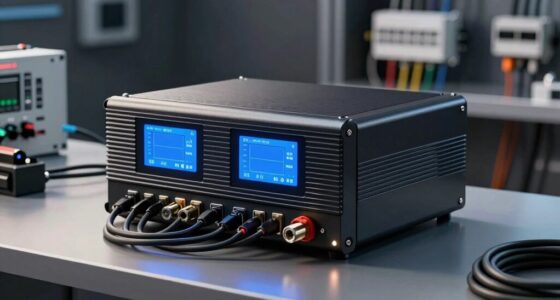
For solar panels for home use, I’d start with the Callsun 450W Bifacial Solar Panels as the best overall panel pick for buyers planning a fixed installation, while the Jackery HomePower 3600 Plus suits households that want a portable power station and included panels. For larger off-grid needs, ECO-WORTHY’s kits stand out by pairing substantial panel capacity with battery storage. The central tradeoff is scale: individual panels offer flexibility but require compatible equipment, while complete kits reduce equipment-matching work but demand more space and careful installation planning. This roundup compares those approaches, along with compact options for smaller systems. Read on for the full breakdown and help matching a setup to your home and energy goals.

Get backup power and energy gear delivered free with Prime
- Fast, free delivery on millions of items
- Prime Video, Amazon Music and more included
- Member-only deals all year
Key Takeaways
- The lineup serves different meanings of home solar: it ranges from individual panels for custom arrays to portable power and high-capacity off-grid kits, so buyers should choose a system type before comparing wattage.
- Callsun’s 450W two-panel set offers the strongest panel-first starting point in this group; its bifacial, double-glass design is aimed at fixed installations, but still needs compatible mounting and electrical components.
- The Jackery package is the clearest convenience pick because it combines a power station with two solar panels, though portable backup is not the same as a grid-connected rooftop system.
- ECO-WORTHY’s three 10kW-class kits differ most in storage and system configuration: the listed battery capacities vary, so matching usable storage and inverter setup to actual loads matters more than choosing by panel capacity alone.
- Renogy’s 200W panels and ECO-WORTHY’s 200W kit suit smaller or staged projects, while the four-panel ShadowFlux set raises output potential at the cost of more roof or ground area and system planning.
| Callsun 450W Bifacial Solar Panels, 2-Pack, N-Type 16BB Monocrystalline, Double-Glass |  | Best for High Output in a Two-Panel Set | Quantity: 2 panels | Cell technology: N-type 16BB monocrystalline | Efficiency: 25.6% | VIEW LATEST PRICE | See Our Full Breakdown |
| Jackery HomePower 3600 Plus Portable Power Station with Two 200W Solar Panels |  | Best All-in-One Backup System | Battery capacity: 3,584Wh | Battery type: LFP | AC output: 3,600W | VIEW LATEST PRICE | See Our Full Breakdown |
| Renogy ShadowFlux 200W N-Type Solar Panel |  | Best for Partially Shaded Mounting Areas | Maximum power: 200W | Cell technology: N-type 16BB | Cell efficiency: 25% | VIEW LATEST PRICE | See Our Full Breakdown |
| Callsun 400W Bifacial Solar Panel Set, Two 200W N-Type Panels |  | Best Bifacial Set for Modular Mounting | Panel configuration: 2 × 200W | Total maximum power: 400W | Cell type: N-type monocrystalline, 16BB | VIEW LATEST PRICE | See Our Full Breakdown |
| Renogy 200W N-Type 16BB Solar Panel, 24V |  | Best for 12V and 24V Battery Compatibility | Power: 200W | Cell technology: N-type 16BB | Cell efficiency: 25% | VIEW LATEST PRICE | See Our Full Breakdown |
| ECO-WORTHY 10kW Off-Grid Solar Panel Kit with 10.62kW Panels and 32.2kWh Battery Storage |  | Best for High-Energy Off-Grid Homes | Total PV capacity: 10,620W | Solar panels: 18 × 590W monocrystalline panels | Continuous inverter output: 10,000W | VIEW LATEST PRICE | See Our Full Breakdown |
| ECO-WORTHY 10kW Off-Grid Solar System Kit with Split-Phase Inverter, Batteries, and Solar Panels |  | Best for Flexible Battery Configuration | Total PV capacity: 5,310W | Solar panels: 9 × 590W bifacial panels | Panel efficiency: 23.23% | VIEW LATEST PRICE | See Our Full Breakdown |
| ECO-WORTHY 10 kW Off-Grid Solar Panel Kit with 16.1 kWh Battery |  | Best for Inverter-Led System Expansion | Total PV capacity: 2,950W | Solar panels: 5 × 590W glass panels | Panel dimensions: 89.69 × 44.65 × 1.18 in each | VIEW LATEST PRICE | See Our Full Breakdown |
| Renogy ShadowFlux 800W N-Type Solar Panel Set, 4 × 200W |  | Best for Partially Shaded Roofs | Total maximum power: 800W | Panel configuration: 4 × 200W | Cell type: N-Type, 16BB | VIEW LATEST PRICE | See Our Full Breakdown |
| ECO-WORTHY 200W 12V/24V Monocrystalline Solar Panel Kit with 30A PWM Charge Controller |  | Best for Small Off-Grid Home Loads | Total power: 200W | Panel configuration: 2 × 100W monocrystalline panels | Output voltage: 12V DC; panels can be wired for 24V | VIEW LATEST PRICE | See Our Full Breakdown |
| solar panels for home | Dimensions | Output voltage |
|---|---|---|
| Callsun 450W Bifacial Solar Pa | 69.37 × 44.65 × 1.18 inches per panel | — |
| Jackery HomePower 3600 Plus Po | — | — |
| Renogy ShadowFlux 200W N-Type | 49.69 × 30.08 × 1.18 inches | — |
| Callsun 400W Bifacial Solar Pa | 51.3 × 30.3 × 1.4 inches per panel | — |
| Renogy 200W N-Type 16BB Solar | 49.7 × 30.1 × 1.2 inches | 24V DC |
| ECO-WORTHY 10kW Off-Grid Solar | — | 120V/240V split phase |
| ECO-WORTHY 10kW Off-Grid Solar | — | 120V/240V split phase |
| ECO-WORTHY 10 kW Off-Grid Sola | — | — |
| Renogy ShadowFlux 800W N-Type | 49.69 × 30.08 × 1.18 in | 24V DC |
| ECO-WORTHY 200W 12V/24V Monocr | — | 12V DC; panels can be wired for 24V |
More Details on Our Top Picks
Callsun 450W Bifacial Solar Panels, 2-Pack, N-Type 16BB Monocrystalline, Double-Glass
With 900W of rated power across two panels, this set is the strongest direct panel option here for buyers who want substantial output without piecing together several smaller modules. Its bifacial cells can collect reflected light from behind the panels, while the parallel layout is designed to reduce the effect of partial shade. Those advantages depend on mounting conditions: a close-mounted rooftop may offer little reflected light, so the bifacial design is not a guaranteed output boost. Compared with the Callsun 400W Bifacial Solar Panel Set, this pair provides more rated power but also takes up more space, with each panel measuring about 69 by 45 inches. Double-glass construction and an IP68 rating suit outdoor installations, though the large format can make handling and mounting more demanding.
Pros:- Two 450W panels provide 900W total rated power.
- Bifacial cells can use reflected light when installation conditions allow.
- Parallel layout is designed to limit losses from partial shading.
- Double-glass construction, an anodized aluminum frame, and IP68 rating suit outdoor use.
Cons:- Each panel’s large dimensions require substantial mounting space.
- Bifacial output gains depend on reflected light and mounting clearance.
- The large panels may be harder to handle and mount than the 200W options in this roundup.
Best for: Homeowners or off-grid property owners with ample mounting area who want a two-panel setup with higher rated output.
Not ideal for: Buyers with limited roof or ground-mount space, or installations where panels sit close to a surface that leaves little room for rear-side light.
- Quantity:2 panels
- Cell technology:N-type 16BB monocrystalline
- Efficiency:25.6%
- Dimensions:69.37 × 44.65 × 1.18 inches per panel
- Maximum voltage:30.08V
- Ingress protection:IP68
- Output commitment:At least 84.5% output after 25 years
Our verdict“Choose this set for high two-panel output and outdoor durability if you have the mounting space to accommodate its large format.”
Jackery HomePower 3600 Plus Portable Power Station with Two 200W Solar Panels
This package is a different kind of home solar choice: it pairs two 200W panels with a 3,584Wh LFP power station, so energy can be stored for use after sunlight fades. Its 3,600W AC output and capacity expansion to 21kWh per unit suit households that want portable backup for appliances and essential devices, rather than panels wired into a conventional rooftop system. Compared with the Callsun 450W Bifacial Solar Panels, Jackery trades higher panel output for built-in storage, multiple charging methods, and ready-to-use AC outlets. The tradeoff is that the included solar array totals only 400W, and the 77.2-pound station is heavy even with its wheels and handle. The panels may also arrive separately, so the complete setup may not be on hand at once.
Pros:- 3,584Wh LFP battery provides stored energy for use beyond daylight hours.
- 3,600W AC output and four outlets support a range of household devices.
- Can charge from AC, solar, a gas generator, or hybrid AC and DC input.
- Wheeled design and telescopic handle ease movement across suitable surfaces.
Cons:- The two included panels total 400W, less panel capacity than the Callsun 900W set.
- At 77.2 pounds, the power station can be difficult to lift.
- Power station and solar panels may ship in separate packages.
Best for: Households seeking movable backup power with included panels, battery storage, and the option to recharge from AC or a generator.
Not ideal for: Homeowners building a fixed rooftop array for sustained household generation, or buyers who need a light unit to lift frequently.
- Battery capacity:3,584Wh
- Battery type:LFP
- AC output:3,600W
- Included solar panels:Two 200W panels
- Expandable capacity:Up to 21kWh per unit
- Weight:77.2 lbs
- Charging time:Solar: 4 hours; AC: 2.5 hours; hybrid AC+DC: 2 hours
- Warranty:5 years
Our verdict“Pick the Jackery package when stored, portable backup matters more than building a high-output fixed solar array.”
Renogy ShadowFlux 200W N-Type Solar Panel
The ShadowFlux panel is the most targeted choice here for a home or off-grid location where shade may cross the array. Its 200W N-type panel uses ShadowFlux anti-shading technology, designed to maintain generation in partial shade and reduce hot-spot risk. That focus distinguishes it from the Renogy 200W N-Type 16BB Solar Panel, 24V, which emphasizes battery-system compatibility and a longer stated output commitment rather than a named anti-shading feature. At 23.8 pounds and nearly 50 by 30 inches, this is still a substantial single panel, not a compact accessory. The IP67-or-higher weather protection suits exposed installations, while the five-year materials and workmanship commitment is shorter than the Renogy 24V panel’s 10-year commitment. Its 25-year output warranty is specified to 80% power.
Pros:- ShadowFlux technology is designed to help generation continue through partial shade.
- N-type 16BB cells are designed to reduce hot spots and micro-crack risks.
- IP67 or higher protection supports exposure to rain, snow, and small hail.
- 25-year output warranty specifies 80% power output.
Cons:- A single 200W panel provides less rated capacity than either Callsun two-panel set.
- At 23.8 pounds and nearly 50 by 30 inches, it still needs sturdy mounting and considerable space.
- The five-year materials and workmanship commitment is shorter than the Renogy 24V panel’s 10-year commitment.
Best for: Homeowners, van owners, or off-grid users whose panel location may receive intermittent shade and who want one weather-resistant 200W module.
Not ideal for: Buyers building a high-output array with minimal shade, or those prioritizing a longer materials and workmanship commitment over anti-shading features.
- Maximum power:200W
- Cell technology:N-type 16BB
- Cell efficiency:25%
- Maximum voltage:36.5V
- Dimensions:49.69 × 30.08 × 1.18 inches
- Weight:23.8 lbs
- Ingress protection:IP67 or higher
- Warranty:5-year materials and workmanship commitment; 25-year output warranty to 80%
Our verdict“Choose this Renogy panel when partial shade is a real installation concern and one 200W module fits your system.”
Callsun 400W Bifacial Solar Panel Set, Two 200W N-Type Panels
This set divides 400W of rated output between two 200W panels, giving home and off-grid installers more flexibility than a single large module. Separate panels can be positioned around roof features or shade, and the dual-module layout is designed to reduce the impact of partial shading. Its bifacial cells may also capture reflected light, but that benefit depends on how much light reaches the rear surface. Compared with the Callsun 450W Bifacial Solar Panels, this set has lower total output but smaller panels that are easier to place on an RV, boat, or constrained roof. Each panel still weighs 23.8 pounds, so mounting is not effortless. Tempered glass, an aluminum frame, an IP68-rated junction box, and pre-drilled holes make it a practical outdoor option when compatible mounting hardware is available.
Pros:- Two panels offer more placement flexibility than one large module.
- Bifacial cells can capture reflected light when installation conditions support it.
- Dual-module design is intended to limit losses from partial shading.
- Pre-drilled mounting holes and outdoor-rated materials suit compatible installations.
Cons:- The 400W total is lower than the Callsun 450W pair’s 900W rated output.
- Each panel weighs 23.8 pounds, making handling and mounting more demanding.
- Bifacial gains depend on rear-side light and the mounting setup.
Best for: RV, van, boat, or home off-grid owners who need two separately mountable panels and want bifacial capability in a 400W set.
Not ideal for: Buyers seeking the highest output from two panels, or those unable to provide secure mounts for two panels weighing 23.8 pounds each.
- Panel configuration:2 × 200W
- Total maximum power:400W
- Cell type:N-type monocrystalline, 16BB
- Conversion efficiency:Up to 25.6%
- Dimensions:51.3 × 30.3 × 1.4 inches per panel
- Weight:23.8 lbs per panel
- Materials:3.2mm tempered glass and aluminum alloy frame
- Long-term output commitment:At least 84.5% rated output after 25 years
Our verdict“Choose this set over the larger Callsun pair when two smaller mounting surfaces and layout flexibility matter more than maximum rated output.”
Renogy 200W N-Type 16BB Solar Panel, 24V
Renogy’s single 200W module is a straightforward fit for buyers building around a 12V or 24V battery system, including lithium, AGM, and deep-cycle setups. Its 24V output and N-type 16BB cells make it a practical standalone panel for a compatible off-grid system, while the stated degradation commitment gives buyers a defined long-term output benchmark. Compared with the Renogy ShadowFlux 200W N-Type Solar Panel, this model lists broader battery compatibility and a 10-year output, material, and workmanship commitment, but does not list ShadowFlux anti-shading technology. It is also only one 200W panel, so it cannot match the capacity of either Callsun set without adding modules. At 23.4 pounds, it remains a substantial rooftop or vehicle-mounted component, and buyers should verify system voltage and controller compatibility before connecting it.
Pros:- Compatible with 12V and 24V battery systems and several battery types.
- N-type 16BB cells and 25% cell efficiency suit a compact 200W panel.
- Designed to perform in cloudy conditions and hot climates.
- Includes a 10-year output, material, and workmanship commitment.
Cons:- A single 200W panel offers less total capacity than the two-panel Callsun sets.
- The 24V output requires checking compatibility with the charge controller and existing system.
- At 23.4 pounds, it adds meaningful weight to a vehicle or roof installation.
Best for: Van, cabin, or small off-grid system owners who need a single 200W panel compatible with 12V or 24V battery setups.
Not ideal for: Buyers who need a multi-panel, high-output array immediately or whose installation receives regular shade and calls for listed anti-shading technology.
- Power:200W
- Cell technology:N-type 16BB
- Cell efficiency:25%
- Output voltage:24V DC
- Maximum voltage:37.44V
- Dimensions:49.7 × 30.1 × 1.2 inches
- Weight:23.4 lbs
- Battery compatibility:12V and 24V systems; lithium, AGM, and deep-cycle batteries
- Warranty commitment:10-year output, material, and workmanship commitment; 25-year 80% output
Our verdict“Choose this panel for a compatible 12V or 24V battery system when a single 200W module and longer stated commitment suit your build.”
ECO-WORTHY 10kW Off-Grid Solar Panel Kit with 10.62kW Panels and 32.2kWh Battery Storage
For a home that needs substantial off-grid capacity, this is the most fully equipped system in this group: 10.62kW of panels, a 10kW split-phase inverter, and 32.2kWh of LiFePO₄ storage arrive as a matched kit. The large battery reserve can help carry household loads beyond sunny hours, while 120V/240V output suits a broader range of home circuits than the smaller ECO-WORTHY 10 kW kit with five panels. Its dual MPPT and monitoring options add useful system oversight, but this is not a plug-and-play home upgrade. Professional installation is recommended, and the panels and batteries take up considerable space. The tradeoff is clear: it offers far more generation and storage than the other ECO-WORTHY kits here, but needs a suitable site, delivery access, and careful system planning.
Pros:- Complete system combines 10.62kW of PV, a 10kW inverter, and 32.2kWh of battery storage.
- 120V/240V split-phase output can serve a wider range of household circuits.
- Dual MPPT, Wi-Fi monitoring, and multiple battery-chemistry support provide configuration flexibility.
- Battery connectivity and built-in wheels and handles aid monitoring and positioning.
Cons:- Professional installation is recommended, adding planning and labor needs.
- Large panels and heavy components require substantial space and truck-accessible delivery.
- Maximum daily generation depends on optimal conditions and will vary with site, season, and weather.
Best for: Owners of remote or grid-unreliable homes with substantial daily loads, room for 18 full-size panels, and access to professional installation.
Not ideal for: Small homes, renters, or buyers seeking a compact backup setup; its panel footprint, heavy pallet delivery, and installation needs are disproportionate for modest loads.
- Total PV capacity:10,620W
- Solar panels:18 × 590W monocrystalline panels
- Continuous inverter output:10,000W
- Peak inverter output:20,000W
- Output voltage:120V/240V split phase
- Battery storage:32.2kWh total; 2 × 48V 314Ah LiFePO₄ batteries
- Inverter features:Dual MPPT, Wi-Fi monitoring, up to 200A battery charging
- Panel dimensions:89.68 × 44.65 × 1.18 in each
Our verdict“Choose this kit when a large off-grid home needs the strongest combination of included solar capacity and battery reserve in this lineup.”
ECO-WORTHY 10kW Off-Grid Solar System Kit with Split-Phase Inverter, Batteries, and Solar Panels
This kit takes a different route from the 32.2kWh ECO-WORTHY system: it pairs a 10kW inverter with 20.48kWh of storage split across four batteries and nine bifacial panels. That battery arrangement may appeal to buyers who prefer several smaller units rather than two larger ones, while the bifacial panels can capture reflected light when the installation surface supports it. The included 5.31kW PV array, however, is much smaller than the inverter’s output rating and half the panel capacity of its larger sibling. That gap matters if you expect the array to replenish batteries quickly after heavy use. Dual MPPT and Wi-Fi monitoring add useful control, but professional installation and pallet delivery remain part of the project. I’d choose it for a planned system that values its battery layout and panel design, not for maximum included generation.
Pros:- Includes a 10kW split-phase inverter and 20.48kWh of LiFePO₄ storage.
- Four-battery configuration offers a different storage layout from the two larger batteries in the 32.2kWh ECO-WORTHY kit.
- Bifacial panels may gain output from reflected light when site conditions suit them.
- Dual MPPT and Wi-Fi monitoring support system tracking and control.
Cons:- The included 5.31kW array is modest relative to the 10kW inverter.
- Large panels and batteries ship by truck on a pallet and need suitable delivery access.
- Professional installation is recommended for safe system setup.
Best for: Homeowners planning an off-grid system who want 20.48kWh of storage in four battery units and can make productive use of bifacial panels.
Not ideal for: Buyers whose priority is high daily solar generation from the supplied array; the 5.31kW PV capacity is well below the inverter’s 10kW rating.
- Total PV capacity:5,310W
- Solar panels:9 × 590W bifacial panels
- Panel efficiency:23.23%
- Continuous inverter output:10,000W
- Peak inverter output:20,000W
- Output voltage:120V/240V split phase
- Battery storage:20.48kWh; 4 × 48V 100Ah LiFePO₄ batteries
- Maximum panel voltage:1,500V
Our verdict“Pick this kit for its four-battery 20.48kWh configuration and bifacial array, provided its included PV capacity matches your generation needs.”
ECO-WORTHY 10 kW Off-Grid Solar Panel Kit with 16.1 kWh Battery
The defining feature here is the mismatch between a 10kW split-phase inverter and just 2.95kW of included panels. That can suit a buyer who needs the inverter and battery capacity for household loads but expects to add more PV later; it is less convincing as a ready-to-go solar generation package. Its 16.076kWh LiFePO₄ battery gives it a useful reserve, though it stores less than the 32.2kWh ECO-WORTHY kit and supplies less panel capacity than the nine-panel bifacial system. Dual MPPT, Wi-Fi monitoring, and parallel capability offer room to shape a larger system, but expansion needs proper design rather than assumptions about compatibility. The five full-size panels still require significant mounting area, and the pallet delivery and professional-installation recommendation make this a substantial home project.
Pros:- 10kW continuous inverter output with 120V/240V split-phase support.
- 16.076kWh LiFePO₄ battery includes a display, wireless connectivity, and wheels.
- Dual MPPT, Wi-Fi monitoring, and support for parallel inverter connections provide expansion options.
- Five 590W panels form a smaller array than the other large ECO-WORTHY kits.
Cons:- The 2.95kW included PV capacity is low relative to the 10kW inverter.
- The system may need additional panels to meet substantial household generation needs.
- Professional installation and truck-accessible pallet delivery add logistical demands.
Best for: Homeowners who want a high-output split-phase inverter and substantial battery storage now, while planning to expand the PV array with a qualified installer.
Not ideal for: Buyers expecting the included panels alone to support heavy daily household use or rapidly recharge the battery; its 2.95kW array is the smallest among the full-home ECO-WORTHY kits.
- Total PV capacity:2,950W
- Solar panels:5 × 590W glass panels
- Panel dimensions:89.69 × 44.65 × 1.18 in each
- Panel weight:72.8 lb each
- Continuous inverter output:10,000W
- Peak inverter output:20,000W
- Battery:48V 314Ah LiFePO₄; 16.076kWh
- Maximum PV voltage:500V
Our verdict“This is a sensible inverter-and-storage foundation for an expansion-minded homeowner, but not the strongest choice for a complete high-generation array out of the box.”
Renogy ShadowFlux 800W N-Type Solar Panel Set, 4 × 200W
For a home installation where trees, vents, or nearby structures cast intermittent shade, this set puts partial-shade performance ahead of sheer array size. Renogy’s ShadowFlux design and N-Type, 16BB cells are intended to sustain generation under partial shading and reduce hot-spot risk, making the four-panel set a more targeted choice than the small ECO-WORTHY 200W kit. Its 800W total output is still better suited to a small auxiliary array or a compatible 24V system than to powering an entire home by itself. The 25% stated efficiency and weather protection are appealing, but the set weighs 95.3 lb overall, and the listed panel dimensions may limit placement on tight roof sections. I’d favor it when shade behavior matters more than getting the highest system capacity from a single purchase.
Pros:- ShadowFlux technology is designed to improve generation under partial shade.
- N-Type 16BB cells have a stated 25% efficiency.
- IP67-or-higher protection and weather-resistant construction suit exposed installations.
- 25-year output warranty specifies at least 80% output.
Cons:- 800W total capacity is not a whole-home solar system on its own.
- The four-panel set weighs 95.3 lb, which can complicate handling and installation.
- Panel dimensions may constrain placement on smaller roof sections.
Best for: Homeowners adding a compact 24V array in a partly shaded location, such as a roof with nearby trees or obstructions.
Not ideal for: Households seeking a stand-alone whole-home solar supply or installers with limited roof space; 800W is a modest array and the four-panel set has a substantial combined weight.
- Total maximum power:800W
- Panel configuration:4 × 200W
- Cell type:N-Type, 16BB
- Efficiency:25%
- Output voltage:24V DC
- Dimensions:49.69 × 30.08 × 1.18 in
- Set weight:95.3 lb
- Output warranty:25 years; 80% power output guaranteed
Our verdict“Choose this Renogy set for a compact, shade-aware 24V array, not as the sole solar supply for a home.”
ECO-WORTHY 200W 12V/24V Monocrystalline Solar Panel Kit with 30A PWM Charge Controller
This is the simplest entry point in the group for a small off-grid load: two 100W panels, a PWM controller, brackets, and cables form a basic 200W kit. Compared with the Renogy ShadowFlux 800W set, it has far less capacity but includes more of the parts needed to begin a modest 12V or 24V setup. That makes it more relevant for a shed, small cabin, or limited backup use than for ordinary whole-home power. The stated daily output of up to 800Wh assumes four hours of full sunshine, so actual production will shift with season, weather, orientation, and shade. Its aluminum frames and wind and snow load ratings suit outdoor mounting, but PWM charging is a simpler approach than the MPPT controls in the larger ECO-WORTHY systems.
Pros:- Includes two panels, a 30A PWM controller, brackets, and connection cables.
- Panels can be wired for 12V or 24V system configurations.
- Corrosion-resistant aluminum frames and stated wind and snow load ratings support outdoor mounting.
- Compact kit provides a straightforward starting point for limited off-grid loads.
Cons:- 200W total capacity is far below the full-home ECO-WORTHY kits and the Renogy 800W set.
- PWM charging is less capable than the MPPT controls included with the larger ECO-WORTHY systems.
- Daily output depends on sufficient sunlight, and the stated maximum assumes four hours of full sunshine.
Best for: Owners of a small cabin, shed, or off-grid workspace who need a modest 12V or 24V array with basic mounting and charge-control components included.
Not ideal for: Homeowners trying to run typical household circuits or build a high-capacity roof array; 200W and a PWM controller are suited to limited loads, not whole-home demand.
- Total power:200W
- Panel configuration:2 × 100W monocrystalline panels
- Output voltage:12V DC; panels can be wired for 24V
- Charge controller:30A PWM
- Efficiency:Up to 21.5%
- Stated daily output:Up to 800Wh/day under 4 hours of full sunshine
- Panel dimensions:35.2 × 23.1 × 1.3 in
- Included components:Panels, Z mounting brackets, controller, solar cables, connectors, and tray cable
Our verdict“Buy this kit for a small 12V or 24V off-grid setup, but choose a larger array for meaningful household power.”
How We Picked
I ranked these products by how well they address distinct home-solar needs, rather than treating every wattage figure as directly comparable. I weighed panel capacity and design, whether storage and conversion equipment are included, how much system planning remains for the buyer, and whether the product is suited to a small expandable setup, portable backup, or a larger off-grid installation. I also considered the practical implications of mounting, compatibility, and ongoing system upkeep.
The order gives priority to flexible panel options that can form a useful foundation for a home installation, then accounts for integrated convenience and the scale of complete systems. The Callsun 450W set leads among panel-first choices; Jackery ranks highly for buyers who value an assembled portable setup. ECO-WORTHY’s large kits follow because their scale can meet bigger off-grid goals, but storage differences and installation demands make them less suitable as default choices. Smaller Renogy and ECO-WORTHY options rank lower for whole-home output, though they can be better fits for compact systems or gradual expansion.
Factors to Consider When Choosing Solar Panels For Home
Choosing home solar starts with the job you want the system to do. I’d separate daily bill-offset goals, outage backup, and off-grid operation before comparing panel specifications; each calls for a different mix of panels, batteries, inverter capacity, and installation work.
Decide Whether You Need Grid-Tied, Backup, or Off-Grid Power
A grid-connected system can reduce grid consumption, but it usually requires equipment and approvals beyond the panels themselves. Backup power needs a battery and an inverter that can supply the circuits you want during an outage; panels alone will not keep household devices running at night. An off-grid system must cover energy use through low-sun periods, which means storage and generation need to be planned together. A portable power station can serve selected appliances or emergency needs, but it should not be mistaken for a whole-home rooftop system. Before shopping, list the loads you want powered and how long you expect to run them. This prevents choosing a high panel wattage that still lacks the storage or output capacity your use case requires.
Size Around Energy Use, Roof Space, and Sun Exposure
Start with household electricity use over a full year, then check which roof areas receive useful sun and whether shade changes through the day. A panel’s rated wattage describes output under defined conditions, not the energy it will deliver at your home every day. Roof direction, tilt, local weather, obstructions, and seasonal daylight all affect production. A bifacial panel may gain value where its rear side can receive reflected light, but a close, dark roof surface may limit that advantage. Avoid filling a roof plan with panels before confirming setbacks, structural suitability, and clearances. If available space is limited, compare expected energy yield and layout flexibility rather than choosing solely by the largest wattage label.
Match Panels, Inverter, Battery, and Wiring
Panel voltage and current must fit the inverter or charge controller, and the way panels are connected changes the electrical characteristics of the array. A kit can simplify equipment selection, but buyers should still check the included inverter’s output, battery chemistry and capacity, and whether the system supports the loads they plan to run. Battery capacity describes stored energy, while inverter power limits how much can operate at once; these figures answer different questions. Allow for wiring, disconnects, mounting hardware, and any components the package does not supply. Mixing panels from separate systems can work only when electrical limits and connector requirements are compatible. Have a qualified installer or system designer verify the full design before purchasing equipment for a permanent home installation.
Choose Storage for the Loads You Need to Cover
Battery sizing should reflect both the energy consumed and the length of time you need to operate without solar production. A refrigerator, lights, and communications equipment may call for a different reserve than heating, cooking, or other high-demand appliances. Also check whether the battery can deliver enough continuous power and whether it can accept the expected charging input. Bigger storage can improve backup duration, yet it adds cost, weight, space needs, and replacement planning. For grid-connected homes, a battery is a separate decision from installing panels and may not suit every household’s goals. Compare usable capacity and supported power rather than relying on a headline storage number alone.
Account for Installation, Permits, and Maintenance
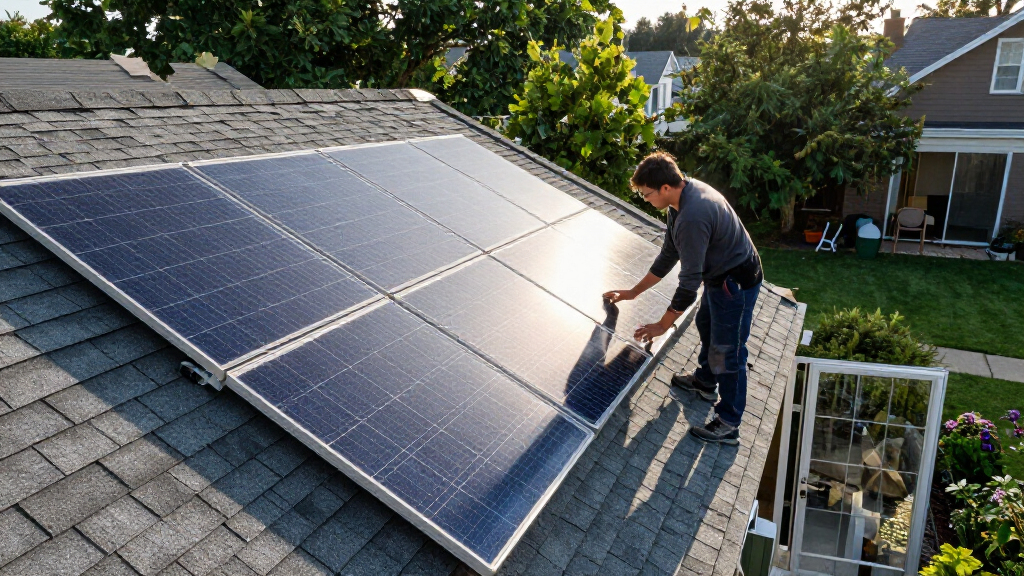
Permanent rooftop solar involves more than attaching panels: mounting must suit the roof, electrical work must follow local rules, and permits or utility approval may apply. Ask what a kit includes and what remains the buyer’s responsibility, particularly racking, cables, protection devices, and installation labor. Roof age matters because removing and reinstalling an array later can add work if a roof needs replacement soon. Panels generally need limited routine care, but dust, leaves, snow, and nearby growth can reduce production, while batteries and electronics have their own service life. Set aside room for equipment with appropriate ventilation and access. A lower-complexity portable or small-scale setup may be a sensible first step if a permanent installation is not yet practical.
Compare Complete-System Convenience With Expandability
A ready-to-use package can reduce the effort of matching components, but it may limit choices about panel layout, battery capacity, or later upgrades. Buying panels separately offers more control and can support staged expansion, though the buyer takes on compatibility checks and system design. A small starter kit can make sense for a shed, cabin, or limited backup loads, but it may not scale cleanly into whole-home service. Before choosing a package, check whether additional batteries or panels are supported and whether expansion requires replacing the inverter or controller. Pay more for included hardware when it saves meaningful design work or fits a real need, not merely because a kit has more components. For a large system, written compatibility and installation guidance can be as valuable as extra rated capacity.
Frequently Asked Questions
Can a portable solar power station replace rooftop panels for my home?
It can cover selected devices or provide backup power, but it usually serves a different purpose from a permanent rooftop array. A portable station’s output and storage limit how many appliances it can run and for how long. Its included panels can recharge the unit when conditions allow, but this does not automatically connect the system to household wiring. If your aim is to reduce regular grid use across the home, compare a professionally designed grid-connected system instead. Choose portable equipment when mobility, emergency use, or powering a few essential loads matters more than whole-home coverage.
Is a 10kW-class off-grid kit enough to power an entire house?
Not by itself: panel capacity is only one part of an off-grid system. Whether it can serve a household depends on daily energy use, weather and seasonal sunlight, battery storage, inverter output, and the loads used at the same time. Heating, cooling, cooking, and electric vehicle charging can raise demand sharply. Review the kit’s battery capacity and inverter specifications alongside your consumption history, and plan for periods of low solar production. A qualified designer can check whether the system covers your needs or whether load reduction, more storage, or another source of backup is required.
Should I buy panels first and add a battery later?
That can be a reasonable staged approach, but only if the initial inverter and system design support the battery you may add. Grid-tied panels without storage can serve daytime consumption, yet they may not provide outage power if the system shuts down when the grid fails. Adding storage later may require compatible equipment, extra wiring, configuration changes, and professional labor. Decide early whether backup is a likely goal, then ask an installer to specify an expansion path before buying. If you are certain you only want daytime bill reduction, a battery may not need to be part of the first purchase.
How do I compare a panel-only set with a solar kit?
Compare what each package actually includes, not just its panel wattage. A panel-only set may require a separate inverter or charge controller, mounting, wiring, disconnects, and batteries if storage is needed. A kit can bundle some of those pieces, but check each component’s capacity and whether it matches your intended loads. Add the cost and effort of missing parts, professional installation, and any required permits to make the comparison useful. Also confirm that the system can be expanded or repaired with compatible components if your needs change.
Will bifacial panels produce more power on my roof?
They can, but the rear side needs access to reflected or scattered light to add useful production. A panel mounted close to a dark roof may receive little light from behind, while spacing and a reflective surface can improve the conditions. The actual benefit depends on mounting height, roof material, surrounding surfaces, shade, and local sunlight. Compare the expected performance in your installation layout rather than assuming the design guarantees a fixed gain. Ask the installer to model the roof-specific output and weigh that against the added requirements of the mounting arrangement.
Conclusion
For a flexible, panel-first home project, I’d choose the Callsun 450W Bifacial Solar Panels as the best overall pick in this lineup, provided you are prepared to select compatible system hardware. The best value for a smaller or staged setup is the ECO-WORTHY 200W kit, while the best premium-scale direction is one of ECO-WORTHY’s 10kW-class off-grid kits—choose by battery capacity and inverter configuration, not the headline panel figure alone. For beginners who want a more integrated portable package, the Jackery HomePower 3600 Plus is the clearest starting point, though it is not a substitute for rooftop solar. Choose Renogy’s compact panels for a custom small array, or the ShadowFlux four-panel set when you need more panel capacity and have room to install it. Match the system to your actual loads and installation plan before deciding which option belongs on your home.
Veterans Day Picks

Shark Matrix Plus 2-in-1 Robot Vacuum and Mop with 60-Day Self-Emptying Base
As an affiliate, we earn on qualifying purchases.