The best vertical solar panels are built for mounting on walls, fences, and balcony railings where traditional tilted roof arrays won’t work — and the Callsun 550W Bifacial N-Type Kit earns the top spot for balancing high wattage, shade tolerance, and a dual-module design that splits output across 12V and 24V battery banks. For whole-home off-grid setups, the AUECOOR 9.36KWH Complete System bundles panels, inverter, and wall-mounted battery into one package, while the HISHEN 990W Frameless Kit appeals to anyone who wants a sleek, UL-certified look on a visible facade. The main tradeoff in this category is flexibility versus raw output: flexible panels like the BougeRV Arch Pro curve onto unusual surfaces but cap out around 200W, while rigid bifacial glass panels deliver more power and rear-side gain but demand solid mounting structures. Warranty coverage, frameless versus framed build, and whether you’re charging a battery or feeding a full inverter system also separate the winners from the rest. Read on for the full breakdown of all 11 panels.

Get backup power and energy gear delivered free — and shop member deals
- Fast, free delivery on millions of items
- Access to Prime Big Deal Days deals on October 6–7
- Prime Video, Amazon Music and more included
Key Takeaways
- Bifacial, double-glass N-Type panels dominated this comparison — 8 of the 11 picks use N-Type cells, which hold voltage better in partial shade and low light, the exact conditions vertical mounting creates.
- The Callsun 550W kit wins overall because its dual 275W modules can be wired for 12V or 24V banks, while the smaller Callsun 360W and 450W kits make more sense for single-battery RV setups.
- Complete kits like the AUECOOR 9.36KWH system trade per-panel value for convenience — buyers pay for integration (inverter, battery, panels matched together) rather than peak component quality.
- Flexible options (BougeRV Arch Pro 200W) fill a gap the rigid panels can’t: curved surfaces and weight-limited walls, but they sacrifice the rear-side gain that makes bifacial vertical installs worthwhile.
- UL 61730 certification appeared on only some picks — if you’re mounting permanently on a dwelling or need permit approval, that certification separates the HISHEN kit from uncertified budget alternatives.
| Callsun N-Type 16BB 550W Bifacial Solar Panel (2×275W) for 12V/24V Battery Systems |  | Best Overall for Shaded Setups | Total power: 550W (2 × 275W) | Cell type: N-Type 16BB bifacial | Efficiency: 25.6% | VIEW LATEST PRICE | See Our Full Breakdown |
| AUECOOR 9.36KWH Complete Off-Grid Solar System with 12KW Split Phase Inverter, 2400W Solar Panels, and 51.2V 200Ah Wall-Mounted LiFePO4 Battery |  | Best Complete Off-Grid System | System capacity: 9.36 kWh | Inverter output: 12 kW, 120V/240V split phase | Solar array: 20 × 120W monocrystalline panels (2400W total) | VIEW LATEST PRICE | See Our Full Breakdown |
| HISHEN 2-Pack 495W Frameless Bifacial Solar Panel Kit (990W Total), UL 61730 Certified, 25.6% Efficiency |  | Best High-Output Pair | Total power: 990W (2 × 495W) | Cell type: A+ grade monocrystalline bifacial | Efficiency: 25.6% | VIEW LATEST PRICE | See Our Full Breakdown |
| ECO-WORTHY 400W 4-Pack 100W 18V N-Type Monocrystalline Solar Panels |  | Best for DIY Beginners | Total power: 400W (4 × 100W) | Cell type: N-type monocrystalline silicon | Conversion efficiency: 25% | VIEW LATEST PRICE | See Our Full Breakdown |
| Callsun 360W Bifacial Solar Panel Kit (2 x 180W N-Type 16BB) for RV and Off-Grid Use |  | Best for Mid-Size RV Arrays | Maximum power: 360W (2 × 180W) | Cell type: N-Type 16BB monocrystalline | Efficiency: 25% | VIEW LATEST PRICE | See Our Full Breakdown |
| Renogy ShadowFlux 120 Watt N-Type Solar Panel |  | Best for Partially Shaded Mounts | Wattage: 120W | Cell type: N-Type with 16BB technology | Cell efficiency: 25% | VIEW LATEST PRICE | See Our Full Breakdown |
| Callsun 450W Bifacial Solar Panel – N-Type 16BB Monocrystalline, Double-Glass, Anti-Shade Dual-Module Design |  | Best High-Output Single Panel | Cell type: N-Type monocrystalline, 16BB | Conversion efficiency: Up to 25.6% | Design: Bifacial, double-glass, dual-module parallel | VIEW LATEST PRICE | See Our Full Breakdown |
| JJN 850W Bifacial N-Type Solar Panel Kit (2 x 425W, 16BB) |  | Best Two-Panel System Starter | Cell type: Monocrystalline A+ grade, 16BB, 182mm | Efficiency: Up to 25% | Amperage capacity: 13.78A | VIEW LATEST PRICE | See Our Full Breakdown |
| 2-Pack 100W 18BB N-Type Monocrystalline Solar Panel, 12V/24V |  | Best Modular Pair for Small Systems | Quantity: 2 panels | Power per panel: 100W | Voltage compatibility: 12V/24V | VIEW LATEST PRICE | See Our Full Breakdown |
| JJN Bifacial 200 Watt Monocrystalline Solar Panel, 25% High-Efficiency |  | Best Compact Bifacial Panel | Power output: 200W | Cell type: 16BB N-Type monocrystalline | Efficiency: 25%+ | VIEW LATEST PRICE | See Our Full Breakdown |
| BougeRV Arch Pro 200W N-Type Fiberglass Flexible Solar Panel |  | Best for Curved-Surface Mounting | Power: 200W | Cell Type: N-type 16BB | Conversion Efficiency: 25% | VIEW LATEST PRICE | See Our Full Breakdown |
| vertical solar panel | Cell type |
|---|---|
| Callsun N-Type 16BB 550W Bifac | N-Type 16BB bifacial |
| AUECOOR 9.36KWH Complete Off-G | — |
| HISHEN 2-Pack 495W Frameless B | A+ grade monocrystalline bifacial |
| ECO-WORTHY 400W 4-Pack 100W 18 | N-type monocrystalline silicon |
| Callsun 360W Bifacial Solar Pa | N-Type 16BB monocrystalline |
| Renogy ShadowFlux 120 Watt N-T | N-Type with 16BB technology |
| Callsun 450W Bifacial Solar Pa | N-Type monocrystalline, 16BB |
| JJN 850W Bifacial N-Type Solar | Monocrystalline A+ grade, 16BB, 182mm |
| 2-Pack 100W 18BB N-Type Monocr | — |
| JJN Bifacial 200 Watt Monocrys | 16BB N-Type monocrystalline |
| BougeRV Arch Pro 200W N-Type F | N-type 16BB |
More Details on Our Top Picks
Callsun N-Type 16BB 550W Bifacial Solar Panel (2×275W) for 12V/24V Battery Systems
The Callsun kit earns my top spot for buyers balancing high efficiency, bifacial output, and shade tolerance. Its two 275W panels can be wired in parallel, so partial shade on one module is less likely to drag down the other. That makes it a better fit for RVs or off-grid sites with nearby obstructions than the HISHEN 990W kit, which offers more total capacity but has a frameless design that may need specialized mounting. Rear-side reflection can add yield when the panels sit above a reflective surface, though that gain depends on the installation. The tradeoff is physical: each panel is nearly 30 pounds and over 68 inches long, and reaching the stated 550W requires mounting both modules. I’d choose it for a capable, shade-prone setup, not a compact roof.
Pros:- N-Type bifacial cells rated at 25.6% efficiency
- Parallel dual-module design helps limit partial-shade losses
- IP68 junction box and tempered-glass construction
- Long output warranty: 30 years to 87.4% stated output
Cons:- The full 550W requires installing both panels
- Each panel weighs 29.8 pounds and is over 68 inches long
- Bifacial gains depend on reflected light reaching the rear surface
Best for: RV and off-grid owners who can mount two rigid panels and expect occasional partial shade.
Not ideal for: Buyers with limited roof space or who need one lightweight panel, since the kit uses two large, heavy modules.
- Total power:550W (2 × 275W)
- Cell type:N-Type 16BB bifacial
- Efficiency:25.6%
- Amperage capacity:13.69 A
- Maximum voltage:25.26 V
- Output voltage:21.29 V
- Dimensions per panel:68.35 × 30.31 × 1.38 in
- Weight per panel:29.8 lb
- Warranty:10-year materials and workmanship; 30-year 87.4% output
Our verdict“Choose this kit for efficient, shade-tolerant output when you have room for two substantial rigid panels.”
AUECOOR 9.36KWH Complete Off-Grid Solar System with 12KW Split Phase Inverter, 2400W Solar Panels, and 51.2V 200Ah Wall-Mounted LiFePO4 Battery
AUECOOR is the only pick here that combines panels, storage, and a split-phase inverter into a single off-grid package. Its 51.2V wall-mounted LiFePO4 battery is the vertical component, giving buyers a compact way to store energy alongside the twenty included panels. That makes this a different kind of choice from the Callsun 550W kit, which supplies panels for a battery system but leaves storage and power conversion to the buyer. The 12kW inverter and 2400W array are aimed at whole-home or backup projects, not a small RV installation. This scale also brings a real tradeoff: planning, wiring, and installation are more involved, and the inverter is limited to 48V-class battery systems. I’d shortlist it when a coordinated system matters more than a simple panel upgrade.
Pros:- Includes inverter, 2400W of panels, battery, cables, and mounting hardware
- Wall-mounted 51.2V 200Ah LiFePO4 battery with built-in BMS and LCD
- 120V/240V split-phase pure sine wave inverter
- RS485 and CAN battery communication with parallel expansion support
Cons:- System scale and wiring complexity may call for professional installation
- Inverter compatibility is limited to 48V battery systems
- Twenty panels require substantial mounting area
Best for: Homeowners planning an off-grid or backup system who need panels, a wall-mounted battery, and 120V/240V inverter output together.
Not ideal for: RV owners and buyers seeking only vertical panels; the package is large, installation-heavy, and built around a 48V battery system.
- System capacity:9.36 kWh
- Inverter output:12 kW, 120V/240V split phase
- Solar array:20 × 120W monocrystalline panels (2400W total)
- Battery:51.2V 200Ah LiFePO4, wall-mounted
- Battery management:Built-in BMS with charge balancing and LCD
- MPPT tracking efficiency:Up to 99%
- Battery communication:RS485 and CAN; supports up to 15 batteries in parallel
- Monitoring:WiFi monitoring
- Warranty:10-year limited warranty; lifetime tech support
Our verdict“Pick AUECOOR when you need a coordinated home-scale off-grid system and can accommodate its installation demands.”
HISHEN 2-Pack 495W Frameless Bifacial Solar Panel Kit (990W Total), UL 61730 Certified, 25.6% Efficiency
For buyers who want nearly a kilowatt from two panels, HISHEN’s 990W total leads the other panel kits in this group. Its bifacial construction and stated 25.6% efficiency suit cabins, boats, and rooftops where reflected light can reach the backs of the modules. Compared with the Callsun 550W kit, it offers substantially more rated power in a two-panel set, while UL 61730 certification gives buyers concrete electrical, fire, mechanical, and environmental safety coverage. The Cleanedge frameless shape is intended to shed dust and debris, which may reduce routine cleaning. That design also narrows mounting options: buyers may need compatible hardware, and the exposed edges call for careful handling. I’d favor HISHEN when output and certification lead the decision, and skip it when a conventional framed installation is essential.
Pros:- 990W combined rated output from two 495W panels
- Bifacial monocrystalline cells with stated 25.6% efficiency
- UL 61730 certification
- Frameless Cleanedge design is intended to limit debris buildup
Cons:- May require specialized mounting hardware
- Frameless edges offer less structural protection during handling
- Bifacial gains depend on the mounting surface and reflected light
Best for: Cabin and rooftop owners seeking high output from two bifacial panels and able to source frameless-compatible mounts.
Not ideal for: Buyers who need standard framed-panel mounting or want extra edge protection during frequent handling.
- Total power:990W (2 × 495W)
- Cell type:A+ grade monocrystalline bifacial
- Efficiency:25.6%
- Certification:UL 61730
- Frame design:Frameless Cleanedge
- Battery compatibility:12V/24V charging systems
- Series:HISHEN FLOWE
- Warranty:10-year product warranty
Our verdict“Choose HISHEN for high two-panel output when your installation can support frameless modules.”
ECO-WORTHY 400W 4-Pack 100W 18V N-Type Monocrystalline Solar Panels
ECO-WORTHY’s four-panel set makes my beginner pick because 100W modules are easier to arrange around the constraints of a small off-grid build than a pair of large panels. Pre-drilled holes and MC4 connectors simplify mounting and wiring, while bypass diodes in IP68 junction boxes help limit the effect of shade on panel output. The tradeoff is capacity: at 400W total, it falls below the Callsun 550W kit and the HISHEN pair, so it suits incremental systems better than buyers trying to maximize generation from limited roof area. This listing describes the panels as bifacial in its product overview, while the detailed cell specs identify N-type monocrystalline silicon; I’d verify the exact configuration before buying specifically for rear-side yield. The four-box shipment can also complicate delivery timing.
Pros:- Four 100W modules allow flexible layout across available mounting space
- Pre-drilled holes and MC4 connectors support straightforward installation
- Bypass diodes and IP68-rated junction boxes
- N-type cells with stated 25% conversion efficiency
Cons:- 400W total is less rated capacity than the Callsun 550W and HISHEN 990W kits
- Panels may arrive in two separate boxes at different times
- Product description and detailed cell specs differ on the bifacial claim
Best for: DIY buyers building a 12V/24V system who want several smaller panels with familiar MC4 connections.
Not ideal for: Buyers prioritizing maximum output per mounting position or relying on bifacial performance without confirming the panel configuration.
- Total power:400W (4 × 100W)
- Cell type:N-type monocrystalline silicon
- Conversion efficiency:25%
- Maximum voltage:25.2 V
- Output voltage:21.6 V
- Amperage capacity:4.96 A
- Dimensions per panel:35.63 × 23.03 × 1.18 in
- Weight:23.8 lb
- System compatibility:12V/24V battery charging; on-grid, off-grid, and hybrid
Our verdict“Choose this set for a modular DIY build, after confirming the panel configuration if bifacial output is a priority.”
Callsun 360W Bifacial Solar Panel Kit (2 x 180W N-Type 16BB) for RV and Off-Grid Use
This Callsun pair is a practical middle ground for RV owners who want two bifacial panels without stepping up to the larger kits. The 360W total sits below the 550W Callsun and far below HISHEN’s 990W pair, but each panel is shorter at 46.46 inches, which may make placement easier on a constrained roof. N-Type 16BB cells, TwinCell shade handling, and an IP68 rating suit mobile systems exposed to changing weather. The stated daily yield of up to 1.8kWh depends on sunlight and installation, so I wouldn’t size a battery plan around that figure alone. At 20.9 pounds per panel, it remains a substantial rooftop component, and the two-module layout still needs space for both panels. I’d pick it for moderate RV demand, not maximum generation.
Pros:- 360W combined output from two N-Type 16BB panels
- Bifacial design can use reflected light when installed above a reflective surface
- TwinCell technology is designed to maintain output under partial shade
- IP68 weather protection and stated snow-load resistance of 5400 Pa
Cons:- At 360W, total output is lower than the Callsun 550W and HISHEN 990W kits
- Each panel weighs 20.9 pounds, complicating solo rooftop handling
- Daily energy yield varies with sunlight and setup
Best for: RV owners with room for two rigid panels who need moderate charging capacity for an off-grid battery setup.
Not ideal for: Buyers with very limited roof area, one-person installation constraints, or power needs that call for a larger array.
- Maximum power:360W (2 × 180W)
- Cell type:N-Type 16BB monocrystalline
- Efficiency:25%
- Output voltage:21.93 V
- Temperature coefficient:-0.3%/°C
- Dimensions per panel:46.46 × 30.31 × 1.58 in
- Weight per panel:20.9 lb
- Warranty:10-year product; 25-year linear performance
Our verdict“Choose this pair for a moderate RV array when two rigid panels fit your roof and power needs.”
Renogy ShadowFlux 120 Watt N-Type Solar Panel
The Renogy ShadowFlux 120W earns its place for buyers whose mounting spot gets intermittent shade. Its anti-shading technology is aimed at keeping output steadier when part of the panel is shaded, while the compact N-Type design can help where wall or balcony area is limited. Compared with the JJN Bifacial 200W, this panel gives up rated output and bifacial generation potential, but its smaller footprint may suit a constrained vertical mount better. The tradeoff is scale: 120W is a modest contribution for a home system, so several panels may be needed for substantial loads. Its IP67 rating supports outdoor exposure, though buyers should still check the mounting system and electrical compatibility for their installation.
Pros:- Anti-shading design targets more consistent output when some cells are shaded
- Compact size suits restricted vertical mounting areas
- N-Type cells with stated 25% cell efficiency
- IP67 weather-resistance rating
Cons:- 120W output is limited for larger household or appliance loads
- Smaller size may not offset its higher cost compared with standard PERC options
- No bifacial generation for installations that could use reflected light
Best for: Van, shed, or small off-grid owners mounting a panel where nearby structures cause partial shade and space is tight
Not ideal for: Households seeking high total generation from a single panel or buyers prioritizing bifacial output
- Wattage:120W
- Cell type:N-Type with 16BB technology
- Cell efficiency:25%
- Materials and craftsmanship warranty:5 years
- Output guarantee:80% power output over 25 years
Our verdict“Choose the ShadowFlux when partial shade and limited mounting space matter more than maximum panel output.”
Callsun 450W Bifacial Solar Panel – N-Type 16BB Monocrystalline, Double-Glass, Anti-Shade Dual-Module Design
For a vertical installation that can accommodate a large panel, the Callsun 450W offers a strong mix of rated output and shade resilience. Its dual-module parallel design is intended to keep one section contributing when another is shaded, and bifacial double glass can use reflected light behind the panel. That makes it a more powerful single-panel choice than the Renogy ShadowFlux 120W, though the Renogy is easier to fit in a small space. The Callsun’s 450W rating also means buyers need an inverter or MPPT controller that supports its voltage and current. Bifacial gains depend on light reaching the rear surface, so a close wall or dark backing can limit the benefit. Its larger format and heavier-duty build suit fixed mounts better than frequent repositioning.
Pros:- 450W rated output can reduce the number of panels needed
- Bifacial double-glass construction can use reflected rear-side light
- Dual-module layout is designed to limit losses from partial shade
- IP68 rating and reinforced construction for harsh weather
Cons:- Requires an inverter or MPPT controller compatible with its high-voltage output
- Bifacial gains can be small when mounted close to a dark or non-reflective surface
- Large format can restrict placement on compact vertical mounts
Best for: Property owners with a spacious, fixed vertical or ground mount, compatible power electronics, and a bright surface behind the panel
Not ideal for: RV owners with tight mounting areas, or rooftop buyers whose panel backs sit close to an unreflective surface
- Cell type:N-Type monocrystalline, 16BB
- Conversion efficiency:Up to 25.6%
- Design:Bifacial, double-glass, dual-module parallel
- Frame and front material:Reinforced aluminum with low-iron tempered glass
- Materials and workmanship warranty:10 years
- Output guarantee:At least 84.5% over 25 years
Our verdict“Pick the Callsun 450W for a fixed, spacious installation where high output and rear-side light can both be used.”
JJN 850W Bifacial N-Type Solar Panel Kit (2 x 425W, 16BB)
The JJN 850W kit is for buyers who want two substantial panels as a matched starting point for a fixed system. At 425W per panel, it gives more combined rated capacity than the single-panel Callsun 450W, and its bifacial design can add generation where the rear faces a bright, open surface. The tradeoff is handling: each panel is listed at 103.2 pounds, so transport and mounting call for careful planning and help. Its rigid, dual-glass construction also limits use on curved or frequently moved surfaces. The UL61730 certification and stated heat-resistant, long-life construction are useful selection points, but the kit’s dimensions and mounting requirements should be checked against the site before purchase. Vertical placement may make the large panels harder to orient for useful rear-side light.
Pros:- 850W combined rated power from two 425W panels
- Bifacial dual-glass design can collect light from both sides
- UL61730 certification
- Drain clips are included
Cons:- Listed weight of 103.2 pounds makes handling and installation demanding
- Rigid panels do not fit curved or flexible mounting needs
- Bifacial yield depends on access to light behind the panels
Best for: Home, farm, or off-grid system builders who can handle and securely mount two large rigid panels
Not ideal for: Solo installers, RV owners with curved surfaces, or anyone lacking space for panels measuring 67.8 by 44.6 inches each
- Cell type:Monocrystalline A+ grade, 16BB, 182mm
- Efficiency:Up to 25%
- Amperage capacity:13.78A
- Maximum voltage:38V
- Output voltage:31.05V
- Dimensions per panel:67.8 × 44.6 × 1.2 inches
- Weight:103.2 lbs
- Certification:UL61730
Our verdict“Choose this kit when you need two high-output rigid panels and have the space and installation help to mount them.”
2-Pack 100W 18BB N-Type Monocrystalline Solar Panel, 12V/24V
This two-panel 100W set suits buyers who want to build a small system in manageable increments. Each panel is rated at 100W, and the stated 12V/24V compatibility gives it a different starting point from the high-voltage Callsun 450W, which calls for compatible power electronics. N-Type 18BB cells and pre-drilled holes make the panels appealing for sheds, workshops, or modest RV setups, while the aluminum frames and tempered glass are specified for substantial wind and snow loads. For vertical mounting, the smaller individual panels may be easier to position than a large-format unit. The limits are equally clear: two panels provide 200W total, and the product data caps series or parallel connections at three panels. That leaves less room for expansion than a system built around larger modules.
Pros:- Two separate 100W panels allow flexible placement
- N-Type 18BB cells with stated conversion efficiency up to 25%
- Pre-drilled mounting holes simplify attachment
- Frame and glass load ratings cover 2400 Pa wind and 5400 Pa snow
Cons:- 200W total rated output is modest for larger power needs
- Connection limit is three panels in series or parallel
- Specified daily output depends on 5–6 hours of sunlight
Best for: DIY owners adding modest solar capacity to a shed, workshop, or small RV setup with a 12V/24V system
Not ideal for: Buyers planning large loads or a system that needs to expand beyond the stated three-panel connection limit
- Quantity:2 panels
- Power per panel:100W
- Voltage compatibility:12V/24V
- Cell type and design:N-Type monocrystalline, 18BB
- Conversion efficiency:Up to 25%
- Wind resistance:2400 Pa
- Snow load resistance:5400 Pa
- Maximum series or parallel connection:3 panels
Our verdict“This pair fits small-system builders who value manageable panel sizes and 12V/24V compatibility over high total output.”
JJN Bifacial 200 Watt Monocrystalline Solar Panel, 25% High-Efficiency
The JJN Bifacial 200W balances a moderate output rating with a lighter build, making it easier to place on an RV, boat, or compact fixed mount than the 450W Callsun panel. Its transparent backsheet lets the rear side contribute when the mounting area reflects light, while 16BB N-Type cells are specified for shade tolerance. At 24.3 pounds, it is also far easier to handle than the two-panel JJN 850W kit, whose listed weight is 103.2 pounds. The catch is that bifacial generation needs light behind the panel; a close, dark mounting surface leaves less reason to choose it over a simpler one-sided design. Pre-drilled holes help with positioning, but mounting hardware is not included, so buyers need to plan the attachment separately.
Pros:- 200W rating in a 24.3-pound panel
- Bifacial transparent backsheet can use reflected light
- 16BB N-Type cells with stated efficiency above 25%
- Pre-drilled holes and load ratings for wind and snow
Cons:- Rear-side contribution depends on reflective space behind the panel
- Mounting hardware is not included
- Lower rated output than the Callsun 450W single panel
Best for: RV, boat, and small off-grid owners who need a relatively light 200W panel and can leave reflective space behind it
Not ideal for: Installers mounting flush against a dark surface or buyers seeking maximum output from one panel
- Power output:200W
- Cell type:16BB N-Type monocrystalline
- Efficiency:25%+
- Design:Bifacial with transparent backsheet
- Weight:24.3 lbs
- Wind resistance:2400 Pa
- Workmanship warranty:10 years
- Output warranty:88.9% at 30 years
Our verdict“Choose the JJN 200W when a lighter bifacial panel fits your mounting space and the rear surface can reflect light.”
BougeRV Arch Pro 200W N-Type Fiberglass Flexible Solar Panel
Most panels in this roundup — the Callsun 550W bifacial or the JJN 850W kit — assume you have a flat, rigid mounting surface. The BougeRV Arch Pro exists for the opposite scenario: curved RV roofs, vehicle hoods, and boat decks where a framed glass panel simply will not conform. At 2.5mm thin and 7.94 lbs, it bends up to 270°, and its N-type 16BB cells hit 25% efficiency, matching the HISHEN bifacial kit’s figure despite the radically different form factor. Bypass diode technology keeps output stable under partial shading, which matters more on a mobile install than on a fixed ground array.
The tradeoff is structural. Compared with the double-glass Callsun 450W bifacial, this panel gives up rigidity and long-term hail resistance, and its 36V open circuit voltage can fall outside some power stations’ input windows. Buyers also need to purchase mounting adhesive separately, since no mounting hardware ships in the box.
Pros:- 25% conversion efficiency from N-type 16BB cells matches the best rigid bifacial panels in this lineup
- Ultra-thin 2.5mm fiberglass build at just 7.94 lbs bends up to 270° for curved surfaces
- ETFE coating with IP68 rating resists scratches, water, and dust for long-term outdoor use
- Bypass diodes maintain stable output in partial shade or low light
Cons:- 36V ± 5% open circuit voltage may exceed the input limits of some power stations
- Mounting adhesive tape is sold separately, adding cost and install planning
- Flexible construction is inherently less durable long-term than framed double-glass panels
Best for: RV owners, van-lifers, and boaters who need solar that conforms to curved or weight-sensitive surfaces
Not ideal for: Anyone building a fixed ground-mount or rooftop array — rigid bifacial panels like the JJN 850W kit deliver more wattage per dollar and better weather resilience
- Power:200W
- Cell Type:N-type 16BB
- Conversion Efficiency:25%
- Open Circuit Voltage:36V ± 5%
- Weight:7.94 lbs
- Thickness:2.5mm
- Flexibility:Up to 270°
- Battery Compatibility:12V; 24/48V with series wiring
Our verdict“Buy this if your mounting surface is curved or weight-limited and a rigid panel like the Callsun 550W simply won’t fit the job.”
How We Picked
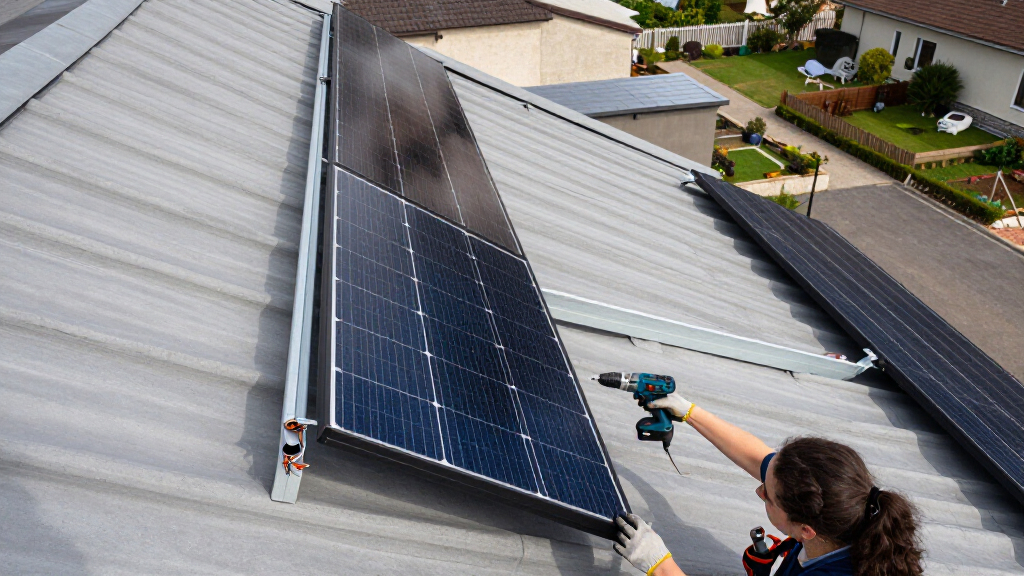
I evaluated every panel through the specific demands of vertical installation, where panels face low sun angles, catch reflected light from the ground, and often sit in partial shade from railings or rooflines. That put a premium on N-Type cell architecture (better low-light and shade performance than older P-Type cells), bifacial double-glass construction (rear-side gain can add meaningful output when mounted away from a wall), and 16-busbar designs that reduce resistive loss across long cells. I also weighed mounting practicality — frameless panels, pre-drilled frames, and kit completeness all matter more when you’re bolting panels to a fence rather than a roof rack.
The ranking logic favors versatility per dollar of capability rather than raw wattage alone. A 550W kit that supports both 12V and 24V systems ranks above a higher-wattage kit locked to one voltage. Complete systems rank high for beginners but lower for experienced builders who’d rather choose components individually. Finally, I flagged every product’s genuine drawbacks — flexible panels that lose bifacial gain, high-wattage kits that need heavy mounting structures, and budget two-packs with thinner frames — so the order reflects real tradeoffs, not spec-sheet praise.
Factors to Consider When Choosing Best Vertical Solar Panels
Choosing a vertical solar panel involves more than picking the highest wattage. Mounting orientation, surface type, and what you’re powering all change which panel actually performs well in your setup.Bifacial Gain Is the Whole Point of Vertical Mounting
When a panel stands vertically instead of tilting toward the sun, it captures less direct light — but it gains something tilted panels can’t: consistent rear-side irradiance from the ground, snow, pavement, or nearby walls. Bifacial glass-glass panels can convert that reflected light into 5–30% extra output depending on the albedo of the surface behind and below them. This is why nearly every pick in this roundup is bifacial, and why mounting a bifacial panel flat against a dark wall wastes its main advantage. A common mistake is mounting these panels inches from an opaque surface with no gap — the rear cells need clearance and a reflective surface to earn their keep. If your mounting location can’t provide that, a cheaper monofacial panel will perform nearly the same for less money. Buyers planning snowy climates should note that vertical bifacial arrays are one of the few setups that actually benefit from winter, since snow cover on the ground boosts reflection while the panels stay clear of accumulation.
N-Type Cells vs. P-Type: It Matters More Vertically
Vertical panels spend much of the day at unfavorable sun angles, which means they operate in low-light and partial-shade conditions far more than roof arrays. N-Type cells (used in the Callsun, JJN, HISHEN, Renogy, and BougeRV picks here) degrade slower, resist light-induced degradation that plagues P-Type cells, and hold voltage better when light is weak. Over a 25-year lifespan, that difference compounds — N-Type panels typically carry 30-year output warranties versus 25 for P-Type. The tradeoff is upfront cost: N-Type commands a premium that only pays off if you’re keeping the system long-term. For a temporary balcony experiment or a seasonal RV setup, a P-Type panel may deliver nearly identical first-year output for less. Buyers who plan to expand their array later should also match cell types, since mixing N-Type and P-Type strings can create mismatch losses at the charge controller.
Match Voltage and Battery Chemistry Before Wattage
The most common mistake I see in this category is buying a 12V-panel kit and expecting it to charge a 24V or 48V battery bank efficiently. Series wiring two 12V nominal panels (as with the Callsun 550W dual-module design) gets you to 24V, but a 48V system like the AUECOOR wall-mounted battery needs four panels in series or an MPPT controller that can boost voltage. Check your charge controller’s maximum input voltage before purchasing — Voc on cold mornings can exceed panel ratings by 10–15% and damage controllers sized too tightly. Also confirm whether the kit includes a controller at all; several picks here are panels only, which is fine if you already own an MPPT unit but a hidden cost if you don’t. LiFePO4 batteries add another wrinkle: they need controllers with adjustable charge profiles, not the default settings older PWM controllers ship with.
Mounting Surface Dictates Panel Type
A rigid glass panel weighs 30–50 pounds and transfers wind load directly to whatever it’s bolted to — a fence panel, vinyl siding, or balcony railing may not be rated for that. Before choosing a heavy kit like the JJN 850W (two 425W glass panels), verify the structure can handle combined weight plus wind pressure, which on a vertical face can exceed roof-mounted loads since the panel acts like a sail. Flexible fiberglass panels like the BougeRV Arch Pro exist precisely for this scenario: curved surfaces, weight-limited walls, and mobile applications where rigidity fails. The compromise is lifespan — flexible panels typically degrade faster and carry shorter warranties than glass-glass construction. Frameless panels like the HISHEN kit offer a middle path: lighter than framed versions, sleeker on visible facades, but harder to clamp and easier to crack during installation. When in doubt, add mid-span rails rather than cantilevering panels from edge mounting holes.
Certification and Permitting Separate the Kits
If your vertical array attaches to a dwelling, runs grid-tied, or needs homeowner’s association approval, UL 61730 certification moves from nice-to-have to non-negotiable. The HISHEN kit advertises it; several budget two-packs in this roundup don’t, which can stall permits and void homeowners insurance claims after a fire, regardless of whether the panel caused it. Off-grid, mobile, and RV buyers can usually skip certification concerns entirely — which is why the uncertified picks still rank well for those use cases. Also check the warranty terms for mounting-orientation language: some manufacturers specify tilt ranges in their installation requirements, and a vertical mount outside those ranges can void the 25-year performance guarantee. Save the installation manual PDF when you buy, since manufacturers revise these documents and the version online years later may differ from what your warranty was based on.
When a Complete System Beats Panels Alone
Buying panels, inverter, battery, and wiring separately gives you the best components in each category — but only if you know how to match them. Mismatched systems suffer from voltage incompatibility, undersized inverters, and charge-profile errors that quietly shave 10–20% off daily production. All-in-one kits like the AUECOOR 9.36KWH bundle solve this by engineering the components together, at the cost of locking you into one ecosystem and paying for integration. My rule of thumb: if your system stays under 400W and charges a single battery, piece it together — the components are simple enough. Above 2KW with a split-phase inverter, the engineering burden of DIY matching grows fast, and complete systems start making financial sense. A middle path is buying a matched panel-and-controller kit (like the Callsun options) and adding your own battery, keeping future upgrade flexibility while avoiding the hardest integration work.
Frequently Asked Questions
Do vertical solar panels produce as much power as tilted ones?
No — a vertically mounted panel typically produces 60–80% of what the same panel would generate at an optimal 30–40 degree tilt, because it faces the sun directly only during parts of the day. However, bifacial vertical panels partially close that gap with rear-side gain, and their production curve is actually flatter across the day, with two peaks in morning and afternoon rather than one midday spike. That flatter curve pairs well with battery charging and self-consumption patterns, since you generate during hours you’re actually home using power. Vertical arrays also stay snow-free in winter and shed dust and debris better than tilted ones. If your only mounting option is a wall or fence, the comparison isn’t vertical versus tilted — it’s vertical versus nothing, and 70% of rated output on an otherwise useless surface is a strong trade.
Should I buy the 550W Callsun kit or the smaller 360W version?
The choice comes down to your battery bank and space. The 550W kit’s two 275W modules support both 12V and 24V configurations, making it the right call if you’re running a 24V system or plan to expand — its higher individual panel wattage also means fewer mounts and less wiring for the same total output. The 360W kit uses smaller 180W modules that are easier to handle solo, fit tighter railings and fence sections, and give you finer control over array sizing. If you’re charging a single 12V battery for an RV or shed, the 360W kit is usually the smarter fit since a 550W array would spend much of the day throttled by a typical 30A controller. For balcony systems feeding a small power station, either works, but the 550W kit’s headroom pays off if you add a second battery later.
Are flexible panels like the BougeRV Arch Pro worth it for vertical mounting?
Flexible panels make sense only when rigid glass panels physically can’t work — curved surfaces, weight-limited walls, or vehicles where you need to walk panels on and off. The Arch Pro’s fiberglass construction bends around surfaces that would require expensive custom brackets for rigid panels, and at a fraction of the weight. The tradeoffs are real: flexible panels lack the double-glass rear face that gives bifacial rigid panels their vertical-mount advantage, they typically degrade faster under UV and thermal cycling, and their warranties run shorter. For a permanent fence or wall installation where weight isn’t a constraint, a rigid bifacial panel like the JJN or Callsun options will outproduce and outlast flexible equivalents. Choose flexible when mobility or surface geometry demands it, not to save on mounting hardware.
What size charge controller do I need for a vertical bifacial kit?
Size the controller on array wattage divided by battery bank voltage, then add 25% headroom for bifacial gain and cold-weather voltage spikes. A 550W bifacial array on a 12V bank pushes past 45A on peak production days, so a 60A MPPT controller is the safe choice — running the same array on 24V halves the current to roughly 23A, letting a 30A controller handle it comfortably. Always check maximum PV input voltage too: two 275W panels in series can hit 90+ Voc on a cold morning, which exceeds many budget controllers. Bifacial panels add a wrinkle some buyers miss — rear-side gain can push real-world output above the nameplate rating, so a controller sized exactly to specifications will clip on bright, reflective days. If you’re running LiFePO4 batteries, confirm the controller supports custom charge voltages rather than fixed lead-acid profiles.
Can I mix these panels with panels I already own?
You can, but only if you match carefully — and honestly, sometimes you shouldn’t. Panels wired in series should share the same current rating, and panels in parallel should share the same voltage rating; mismatched strings cause the whole array to operate at the weakest panel’s level. Mixing N-Type panels from this roundup with older P-Type panels works electrically if voltages align, but the different temperature coefficients mean output diverges in heat and cold, and the N-Type panel’s advantages get partially wasted. Charge controllers with multiple MPPT trackers (or running two controllers to one battery) sidestep the problem entirely by letting each panel type operate at its own maximum power point. If your existing panels are more than a few years old or a different cell type, my advice is to run them as a separate array rather than combining strings — the small cost of a second controller beats the chronic production loss of a mismatched string.
Conclusion
For most buyers, the Callsun 550W Bifacial N-Type Kit is the best overall pick — its dual-voltage flexibility, shade-tolerant 16BB cells, and bifacial rear gain cover the widest range of vertical installations, from balcony railings to fence lines. If value is the priority, the ECO-WORTHY 400W 4-Pack and the 2-Pack 100W 18BB N-Type kit deliver flexible, expandable arrays at accessible price points, trading peak wattage for modularity. On the premium end, the AUECOOR 9.36KWH Complete System is the choice for whole-home off-grid power — you’re paying for engineering integration, not per-panel bargains, and the HISHEN 990W frameless kit suits buyers who want certified performance with a clean facade aesthetic.
Beginners should start with the Renogy ShadowFlux 120W or the JJN 200W bifacial — small enough to learn on, forgiving of mounting mistakes, and matched to entry-level charge controllers. For specific needs: RV owners get the best fit from the Callsun 360W kit, curved or weight-limited surfaces call for the BougeRV Arch Pro flexible panel, and high-output stationary installs favor the JJN 850W or Callsun 450W single-module designs. Whatever your mounting situation, prioritize N-Type bifacial construction and a mounting surface with clearance behind the panel — those two decisions determine whether your vertical array performs or disappoints.
Fall Picks
fall essentials
As an affiliate, we earn on qualifying purchases.