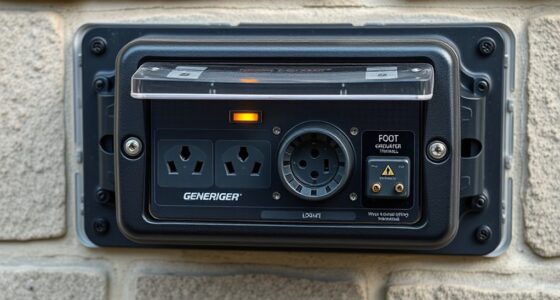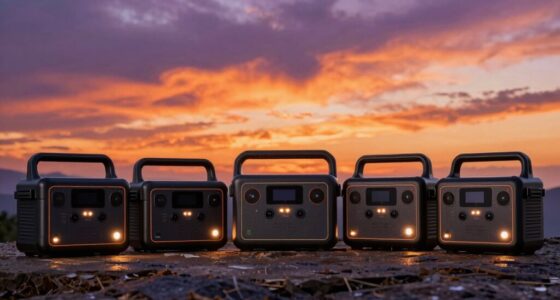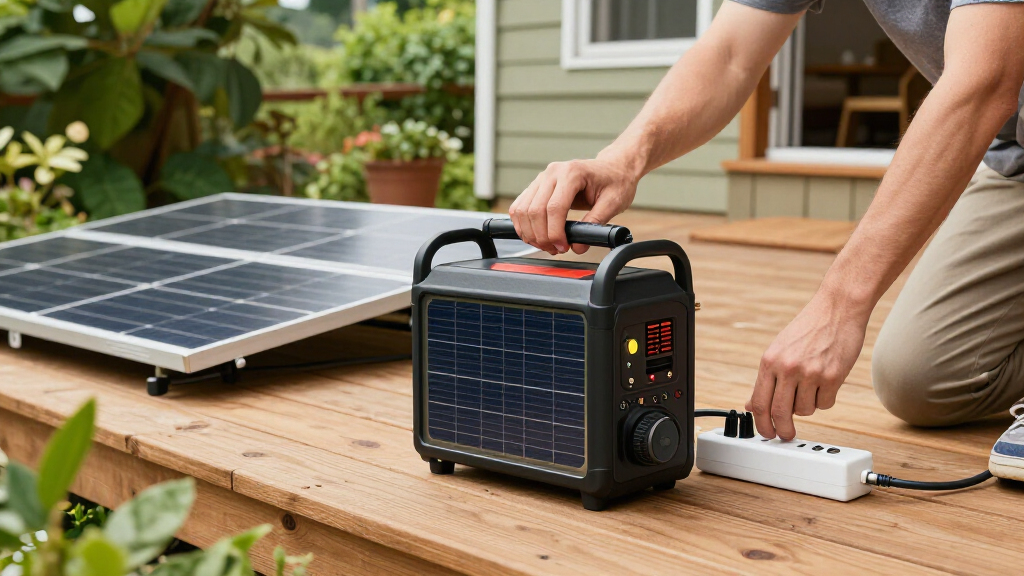

Solar-powered backup generators pair a battery power station with solar panels so you can keep essentials running during an outage or off the grid without fuel, fumes, or noise. The Jackery Solar Generator 1000 V2 earns my best overall pick for balancing a usable 1070Wh capacity, a genuinely powerful 1500W inverter, and fast solar charging in a package that still costs less than premium rivals. For whole-home backup, the Jackery HomePower 3600 Plus and EF ECOFLOW DELTA Pro offer far more muscle but at triple the price and weight, while budget models like the MARBERO 237Wh set cover phones and lights for weekend camping. The main tradeoff in this category is capacity versus portability versus cost — and battery chemistry (LiFePO4 versus older lithium-ion) now separates the long-term winners from the short-lived bargains. Keep reading for the full breakdown of all 12 models.

Get backup power and energy gear delivered free with Prime
- Fast, free delivery on millions of items
- Prime Video, Amazon Music and more included
- Member-only deals all year
Complete the kit


Key Takeaways
- Capacity clusters defined this comparison: sub-300Wh units (MARBERO, Jackery Explorer 300, 300W kits) for gadget-level backup, ~1000Wh units (Jackery 1000 V2, Anker SOLIX C1000, BROWEY, BLAVOR) for fridge-and-router home backup, and 3000Wh+ units (HomePower 3600 Plus, DELTA Pro, HomePower 3000) for whole-circuit coverage.
- Bundled solar panels varied wildly in value — the 200W Jackery panel can realistically recharge a 1000Wh station in a day, while the 40W and 60W panels on budget 300W kits take multiple sunny days to refill the same capacity.
- Built-in solar panels (BROWEY, BLAVOR) trade charging speed for grab-and-go convenience; neither replaces a proper panel setup for serious backup.
- At the premium end, expandability became the deciding factor: the HomePower 3600 Plus scales to 21kWh while the similarly priced DELTA Pro caps out sooner, shifting the DELTA Pro toward fixed-output buyers.
- LiFePO4 chemistry appeared in every top-tier pick, promising 3,000+ charge cycles versus roughly 500-800 for smaller lithium-ion units — the strongest predictor of long-term value in this lineup.
| MARBERO 237Wh Portable Solar Generator with Foldable 60W Solar Panel Set |  | Best Budget Starter Kit | Battery Capacity: 237Wh / 64000mAh | Output Power: 300W pure sine wave | Solar Panel Power: 60W foldable | VIEW LATEST PRICE | See Our Full Breakdown |
| Jackery Solar Generator 1000 V2 and 200W Solar Panel, 1070Wh, 1500W AC |  | Best Overall | Capacity: 1070Wh | AC Output: 1500W (3000W surge peak) | Battery Type: LFP, 4000 cycles | VIEW LATEST PRICE | See Our Full Breakdown |
| Portable Solar Generator 300W with 40W Solar Panel |  | Best Ultra-Compact Value | Power Output: 300W (600W peak) | Battery Capacity: 220Wh (60000mAh) | Solar Panel Power: 40W | VIEW LATEST PRICE | See Our Full Breakdown |
| BROWEY 1600W Portable Power Station with 1024Wh LiFePO4 Battery and Built-in Solar Panel |  | Best Integrated Solar Design | Capacity: 1024Wh | Power Output: 1600W (3200W peak) pure sine wave | Battery Type: LiFePO4 | VIEW LATEST PRICE | See Our Full Breakdown |
| Anker SOLIX C1000 Gen 2 Portable Power Station, 1024Wh, 2000W |  | Best Premium Performer | Capacity: 1024Wh | Power Output: 2000W (3000W peak) | Recharging: 80% in ~49 minutes (HyperFlash); 1.8 hours via solar | VIEW LATEST PRICE | See Our Full Breakdown |
| Jackery Explorer 300 Portable Power Station, 292Wh |  | Best Ultralight Pick | Capacity: 292Wh | Weight: 7.5 lbs | AC Outlets: 2 | VIEW LATEST PRICE | See Our Full Breakdown |
| BLAVOR Portable Power Station 1600W with Built-in Solar Panel, 1024Wh LiFePO4 Battery |  | Best All-in-One Solar Value | Battery Capacity: 1024Wh | Battery Type: LiFePO4 | Rated Power: 1600W | VIEW LATEST PRICE | See Our Full Breakdown |
| Jackery HomePower 3600 Plus Portable Power Station, 3600W AC Output, 3584Wh |  | Best for Whole-Home Backup | Power Output: 3600W (7200W in parallel) | Capacity: 3584Wh | Expandable Capacity: Up to 21kWh per unit, 43kWh with multiple units | VIEW LATEST PRICE | See Our Full Breakdown |
| EF ECOFLOW Portable Power Station 3600Wh DELTA Pro, 120V 3600W AC Output |  | Best Premium Powerhouse | Battery Capacity: 3600Wh | Battery Type: LFP | Maximum AC Output: 3600W (4500W with X-Boost) | VIEW LATEST PRICE | See Our Full Breakdown |
| Portable Solar Generator 300W with 60W Solar Panel |  | Best Budget Starter Kit | Power Output: 300W | Solar Panel: 60W monocrystalline foldable | AC Outlets: 2 x 300W max | VIEW LATEST PRICE | See Our Full Breakdown |
| Jackery HomePower 3600 Plus Portable Power Station with Solar Panels |  | Best Premium Whole-Home Backup | Power Output: 3600W (7200W in parallel) | Capacity: 3584Wh | Expandability: Up to 21kWh per unit, 43kWh with multiple units | VIEW LATEST PRICE | See Our Full Breakdown |
| Jackery HomePower 3000 with 2x200W Solar Panels, 3072Wh, 3600W AC Output |  | Best Value for Serious Home Backup | Capacity: 3072Wh | AC Output: 3600W | Surge Power: 7200W | VIEW LATEST PRICE | See Our Full Breakdown |
| solar-powered backup generator | Capacity | Battery Type | Power Output |
|---|---|---|---|
| MARBERO 237Wh Portable Solar G | — | — | — |
| Jackery Solar Generator 1000 V | 1070Wh | LFP, 4000 cycles | — |
| Portable Solar Generator 300W | — | — | 300W (600W peak) |
| BROWEY 1600W Portable Power St | 1024Wh | LiFePO4 | 1600W (3200W peak) pure sine wave |
| Anker SOLIX C1000 Gen 2 Portab | 1024Wh | — | 2000W (3000W peak) |
| Jackery Explorer 300 Portable | 292Wh | — | — |
| BLAVOR Portable Power Station | — | LiFePO4 | — |
| Jackery HomePower 3600 Plus Po | 3584Wh | LFP (Lithium Iron Phosphate) | 3600W (7200W in parallel) |
| EF ECOFLOW Portable Power Stat | — | LFP | — |
| Portable Solar Generator 300W | — | — | 300W |
| Jackery HomePower 3600 Plus Po | 3584Wh | LFP (Lithium Iron Phosphate) | 3600W (7200W in parallel) |
| Jackery HomePower 3000 with 2x | 3072Wh | LiFePO4 | — |
More Details on Our Top Picks
MARBERO 237Wh Portable Solar Generator with Foldable 60W Solar Panel Set
Most cheap solar generator bundles make you choose between a weak panel or a weak battery, but the MARBERO 237Wh kit balances both reasonably well for the price. The 60W foldable panel is the standout here — compared with the 40W panel bundled with the Portable Solar Generator 300W later in this list, it meaningfully cuts recharge time on sunny days. The 300W pure sine wave inverter is honest about its limits: this runs phones, laptops, cameras, and a CPAP for a night, but a microwave is out of the question.
The tradeoff is capacity. At 237Wh, it holds roughly a fifth of what the Jackery Solar Generator 1000 V2 stores, so multi-day off-grid trips will strain it. For weekend campers and first-time buyers testing whether solar backup fits their lifestyle, though, that smaller capacity is exactly why the price stays accessible.
Pros:- Complete kit with a genuinely useful 60W foldable panel included
- Pure sine wave inverter is safe for sensitive electronics
- Lightweight and easy to carry in a backpack
- Built-in LED flashlight with SOS mode adds emergency value
Cons:- 237Wh capacity is too small for extended outages or appliance backup
- 300W output ceiling rules out anything beyond small devices
Best for: Weekend campers and first-time buyers who want a complete panel-plus-battery kit without a big spend
Not ideal for: Households preparing for multi-day outages — 237Wh won’t keep a fridge or router running through a long blackout
- Battery Capacity:237Wh / 64000mAh
- Output Power:300W pure sine wave
- Solar Panel Power:60W foldable
- Input Voltage:12-16.8V
- Solar Conversion Rate:21.5-23.5%
- LED Flashlight Modes:Flashlight, Strobe, SOS
Our verdict“A low-risk entry point for casual campers who want to try solar backup before committing to a larger system.”
Jackery Solar Generator 1000 V2 and 200W Solar Panel, 1070Wh, 1500W AC
This is the pick that makes the most sense for the widest range of buyers, and the reasoning comes down to balance. The Jackery 1000 V2 pairs a 1070Wh LFP battery rated for 4,000 cycles — roughly a decade of regular use — with a 1500W inverter that comfortably runs a fridge, a microwave, or a cluster of smaller devices at once. Compared with the Anker SOLIX C1000, it gives up some peak output and charging speed, but the included 200W panel closes the gap for off-grid recharging in a way the Anker (sold without panels) can’t match out of the box.
It’s not flawless. The panel and station ship separately, which means two deliveries and a bit of setup, and unlocking the fastest charge rate requires app activation — an annoying hurdle for a backup device you want working immediately. Still, for capacity, durability, and included solar hardware, nothing else in this batch matches the total package.
Pros:- 1070Wh LFP battery rated for 4,000 cycles / 10+ years of use
- 1500W AC output with 3000W surge handles real appliances
- 200W solar panel included in the bundle
- Fast charging can top up the battery in about an hour
Cons:- Panel and generator ship separately, adding setup friction
- App activation is required to access the fastest charging mode
Best for: Families and frequent campers who want a do-everything kit with real appliance power and solar included
Not ideal for: Whole-home backup seekers — for that, stepping up to the Jackery HomePower 3600 Plus or EcoFlow DELTA Pro in this guide is the better call
- Capacity:1070Wh
- AC Output:1500W (3000W surge peak)
- Battery Type:LFP, 4000 cycles
- Weight:23.8 lbs
- Charging Time:1 hour fast / 3 hours 600W charger / 6 hours via 200W solar
- Ports:3 AC, 2 USB-C, 1 USB-A, 1 DC car port
Our verdict“The most complete, future-proof kit in this price class — buy it if you want one purchase that covers camping trips and home outages alike.”
Portable Solar Generator 300W with 40W Solar Panel
At 5 pounds and roughly the size of a lunchbox, this unit is the true grab-and-go option of the group. Where the MARBERO kit is already portable, this one is noticeably lighter, and its port selection is surprisingly generous for the size — 2 AC outlets, 2 USB-C PD, 3 USB-A, and a carport let a whole campsite’s devices charge at once. The integrated large-area LED light is a nice touch that earns its keep during power cuts.
The compromises are real, though. Its 40W panel is the smallest in this batch, so full solar recharges take patience, and the 220Wh battery drains quickly if you push it. This model is better suited to buyers who prioritize weight and price over runtime — anyone expecting the endurance of the BROWEY 1600W or Jackery 1000 V2 will be disappointed within a day.
Pros:- Genuinely light at 5 lbs with a compact carry size
- Eight ports allow many devices to charge simultaneously
- Bright large-area LED light doubles as emergency lighting
- Low price point for a panel-included kit
Cons:- 40W panel is the slowest solar recharge option in this lineup
- 220Wh capacity limits it to short trips and small devices
Best for: Hikers, solo travelers, and car campers who prioritize minimum weight and simultaneous device charging over capacity
Not ideal for: Anyone backing up a home office or medical device — the 220Wh battery and 300W ceiling run out fast
- Power Output:300W (600W peak)
- Battery Capacity:220Wh (60000mAh)
- Solar Panel Power:40W
- Weight:5 lbs
- Dimensions:8.5 x 6.7 x 4.1 inches
- Ports:2 AC, 2 USB-C PD, 3 USB-A, 1 DC carport
Our verdict“Choose this when pack weight matters more than runtime; skip it if outages longer than a few hours are the concern.”
BROWEY 1600W Portable Power Station with 1024Wh LiFePO4 Battery and Built-in Solar Panel
The BROWEY’s cleverest trick is that the solar panel is built into the unit itself, with an MPPT controller managing the charge. Every other pick in this roundup requires you to carry, connect, and angle a separate panel — here, you set the station in the sun and walk away. That self-contained design (recognized with an iF Design Award) makes it a strong fit for RV owners and balcony-backup users who dislike cable clutter.
Against the Jackery 1000 V2, capacity is nearly identical at 1024Wh, and the BROWEY actually wins on continuous output at 1600W. But an integrated panel can’t be repositioned for ideal sun the way Jackery’s 200W external panel can, and the fixed panels add weight that makes it feel less portable despite the compact footprint. Reaching only 80% in 3 hours will also frustrate anyone needing rapid turnaround between uses.
Pros:- Built-in solar panel eliminates separate panel storage and cables
- 1600W pure sine wave output with 3200W peak handles demanding loads
- 1024Wh LiFePO4 battery built for long cycle life
- Award-winning compact integrated design with 8 ports
Cons:- Fixed panels can’t be angled or relocated for maximum sun exposure
- Heavier than comparable capacity units without built-in panels
- 3 hours to reach only 80% charge is slow for heavy users
Best for: RV owners and apartment dwellers who want solar charging with zero setup and no separate panels to store
Not ideal for: Weight-conscious backpackers and buyers who want to maximize solar harvest by repositioning panels throughout the day
- Capacity:1024Wh
- Power Output:1600W (3200W peak) pure sine wave
- Battery Type:LiFePO4
- Solar Panel:Built-in with MPPT controller
- Charging Time:3 hours to 80%
- Ports:8 total including USB-C PD 100W
Our verdict“The right pick if you value a tidy, all-in-one solar setup over raw charging speed and panel flexibility.”
Anker SOLIX C1000 Gen 2 Portable Power Station, 1024Wh, 2000W
If recharge speed and power density top your list, the Anker SOLIX C1000 Gen 2 is the performance leader of this group. Its HyperFlash charging hits 80% in about 49 minutes — dramatically faster than the BROWEY’s 3-hour climb to the same level — and the 2000W output is the highest continuous rating among the 1kWh-class units here, enough to run power-hungry kitchen appliances the Jackery 1000 V2 can’t start. The sub-10ms UPS switchover is a genuine differentiator for home backup: plugged-in computers and routers won’t even blink when the grid drops.
Two things hold it back from Best Overall. It arrives without a solar panel, so off-grid buyers must budget extra, and solar input caps at 600W — fine, but slower-oriented than its AC charging suggests. The higher price also stings next to bundled kits like the Jackery. This model is better suited to buyers who already own panels or who mainly need fast, wall-charged home backup.
Pros:- HyperFlash recharging reaches 80% in roughly 49 minutes
- 2000W output is the highest in the 1kWh class here
- Under 10ms UPS switchover protects computers during outages
- Compact and lighter than comparable-capacity rivals, with 10 ports
Cons:- Solar panel not included, unlike the Jackery and MARBERO bundles
- 600W solar input ceiling limits off-grid recharge speed
- Premium price point compared with bundled competitors
Best for: Home-office owners and power users who need UPS-grade backup and the fastest recharges in this class
Not ideal for: Off-grid campers on a budget — no panel is included, and the price climbs quickly once you add solar
- Capacity:1024Wh
- Power Output:2000W (3000W peak)
- Recharging:80% in ~49 minutes (HyperFlash); 1.8 hours via solar
- Max Solar Input:600W
- Ports:10
- UPS Backup Time:Under 10 ms
- Battery Cycles:4,000 cycles to at least 80% capacity
Our verdict“The fastest, most powerful 1kWh option in this roundup — buy it for speed and UPS backup, not for out-of-the-box solar value.”
Jackery Explorer 300 Portable Power Station, 292Wh
At just 7.5 lbs, the Jackery Explorer 300 is the lightest option in this roundup by a wide margin, and that changes who it’s for. Compared with the BLAVOR 1600W or the EcoFlow DELTA Pro, this unit trades raw capacity for genuine grab-and-go portability — it fits in a backpack and charges a laptop three or four times over. The 100W USB-C PD port means modern laptops don’t even need an adapter, and the LiFePO4 chemistry rated for 4,000+ cycles outlasts older battery types at this size. The tradeoff is obvious: 292Wh won’t run a fridge, a microwave, or anything during a multi-day outage. It’s a device charger with solar capability, not a home backup — buyers wanting whole-house resilience should look at the Jackery HomePower 3600 Plus instead.
Pros:- Featherweight 7.5 lb design that genuinely fits in a backpack
- 100W USB-C PD charges modern laptops without extra adapters
- LiFePO4 battery rated for over 4,000 charge cycles
- Fast solar charging when paired with a Jackery panel
Cons:- Solar panel sold separately, adding real cost to a solar setup
- 292Wh capacity is limited to phones, laptops, cameras, and small devices
Best for: Hikers, campers, and drone or camera enthusiasts who need laptop-class charging off-grid without hauling bulk
Not ideal for: Anyone shopping for home backup — 292Wh can’t sustain refrigeration or appliances through even a short outage
- Capacity:292Wh
- Weight:7.5 lbs
- AC Outlets:2
- USB-C Port:100W PD
- USB-A Ports:2
- Car Port:120W
- Peak Surge Power:600W
- Charge Cycles:Over 4,000
Our verdict“Buy this if your priority is portability for off-grid work or camping, not household emergency power.”
BLAVOR Portable Power Station 1600W with Built-in Solar Panel, 1024Wh LiFePO4 Battery
The BLAVOR 1600W solves the most annoying part of solar generator ownership: the panel is built in and foldable, so nothing extra to buy, carry, or forget. That’s a real advantage over the Jackery Explorer 300 and the EcoFlow DELTA Pro, both of which treat panels as add-ons that can cost hundreds more. With 1024Wh and 1600W of rated output, it runs most household appliances — a fridge, a microwave briefly, certainly a CPAP or TV setup. The 3,500-cycle LiFePO4 battery should outlast a decade of typical use. The honest caveat: a 40W panel recharging a 1024Wh battery is slow, topping up over multiple sunny days. Think of the built-in panel as a trickle maintainer, not a fast charger.
Pros:- Built-in foldable 40W solar panel means no separate panel purchase
- 1024Wh capacity with 1600W rated output runs most household appliances
- LiFePO4 battery rated for 3,500+ cycles, roughly a 10-year lifespan
- 100W two-way USB-C fast charging across 8 versatile outlets
Cons:- 40W panel output is modest relative to battery size, making solar recharge slow
- Weight and dimensions aren’t published, complicating portability planning
Best for: Buyers who want a complete solar generator out of the box without shopping for panels separately, at a midrange price
Not ideal for: Anyone needing fast solar recovery — the 40W built-in panel can’t quickly refill 1024Wh, so heavy users will need wall charging
- Battery Capacity:1024Wh
- Battery Type:LiFePO4
- Rated Power:1600W
- Peak Power:3200W
- Solar Panel:40W built-in foldable
- Charge Cycles:Over 3,500
- USB-C Port:100W two-way fast charge
- Outlets:8 versatile outlets
- Display:LCD showing input/output and battery status
Our verdict“The most complete no-extra-purchases solar generator here, as long as you accept slow solar top-ups.”
Jackery HomePower 3600 Plus Portable Power Station, 3600W AC Output, 3584Wh
Where the BLAVOR and Explorer 300 are about portability and convenience, the Jackery HomePower 3600 Plus is about survival — running a household. With 3600W of AC output (7200W in parallel) and 3584Wh expandable to 21kWh, it covers refrigeration, lighting, and medical devices through extended outages, and stacks to 43kWh for serious off-grid living. Against the similarly sized EcoFlow DELTA Pro, Jackery’s edge is handling: the luggage-style wheels and telescopic handle make 3.5kWh manageable, and a 6,000-cycle LFP battery with a 10-year lifespan beats most rivals on longevity. The catch is cost and the a-la-carte solar — panels are optional extras, so budget accordingly before assuming a full solar recharge in 4 hours.
Pros:- 3584Wh expandable to 21kWh (43kWh with multiple units) for extended outages
- 3600W AC output, doubling to 7200W in parallel, runs major appliances
- Luggage-style wheels and telescopic handle make a large unit movable
- 6,000-cycle LFP battery rated for roughly 10 years of use
Cons:- Solar panels sold separately, so true solar capability costs well above the base price
- Expensive compared with smaller generators in this lineup
- Detailed port and outlet specifications aren’t clearly published
Best for: Homeowners in outage-prone areas who need multi-day, appliance-level backup and plan to expand capacity over time
Not ideal for: Campers and casual users — the price and scale are overkill when a 300Wh-class unit would do the job
- Power Output:3600W (7200W in parallel)
- Capacity:3584Wh
- Expandable Capacity:Up to 21kWh per unit, 43kWh with multiple units
- Battery Type:LFP (Lithium Iron Phosphate)
- Charging Time:AC+DC in 2 hours, solar in 4 hours
- Lifespan:6,000 cycles, 10 years
- Design:Luggage-style wheels and telescopic handle
Our verdict“The pick for whole-home resilience — if you’re buying one generator to run a house through an outage, this is it.”
EF ECOFLOW Portable Power Station 3600Wh DELTA Pro, 120V 3600W AC Output
The EcoFlow DELTA Pro competes directly with the Jackery HomePower 3600 Plus on capacity, but it wins on refinement. A 1.8-hour recharge at 240V is exceptionally fast for 3600Wh, and the sheer range of charging methods — EV charging stations, solar, wall outlets, even a car outlet — gives flexibility no smaller unit in this roundup matches. Port selection is exhaustive: 5 AC outlets, dual 100W USB-C, and X-Boost pushing output to 4500W for stubborn appliances. The killer feature for tech-minded buyers is app control over Wi-Fi or Bluetooth, letting you monitor and customize consumption remotely. The tradeoffs mirror Jackery’s: it’s heavy, expensive, and rapid solar recharging realistically requires an investment in multiple panels beyond the base unit.
Pros:- Extremely fast 1.8-hour recharge at 240V for a 3600Wh battery
- Charges from EV stations, solar, wall outlets, or a car outlet
- Extensive port selection with 5 AC outlets and dual 100W USB-C
- Wi-Fi/Bluetooth app control for monitoring and customization
Cons:- Large and heavy — this is a wheeled-and-planned unit, not grab-and-go
- Premium price well above smaller stations in this roundup
- Rapid solar recharging requires investing in multiple panels
Best for: Tech-savvy buyers and RV owners who want the fastest recharging, deep app control, and premium build at 3.6kWh scale
Not ideal for: Budget shoppers and occasional campers — the price and weight are wasted on light-duty use
- Battery Capacity:3600Wh
- Battery Type:LFP
- Maximum AC Output:3600W (4500W with X-Boost)
- Pairing Capacity:Two units for 7200W
- Output Ports:5 AC, 2 USB-C (100W), 4 USB-A, 2 DC, car power, Anderson port
- Recharge Time:1.8 hours (240V), 2.8 hours (solar)
- Charging Methods:EV station, solar, wall outlet, car outlet
- App Control:Yes, via Wi-Fi or Bluetooth
Our verdict“The most polished high-capacity option here for buyers who prioritize recharge speed and smart controls over price.”
Portable Solar Generator 300W with 60W Solar Panel
For first-time buyers, this 300W solar generator with an included 60W panel is the cheapest complete entry point in the roundup — no separate panel purchase, unlike the Jackery Explorer 300, which asks you to add solar à la carte. The foldable 60W monocrystalline panel at 20.5% conversion efficiency is genuinely decent for the price, and triple charging (AC, car, solar) plus a built-in SOS flashlight round out a sensible camping kit. A proper BMS with five protection layers keeps things safe for less careful users. But the ceiling is low: 300W means no kettles, microwaves, or power tools, and the junction box isn’t waterproof, so the panel needs babysitting in bad weather — a real limitation compared with pricier kits like the Jackery Solar Generator 1000 V2.
Pros:- Includes a 60W foldable monocrystalline panel — a true complete kit at a low price
- Triple charging options: AC, car, and solar
- Built-in BMS with short circuit, over-current, and overheating protection
- Compact design with a built-in SOS flashlight for emergencies
Cons:- 300W output can’t run high-power appliances like kettles or power tools
- Solar panel junction box is not waterproof, limiting use in rain
- Panel performance drops noticeably in low-light conditions
Best for: First-time buyers and budget campers who want a complete panel-plus-generator kit for phones, lights, fans, and small devices
Not ideal for: Anyone powering appliances over 300W or needing weatherproof solar hardware — this kit’s ceiling is small devices
- Power Output:300W
- Solar Panel:60W monocrystalline foldable
- AC Outlets:2 x 300W max
- USB Ports:3 x 5V/3A, 1 x Quick Charge USB
- DC Port:9V-12.6V/10A max
- Charging Methods:AC, solar, car
- Conversion Efficiency:20.5%
- Protection:Short circuit, over-current, over-voltage, overload, overheating
Our verdict“The lowest-cost way to own a complete solar generator setup, ideal for learning the ropes on small devices.”
Jackery HomePower 3600 Plus Portable Power Station with Solar Panels
This is the most ambitious system in the lineup, and it earns its premium spot through raw expandability. With 3584Wh of capacity scaling up to 43kWh when you chain multiple units, it moves past the “essentials only” category occupied by the Anker SOLIX C1000 or the EF ECOFLOW DELTA Pro and into genuine whole-house territory. The 6,000-cycle LFP battery outlasts nearly every rival here, including Jackery’s own HomePower 3000, which is rated for 4,000 cycles.
The tradeoffs are real, though. You pay a premium for that headroom, the solar panels arrive in separate packages, and setup for a proper home-backup configuration takes more effort than a plug-and-play camping unit. The luggage-style wheels help, but this is a commitment, not an impulse buy.
Pros:- Expands up to 43kWh with multiple units for true whole-home coverage
- 6,000-cycle LFP battery rated for roughly 10 years of use
- Hybrid charging hits a full charge in about 2 hours
- Luggage-style wheels and handle make repositioning far easier than fixed units
Cons:- Premium price that most occasional-outage households won’t justify
- Solar panels ship separately and can arrive on different days
- Full home integration requires setup work beyond plug-and-play use
Best for: Homeowners who want scalable, multi-day backup power for an entire household rather than just a fridge and a few lights
Not ideal for: Campers and casual users — the capacity, weight, and price are overkill next to options like the Jackery Solar Generator 1000 V2
- Power Output:3600W (7200W in parallel)
- Capacity:3584Wh
- Expandability:Up to 21kWh per unit, 43kWh with multiple units
- Charging Time:AC in 2.5 hours, solar in 4 hours, hybrid in 2 hours
- Battery Type:LFP (Lithium Iron Phosphate)
- Lifespan:6,000 cycles, 10 years
- Design:Luggage-style with wheels and telescopic handle
Our verdict“Buy this if you’re preparing for multi-day outages and want a system that grows with your needs; skip it if a single evening of backup power is all you’re after.”
Jackery HomePower 3000 with 2x200W Solar Panels, 3072Wh, 3600W AC Output
Sitting one tier below the HomePower 3600 Plus, this model hits a sweet spot between cost and capability. You still get 3600W of output — enough to run a fridge, microwave, and more simultaneously — at a lower capacity of 3072Wh. Compared with the EF ECOFLOW DELTA Pro at a similar 3600Wh class, the HomePower 3000 undercuts it on weight and adds bundled 2x200W solar panels, where Ecoflow leaves you sourcing panels separately.
The compromises are sensible but worth knowing: the 4,000-cycle battery falls short of the 3600 Plus’s 6,000, and there’s no expansion path if your needs grow. Still, the 1.7-hour hybrid recharge is genuinely fast for this class, and for a household that wants reliable outage coverage without paying for scalability they may never use, this pick makes the most sense.
Pros:- 3600W output with 7200W surge handles demanding appliance startups
- Hybrid recharge reaches full capacity in just 1.7 hours
- Includes two 200W solar panels in the bundle
- Notably lighter than comparable 3kWh-class units
Cons:- No expandability — capacity is capped at 3072Wh
- Higher initial cost than smaller units like the Anker SOLIX C1000
- Solar panels ship separately and may not arrive together
Best for: Suburban households that want fridge-plus-essentials coverage for a day or two without paying for an expandable system
Not ideal for: Off-grid dwellers or long-outage preppers — the fixed 3072Wh capacity can’t be expanded like the HomePower 3600 Plus
- Capacity:3072Wh
- AC Output:3600W
- Surge Power:7200W
- Recharge Time:1.7 hours hybrid AC/DC, 2.2 hours AC
- Battery Type:LiFePO4
- Cycle Life:4,000 cycles
- Weight:47% lighter than comparable models
Our verdict“The smart middle ground for buyers who need serious whole-essential backup with included solar, but who don’t need the 3600 Plus’s expansion ceiling.”
How We Picked
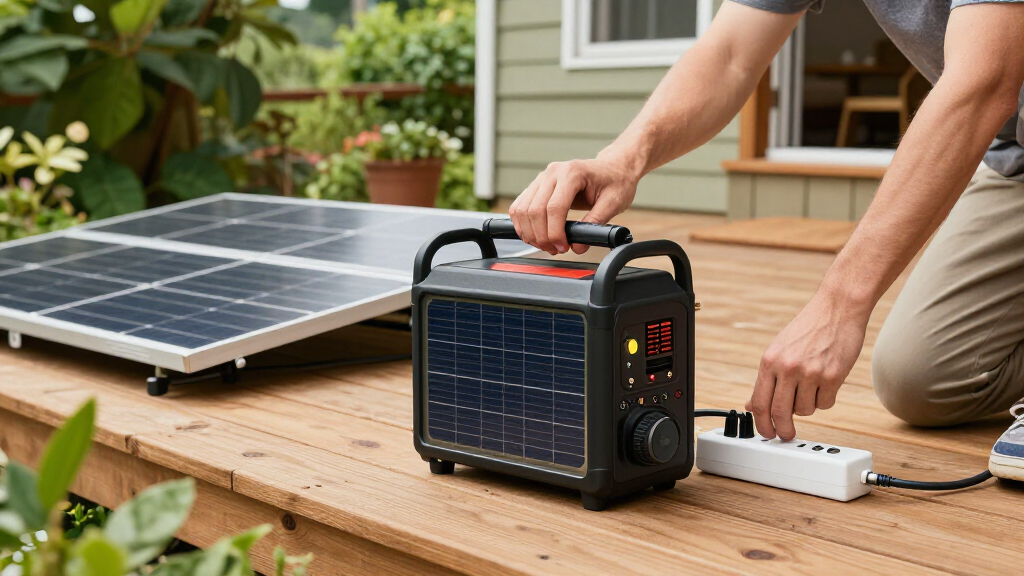
I evaluated each generator through the lens a backup buyer actually cares about: usable capacity (what it can run and for how long), inverter output (whether it handles a fridge, microwave, or power tools, not just phones), solar charging speed (panel wattage relative to battery size, since a slow-charging generator is useless in a multi-day outage), and battery chemistry and cycle life. I also weighed portability, expandability, outlet variety, warranty terms, and price per watt-hour to separate genuine value from spec-sheet inflation.
The ranking logic follows a usefulness curve rather than raw specs. Units that match capacity to a realistic job — and charge quickly enough to sustain that job on solar alone — ranked higher than units with big numbers and weak solar input. That’s why the Jackery 1000 V2 leads: its capacity, inverter, and 200W panel are proportionate to each other. Premium expandable units followed close behind, and budget models ranked where their honest limits (small batteries, slow panels) place them.
| solar-powered backup generator | Battery Type |
|---|---|
| MARBERO 237Wh Portable Solar G | — |
| Jackery Solar Generator 1000 V | LFP, 4000 cycles |
| Portable Solar Generator 300W | — |
| BROWEY 1600W Portable Power St | LiFePO4 |
| Anker SOLIX C1000 Gen 2 Portab | — |
| Jackery Explorer 300 Portable | — |
| BLAVOR Portable Power Station | LiFePO4 |
| Jackery HomePower 3600 Plus Po | LFP (Lithium Iron Phosphate) |
| EF ECOFLOW Portable Power Stat | LFP |
| Portable Solar Generator 300W | — |
| Jackery HomePower 3600 Plus Po | LFP (Lithium Iron Phosphate) |
| Jackery HomePower 3000 with 2x | LiFePO4 |
Factors to Consider When Choosing Solar-powered Backup Generators
Before choosing a solar-powered backup generator, it helps to understand the mistakes that catch most first-time buyers — usually sizing the battery to the wrong appliance, or buying panels too small to recharge it.Size the Battery to the Job, Not the Marketing
The most common mistake is buying capacity you don’t need — or capacity that can’t do the job you bought it for. A 300Wh station keeps a router, phone, and a few LED lights alive for a day; a 1000Wh unit runs a refrigerator for 12-20 hours; only 3000Wh+ units can carry multiple appliances overnight. Start by listing the wattage of your must-have devices and how many hours you need them, then add 20% headroom, since inverters lose efficiency and batteries degrade. Also check the inverter’s continuous watt rating, because a big battery with a small inverter still can’t start a fridge compressor. Finally, remember that half the value is recharging speed — a generator you can’t refill on solar during a multi-day outage is a one-time buffer, not backup power.
Panel Wattage Matters as Much as Battery Size
Buyers often fixate on watt-hours and ignore the panels, but the panel-to-battery ratio determines whether your system actually sustains itself. As a rule of thumb, you want at least enough panel wattage to refill the battery in one good sunny day — roughly panel watts × 4-5 peak-sun-hours ≈ daily recharge. A 60W panel paired with a 300Wh battery works; the same 60W panel paired with a 1000Wh battery leaves you waiting days. Weather, panel angle, and shading cut real-world output 20-40% below lab ratings, so budget more panel wattage than the math suggests. Also check the station’s maximum solar input, because some units cap incoming wattage well below what you might want to attach.
Battery Chemistry and Cycle Life
Most quality units now use LiFePO4 (LFP) chemistry, rated for roughly 3,000-4,000 charge cycles — close to a decade of daily use. Older NMC lithium-ion batteries, still common in compact budget stations, typically last 500-800 cycles. That difference matters more for a backup generator than for a camping battery, because backup units sit at full charge for months, and high state-of-charge aging hits NMC cells harder. If you plan to keep the unit plugged in and ready for years, LFP justifies a higher price. If you’ll use it a dozen times a year for weekends away, a cheaper NMC unit may serve you fine.
Expandability: When to Pay for It
Some premium stations accept extra battery packs, letting you grow from 3-4kWh to 20kWh+ over time. That flexibility costs real money up front, so it only pays off if you genuinely anticipate needing more capacity later — for example, adding a well pump or medical equipment to your backup plan. Buyers who only need outage essentials (fridge, phones, CPAP, a few lights) will never use the expansion ceiling and are better off spending less. One overlooked catch: expansion batteries are usually brand-locked and often discontinued after a few years, so buying expandable headroom you don’t use is wasted money. Treat expandability as a planned purchase path, not an insurance policy.
Built-in Panels Versus Separate Panels
A newer design trend — seen in a couple of units in this roundup — builds a solar panel directly into the power station. The convenience is real: nothing to carry separately, no cables to manage, and charging happens whenever the unit sits in the sun. The tradeoff is that integrated panels are small (typically 40-100W), so they trickle-charge rather than fast-charge, and the unit must sit outside in sunlight, which heats the battery and shortens its life. Separate panels can be positioned, angled, and sized independently, and they keep the battery in the shade. Built-in panels suit occasional campers; separate panels suit anyone preparing for real outages.
The Hidden Costs: Cables, UPS Features, and Warranty
Three details rarely make the sales page but shape daily use. First, pass-through charging (running devices while the station charges from solar) isn’t universal — confirm it if you plan to use the unit as a always-on hub. Second, true UPS-style switchover — where the station takes over instantly during an outage — matters for computers and medical devices; many budget units take several seconds to switch. Third, check the warranty length and whether it covers the battery’s capacity retention, not just manufacturing defects. Two-year warranties are standard on budget brands; three to five years on premium units signals confidence in the cells. These small factors often outlast the headline specs in deciding whether you’re happy two years from now.
Frequently Asked Questions
How long will a 1000Wh solar generator run my refrigerator?
A modern fridge-freezer draws roughly 40-80Wh per hour once you account for compressor cycling, so expect 12-20 hours of runtime from a 1000Wh unit, less in hot weather when the compressor runs harder. Remember that recharging is half the equation: with a 200W panel in decent sun, you can add 600-1000Wh per day, which is roughly enough to keep a fridge alive indefinitely through a sunny multi-day outage. A 40-60W panel, by contrast, cannot keep pace with a fridge and the battery will drain over a day or two. If refrigeration is your main backup goal, treat 1000Wh plus a 200W panel as the practical floor.
Is it better to buy a power station and panels as a bundle or separately?
Bundles usually win on price and compatibility — manufacturers pair panels matched to the station’s input limits and include the right cables and connectors. Buying separately makes sense when you want more panel wattage than the bundled kit offers, since most stations accept third-party panels if the connector and voltage range match. Check the station’s maximum solar input wattage before upgrading, because excess panel capacity beyond that cap gets wasted. Also compare the bundle discount against the standalone panel price; some bundles save $100-200, while others bundle underpowered panels that are better replaced. For first-time buyers, a matched bundle removes the most common compatibility headaches.
Can a solar generator actually replace a gas generator for home backup?
For partial-home backup — fridge, internet, lights, medical devices, phone charging — a 3000Wh+ solar generator with 3600W output handles the job more quietly and with zero maintenance, and it can run indoors safely. Gas still wins for whole-house backup with air conditioning, electric water heating, or well pumps drawing continuously over multiple days, because fuel can be replenished instantly while solar recharge depends on weather. The solar path also costs more upfront per watt-hour, though it avoids fuel storage, oil changes, and carburetor issues. Many homeowners land on a hybrid answer: a big solar generator for essentials, with no gas generator at all if their must-run list is modest.
What’s the real difference between LiFePO4 and regular lithium-ion in these generators?
LiFePO4 cells last roughly 3,000-4,000 full cycles versus 500-800 for NMC lithium-ion, and they tolerate sitting at full charge much better — which is exactly how backup generators spend their lives. That means an LFP unit kept plugged in and ready for a decade will likely still hold 80% of its original capacity, while an NMC unit may need replacement in 3-5 years of the same treatment. LFP is also more thermally stable, reducing fire risk. The tradeoff is weight and size: LFP packs are heavier per watt-hour, which is why ultra-compact camping units still use NMC. For home backup, choose LFP; for a lightweight adventure battery, NMC’s weight advantage can justify the shorter lifespan.
Do I need a 3600W model, or is a 1000-2000W station enough?
Inverter wattage determines what you can run at once, not how long — so the answer depends on your appliances. A 1000-2000W station comfortably runs a fridge, TV, laptops, lights, and a microwave one at a time; 3600W matters when you want to run several high-draw items simultaneously, like a fridge plus a space heater, hair dryer, or power tools. Oversizing the inverter costs money and weight you may never use. The smarter approach is to add up the running watts (plus surge watts for motor-driven appliances) of everything you’d honestly run during an outage. Most households discover 2000W covers their real needs, which makes 1000Wh-class units with strong inverters the sweet spot for value.
Conclusion
The right choice here depends almost entirely on what ‘backup’ means to you. For best overall, the Jackery Solar Generator 1000 V2 hits the sweet spot of capacity, inverter power, and a 200W panel that can genuinely sustain the system on solar — it’s the pick for most households. The Anker SOLIX C1000 Gen 2 takes best value at the same capacity class with a stronger 2000W inverter, while the MARBERO 237Wh set or a 300W kit wins best for beginners and casual campers at a fraction of the price. For best premium, the Jackery HomePower 3600 Plus justifies its cost with 3600W of output and expansion to 21kWh, making it the clear whole-home contender — with the EF ECOFLOW DELTA Pro as a strong alternative for buyers who don’t need the expansion ceiling. And for specific needs, the built-in-panel units (BROWEY, BLAVOR) suit grab-and-go campers, while the HomePower 3000 bundle fits RV owners who want panels included from day one. Whatever you choose, prioritize battery chemistry and panel wattage over headline capacity — those two specs decide whether your generator still works when you need it, years from now.
Fall Picks
fall essentials
As an affiliate, we earn on qualifying purchases.