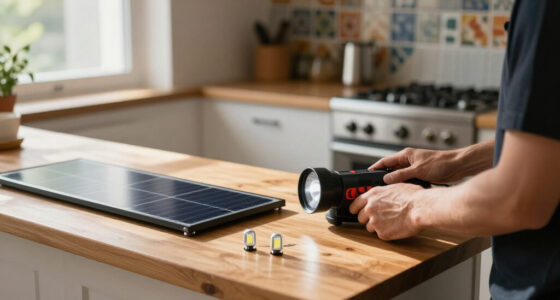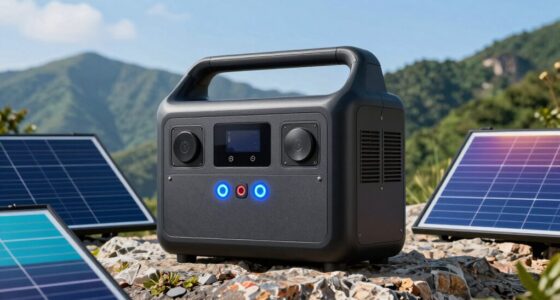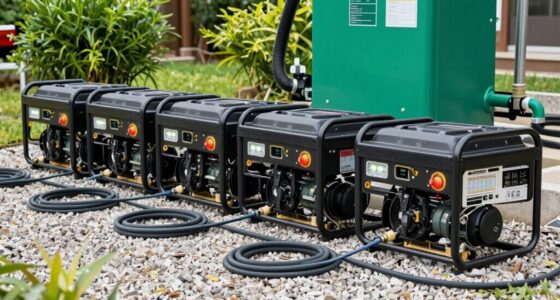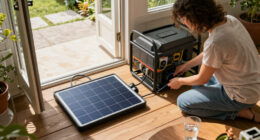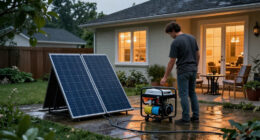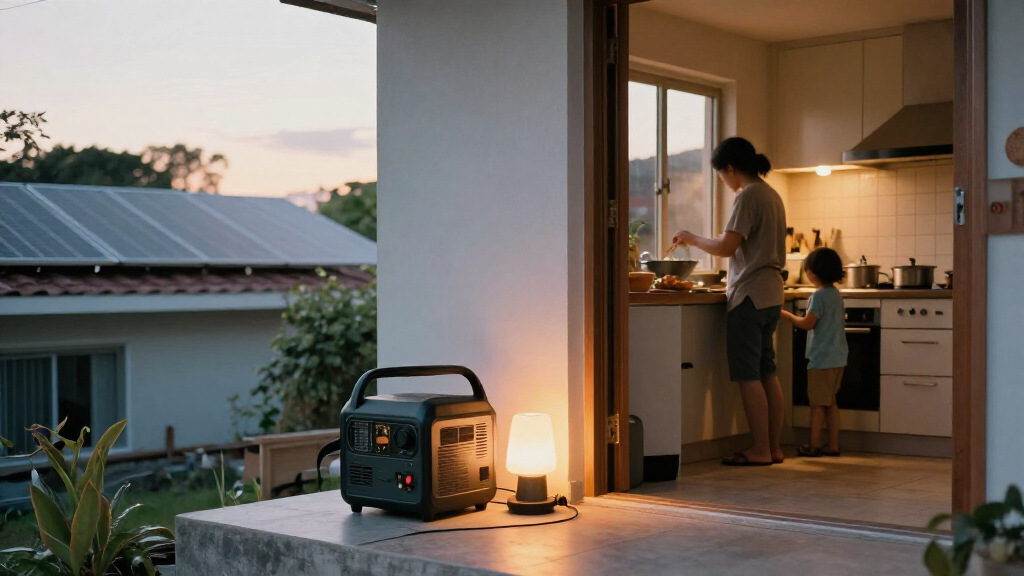
For home backup, I would start with the Jackery HomePower 3600 Plus for its larger capacity, then compare it with the EcoFlow DELTA 3800 Gen4 for high-output needs and the Anker SOLIX C1000 Gen 2 for a smaller, easier-to-place setup. The main tradeoff is straightforward: compact stations are easier to move and store, while larger units can support more devices for longer but need more space and careful load planning. Solar panels can replenish a station during an extended outage, though actual charging depends on sunlight, panel placement, and your household’s power use. I’ve ranked these options by how well their capacity, output, and solar configuration match realistic backup needs. Continue reading for the full comparison and help matching a station to your home.

Get backup power and energy gear delivered free with Prime
- Fast, free delivery on millions of items
- Prime Video, Amazon Music and more included
- Member-only deals all year
Complete the kit


Key Takeaways
- Capacity changes the backup plan: The Jackery HomePower 3600 Plus, EcoFlow DELTA 3800 Gen4, and EcoFlow TITAN 5000 Classic are better suited to longer or heavier outages than the 292Wh Jackery Explorer 300.
- High output and long runtime are separate needs: A station such as the 3763Wh DELTA 3800 Gen4 offers both substantial stored energy and high AC output, while a compact model may power demanding devices but run them for less time.
- Solar kits simplify the starting setup: Several entries bundle panels, including the BLUETTI Elite 300 kit and Jackery Solar Generator 1000 V2, but bundled panel capacity still needs to match the energy you expect to use.
- There are many near-capacity 1kWh choices: The Anker SOLIX C1000 Gen 2, BLUETTI Elite 100 V2, Jackery Solar Generator 1000 V2, and EcoFlow DELTA 3 models call for close comparison of output, charging setup, and included accessories.
- The smallest option serves a different role: The Jackery Explorer 300 is easier to treat as a portable essentials unit; it is not a substitute for the larger stations when you need extended household backup.
| Anker SOLIX C1000 Gen 2 Portable Power Station with 200W Solar Panel |  | Best Overall for Portable Home Backup | Battery capacity: 1,024Wh | Battery type: LiFePO4 | AC output: 2,000W; 3,000W peak | VIEW LATEST PRICE | See Our Full Breakdown |
| Jackery HomePower 3600 Plus Portable Power Station |  | Best for High-Capacity Home Backup | Battery capacity: 3,584Wh; expandable to 21kWh per unit | Battery type: LFP with ceramic membrane cells | AC output: 3,600W; 7,200W in parallel | VIEW LATEST PRICE | See Our Full Breakdown |
| Anker SOLIX C1000 Gen 2 Portable Power Station |  | Best Compact Station for Existing Solar Owners | Battery capacity: 1,024Wh | Battery type: LiFePO4 | Running output: 2,000W | VIEW LATEST PRICE | See Our Full Breakdown |
| BLUETTI Elite 100 V2 Portable Power Station, 1024Wh, 1800W |  | Best for Quiet, Multi-Device Backup | Battery capacity: 1,024Wh | Battery type: LiFePO4 | AC output: 1,800W | VIEW LATEST PRICE | See Our Full Breakdown |
| Jackery Explorer 2000 v2 and 2x200W Solar Panels, 2042Wh, 2200W AC Output |  | Best Bundled Solar Backup for Longer Runtime | Battery capacity: 2,042Wh | Battery type: LiFePO4 | AC output: 2,200W | VIEW LATEST PRICE | See Our Full Breakdown |
| AP2000 Portable Power Station with 400W Solar Panel |  | Best for Quiet, Mid-Size Backup | Battery capacity: 2,048Wh | Battery type: LiFePO4 | AC output: 2,400W | VIEW LATEST PRICE | See Our Full Breakdown |
| BLUETTI Elite 300 Solar Generator Kit with Two 200W Solar Panels, 3014Wh |  | Best for RV-Ready Backup | Battery capacity: 3,014Wh | Battery type: LiFePO4 | Stated cycle life: 6,000+ cycles | VIEW LATEST PRICE | See Our Full Breakdown |
| EF EcoFlow TITAN 5000 Classic Portable Power Station, 5017Wh, 4000W AC Output |  | Best for Expandable Home Backup | Capacity: 5,017Wh | Expandable capacity: 5–30kWh | AC output: 4,000W | VIEW LATEST PRICE | See Our Full Breakdown |
| EF ECOFLOW DELTA 3800 Gen4 Portable Power Station, 3763Wh, 3600W AC Output |  | Best for Flexible Recharge | Capacity: 3,763Wh | Continuous AC output: 3,600W | Surge power: 7,200W | VIEW LATEST PRICE | See Our Full Breakdown |
| Jackery Solar Generator 1000 V2 with 200W Solar Panel, 1024Wh LiFePO4 Battery |  | Best Compact Backup | Battery capacity: 1,024Wh | Battery chemistry: LiFePO4 | AC output: 1,500W | VIEW LATEST PRICE | See Our Full Breakdown |
| Jackery Explorer 300 Portable Power Station 292Wh |  | Best Compact Backup for Essentials | Battery capacity: 292Wh / 20.4Ah | Battery chemistry: LiFePO4 | Weight: 7.5 lbs | VIEW LATEST PRICE | See Our Full Breakdown |
| EcoFlow DELTA 3 Portable Power Station (1024Wh, 1800W) |  | Best for Fast Recharge and Expansion | Battery capacity: 1,024Wh | AC output: 1,800W | Surge output: 3,600W with X-Boost | VIEW LATEST PRICE | See Our Full Breakdown |
| Anker SOLIX S2000 Portable Power Station, 2,010Wh, 1,500W |  | Best for Longer Appliance Backup | Battery capacity: 2,010Wh | Battery chemistry: LiFePO4 | Continuous / peak output: 1,500W / 3,000W | VIEW LATEST PRICE | See Our Full Breakdown |
| EF ECOFLOW DELTA 3 Classic Portable Power Station, 1024Wh, 1800W |  | Best for UPS-Backed Essentials | Battery capacity: 1,024Wh | Battery chemistry: LiFePO4 | Output / surge power: 1,800W / 3,600W | VIEW LATEST PRICE | See Our Full Breakdown |
| EcoFlow Solar Generator DELTA 3 Classic with 2x100W Solar Panels, 1024Wh |  | Best Solar Starter Kit | Battery capacity: 1,024Wh | Battery chemistry: LiFePO4 | Continuous / surge output: 1,800W / 3,600W | VIEW LATEST PRICE | See Our Full Breakdown |
| solar generators for home backup | Battery capacity | Weight | Battery type | AC output |
|---|---|---|---|---|
| Anker SOLIX C1000 Gen 2 Portab | 1,024Wh | 24.9 lbs | LiFePO4 | 2,000W; 3,000W peak |
| Jackery HomePower 3600 Plus Po | 3,584Wh; expandable to 21kWh per unit | 77.2 lbs | LFP with ceramic membrane cells | 3,600W; 7,200W in parallel |
| Anker SOLIX C1000 Gen 2 Portab | 1,024Wh | 11.3 kg | LiFePO4 | — |
| BLUETTI Elite 100 V2 Portable | 1,024Wh | 25.3 lbs | LiFePO4 | 1,800W |
| Jackery Explorer 2000 v2 and 2 | 2,042Wh | 39.5 lbs | LiFePO4 | 2,200W |
| AP2000 Portable Power Station | 2,048Wh | 50.7 lb | LiFePO4 | 2,400W |
| BLUETTI Elite 300 Solar Genera | 3,014Wh | — | LiFePO4 | 2,400W |
| EF EcoFlow TITAN 5000 Classic | — | 102.5 lb | LiFePO4 | 4,000W |
| EF ECOFLOW DELTA 3800 Gen4 Por | — | 67.5 lb | LiFePO4 | — |
| Jackery Solar Generator 1000 V | 1,024Wh | 23.4 lb | — | 1,500W |
| Jackery Explorer 300 Portable | 292Wh / 20.4Ah | 7.5 lbs | — | — |
| EcoFlow DELTA 3 Portable Power | 1,024Wh | 27.5 lbs | — | 1,800W |
| Anker SOLIX S2000 Portable Pow | 2,010Wh | 35.7 lbs | — | — |
| EF ECOFLOW DELTA 3 Classic Por | 1,024Wh | 26.7 lbs | — | — |
| EcoFlow Solar Generator DELTA | 1,024Wh | — | — | — |
More Details on Our Top Picks
Anker SOLIX C1000 Gen 2 Portable Power Station with 200W Solar Panel
The Anker SOLIX C1000 Gen 2 pairs a 1,024Wh battery with a 200W bifacial solar panel, so it arrives ready to collect solar power while remaining light enough to move between rooms. Its 2,000W output and nine ports suit common outage loads such as a refrigerator, router, and phones, though the battery is better for targeted essentials than whole-home coverage. Compared with the Jackery HomePower 3600 Plus, Anker stores far less energy and lacks its 240V capability, but it weighs 24.9 pounds rather than 77.2. A sub-10ms UPS switchover can help keep sensitive equipment running, and fast AC charging helps restore capacity between outages. Solar replenishment depends on conditions and access to more input than the included panel provides for the advertised 1.8-hour charge. The station and panel may also ship separately.
Pros:- Includes a 200W bifacial solar panel for starting solar charging without a separate panel purchase
- 2,000W output and nine ports support several everyday backup devices
- 24.9-pound unit is easier to move than the much larger Jackery HomePower 3600 Plus
- Under-10ms UPS switchover and 49-minute AC recharge support quick response to outages
Cons:- 1,024Wh capacity limits runtime when powering high-draw appliances
- The included 200W panel alone does not match the 600W maximum solar input used for the stated 1.8-hour solar recharge
- Power station and solar panel may be dispatched separately
Best for: Households seeking a portable, solar-ready unit for routers, refrigeration, lights, and other essential 120V loads
Not ideal for: People who need to run multiple large appliances for long periods or power 240V equipment
- Battery capacity:1,024Wh
- Battery type:LiFePO4
- AC output:2,000W; 3,000W peak
- Ports:9
- Included solar panel:200W bifacial portable panel
- Maximum solar input:600W (60V maximum)
- AC recharge time:49 minutes at 1,600W
- UPS switchover:Under 10 ms
- Weight:24.9 lbs
Our verdict“Choose this Anker for portable, solar-ready backup of essential 120V devices; choose a larger-capacity model for longer or heavier loads.”
Jackery HomePower 3600 Plus Portable Power Station
For households that need more than a short bridge through an outage, the Jackery HomePower 3600 Plus offers 3,584Wh of storage and 3,600W AC output. That extra capacity gives essential appliances more headroom than the 1,024Wh Anker SOLIX C1000 Gen 2, while expansion up to 21kWh per unit supports a longer backup plan. Dual-voltage support, including 120V and 240V in parallel, also reaches equipment that smaller portable stations cannot serve. Hybrid AC+DC charging is listed at two hours for a full recharge, useful when power returns briefly. The tradeoff is physical: at 77.2 pounds, its wheels and telescopic handle help with rolling but do not make lifting easy. It has only two AC outlets, so households connecting several appliances may need extension cords. This makes more sense as a substantial home backup unit than as a grab-and-go station.
Pros:- 3,584Wh capacity provides substantially more stored energy than the 1,024Wh Anker SOLIX C1000 Gen 2
- Expandable capacity up to 21kWh per unit supports longer backup needs
- 3,600W output and 120V/240V capability cover a broader range of home loads
- Wheels and telescopic handle make moving the heavy unit across a level floor easier
Cons:- 77.2-pound weight makes lifting and stair transport difficult
- Only two AC outlets may require extension cords for multiple appliances
- No solar panel is listed among the included components
Best for: Households prioritizing longer essential-appliance runtime, expansion, and 240V backup capability
Not ideal for: Buyers who need a lightweight station to carry up stairs or want several built-in AC outlets
- Battery capacity:3,584Wh; expandable to 21kWh per unit
- Battery type:LFP with ceramic membrane cells
- AC output:3,600W; 7,200W in parallel
- Voltage:120V and 240V in parallel
- AC outlets:2
- Hybrid AC+DC recharge time:2 hours
- Solar recharge time:4 hours
- Cycle life:6,000 cycles
- Weight:77.2 lbs
Our verdict“Pick the HomePower 3600 Plus when capacity and voltage flexibility matter more than easy lifting or a compact footprint.”
Anker SOLIX C1000 Gen 2 Portable Power Station
Without an included panel, this Anker SOLIX C1000 Gen 2 is a practical match for buyers who already own compatible solar gear and want a portable battery for essential 120V loads. Its 1,024Wh capacity and 2,000W running output sit in the same compact class as the BLUETTI Elite 100 V2, while Anker lists a 3,000W peak and nine ports. The BLUETTI offers 11 ports and a 3,600W surge rating, so it may suit buyers who value additional connections or surge headroom; Anker counters with a 49-minute AC recharge and UPS switchover under 10ms. The 600W solar input ceiling sets a limit on how much panel capacity can be put to work, and the product data differs on whether it can power nine or ten devices. With no solar panel included, buyers starting from scratch need to source one separately.
Pros:- 2,000W running output and 3,000W peak output suit many essential 120V devices
- Compact 24.9-pound form factor is easier to move than high-capacity home backup units
- 49-minute AC recharge helps restore the battery quickly when grid power returns
- Under-10ms UPS switchover and 4,000-cycle rating support backup use over time
Cons:- Solar panel is not included, unlike the bundled Anker C1000 Gen 2 kit
- Maximum solar input is limited to 600W and 60V
- Product details conflict on whether the station supports nine or ten devices
Best for: Owners of compatible solar panels who want a portable station for essential devices and fast AC recovery
Not ideal for: Buyers who want a ready-to-use solar kit, more than 1kWh of storage, or a clearly specified device count above nine ports
- Battery capacity:1,024Wh
- Battery type:LiFePO4
- Running output:2,000W
- Peak output:3,000W
- Ports:9 listed
- Maximum solar input:600W; 60V maximum
- AC recharge time:49 minutes at 1,600W
- UPS switchover:Under 10 ms
- Weight:11.3 kg
Our verdict“Choose this version if you already have compatible panels and want a compact, fast-charging station for essential 120V backup.”
BLUETTI Elite 100 V2 Portable Power Station, 1024Wh, 1800W
The BLUETTI Elite 100 V2 puts 11 ports and a 1,024Wh battery in a compact station aimed at households that need to connect several small devices during an outage. Its 1,800W AC output is lower than the Anker SOLIX C1000 Gen 2’s 2,000W, so the Anker offers more running-power headroom; BLUETTI counters with a stated 3,600W surge and more ports. A noise rating of 30dB may be welcome in a bedroom or workspace, while UPS transfer of up to 10ms supports equipment that should stay powered through a brief interruption. Fast AC charging reaches 80% in about 45 minutes, but that is not a full recharge. The 25.3-pound body is manageable for repositioning, though heavier than some buyers may want to carry often. Solar charging is supported, but no panel is included in the listed items.
Pros:- Eleven ports accommodate more simultaneous connections than the nine listed on the Anker SOLIX C1000 Gen 2
- 30dB listed noise level suits quiet indoor spaces
- Reaches 80% AC charge in about 45 minutes
- UPS transfer time of up to 10ms and 4,000+ cycle rating suit recurring backup use
Cons:- 1,800W AC output is below the Anker C1000 Gen 2’s 2,000W
- The 45-minute figure is for an 80% charge, not a full recharge
- Solar panel is not among the listed included items, and vehicle fast charging requires a separate Charger 1
Best for: Households that need to connect several smaller backup devices and value quiet operation
Not ideal for: Buyers running loads that require more than 1,800W continuously or seeking a solar panel in the box
- Battery capacity:1,024Wh
- Battery type:LiFePO4
- AC output:1,800W
- Surge power:3,600W
- Ports:11
- AC charging:1,200W TurboBoost; 80% in about 45 minutes
- UPS transfer time:Up to 10 ms
- Noise level:30dB
- Weight:25.3 lbs
Our verdict“Choose the Elite 100 V2 for quiet, multi-device backup when its 1,800W output is enough for your loads.”
Jackery Explorer 2000 v2 and 2x200W Solar Panels, 2042Wh, 2200W AC Output
With 2,042Wh of storage and two 200W panels in the bundle, the Jackery Explorer 2000 v2 is built for buyers who want more outage runtime than a 1kWh station and a way to recharge from sunlight. Its 2,200W output exceeds the Anker SOLIX C1000 Gen 2’s 2,000W, while double the battery capacity gives more breathing room for essential loads; the tradeoff is a 39.5-pound station and only three AC ports. Jackery lists a 20ms UPS switch, slower than the under-10ms transfer specified for the Anker and BLUETTI Elite 100 V2. The included panels total 400W, with a stated six-hour solar recharge under listed conditions. AC charging reaches 80% in 66 minutes, and the optional emergency mode is listed at 102 minutes for a full charge. The panels and station may ship separately, and solar results depend on conditions.
Pros:- 2,042Wh capacity provides about twice the stored energy of the Anker SOLIX C1000 Gen 2
- Includes two 200W solar panels for a bundled solar charging setup
- 2,200W AC output exceeds the 1,800W BLUETTI Elite 100 V2
- USB-C PD port supplies up to 100W for compatible devices without a separate adapter
Cons:- 39.5-pound station is substantially heavier than the 1kWh options in this roundup
- Three AC ports limit direct connections for multiple household appliances
- 20ms UPS switching is slower than the sub-10ms transfer times listed for the Anker and BLUETTI alternatives
Best for: Households wanting a bundled 2kWh-class station and panels for longer essential-load backup
Not ideal for: People who need a lightweight unit, many built-in AC outlets, or a very fast UPS transfer
- Battery capacity:2,042Wh
- Battery type:LiFePO4
- AC output:2,200W
- AC ports:3
- Included solar panels:2 × 200W
- Solar recharge time:6 hours with 400W panels
- AC charge time:80% in 66 minutes; full in 102 minutes with Emergency Super Charging
- UPS switching:20 ms
- Weight:39.5 lbs
Our verdict“Pick the Explorer 2000 v2 bundle for added runtime and included solar panels if you can manage its weight and three AC outlets.”
AP2000 Portable Power Station with 400W Solar Panel
The AP2000 pairs a 2,048Wh LiFePO4 battery with 2,400W AC output, a useful balance for keeping a router, lights, laptops, and selected appliances going during an outage. Its included 400W panel has twice the listed wattage of the Jackery Solar Generator 1000 V2’s panel, giving this kit more solar input potential when conditions are favorable. The under-35 dB operation and UPS function also suit a home office where noise and brief interruptions matter.
Compared with the BLUETTI Elite 300, though, the AP2000 stores substantially less energy, so it is a better fit for shorter outages than extended household backup. The 50.7-pound station is portable in a limited sense, and solar output depends on sunlight and setup. I’d choose it for a quiet essentials circuit, not for powering a home broadly.
Pros:- 2,400W AC output supports a range of compatible home essentials.
- Included 400W solar panel offers more panel wattage than the Jackery Solar Generator 1000 V2 bundle.
- UPS function is suited to compatible computers and Wi-Fi routers.
- LiFePO4 battery and under-35 dB specified operation fit repeated, indoor backup use.
Cons:- 2,048Wh capacity limits how long it can cover household loads compared with larger options such as the BLUETTI Elite 300.
- At 50.7 pounds, moving it around is less convenient than the 23.4-pound Jackery 1000 V2.
- Actual solar charging varies with sunlight, panel angle, and operating conditions.
Best for: Home-office users who want quiet backup for networking gear, computers, lights, and a few compatible appliances, with a 400W panel included.
Not ideal for: Households planning extended outages or backup for several high-draw appliances; its 2,048Wh capacity is below the BLUETTI Elite 300 and expandable EcoFlow options.
- Battery capacity:2,048Wh
- Battery type:LiFePO4
- AC output:2,400W
- Included solar panel:400W
- AC recharge time:Approximately 1.5 hours under specified conditions
- UPS:Built-in; product title lists under 20 ms
- Noise:Less than 35 dB under specified conditions
- Weight:50.7 lb
Our verdict“Choose the AP2000 for quiet, short-duration backup with a substantial included solar panel, but look to a higher-capacity model for longer outages.”
BLUETTI Elite 300 Solar Generator Kit with Two 200W Solar Panels, 3014Wh
The Elite 300 earns its place for buyers who want 3,014Wh of LiFePO4 storage and useful RV connections in one backup kit. Its TT-30 outlet and 12V/30A DC port make it more directly suited to RV loads than the home-office-focused AP2000, while 2,400W output and 4,800W surge capacity give it room for compatible appliances with higher startup demands. Two 200W panels are included, so solar charging is part of the package.
That solar setup is modest beside the AP2000’s single 400W panel, and the listed solar recharge window of about 7–15 hours can mean a long wait for a full battery. The 78-minute fast-charge figure reaches 80%, not a full charge. I’d rank it ahead of smaller stations for capacity and RV utility, but below expandable systems like the EcoFlow TITAN 5000 Classic for lengthy home outages.
Pros:- 3,014Wh LiFePO4 capacity provides more stored energy than the AP2000.
- 4,800W surge output can accommodate compatible loads with high startup demand.
- TT-30 and 12V/30A DC ports are useful for RV connections.
- Includes two 200W solar panels.
Cons:- Listed solar charging takes about 7–15 hours with the included panels.
- Panels ship separately from the power station.
- Unlike the EcoFlow TITAN 5000 Classic, no expandable capacity is specified.
Best for: RV owners and households seeking a larger portable reserve with TT-30 and 12V/30A connections plus included solar panels.
Not ideal for: Buyers who need fast solar replenishment or scalable whole-home storage; the included panels are 400W combined and no expansion capacity is listed.
- Battery capacity:3,014Wh
- Battery type:LiFePO4
- Stated cycle life:6,000+ cycles
- AC output:2,400W
- Surge output:4,800W
- Included solar panels:2 × 200W
- Solar charging time:About 7–15 hours with included panels
- RV ports:TT-30 outlet and 12V/30A DC port
Our verdict“Pick the Elite 300 if RV connections and a larger ready-to-use battery matter more than fast solar charging or future capacity expansion.”
EF EcoFlow TITAN 5000 Classic Portable Power Station, 5017Wh, 4000W AC Output
The TITAN 5000 Classic is the strongest fit here for a buyer planning backup beyond a few devices: it starts with 5,017Wh and can expand to 30kWh. Its 4,000W AC output also exceeds the 2,400W ceiling on the BLUETTI Elite 300 and AP2000, giving compatible household loads more headroom. For a fixed home setup, pairing it with the Smart Home Panel 10 enables the listed under-20-ms automatic switchover.
That home integration is a meaningful advantage, but it depends on buying the panel separately. The station alone weighs 102.5 pounds, making it much less practical to reposition than the EcoFlow DELTA 3800 Gen4. Its six outlets may also constrain how many devices plug in directly. I’d put it first for scalable, quiet backup, while mobile users should favor the lighter DELTA 3800 or AP2000.
Pros:- 5,017Wh base capacity can expand up to 30kWh.
- 4,000W AC output offers more headroom than the 2,400W BLUETTI Elite 300.
- Under-30 dB specified operation suits indoor and overnight use.
- Smart Home Panel 10 pairing supports automatic switchover under 20 ms.
Cons:- The 102.5-pound unit is difficult to move.
- Automatic home-circuit backup requires the Smart Home Panel 10.
- Six outlets may limit direct connections for households with many devices.
Best for: Homeowners planning a stationary backup system that may grow over time and who want high output with Smart Home Panel integration.
Not ideal for: People who need to carry a station between rooms, vehicles, or campsites; at 102.5 pounds, it is substantially heavier than the DELTA 3800 Gen4.
- Capacity:5,017Wh
- Expandable capacity:5–30kWh
- AC output:4,000W
- Battery type:LiFePO4
- Automatic switchover:Under 20 ms with Smart Home Panel 10
- Noise level:Under 30 dB
- Weight:102.5 lb
- Warranty:5 years
Our verdict“Choose the TITAN 5000 Classic for a scalable home backup setup with high output, provided you can accommodate its weight and panel requirement.”
EF ECOFLOW DELTA 3800 Gen4 Portable Power Station, 3763Wh, 3600W AC Output
The DELTA 3800 Gen4 combines 3,763Wh of capacity with 3,600W continuous output, making it a capable middle ground between the Elite 300 and the much larger TITAN 5000 Classic. Its standout home-backup feature is the under-10-ms UPS switching time, and expansion to 12kWh can stretch runtime as household needs grow. Six charging methods—including combinations with solar and a generator or alternator—give it more ways to recover during an extended outage than the AP2000’s described AC and solar setup.
Those options come with a portability cost: at 67.5 pounds, it is no lightweight, even though it is easier to move than the TITAN. Expansion requires compatible EcoFlow extra batteries, so the base unit is not the whole system for longer outages. I’d favor it for buyers who value multiple recharge routes and fast backup switching over the BLUETTI’s RV-specific ports.
Pros:- 3,600W continuous and 7,200W surge output suit a broad range of compatible loads.
- Expandable capacity reaches 12kWh with compatible extra batteries.
- Under-10-ms UPS switching supports sensitive connected equipment.
- Six charging methods add flexibility during outages and travel.
Cons:- At 67.5 pounds, frequent repositioning is burdensome.
- Capacity expansion depends on compatible EcoFlow extra batteries.
- No included solar panel is listed.
Best for: Households that want a high-output portable station with several ways to recharge during outages and a path to added storage.
Not ideal for: Buyers who need an easy-to-carry station or RV-specific TT-30 connection; it weighs 67.5 pounds and no TT-30 port is listed.
- Capacity:3,763Wh
- Continuous AC output:3,600W
- Surge power:7,200W
- Expandable capacity:4–12kWh
- Battery type:LiFePO4
- UPS switching time:Under 10 ms
- Charging methods:AC wall, solar, alternator, generator, solar + generator, solar + alternator
- Weight:67.5 lb
Our verdict“Choose the DELTA 3800 Gen4 for flexible recharging and fast UPS switching, and budget for compatible batteries if its base capacity is not enough.”
Jackery Solar Generator 1000 V2 with 200W Solar Panel, 1024Wh LiFePO4 Battery
At 23.4 pounds, the Jackery 1000 V2 is the easiest station in this group to move and store, which makes it a practical pick for renters or anyone who needs to bring backup power close to the devices that need it. Its 1,024Wh battery and 1,500W output can cover smaller essentials, while the 10ms UPS switchover helps keep compatible equipment running through brief interruptions. The included 200W panel and app-controlled charging modes add useful flexibility.
This is a different scale of backup from the AP2000 or BLUETTI Elite 300: the Jackery holds roughly half or less of their energy, so it suits a router, lights, and selected electronics rather than a long list of household loads. Emergency charging can reach about 50 minutes only when enabled in the app, and the panel ships separately. I’d choose it for portability, not extended outages.
Pros:- 23.4-pound weight makes it far easier to move than the larger backup stations in this group.
- 10ms UPS switchover supports compatible essential electronics.
- Includes a 200W solar panel and app-based charging modes.
- LiFePO4 battery is specified to retain over 70% capacity after 4,000 cycles.
Cons:- 1,024Wh capacity limits runtime for household backup compared with the AP2000 and larger models.
- Fast emergency charging requires enabling the mode in the app.
- The power station and panel ship separately.
Best for: Renters, apartment dwellers, and remote workers who need portable backup for networking gear, lighting, and selected electronics.
Not ideal for: Families seeking several hours of backup for multiple appliances; its 1,024Wh capacity is far below the BLUETTI Elite 300 and EcoFlow DELTA 3800 Gen4.
- Battery capacity:1,024Wh
- Battery chemistry:LiFePO4
- AC output:1,500W
- Surge peak:3,000W
- Included solar panel:200W
- UPS switchover:10 ms
- Weight:23.4 lb
- Battery lifespan specification:Over 70% capacity after 4,000 charge cycles
Our verdict“Pick the Jackery 1000 V2 when easy carrying and compact backup matter more than running multiple home appliances for long.”
Jackery Explorer 300 Portable Power Station 292Wh
The Jackery Explorer 300 fits a narrow home backup role: keeping phones, a laptop, lights, or a compatible CPAP running through a short outage. At 7.5 pounds, it is much easier to move or store than the larger EcoFlow DELTA 3, but its 292Wh capacity and 300W rated output rule out most household appliances. Its LiFePO4 battery is rated for more than 4,000 cycles, a strong longevity point for a compact unit that may sit ready between emergencies. Solar charging can reach 80% in about 2.8 hours with a 100W panel, though the panel is sold separately. I’d choose this for portable essentials; for longer outages or refrigerator backup, the Anker SOLIX S2000’s larger battery is a better fit.
Pros:- Light 7.5-pound design is easy to move and store
- LiFePO4 battery rated for more than 4,000 charge cycles
- 100W USB-C port can power compatible laptops
- Can reach 80% charge in about 2.8 hours with a compatible 100W solar panel
Cons:- 292Wh capacity limits how long it can run home essentials
- 300W rated output cannot handle many household appliances
- Solar panel is not included
Best for: People in apartments or households who want a light, easy-to-store backup for phones, laptops, lights, and other low-power essentials
Not ideal for: Households seeking refrigerator backup or power for high-wattage appliances, since its capacity and 300W rated output are limited
- Battery capacity:292Wh / 20.4Ah
- Battery chemistry:LiFePO4
- Weight:7.5 lbs
- AC outlets:2
- USB-C output:100W
- AC charge time:4 hours
- Solar charge time:About 2.8 hours to 80% with a 100W panel
- Cycle life:More than 4,000 cycles to 70% capacity
Our verdict“Choose the Explorer 300 for portable, low-power outage essentials; pick a larger station such as the Anker SOLIX S2000 for longer home backup.”
EcoFlow DELTA 3 Portable Power Station (1024Wh, 1800W)
The EcoFlow DELTA 3 suits outage plans where quick turnaround matters: it can recharge from AC in a claimed 56 minutes, reducing the time it needs to spend plugged in between uses. Its 1,024Wh battery and 1,800W output cover more than the compact Jackery Explorer 300, including a broader range of household devices, while remaining far below the multi-kilowatt-hour capacity of the Anker SOLIX S2000. The battery can expand to up to 5kWh with extra batteries, giving buyers a path to longer backup, but those packs add bulk and are not included. At 27.5 pounds, it is movable but not a grab-and-go unit for everyone. I’d favor it when fast AC charging and future expansion matter more than getting a complete long-runtime setup in one purchase.
Pros:- 1,800W AC output supports a wider range of devices than compact stations
- Claimed full AC recharge time of 56 minutes
- Expandable to 5kWh with additional batteries
- LiFePO4 battery rated for 4,000 cycles to 80% capacity
Cons:- Extra batteries are required to reach the advertised 5kWh capacity
- At 27.5 pounds, it is heavier than compact backup options
- The base 1,024Wh capacity is modest for extended refrigerator or whole-home backup
Best for: Households that need a mid-size backup station they can recharge quickly and expand later with compatible extra batteries
Not ideal for: Buyers who need several days of stored power immediately or want a very light unit, since extra capacity costs additional space and weight
- Battery capacity:1,024Wh
- AC output:1,800W
- Surge output:3,600W with X-Boost
- Battery chemistry:LiFePO4
- Weight:27.5 lbs
- Expansion capacity:Up to 5kWh with extra batteries
- AC recharge time:56 minutes full; 30 minutes to 80%
- USB-C output:100W
- Warranty:5 years
Our verdict“Pick the DELTA 3 if fast recharging and a future expansion path matter more than having the Anker SOLIX S2000’s larger capacity from the outset.”
Anker SOLIX S2000 Portable Power Station, 2,010Wh, 1,500W
With a 2,010Wh battery, the Anker SOLIX S2000 is the strongest fit in this batch for keeping several essentials running longer between charges. It has nearly twice the base capacity of the EcoFlow DELTA 3, making it the more compelling pick when a refrigerator or multiple devices are part of the outage plan, though actual runtime depends on the appliance and conditions. Its 1,500W continuous output is lower than the DELTA 3’s 1,800W, so buyers should check appliance requirements rather than assume the larger battery also means greater appliance compatibility. Eight outlets and UPS switchover under 10ms suit a busy household setup. The tradeoff is a 35.7-pound body and no 12V DC port; compared with the small Jackery Explorer 300, this is built for capacity over easy carrying.
Pros:- 2,010Wh capacity provides more stored energy than the 1,024Wh DELTA 3
- Eight outlets allow several devices to connect at once
- UPS switchover under 10ms supports backup for sensitive electronics
- Supports AC and solar charging, with solar input up to 400W
Cons:- 35.7-pound weight makes frequent carrying less convenient
- No 12V DC port
- 1,500W continuous output is lower than the EcoFlow DELTA 3’s 1,800W
Best for: Households prioritizing longer runtime for a refrigerator, networking gear, and several smaller devices during outages
Not ideal for: People who need a lightweight station, a 12V DC output, or appliances that exceed its 1,500W continuous limit
- Battery capacity:2,010Wh
- Battery chemistry:LiFePO4
- Continuous / peak output:1,500W / 3,000W
- Solar input:Up to 400W
- Outlets:8
- UPS switchover:Under 10ms
- Weight:35.7 lbs
- Dimensions:8.19 × 11.1 × 12.7 in
- Warranty:5 years
Our verdict“Choose the SOLIX S2000 for more stored energy and household connections; favor the lighter Jackery Explorer 300 if you only need portable device backup.”
EF ECOFLOW DELTA 3 Classic Portable Power Station, 1024Wh, 1800W
The DELTA 3 Classic is a practical middle ground for buyers who want a 1,024Wh station with fast AC charging and a quick under-10ms UPS switch for sensitive electronics. That transfer time can help keep a connected computer or network device powered during an interruption, while the 1,800W output handles more than the Jackery Explorer 300’s 300W limit. Its six AC outlets and 100W USB-C port give a household room to connect a mix of gear. The key limitation is expansion: it is incompatible with DELTA 2 and DELTA 3 Series Smart Extra Batteries, so its base capacity is the capacity to plan around. The DELTA 3 listing offers expansion up to 5kWh; I’d choose the Classic when UPS support is central and a fixed 1,024Wh setup is sufficient.
Pros:- Under-10ms UPS switching supports connected sensitive electronics
- 1,800W output and 3,600W surge capacity cover more loads than the Explorer 300
- AC charging reaches 80% in 45 minutes
- Six AC outlets and a 100W USB-C port
Cons:- Not compatible with DELTA 2 or DELTA 3 Series Smart Extra Batteries
- Solar panels are optional and sold separately
- The 1,024Wh base capacity is less than half the Anker SOLIX S2000’s
Best for: Remote workers and households who want quick UPS switching for a computer, router, or other sensitive electronics
Not ideal for: Buyers planning to add DELTA 2 or DELTA 3 Series Smart Extra Batteries or seeking multi-day capacity from one base unit
- Battery capacity:1,024Wh
- Battery chemistry:LiFePO4
- Output / surge power:1,800W / 3,600W
- X-Boost output:Up to 2,600W
- UPS switching time:Under 10ms
- AC charging:0–80% in 45 minutes
- Solar charging:About 2.5 hours with an optional 500W panel
- AC outlets:6
- Weight:26.7 lbs
Our verdict“Pick the DELTA 3 Classic for UPS-backed electronics and quick charging, but choose the Anker SOLIX S2000 if longer runtime takes priority.”
EcoFlow Solar Generator DELTA 3 Classic with 2x100W Solar Panels, 1024Wh
This DELTA 3 Classic kit pairs a 1,024Wh power station with two 100W solar panels, so it gives solar-curious households a starting setup without choosing panels separately. The station matches the standalone DELTA 3 Classic’s 1,800W continuous output, 3,600W surge capacity, and under-10ms UPS switching; the practical distinction is the included solar equipment. Its listed solar recharge time is 6.4 hours, so I’d treat solar as a way to replenish the battery over a suitable daylight window, not as instant outage coverage. The Anker SOLIX S2000 stores nearly twice as much energy, while this kit is lighter and includes panels. The two rigid panels are less convenient to carry and position than foldable models, and the power station and panels ship separately.
Pros:- Includes two 100W solar panels
- 1,800W continuous output with 3,600W surge capacity
- Under-10ms UPS switching for sensitive electronics
- AC charging reaches 80% in 45 minutes
Cons:- Listed solar recharge time is 6.4 hours
- Rigid panels are less portable than foldable options
- Station and panels ship separately
Best for: Households beginning solar backup who want a matched 1,024Wh station and two panels for daytime recharging
Not ideal for: Buyers needing longer stored runtime or a compact, easy-to-carry panel setup, since capacity is limited and the panels are rigid
- Battery capacity:1,024Wh
- Battery chemistry:LiFePO4
- Continuous / surge output:1,800W / 3,600W
- Solar panels:2 × 100W
- Solar panel efficiency:23%
- Solar recharge time:6.4 hours
- AC charging:0–80% in 45 minutes
- UPS switch time:Under 10ms
- USB-C output:100W
Our verdict“Choose this kit to start solar recharging with a matched station and panels; the Anker SOLIX S2000 is a better fit when stored capacity matters more.”
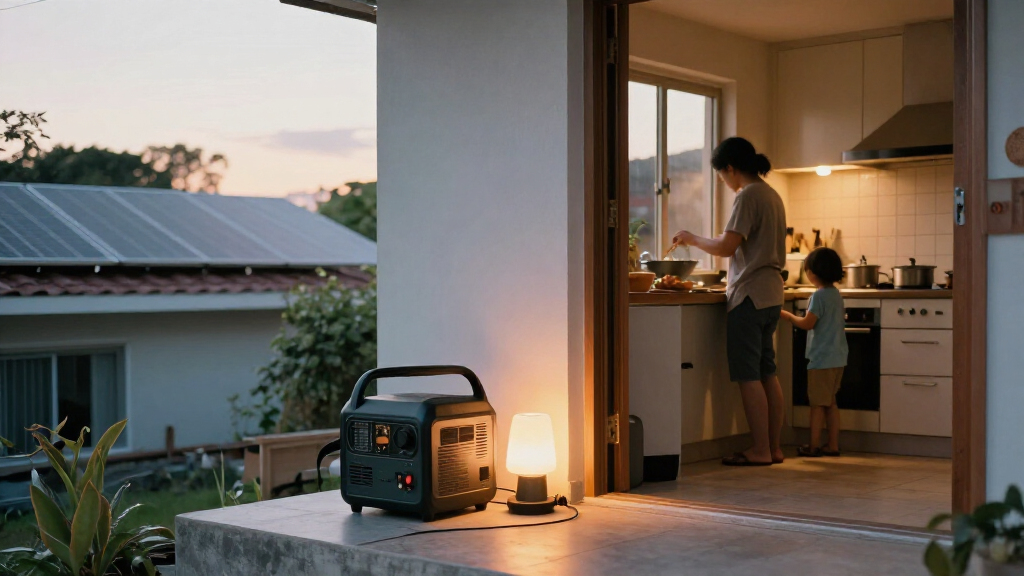
How We Picked
I compared each station through the lens of home backup: stored energy for runtime, AC output for the devices it can run, and solar charging support for outages that last beyond a single charge. I also considered whether panels are included, how easily a buyer can build a usable setup, and whether a model’s size and capacity appear proportionate to common backup goals. A high wattage figure alone does not promise long runtime, and a large battery alone does not mean it can start every appliance.
The ranking favors products that balance capacity, output, and practical solar setup for a household. Larger systems rise when they can support a broader backup plan; compact models earn a place for smaller loads, limited space, or portability. Among similar-capacity stations, I distinguish them by their stated output and bundled solar equipment, while keeping the limitations visible. Product names and listed specifications guide this comparison; buyers should confirm current compatibility and operating details with the manufacturer before connecting critical equipment.
| solar generators for home backup | Battery type |
|---|---|
| Anker SOLIX C1000 Gen 2 Portab | LiFePO4 |
| Jackery HomePower 3600 Plus Po | LFP with ceramic membrane cells |
| Anker SOLIX C1000 Gen 2 Portab | LiFePO4 |
| BLUETTI Elite 100 V2 Portable | LiFePO4 |
| Jackery Explorer 2000 v2 and 2 | LiFePO4 |
| AP2000 Portable Power Station | LiFePO4 |
| BLUETTI Elite 300 Solar Genera | LiFePO4 |
| EF EcoFlow TITAN 5000 Classic | LiFePO4 |
| EF ECOFLOW DELTA 3800 Gen4 Por | LiFePO4 |
| Jackery Solar Generator 1000 V | — |
| Jackery Explorer 300 Portable | — |
| EcoFlow DELTA 3 Portable Power | — |
| Anker SOLIX S2000 Portable Pow | — |
| EF ECOFLOW DELTA 3 Classic Por | — |
| EcoFlow Solar Generator DELTA | — |
Factors to Consider When Choosing Solar Generators For Home Backup
Choosing a station starts with the outage you want to handle, not the largest capacity number on a product page. I’d map the devices you need, how long you expect to run them, and whether solar recharging is practical at your home. These factors help avoid buying a unit that is either difficult to use or too limited when the power goes out.
Match Battery Capacity to the Outage You Need to Cover
Capacity, commonly listed in watt-hours, estimates how much energy the battery stores; it does not promise a fixed runtime. Add up the watt-hours your planned devices consume over the hours you need them, then allow for conversion losses and changes in actual usage. A phone and a few lights create a different demand from a refrigerator, modem, and medical device running overnight. A common mistake is treating a station’s capacity as if it were its AC output: one affects duration, the other affects which devices it can power at once. If outages often last more than a day, plan how the station will recharge between uses. Leave room for unpredictable loads instead of sizing to a perfect-case estimate.
Check Starting Loads and Simultaneous Use
Appliances with motors or compressors can briefly draw more power when starting than they use once running. Compare both the station’s continuous output and any clearly specified surge capability with the devices you want to connect. Then consider which appliances might run at the same time; several individually compatible loads can exceed the unit’s limit when combined. A practical method is to list essential devices in priority order and decide which ones can take turns. Avoid assuming that a high capacity battery automatically supports a high-wattage appliance. If a device is critical, check its nameplate and the station’s operating limits before buying.
Plan Solar Charging Around Your Site and Daily Use
Panel wattage is a rated condition, not a guarantee of energy collected each day. Shade, cloud cover, season, panel angle, and available outdoor space all affect charging, so a roofless or shaded site may get less from solar than expected. Estimate your daily consumption and compare it with realistic solar production for your location, leaving a buffer for poor weather. Bundled panels can make setup simpler, but check whether their connectors and voltage range are compatible with the station and whether more panels can be added. A frequent planning error is buying enough battery for several days without a credible way to refill it. For critical backup, consider how the unit can recharge from AC power when the grid is available.
Decide Whether You Need Portable Backup or a Home Power System
Portable power stations are convenient for moving between rooms or taking outside, while larger units can be heavy and occupy meaningful storage space. Think through where you will keep the station, how you will move it, and where panels can sit safely in sunlight. Also distinguish plugging selected appliances directly into a station from powering household circuits through a transfer setup. A station’s outlets do not by themselves authorize connection to home wiring; circuit backup needs compatible equipment and a safe installation approach. Buyers hoping to back up an entire home should check the system’s intended integration and professional requirements before purchase. If you only need a few essentials, a portable station may be simpler to manage.
Check Battery Chemistry, Care, and Long-Term Storage
Battery chemistry and the maker’s cycle-life terms can affect how a station ages under regular use. Read the warranty and care guidance for storage charge, temperature limits, and recommended periodic checks rather than assuming every battery can sit unused indefinitely. A backup unit that is hard to reach or left uncharged may not be ready when needed. If you expect to cycle the battery often, compare the manufacturer’s stated cycle conditions and warranty coverage alongside capacity. Consider whether the display or app gives enough information to monitor charge and output. The right choice depends on whether this is an emergency reserve, a frequently used power source, or both.
Compare Complete Setup Needs, Not Just the Station
A station may require separate solar panels, cables, adapters, or storage planning to become useful for your backup routine. Make a complete checklist of what is included and what your intended setup needs, including any panel compatibility limits. Bundled kits reduce the number of separate decisions, but their panel arrangement may not fit your roof, yard, or daily energy target. Check the number and type of outlets against your priority devices, too; outlet count matters when several essentials need power at once. Think about where extension cords can run without creating trip or weather hazards. A small amount of setup planning can prevent a capable station from sitting unused when an outage begins.
Frequently Asked Questions
Can a solar generator keep my refrigerator running during an outage?
It may, if the station’s continuous and surge output can handle the refrigerator and its battery has enough usable energy for the runtime you need. Check the appliance label or manual for running and starting loads; compressor startup can exceed steady consumption. Estimate energy over a full day, accounting for cycling and other devices you plan to power. Solar panels can extend operation when sunlight and panel placement cooperate, but they do not guarantee uninterrupted power through cloudy periods. For a critical refrigerator, test the intended setup before relying on it in an emergency.
How much solar panel capacity do I need to recharge a station during an outage?
Start with the energy you expect to use in a day, then estimate how much sunlight your panels can collect at your location and in the season you care about. Rated panel wattage is measured under favorable conditions, so shade, clouds, heat, angle, and short winter days can reduce actual charging. The station’s solar input limits also cap how much panel power it can accept. Check the manual for supported panel voltage, connectors, and maximum input before adding panels. If you cannot count on sun, include a grid charging plan before the outage and a way to reduce nonessential loads during it.
Is a 1kWh station enough for home backup?
A 1kWh class station can cover selected small loads for a limited period, but it is not automatically enough for a household’s full backup needs. Runtime depends on the power draw and how many hours each device runs, while output determines which devices can operate. Use it to prioritize essentials such as communications, lighting, and charging before adding larger appliances. The lineup includes several models near this capacity, so compare their output and solar setup as well as their energy storage. If you need longer runtimes or multiple demanding devices, consider a larger capacity and a realistic recharge plan.
Can I connect a portable power station to my home’s electrical panel?
Do not connect a station to household wiring through an ordinary outlet or an improvised cable. Powering selected circuits requires equipment designed for that use, compatibility with the station, and installation that prevents dangerous backfeed. Some portable stations are intended for direct use with appliances, while other backup systems support additional integration options. Check the manufacturer’s instructions and consult a qualified electrician about your panel and local requirements. If you only need to run a few devices, plugging them directly into the station may be a simpler plan.
Should I buy a station with panels included or choose the power station separately?
A kit can simplify shopping by pairing a station with compatible panels, which helps if you want a ready-to-configure solar setup. Buying separately can make sense if you already own panels or need a different panel size or layout. In either case, verify the station’s solar input specifications, connector compatibility, and any limits on panel configuration. Compare the panel capacity with your expected daily use rather than judging the kit by its bundle alone. Also check what cables and adapters are included so you can tell whether the setup will work at your home.
Conclusion
For a broad home backup plan, I’d begin with the Jackery HomePower 3600 Plus as the best overall choice in this lineup, then compare its setup and output with the EcoFlow DELTA 3800 Gen4 if high-demand appliances are central to your plan. The Jackery Explorer 300 is the best compact pick for a few essentials, while the Anker SOLIX C1000 Gen 2 suits buyers who want a more manageable station with a solar kit option. For a premium, higher-capacity direction, look at the EcoFlow TITAN 5000 Classic and confirm its size and integration fit your home. The best value depends on your actual load list: compare the near-1kWh options by output, included panels, and compatibility rather than choosing by capacity label alone. Beginners may find a bundled kit such as the Jackery Solar Generator 1000 V2 easier to start with; buyers with longer outages should prioritize larger storage and a credible recharging plan.