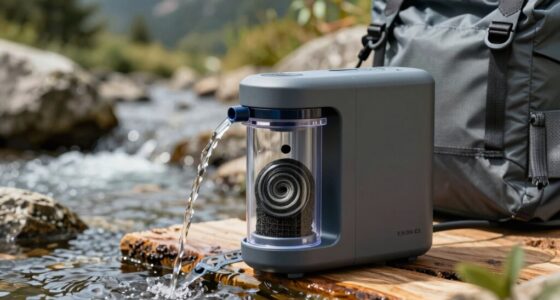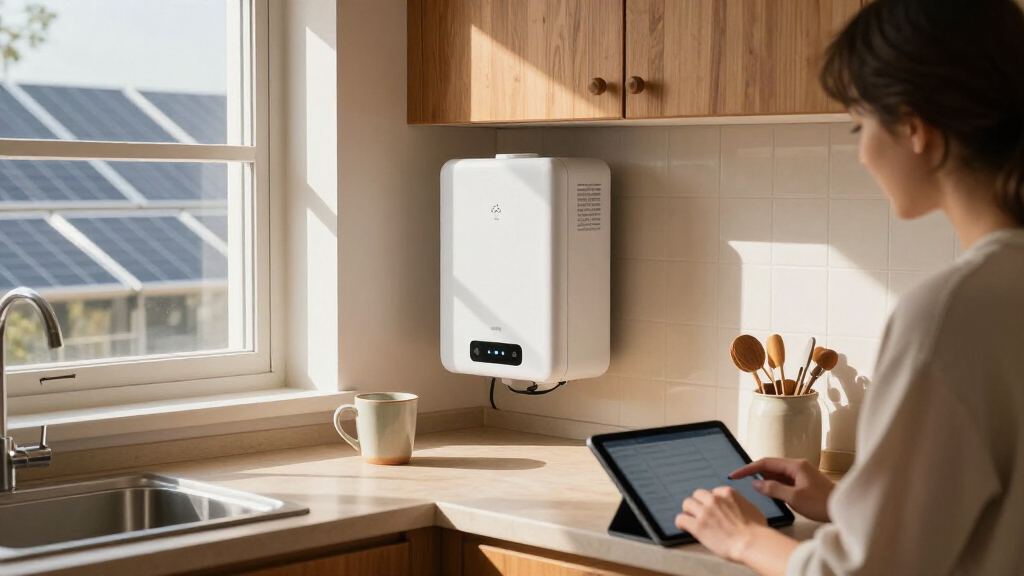
Choosing among the best home batteries depends first on what “home backup” means for you: a ready-made power station for household circuits, or a battery to build into a larger solar or off-grid system. The Jackery Solar Generator 5000 Plus is my leading pick for whole-home-style backup because it combines 120V and 240V output with transfer-switch compatibility and substantial expansion potential. For a modular 12V system, the VATRER POWER 460Ah stands out for its large capacity and self-heating, while the ECO-WORTHY 314Ah adds Bluetooth monitoring in a more moderate-capacity package.

Get backup power and energy gear delivered free — and shop member deals
- Fast, free delivery on millions of items
- Access to Prime Big Deal Days deals on October 6–7
- Prime Video, Amazon Music and more included
These options are not direct substitutes. Jackery is an integrated power station, whereas ROSINLI, ECO-WORTHY, and VATRER POWER are batteries that need compatible charging, wiring, and—in many home setups—an inverter. I rank them by how well each serves a distinct home-energy use, while weighing usable system scale, output, expansion, monitoring, cold-weather behavior, and installation demands. The main tradeoff is convenience versus flexibility: an all-in-one unit simplifies the core equipment, while standalone batteries give system builders more control but require more planning.
Complete the kit


Key Takeaways
- The Jackery 5000 Plus is the only pick here with stated 120V and 240V output and transfer-switch compatibility for household circuits; budget for the switch and any solar panels separately.
- VATRER POWER offers the largest stated single-battery capacity at 460Ah and includes self-heating, making it the strongest match here for a high-draw 12V setup in cold conditions.
- ECO-WORTHY combines 4,019.2Wh of stated energy with Bluetooth monitoring and status LEDs, but its 60.4 lb weight makes placement less convenient than the smaller ROSINLI units.
- ROSINLI’s two 100Ah batteries are the most modular entry point in this group, but they provide much less capacity individually and need a compatible LiFePO4 charging system.
- The three standalone battery options do not by themselves provide household AC outlets or circuit backup; buyers need to plan for an inverter, charging equipment, protection, and suitable installation.
| Jackery Solar Generator 5000 Plus Portable Power Station |  | Best Overall for Home Circuit Backup | Battery capacity: 5,040Wh | Battery chemistry: LiFePO4 | Surge output: 14,400W | VIEW LATEST PRICE | See Our Full Breakdown |
| ROSINLI 2-Pack 12V 100Ah Group 24 LiFePO4 Batteries with 100A BMS |  | Best Modular Starting Point | Quantity: 2 batteries | Chemistry: LiFePO4 | Nominal voltage: 12V each | VIEW LATEST PRICE | See Our Full Breakdown |
| ECO-WORTHY 12.8V 314Ah LiFePO4 Battery with Bluetooth and Low-Temperature Protection |  | Best for App Monitoring | Chemistry: LiFePO4 | Voltage: 12.8V | Capacity: 314Ah | VIEW LATEST PRICE | See Our Full Breakdown |
| VATRER POWER 12.8V 460Ah Self-Heating LiFePO4 RV Battery with App Monitoring |  | Best High-Capacity 12V Battery for Cold Conditions | Chemistry: LiFePO4 | Voltage: 12.8V | Capacity: 460Ah | VIEW LATEST PRICE | See Our Full Breakdown |
| home batterie | Voltage | Chemistry | Capacity | BMS |
|---|---|---|---|---|
| Jackery Solar Generator 5000 P | 120V/240V | — | — | — |
| ROSINLI 2-Pack 12V 100Ah Group | — | LiFePO4 | 100Ah each | Built-in smart 100A |
| ECO-WORTHY 12.8V 314Ah LiFePO4 | 12.8V | LiFePO4 | 314Ah | 200A |
| VATRER POWER 12.8V 460Ah Self- | 12.8V | LiFePO4 | 460Ah | — |
More Details on Our Top Picks
Jackery Solar Generator 5000 Plus Portable Power Station
The Jackery Solar Generator 5000 Plus is the clearest fit here for someone who wants a defined route from stored energy to household backup. Its 5,040Wh battery, 7,200W rated output, and stated 120V and 240V support put it in a different category from the three 12V batteries in this lineup. Jackery also lists compatibility with its 60A Smart Transfer Switch, which can connect the system to selected home circuits; the switch is a required part of that setup, not an included detail to overlook.
Its expansion ceiling of up to 60kWh and solar input up to 4,000W give buyers room to design a larger system around it. Those figures are most useful to households planning beyond a short outage, but they do not mean the base unit alone stores 60kWh or that solar panels come in the box. Jackery’s stated solar recharge time of about two hours depends on suitable input conditions and should not be read as a universal household charging estimate.
Compared with VATRER POWER’s 460Ah battery, Jackery is more turnkey for AC and circuit backup, while VATRER gives component-system builders a high-capacity 12V battery with self-heating. Compared with the smaller ROSINLI pair, Jackery is far simpler for powering selected household circuits, but it is also a more specialized system tied to compatible accessories. I would choose it for the combination of output, voltage flexibility, and expansion; I would skip it if I only need a modest 12V RV or solar-bank battery.
Pros:- 7,200W rated output with stated 120V and 240V support
- Expandable capacity up to 60kWh
- Accepts up to 4,000W of solar input
- LiFePO4 chemistry and ChargeShield 2.0 are rated for up to 11 years of daily use
Cons:- Solar panels are optional and add to the system requirements
- A compatible transfer switch is needed to power home circuits
- The integrated format offers less component-level flexibility than standalone batteries
Best for: Homeowners who want an integrated battery power station with a defined transfer-switch path to selected 120V or 240V circuits.
Not ideal for: Buyers seeking an inexpensive component battery, a small RV-only setup, or a complete home-circuit solution without purchasing a compatible transfer switch.
- Battery capacity:5,040Wh
- Battery chemistry:LiFePO4
- Surge output:14,400W
- Voltage:120V/240V
- Maximum expandable capacity:60kWh
- Maximum solar input:4,000W
- Transfer switch compatibility:Jackery 60A Smart Transfer Switch
Our verdict“I rank Jackery first for home backup because it combines substantial output and 120V/240V support in one system, provided you account for the required transfer switch.”
ROSINLI 2-Pack 12V 100Ah Group 24 LiFePO4 Batteries with 100A BMS
The ROSINLI two-pack suits buyers who want to assemble a 12V energy-storage system one battery at a time. Each unit is rated at 12V and 100Ah, and the pair can be connected in series or parallel, with configurations listed up to 4S or 4P. That gives this pick a modular feel the Jackery lacks: the batteries can be arranged as part of a compatible RV, marine, solar, or off-grid design instead of requiring the buyer to adopt a single integrated power station.
Each battery weighs about 22.6 lb, so handling and placement are easier than with the 60.4 lb ECO-WORTHY unit or the large-capacity VATRER battery. The built-in 100A BMS lists protections for overcharging, over-discharging, overcurrent, and short circuits, plus a low-temperature cutoff. Those protections are useful features, but they do not replace suitable system design, wiring protection, or a charger configured for LiFePO4 chemistry.
Compared with the ECO-WORTHY battery, ROSINLI offers a smaller capacity per battery and lacks the stated Bluetooth status app, but its lighter individual units may be easier to install in tight spaces. Against VATRER POWER, it is a more flexible low-capacity starting point, while VATRER supplies much more capacity in one battery and includes self-heating. This is my pick for a buyer building a modest system or valuing manageable modules. It is not an engine-starting battery and is not a plug-in home backup device on its own.
Pros:- Two batteries, each rated at 12V and 100Ah
- Series and parallel configurations listed up to 4S or 4P
- Built-in 100A BMS includes multiple protections and low-temperature cutoff
- About 22.6 lb per battery for easier handling than the larger single-battery picks
Cons:- Not intended for starting engines
- Requires a compatible LiFePO4 charging setup
- Each battery stores less energy than the ECO-WORTHY and VATRER POWER options
Best for: RV, marine, and off-grid buyers who want two relatively light 12V batteries for a modular energy-storage system.
Not ideal for: Anyone needing a ready-to-connect home AC backup unit, engine-starting battery, or high capacity from a single battery.
- Quantity:2 batteries
- Chemistry:LiFePO4
- Nominal voltage:12V each
- Capacity:100Ah each
- BMS:Built-in smart 100A
- Maximum configuration:4S or 4P
- Weight:22.6 lb each
- Warranty:5 years
Our verdict“I recommend ROSINLI as the modular entry point for modest 12V storage, but buyers seeking substantial household backup should start with a larger system plan.”
ECO-WORTHY 12.8V 314Ah LiFePO4 Battery with Bluetooth and Low-Temperature Protection
The ECO-WORTHY 314Ah sits between ROSINLI’s smaller modules and VATRER POWER’s higher-capacity single battery. Its stated 4,019.2Wh gives a system builder a meaningful amount of stored energy in one 12.8V unit, while Bluetooth monitoring, SOC and status LEDs, and a fault-alert buzzer give several ways to check state and notice problems. This is the most information-forward battery in the group; that can help when the battery is installed out of sight, though it still depends on a separate inverter and charging system for household use.
The 200A BMS and low-temperature charging cutoff at -7°C (19.4°F) are relevant to both load planning and placement. The product is listed for expansion up to 32.15kWh in compatible configurations, making it a possible building block for an RV or off-grid solar system that may grow over time. Buyers should confirm that their charger, inverter, cabling, and planned battery arrangement support the intended configuration rather than assuming the expansion figure describes a ready-to-run home system.
Compared with ROSINLI, ECO-WORTHY gives more capacity and app feedback but weighs 60.4 lb, a notable handling penalty when installation involves lifting into a compartment. Compared with VATRER POWER, it has less stated capacity and a lower BMS current rating, but its LEDs and buzzer add visible and audible status cues. I’d shortlist it when monitoring and moderate expansion matter more than easy lifting or cold-weather self-heating. The product description also notes that orders may arrive in multiple packages at different times, which can affect installation timing.
Pros:- 4,019.2Wh stated energy in one 12.8V battery
- Bluetooth app, SOC and status LEDs, and fault-alert buzzer
- 200A BMS with low-temperature charging protection
- Expansion listed up to 32.15kWh in compatible configurations
Cons:- At 60.4 lb, it may be difficult to position without help
- Orders may arrive in multiple packages at different times
- Needs a compatible inverter and LiFePO4 charging equipment for home loads
Best for: RV and off-grid solar owners who want a substantial 12.8V battery with app status checks and expansion options.
Not ideal for: Buyers who need a lightweight battery, an integrated household AC system, or automatic self-heating for charging in freezing conditions.
- Chemistry:LiFePO4
- Voltage:12.8V
- Capacity:314Ah
- Energy:4,019.2Wh
- BMS:200A
- Weight:60.4 lb
- Low-temperature charging cutoff:-7°C (19.4°F)
- Monitoring:Bluetooth app and SOC/status LED display
Our verdict“I’d choose ECO-WORTHY when battery visibility and a mid-sized expandable 12V bank matter more than low weight or self-heating.”
VATRER POWER 12.8V 460Ah Self-Heating LiFePO4 RV Battery with App Monitoring
Among the standalone batteries here, VATRER POWER’s 460Ah model has the largest stated capacity, paired with a 300A continuous-discharge BMS. That combination makes it the strongest fit in this group for a high-demand 12V system that needs more stored energy and discharge capacity from a single battery. The Jackery still leads for direct household circuit backup because it provides 120V and 240V output, but VATRER gives a system builder more capacity in a component that can be integrated with a separately selected inverter and charging setup.
The feature that most clearly separates it from ECO-WORTHY and ROSINLI is automatic self-heating, with activation listed from -4°F to 41°F. That can support charging in low temperatures under suitable system conditions, whereas ECO-WORTHY specifies a low-temperature charging cutoff and ROSINLI specifies a cutoff. It is not a reason to ignore installation guidance or environmental limits; it is a built-in feature to weigh if the battery will be used in a cold location.
App monitoring reports current, voltage, temperature, and cycle life, and the battery has a main switch and SPCC case. Its stated expansion support reaches 4P4S, and it comes with a five-year limited warranty. The tradeoff is physical: at 18.9 by 10.82 by 9.84 inches, it needs careful placement, and the supplied details describe it as large and heavy without listing its weight. Compared with ECO-WORTHY, VATRER offers more capacity and self-heating; compared with ROSINLI, it is a far less incremental purchase. I’d choose it for a planned, high-capacity 12V build, not for someone expecting a compact, ready-made household power station.
Pros:- Largest stated single-battery capacity in this roundup at 460Ah
- 300A continuous-discharge BMS
- Automatic self-heating supports charging in low temperatures
- App monitoring covers current, voltage, temperature, and cycle life
Cons:- Large, heavy form factor calls for careful installation planning
- App monitoring requires downloading the companion app
- Needs compatible charging and inverter equipment for home use
Best for: RV or off-grid system builders who need high 12V capacity, app monitoring, and self-heating support for charging in low temperatures.
Not ideal for: Buyers who want a light, small battery or direct AC home backup without selecting and installing compatible system components.
- Chemistry:LiFePO4
- Voltage:12.8V
- Capacity:460Ah
- Continuous discharge current:300A
- Self-heating activation range:-4°F to 41°F
- Expandable configuration:Up to 4P4S
- Case material:SPCC
- Warranty:5-year limited
Our verdict“I rank VATRER POWER first among the standalone batteries for cold-weather, high-capacity 12V builds, while Jackery remains the stronger pick for household circuit integration.”
How We Picked
I compared these four products as different answers to a home energy problem, rather than treating every battery as a plug-in household backup unit. The most relevant distinctions are whether a product is an integrated power station or a standalone battery, how much capacity and output it states, what expansion it supports, and what equipment a buyer must add before it can serve home loads.
For buyers seeking direct household backup, I gave weight to the Jackery’s stated 120V/240V output, 7,200W rated output, and compatibility with a 60A transfer switch. For buyers building from components, I compared the three 12V batteries on stated amp-hour capacity, BMS rating, connection options, monitoring, temperature protection, and physical handling. These specs shape practical choices: capacity affects how long loads can run, discharge capability constrains which loads a system can support, and cold-weather features influence where and when charging is suitable.
I also considered the work between purchase and use. Jackery still requires a transfer switch for home circuits, while the standalone batteries require a correctly sized inverter and a compatible LiFePO4 charging setup. I treated expansion claims as system-dependent rather than a guarantee of a complete backup installation. The product details supplied do not establish installation costs, independently verified runtime for a particular home, or compatibility with every inverter, panel, or electrical panel. My ranking reflects the stated features and tradeoffs, not hands-on testing.
Factors to Consider When Choosing Best Home Batteries
I’d start by defining the loads you need to run, the voltage your system requires, and whether you want a complete power station or a battery component. These choices matter more than comparing capacity figures in isolation.Decide whether you need a power station or a battery
The Jackery is an integrated power station with stated AC output and 120V/240V support. It is the most direct match if your goal is to connect a system to selected home circuits through a compatible transfer switch. The other three products are 12V batteries. They store energy, but do not by themselves provide the household AC outlets or circuit connection described for Jackery.
With a standalone battery, I would include an inverter, LiFePO4-compatible charger, wiring, protection devices, and installation needs in the plan. That route can be flexible and expandable, but it places more design work on the buyer. The right choice depends on whether you value a defined integrated system or want to choose each component.
Size capacity around the loads you plan to run
Watt-hours estimate stored energy; they do not alone predict runtime. Actual runtime depends on the power draw of connected devices, inverter losses, system limits, and how much capacity is available for use. A refrigerator, lighting, communications equipment, and a well pump have different demands, so list the devices you expect to run and their wattage before settling on a battery.
Jackery states 5,040Wh, ECO-WORTHY states 4,019.2Wh, and the ROSINLI batteries are rated at 100Ah each at 12V. VATRER lists 460Ah at 12.8V. Amp-hours are tied to voltage, so I would compare energy in watt-hours when the figure is available and avoid treating amp-hour numbers at different voltages as interchangeable. Expansion claims also depend on compatible system components.
Match output and voltage to your appliances
Capacity answers how much energy is stored; output and current limits help determine which devices can run at once. Jackery lists 7,200W rated output, 14,400W surge output, and 120V/240V support. That makes its specifications more relevant for households planning to connect selected circuits, subject to the system’s limits and proper installation.
For the standalone batteries, check the inverter’s continuous and surge ratings against the appliances you plan to use, and confirm that battery discharge limits and wiring can support the load. VATRER lists a 300A continuous-discharge BMS, ECO-WORTHY a 200A BMS, and ROSINLI a 100A BMS per battery. These ratings are not a substitute for checking the complete system’s specifications.
Plan for cold-weather charging
Charging temperature is a useful differentiator if the battery will be installed in an unheated area or used in winter. ROSINLI includes a low-temperature cutoff, and ECO-WORTHY lists low-temperature charging cutoff at -7°C (19.4°F). VATRER POWER instead lists automatic self-heating with an activation range from -4°F to 41°F, a feature aimed at supporting charging in low temperatures.
Cold-weather protections are not interchangeable: a cutoff can prevent charging outside specified conditions, while self-heating uses system energy to warm the battery. Check the manufacturer’s guidance for ambient limits, charging behavior, and installation before using any battery in cold conditions. Jackery’s supplied details do not specify a comparable cold-weather charging feature.
Compare expansion, monitoring, and installation effort
If you expect the system to grow, examine the exact permitted series and parallel configurations and confirm compatibility with the inverter and charger. Jackery lists expansion up to 60kWh; ECO-WORTHY lists expansion up to 32.15kWh in compatible configurations; ROSINLI supports up to 4S or 4P; and VATRER POWER lists up to 4P4S. These limits describe possible configurations, not a promise that every combination will work with your existing equipment.
Monitoring can make maintenance easier. ECO-WORTHY supplies Bluetooth status monitoring, LEDs, and a fault-alert buzzer; VATRER POWER offers app readings for current, voltage, temperature, and cycle life. ROSINLI lists a smart BMS but not the same app features. Finally, consider lifting and placement: ROSINLI’s batteries weigh about 22.6 lb each, while ECO-WORTHY is 60.4 lb; the provided VATRER details flag its size and weight as installation considerations without giving a weight. Jackery’s integrated format has its own space and transfer-switch requirements.
Frequently Asked Questions
Which product in this roundup is most ready for home circuit backup?
The Jackery Solar Generator 5000 Plus is the most directly suited to that use among these options because it lists 120V and 240V output and compatibility with the Jackery 60A Smart Transfer Switch. A compatible transfer switch is required to power home circuits, and the supplied details do not mean that every circuit or household load can be supported at once. The ROSINLI, ECO-WORTHY, and VATRER POWER products are standalone batteries that need an inverter and other compatible system equipment.
Can I connect any of these batteries directly to household appliances?
The standalone ROSINLI, ECO-WORTHY, and VATRER POWER batteries are 12V-class energy-storage components, not household AC power stations with built-in outlets. To run AC appliances, a compatible inverter and correctly designed battery system are needed. Jackery is the exception in this selection because it is a power station with stated 120V/240V output, though connecting it to selected home circuits requires the compatible transfer switch and suitable installation.
Which option has the largest stated capacity?
VATRER POWER has the largest stated capacity among the standalone batteries at 460Ah and 12.8V. Jackery, however, states 5,040Wh for its base unit and an expansion ceiling of up to 60kWh. Those figures describe different system formats, so I would compare the energy you need, the supported configuration, and the required equipment rather than choosing by a single number alone.
Which battery is best suited to cold-weather charging?
VATRER POWER is the standout here because it lists automatic self-heating with an activation range from -4°F to 41°F. ROSINLI and ECO-WORTHY list low-temperature charging cutoffs, which serve a different role by limiting charging under specified low-temperature conditions. Buyers should still follow each manufacturer’s temperature and installation guidance; the feature descriptions do not establish that a battery can be charged in every freezing environment.
What should I check before choosing a battery for a home backup system?
I would list the loads you want to power, how much energy they use, their startup demand, and whether they require 120V or 240V. Then check usable capacity, continuous and surge output, inverter and charger compatibility, wiring and protection requirements, cold-weather limits, and the space and lifting needed for installation. If connecting to home circuits, confirm transfer-switch compatibility and arrange appropriate installation. A battery’s stated capacity alone cannot tell you how long it will run your particular home.
Conclusion
For a homeowner who wants the clearest path to selected household circuits, I recommend the Jackery Solar Generator 5000 Plus, with the compatible transfer switch included in the system plan. If you are assembling a component-based 12V setup and want the most capacity plus cold-weather self-heating, the VATRER POWER 460Ah is my pick. Choose the ECO-WORTHY 314Ah when Bluetooth monitoring and visible status cues matter more than easier handling, or the ROSINLI two-pack when lighter, modular batteries suit an RV, marine, or modest off-grid build.
My recommendation changes with the installation you have in mind: Jackery favors integrated household backup, VATRER POWER favors high-capacity 12V storage in colder conditions, ECO-WORTHY favors monitored expansion, and ROSINLI favors a manageable modular start. Before buying any standalone battery for home use, confirm the inverter, charger, protection, and installation plan that will turn stored energy into power your loads can safely use.
Fall Picks
fall essentials
As an affiliate, we earn on qualifying purchases.