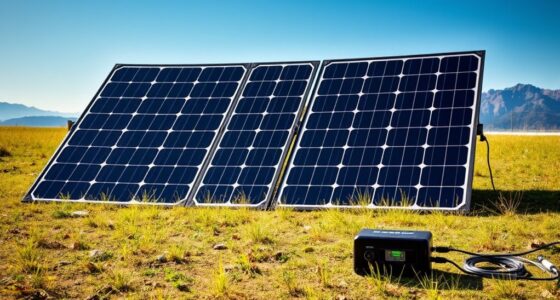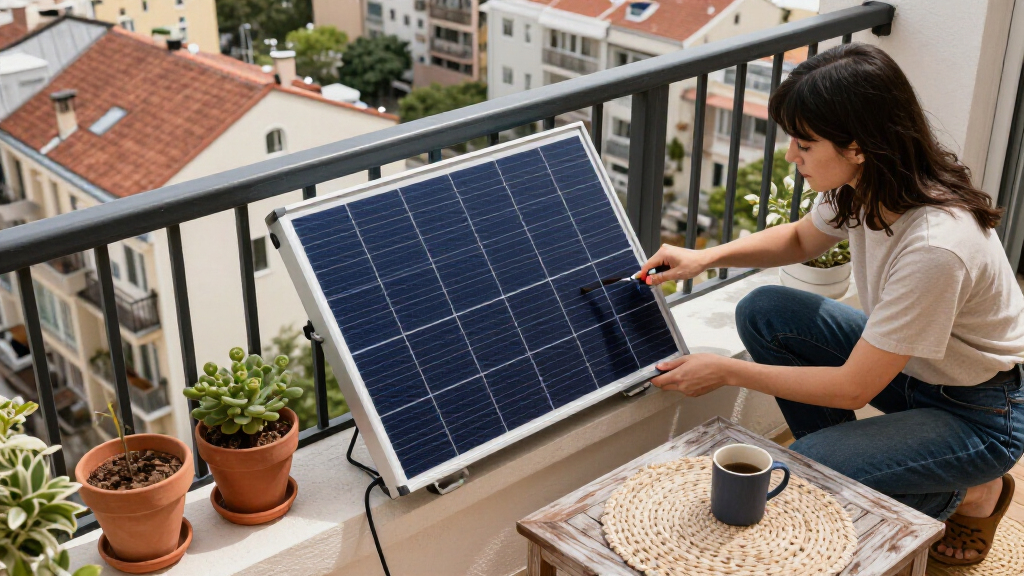
The best balcony solar panels pair useful output with a format your railing, wall or floor can safely support. My best overall pick is the Renogy ShadowFlux 400W Flexible Solar Panel, which combines flexible mounting potential with N-Type cells and a shade-focused design. For buyers who prefer rigid panels, the HQST 400W set offers two 200W modules, while the ECO-WORTHY 400W kit splits its capacity across four smaller panels. The main tradeoffs are flexibility versus rigidity, panel count versus installation simplicity, and advertised output versus the sunlight your balcony actually receives. Read on for the full comparison and guidance on matching panel format to your space.

Get backup power and energy gear delivered free — and shop member deals
- Fast, free delivery on millions of items
- Access to Prime Big Deal Days deals on October 6–7
- Prime Video, Amazon Music and more included
Key Takeaways
- Flexible formats suit more balcony shapes: Renogy’s 400W ShadowFlux and ECO-WORTHY’s 2-pack of 200W HJT panels can fit surfaces where rigid modules are awkward, but mounting and airflow still need careful planning.
- Rigid panels favor stable, open mounting: The HQST 2 x 200W and ECO-WORTHY 4 x 100W options provide defined panel sizes; check their dimensions and support needs before choosing them for a narrow railing.
- Panel count changes the layout, not just the total wattage: Four 100W modules may be easier to arrange around obstacles than two 200W panels, while more modules can mean more wiring and mounting points.
- Shade claims do not replace a site check: Renogy’s ShadowFlux models are positioned for shade-related performance, but balcony orientation, nearby buildings and rail shadows still limit available sunlight.
- High-capacity kits need a system compatibility check: The 1000W portable kit and 400W bifacial option should not be selected on panel wattage alone; buyers need to confirm inverter or battery compatibility, mounting, and local balcony rules.


| balcony solar panel | Weight | Dimensions | Maximum voltage | Efficiency |
|---|---|---|---|---|
| ECO-WORTHY 400W Monocrystallin | 23.8 pounds per panel | — | 25.2V | — |
| 100W 12V Flexible Monocrystall | 3 pounds | 38.1 × 20.8 × 0.3 inches | 18V | — |
| Renogy ShadowFlux Solar Panel | 23.8 pounds | 49.69 × 30.08 × 1.18 inches | 36.5V | — |
| Renogy 400W ShadowFlux Flexibl | 15.4 pounds | 62.2 × 27.4 × 1.2 inches | 44.1V | 25% |
| ECO-WORTHY 2-Pack 200W Flexibl | 12.6 pounds | — | — | — |
| N-Type 16BB 400W Bifacial Sola | 23.8 lb | 51.3 × 30.3 × 1.4 in | 23.74 V | 25.6% |
| ECO-WORTHY 2pcs 130 Watt Flexi | 12.6 lb | 37.8 × 27.1 × 0.1 in per panel | 24.5 V | 25% |
| HQST 400W Solar Panel | 20.17 lb | 47 × 31 × 3.5 in | — | Up to 25.4% |
| 1000 Watt Portable Solar Panel | — | 46.26 × 21.26 × 0.14 in per panel | — | 23% |
More Details on Our Top Picks
ECO-WORTHY 400W Monocrystalline Solar Panel Kit (4 pcs, 100W each, 18V, N-Type, IP68 Waterproof, 16BB Busbar)
I’d pick this four-panel kit when a balcony layout benefits from several smaller modules rather than one large surface. Its four 100W panels can be arranged to work around railings or other obstructions, and pre-drilled holes with MC4 connectors simplify the wiring and mounting process. The listed IP68 protection also suits exposed outdoor placement, though weather resistance does not replace secure mounting. Compared with the single-panel Renogy ShadowFlux 200W, this kit offers more layout flexibility and twice the combined rated power, but it also means more panels, connections, and mounting points to manage. At 23.8 pounds per panel, it is not a lightweight balcony option. I’d check the balcony’s usable area and mounting rules before choosing it; buyers wanting a compact, low-effort setup may prefer a flexible panel instead.
Pros:- Four separate 100W panels allow more flexible placement than a single large module.
- MC4 connectors and pre-drilled mounting holes simplify installation.
- IP68 waterproof rating is suited to exposed outdoor conditions.
- 400W combined rated power provides more capacity than a single 200W panel.
Cons:- Four rigid modules need substantial balcony area and multiple secure mounting points.
- Each panel weighs 23.8 pounds, making handling and installation less convenient.
- Multiple boxes and connections can make setup more involved.
Best for: Balcony owners with room for multiple rigid panels who want to arrange a 400W array around railings or partial obstructions.
Not ideal for: Renters or owners with narrow balconies, strict appearance rules, or no safe way to secure four rigid panels.
- Number of panels:4
- Output voltage:21.6V
- Maximum voltage:25.2V
- Amperage capacity:4.96A
- Dimensions per panel:35.63 × 23.03 × 1.18 inches
- Weight:23.8 pounds per panel
- Connector:MC4
Our verdict“Choose this kit if you have space and secure mounting for four rigid panels; skip it if your balcony needs a compact, simple installation.”
100W 12V Flexible Monocrystalline Solar Panel, IP67 Waterproof, Ultra-Thin, Lightweight for RV, Boat, Camping, Home Roof, Balcony
For a balcony where weight and a low-profile appearance matter more than total output, this 3-pound flexible panel is the easiest fit in this group. Its 0.3-inch thickness and bendable construction can suit curved or uneven mounting surfaces that a rigid panel such as the ECO-WORTHY 400W kit cannot follow. The tradeoff is capacity: at 100W, it is better treated as a small-scale option than a high-output balcony array. Its listed 23% conversion efficiency is competitive on paper, but real results still depend on sun exposure, orientation, and installation. I’d choose it for a limited space or a setup where a heavy frame is impractical, not as a substitute for a larger multi-panel system.
Pros:- At 3 pounds, it is much easier to handle than the rigid ECO-WORTHY 400W panels.
- Flexible, 0.3-inch profile can suit curved or uneven surfaces.
- Listed 23% conversion efficiency makes good use of limited panel area.
- IP67 waterproof rating supports outdoor installation.
Cons:- 100W rated output is limited for buyers seeking higher generation.
- Flexible construction still needs appropriate support and secure mounting.
- The product data does not specify a long-term warranty.
Best for: Balcony renters or RV owners who need a lightweight, low-profile panel for a curved or weight-sensitive mounting surface.
Not ideal for: Households seeking substantial balcony generation from one panel or buyers who need a rigid, frame-supported module.
- Amperage capacity:5.56A
- Maximum voltage:18V
- Dimensions:38.1 × 20.8 × 0.3 inches
- Weight:3 pounds
- Cell type:PERC monocrystalline
- Conversion efficiency:Up to 23%
Our verdict“Pick this panel for a light, low-profile balcony setup with modest power needs, not for a high-output array.”
Renogy ShadowFlux Solar Panel 200 Watt, N-Type 25% High-Efficiency
Balcony railings, nearby buildings, and awnings can cast shifting shadows, which is why I’ve given this Renogy ShadowFlux 200W a role focused on partial shade. Its anti-shading design and N-Type cells are intended to keep performance more dependable when a panel is not in uninterrupted sun. At 200W, it also offers more rated capacity than the 100W flexible panel in this roundup, while remaining a single rigid module rather than four separate panels like the ECO-WORTHY 400W kit. That simpler panel count can suit a straightforward mounting plan, but its 23.8-pound weight and nearly 50-inch length call for a strong, carefully measured installation. I’d favor it over a basic panel when shade is the main concern, but not when a balcony needs a light or bendable option.
Pros:- Anti-shading technology is designed for locations with partial shade.
- N-Type cells carry a listed 25% efficiency rating.
- 200W rated output exceeds the 100W flexible panel’s capacity.
- Includes a 5-year materials and workmanship warranty and 25-year power-output warranty.
Cons:- At 23.8 pounds and nearly 50 inches long, it needs careful placement and secure mounting.
- Rigid construction cannot conform to curved balcony surfaces.
- Its listed voltage and installation requirements may call for compatible system equipment.
Best for: Balcony owners with intermittent railing or building shadows who can securely mount a full-size rigid panel.
Not ideal for: Renters with weight limits, very small balconies, or curved mounting surfaces that call for a flexible panel.
- Cell efficiency:25%
- Maximum voltage:36.5V
- Output voltage:12V
- Dimensions:49.69 × 30.08 × 1.18 inches
- Weight:23.8 pounds
- Warranty:5 years materials and workmanship; 25 years power output
Our verdict“Choose this Renogy panel when balcony shade is your main challenge and you have the space and mounting strength for a rigid module.”
Renogy 400W ShadowFlux Flexible Solar Panel, N-Type 25% High-Efficiency
This Renogy combines 400W rated output with a flexible format, making it the most capacity-focused choice here for buyers who cannot use a conventional rigid panel. Its anti-shading technology and 25% N-Type cell efficiency also target balconies where shadows and limited surface area complicate generation. Compared with the Renogy ShadowFlux 200W rigid panel, it doubles the rated power and weighs less at 15.4 pounds, while giving up the rigid panel’s framed construction. That flexibility can help on curved surfaces, but it calls for careful handling and reliable support; flexibility is not a license to leave the module unsecured. At 62.2 inches long, it still needs a sizeable clear mounting area. I’d choose it for a high-output curved installation, not for a small balcony or a simple low-cost setup.
Pros:- 400W rated output is the highest among the five products reviewed here.
- Flexible design can suit curved mounting surfaces.
- N-Type cells are listed at 25% efficiency.
- IP68 rating is specified for outdoor protection.
Cons:- The 62.2-inch length requires a large, clear mounting area.
- Flexible construction needs careful handling and well-planned support.
- The product data does not specify a warranty term.
Best for: Balcony or RV owners with a long curved mounting surface who want higher rated output without a conventional rigid panel.
Not ideal for: Buyers with short or narrow balconies, those who prefer a rigid frame, or anyone unable to provide careful support and handling.
- Cell type:Mono N-Type
- Efficiency:25%
- Maximum voltage:44.1V
- Amperage capacity:5.55A
- Number of cells:63
- Dimensions:62.2 × 27.4 × 1.2 inches
- Weight:15.4 pounds
Our verdict“Choose this Renogy when you need high rated output on a curved, spacious mounting surface and can handle a flexible panel carefully.”
ECO-WORTHY 2-Pack 200W Flexible HJT Solar Panels ETFE 18BB
I’d consider this pair for balcony owners who want to spread flexible panels across a broad surface instead of mounting one rigid module. The set includes two 200W panels, each listed at 57.09 inches long, and its thin construction may suit uneven or curved installations. Compared with the 100W flexible monocrystalline panel in this roundup, it offers more combined rated power, but the longer panels need substantially more mounting area. Pre-drilled grommets and mounting accessories can help with installation, while the built-in blocking diode adds a specified electrical safeguard. The listing describes the cells as HJT and also mentions monocrystalline construction, so I’d verify system compatibility and the detailed panel documentation before wiring. This is a better match for a roomy balcony than for a narrow rail or a low-light location.
Pros:- Two 200W panels provide 400W combined rated power.
- Flexible, thin panels can suit uneven or curved mounting surfaces.
- Pre-drilled grommets and included mounting accessories support installation.
- Built-in blocking diode is specified as a safety feature.
Cons:- Each panel is more than 57 inches long, requiring substantial clear space.
- Proper mounting hardware and wiring are still needed for safe installation.
- The product data gives limited detail on weather ratings and warranty.
Best for: Balcony owners with a broad, uneven mounting surface who want two flexible panels and can accommodate their full length.
Not ideal for: People with narrow balconies, buyers seeking one compact module, or those unable to confirm wiring and controller compatibility.
- Panel count:2
- Output voltage:18V
- Dimensions per panel:57.09 × 27.17 × 0.1 inches
- Weight:12.6 pounds
- Cell description:HJT and monocrystalline cells, as described in the listing
- Busbar count:18
- Model number:L02AM200HJT2-2
Our verdict“Pick this two-panel set for a spacious balcony that benefits from flexible placement; choose a smaller panel if surface area is tight.”
N-Type 16BB 400W Bifacial Solar Panel, 2Pcs 200W for 12V/24V Systems
This two-panel set is the strongest fit here for a balcony where railings, nearby buildings, or plants may cast intermittent shade. Its dual-module design is intended to limit the effect of shading on output, while bifacial cells can collect light from the rear when the installation leaves space for reflected light to reach them. That makes it more adaptable than the rigid HQST 400W Solar Panel, which emphasizes compact construction rather than rear-side generation. The tradeoff is practical: at 23.8 pounds per panel, these modules need secure support, and bifacial gains depend on the balcony surface and mounting gap. I would choose this set for a well-supported, open railing, not a cramped, flush-mounted setup where the rear face gets little light.
Pros:- Bifacial cells can collect light from both sides when the mounting position allows it.
- Two 200W modules offer more placement flexibility than one large panel.
- The stated dual-module shading design is suited to locations with intermittent partial shade.
- Tempered glass and an aluminum alloy frame are designed for outdoor use.
Cons:- Each panel weighs 23.8 pounds, demanding sturdy and secure mounting.
- Bifacial output depends on rear-side light and suitable installation clearance.
- The rigid glass construction is less adaptable to curved or irregular balcony surfaces.
Best for: Balcony owners with sturdy mounting points, some intermittent shade, and clearance behind the panels for reflected light.
Not ideal for: Renters or apartment owners with weight-sensitive railings, limited mounting clearance, or no safe way to secure rigid glass panels.
- Maximum power:400 W total
- Panel configuration:2 × 200 W
- Cell technology:N-type monocrystalline, bifacial
- Efficiency:25.6%
- Amperage capacity:8.43 A
- Maximum voltage:23.74 V
- Dimensions:51.3 × 30.3 × 1.4 in
- Weight:23.8 lb
- Materials:Tempered glass, aluminum alloy frame, N-type monocrystalline cells
Our verdict“Choose this set for a securely mounted balcony with intermittent shade and room behind the panels; skip it if weight or tight clearance is a concern.”
ECO-WORTHY 2pcs 130 Watt Flexible Monocrystalline Solar Panels, Waterproof, Lightweight for RVs, Boats, Curved Surfaces
For a balcony with a curved awning, rounded railing, or other surface that will not take a rigid glass module, this two-panel flexible set is the most adaptable choice in this group. Its stated 270-degree bending capability and slim profile suit unusual mounting shapes better than the rigid N-Type 16BB 400W Bifacial Solar Panel. The compromise is capacity: the set provides 260 W total, so buyers seeking more output may need additional panels and suitable system components. Flexible construction also makes correct support and mounting especially important; the product description does not establish that every balcony surface or mounting method is suitable. I’d favor it for a lightweight, shaped installation, but compare its modest per-panel output against the higher-capacity rigid options before committing.
Pros:- Flexible design is intended to fit curved and irregular surfaces.
- Two panels provide 260 W combined rated power.
- At 0.1 inch thick, the panels have a low-profile form.
- The description lists an IP68-rated junction box.
Cons:- At 130 W per panel, the set has less rated capacity than the 400 W rigid options.
- Flexible panels need suitable mounting and support for the particular surface.
- Installation hardware may not suit every balcony structure.
Best for: Balcony owners who need lightweight panels to follow a curved awning, rounded structure, or other non-flat mounting surface.
Not ideal for: Buyers seeking high output from a small panel count, or anyone who needs a rigid module for a flat, secure rack.
- Maximum power:260 W total
- Panel configuration:2 × 130 W
- Cell technology:Monocrystalline silicon
- Efficiency:25%
- Dimensions:37.8 × 27.1 × 0.1 in per panel
- Weight:12.6 lb
- Bending capability:Up to 270°
- Maximum voltage:24.5 V
Our verdict“Pick this set when a curved or irregular balcony surface rules out rigid panels, but choose a higher-capacity option if output is your priority.”
HQST 400W Solar Panel, 2 x 200W, N-Type, 16BB, IP65 Waterproof, Up to 25.4% Efficiency
The HQST set suits buyers who want rigid, high-output panels in a comparatively compact listed footprint. Its two 200 W modules total 400 W, matching the N-Type 16BB bifacial set, while the listed panel weight of 20.17 pounds is lower than that competitor’s 23.8 pounds. It also lists an IP65 rating and load figures for wind and snow, details that help buyers assess outdoor mounting needs. Unlike the bifacial option, the HQST description does not claim rear-side generation or a dedicated shading design; it is a more straightforward rigid-panel choice. At 47 by 31 by 3.5 inches, though, it is not a slim flexible panel, and the description gives limited warranty detail. I’d shortlist it for a secure, flat balcony rack rather than a delicate railing.
Pros:- Two 200 W panels provide 400 W total rated power.
- N-type cells are listed with up to 25.4% efficiency.
- The listed weight is lower than the N-Type 16BB bifacial set in this roundup.
- IP65 rating and stated wind and snow load figures provide useful outdoor-installation details.
Cons:- Rigid construction is not suited to curved balcony surfaces.
- At 20.17 pounds, each listed panel still calls for secure support.
- Warranty coverage is not detailed in the supplied product information.
Best for: Balcony owners with a sturdy, flat mounting frame who want a 400 W rigid set and listed wind and snow load figures.
Not ideal for: People with curved surfaces, weight-sensitive railings, or a need for bifacial generation from light behind the panels.
- Maximum power:400 W total
- Panel configuration:2 × 200 W
- Cell technology:N-type, A+ 16BB
- Efficiency:Up to 25.4%
- Dimensions:47 × 31 × 3.5 in
- Weight:20.17 lb
- Water resistance:IP65
- Wind load:2400 Pa
- Snow load:5400 Pa
Our verdict“Choose HQST for a secure flat mount and a compact rigid 400 W set; favor the bifacial alternative if rear-side light collection or stated shade handling matters more.”
1000 Watt Portable Solar Panel Kit with 2 Flexible 500W Monocrystalline Panels
This kit is the high-capacity outlier: its two flexible 500 W panels offer far more stated power than the ECO-WORTHY 2 × 130 W flexible set, and a 50 A intelligent charge controller is included. That package may appeal to buyers who also need a portable off-grid setup, but it is a less straightforward balcony choice than either 400 W rigid set. Each panel is listed at 46.26 by 21.26 inches, so buyers need to check the available mounting area and plan for secure installation; flexibility up to 30 degrees does not make the panels self-supporting. The 23% efficiency is lower than the other products here that list efficiency, and the description gives no warranty details or long-term durability evidence. I’d choose it for a large, adaptable installation, not a small apartment balcony.
Pros:- Two 500 W panels provide 1000 W total rated power.
- Panels can bend up to 30 degrees for uneven surfaces.
- A 50 A intelligent charge controller is included.
- ETFE film coating and an IP67-rated junction box are listed.
Cons:- The 23% efficiency is lower than the stated efficiency of the other listed panels.
- The large combined capacity and panel dimensions may be difficult to accommodate on a typical balcony.
- The supplied description does not specify warranty coverage or long-term durability.
Best for: Buyers with ample balcony or outdoor mounting space who want a flexible high-capacity kit and an included charge controller for an off-grid system.
Not ideal for: Apartment dwellers with limited mounting area, buyers seeking a simple balcony-only panel setup, or anyone requiring clear warranty and longevity details.
- Power output:1000 W total
- Panel configuration:2 × 500 W
- Cell technology:Monocrystalline silicon
- Efficiency:23%
- Dimensions:46.26 × 21.26 × 0.14 in per panel
- Flexibility:Bends up to 30°
- Surface coating:ETFE film
- Charge controller:50 A intelligent controller
Our verdict“Choose this kit only if you have the space and mounting plan for a high-capacity flexible setup; for a typical balcony, the smaller ECO-WORTHY flexible set is easier to fit.”

How We Picked
I compared these nine options as balcony candidates, not as general-purpose solar products. The main criteria were panel format and likely fit, stated wattage and module count, construction cues such as flexible or rigid design, and information that may affect exposure, including waterproofing and shade-oriented features. I also weighed how much additional planning a buyer may need for mounting, wiring, and matching panels to the rest of a solar system.
The order favors products with a clearer balance of balcony-friendly form and useful capacity, then separates alternatives by their best-fit use. Flexible and shade-focused models rank ahead for balconies where mounting space or partial shade may be limiting; rigid multi-panel options remain strong choices where there is room for secure, fixed support. Smaller panels, specialized formats and the 1000W kit rank lower as general recommendations because they may call for more compromises or compatibility checks. Product names and specifications alone cannot confirm balcony suitability, so buyers should verify dimensions, permitted loads, mounting instructions and local rules before purchase.
Factors to Consider When Choosing Best Balcony Solar Panels
Balcony solar shopping starts with the site and the electrical setup, not the largest wattage printed on a listing. I would check these factors before comparing panel counts or cell technologies.
Measure the usable area and check mounting limits
Measure the actual space available after accounting for railing posts, doors, drainage and any required clearance. A panel that fits on paper may block a window or extend beyond a balcony edge once its brackets are included. Check the balcony’s permitted load and the panel maker’s mounting guidance rather than assuming a railing can carry a rigid module in wind. Flexible panels can follow a curved surface, but flexibility does not make an improvised attachment safe. If building management restricts visible equipment or drilling, ask about approved mounting methods before ordering.
Match panel output to the system you can use
Panel wattage describes rated capacity under specified conditions, not the energy your home will receive throughout a typical day. Before buying, identify whether you need a compatible microinverter, charge controller, battery or another system component; a panel kit may not provide everything needed for usable power. Confirm voltage and connector requirements across the panels and the receiving equipment. Buying more panel capacity than the system can accept can add cost and installation work without a matching increase in useful energy. If you are unsure, get the full system diagram or compatibility details before choosing a kit.
Account for orientation, shade and seasonal sun
Balcony direction, nearby buildings, trees and railings can change how much direct sun reaches a panel. Observe the space at different times of day, since a clear midday view does not rule out morning or afternoon shade. Shade-focused cell designs may help with some conditions, but they cannot create sunlight where a balcony is blocked. A smaller panel placed in a consistently sunny area can make more sense than a larger panel that spends much of the day shaded. For a rented home, check whether seasonal adjustments are practical and permitted.
Choose flexible or rigid panels for the right reason
Flexible panels can be easier to place on a curved or weight-sensitive surface, while rigid panels offer a defined frame that may suit a fixed support. Neither format is automatically better for every balcony: flexible panels still need secure support, and the mounting surface should allow the panel to operate as specified. Rigid models can be bulkier to handle and may catch wind if mounted poorly. Avoid choosing flexibility only because it sounds convenient; confirm the maker’s installation instructions and allowed mounting surfaces. When space is flat and support is secure, a rigid panel may be the simpler long-term fit.
Read waterproofing and durability details in context
Water-resistance labels can help compare products, but they do not answer every question about outdoor exposure. Check whether the stated protection applies to the panel itself, its connectors or the full installed setup. Balcony installations may face rain, wind, temperature changes and abrasion from repeated movement, so inspect the guidance for cable routing, storage and cleaning. Flexible modules may be easier to reposition, but repeated bending or unsupported areas can create risks if the instructions do not allow it. Prefer clear care and installation guidance over assuming that a waterproof claim makes any mounting arrangement suitable.
Calculate the real cost of a larger or more complex kit
A high-wattage kit can require more space, stronger mounting and additional electrical components, so compare the whole setup rather than panel capacity alone. Include any inverter, controller, battery, cables, brackets and permitted installation work in your planning. Multiple smaller panels can fit around balcony obstacles, although each added module may bring more wiring and attachment points. A portable kit may suit someone who wants to move panels between locations, but it can be unnecessary for a fixed balcony installation. Pay more for capacity or specialized construction only when your usable area, system and expected exposure can take advantage of it.
Frequently Asked Questions
Can I connect these panels directly to a household wall outlet?
Do not assume a panel can connect directly to a household outlet. Solar panels produce DC electricity, while a home circuit requires equipment designed to convert and manage that power safely. You need to confirm the compatible inverter or other system components, connection method and local electrical requirements. A panel listing may describe a module or kit without including those parts. Check the manufacturer’s system documentation and consult a qualified installer if the connection method is unclear.
Are flexible panels always better for a balcony railing?
No. Flexible construction can help when a mounting surface is curved or a rigid panel will not fit, but it does not remove the need for secure support and suitable airflow. Some railings may not provide an approved surface, and wind exposure can make an improvised attachment unsafe. A rigid panel may be a better choice when the balcony has a stable, properly sized support. Compare the installation instructions and allowed mounting locations before deciding based on flexibility alone.
Will a shade-focused panel solve partial shading from balcony rails?
A shade-focused design may be relevant where shadows cross the panel, but it cannot eliminate the effect of limited sunlight. The result depends on how much of the panel is shaded, when the shadow falls and how the complete system is wired. Check the balcony across several times of day and note shadows from railings, walls and neighboring buildings. If shade covers much of the usable area, relocating the panel or reducing expectations may matter more than choosing a particular cell label. Treat shade features as a possible advantage, not a substitute for a clear exposure check.
Can I combine panels with different wattages or brands?
It may be possible, but compatibility depends on electrical specifications and how the panels are connected. Differences in voltage, current or behavior under shade can affect the output of a combined array, especially when panels share a connection path. Confirm the inverter or charge controller limits and follow the system maker’s approved wiring diagrams. Do not rely on matching wattage alone; a 100W panel from one product line may not operate like a different 100W panel. When the specifications are incomplete, ask the equipment maker or a qualified installer before combining modules.
What should I verify before buying a 1000W portable kit for a balcony?
First, check whether the panels can physically fit and be secured within your balcony’s rules; a high-capacity portable set may occupy more space than expected. Confirm whether the kit includes a compatible power station, inverter or controller, since panel capacity by itself does not provide a complete usable-power setup. Review connectors, voltage limits and the system’s accepted input before purchase. Also consider whether the panels can be positioned for good sun without obstructing access or creating wind and falling-object risks. If the balcony cannot support the full array, a smaller, better-positioned setup may be a more practical match.
Conclusion
For most buyers seeking a balance of flexible mounting and substantial stated capacity, I would start with the Renogy ShadowFlux 400W Flexible Solar Panel as the best overall choice. The ECO-WORTHY 4 x 100W kit is my best-value-style pick for shoppers who need smaller modules to work around balcony obstacles, while the HQST 2 x 200W set suits buyers with room for a more conventional rigid layout. Beginners should favor the option whose mounting instructions and system compatibility are easiest to verify, rather than starting with the largest kit. For specific needs, the 100W flexible panel fits buyers prioritizing a compact module, and the 1000W portable kit is best reserved for people with the space and compatible equipment to use its greater capacity. Before choosing, confirm your balcony’s dimensions, mounting permissions, sunlight and electrical setup.
Halloween Picks
halloween
As an affiliate, we earn on qualifying purchases.