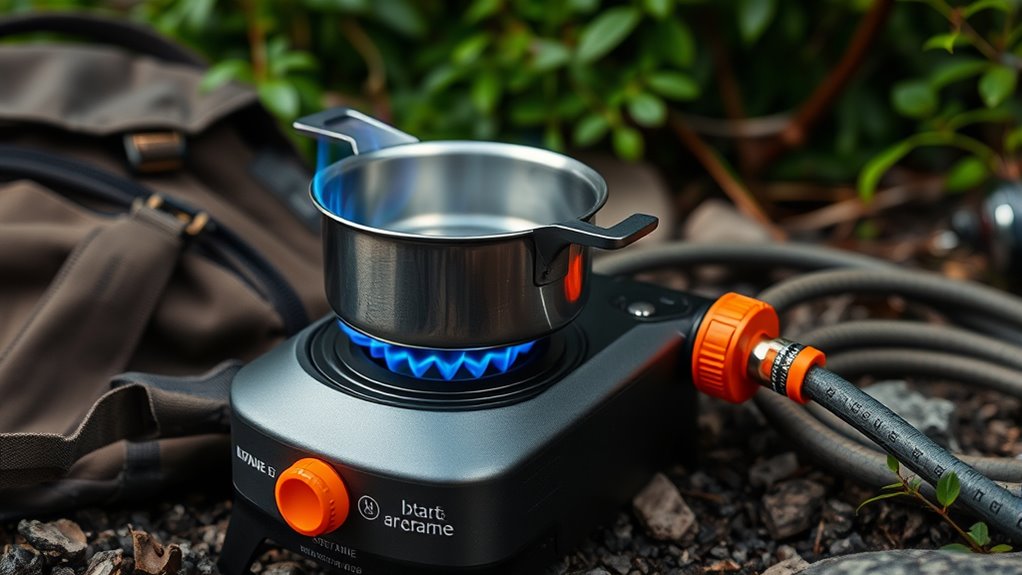

For hurricane prep, I’d choose a stove that balances reliable cooking, safe operation, and a fuel plan that suits the length of a power outage. My best overall pick is the Gas One GS-3400P, since its propane-or-butane compatibility gives you more fuel options; the Chef Master 15,000 BTU with four canisters stands out for its included fuel, while the Coleman Classic is a straightforward choice for buyers who want a familiar single-burner setup. The main tradeoff is between compact simplicity and added flexibility, such as dual-fuel support, wind protection, or a second burner. Canister availability, safe indoor-use limits, and the amount of food you need to prepare matter as much as burner output. Read on for my full comparison and guidance on choosing a stove that fits your emergency plan.

Get backup power and energy gear delivered free with Prime
- Fast, free delivery on millions of items
- Prime Video, Amazon Music and more included
- Member-only deals all year
Key Takeaways
- Fuel flexibility is the clearest differentiator: the Gas One GS-3400P and GS-3900PB accept propane or butane, while most options here rely on butane canisters.
- High output does not solve fuel planning: the 15,000 BTU Chef Master models and Gas One GS-3900PB prioritize cooking power, but the Chef Master bundle is the only listed option that explicitly includes four 8 oz canisters.
- Wind protection is a meaningful hurricane-prep feature: the 10,000 BTU windblocker models and the JoChef add shielding that can help outdoors, where gusts can slow cooking and waste fuel.
- Most picks are single-burner stoves: the double-burner kit is the exception for preparing multiple dishes, though its larger setup may be less convenient to store and transport.
- A stove is only one part of outage readiness: none of these product descriptions alone settles indoor-use safety, fuel storage, or how many meals your household can cook before resupply.


| butane stove for hurricane prep | Ignition | Fuel type |
|---|---|---|
| Chef Master 15,000 BTU Butane | Piezo electric | Butane |
| Gas One GS-3400P Propane or Bu | Automatic Piezo electric | — |
| Chef Master Portable Butane Ca | Piezo electric | Butane |
| Coleman Classic Portable 1-Bur | Instastart matchless ignition | Butane |
| BIG HORN OUTDOORS Portable Fol | — | Butane |
| Propane or Butane Stove with W | Automatic | Propane or butane |
| JoChef Portable Butane Camping | One-click auto-ignition | Butane |
| Sterno Portable Butane Stove w | Automatic | Butane |
| Chef Master Portable Butane Ca | Piezo electric | Butane |
| Gas One GS-3900PB Dual-Fuel Po | Piezo-electric | Propane or butane |
| Gas One GS-1000G Portable Buta | Piezo electric | Butane; 8 oz canister sold separately |
| GasOne Emergency Gear Camping | Automatic piezo-electric | — |
| Propane or Butane Stove with W | Automatic | Propane or butane |
| Vivicreate Portable Butane Sto | Automatic | Butane |
| Double Burner Butane Stove | Piezoelectric | Butane |
More Details on Our Top Picks
Chef Master 15,000 BTU Butane Camping Stove with Four 8 oz Fuel Canisters
I rank this Chef Master first for hurricane prep because it combines 15,000 BTU output with four included 8 oz canisters, reducing the number of separate pieces to source before an outage. Its Piezo ignition avoids dependence on matches, while the double wind guard can help protect the flame when cooking outdoors. The pressure-sensing shut-off and in-line regulator add safety features, and the hard-shell case keeps the stove organized between emergencies.
Compared with the Gas One GS-3400P, this pick supplies fuel but does not offer propane compatibility. It also needs more careful fuel handling: the canister must be removed for transport, and the included supply is finite. Choose it if you want a high-output butane setup in one package; skip it if you need dual-fuel flexibility.
Pros:- 15,000 BTU output supports faster cooking than the 7,650 BTU Coleman Classic
- Includes four 8 oz butane canisters
- Piezo ignition and adjustable heat reduce reliance on separate lighting tools
- Double wind guard, pressure-sensing shut-off, and hard-shell case add useful emergency-kit features
Cons:- Butane canister must be removed during transport
- Unlike the Gas One GS-3400P, it is not described as compatible with propane
- The included fuel supply is limited and will need replenishing for extended outages
Best for: Households assembling a butane-focused emergency kit who want a high-output stove and several canisters included.
Not ideal for: Buyers who want propane as a backup fuel or need a stove that can be transported with its canister attached.
- Brand:Chef Master
- Model:90019-Combo
- Fuel type:Butane
- Heat output:15,000 BTU
- Ignition:Piezo electric
- Wind protection:Double wind guard
- Safety features:In-line regulator and pressure-sensing shut-off
- Included fuel:Four 8 oz butane canisters
- Included accessory:Hard-shell carrying case
Our verdict“Choose this Chef Master if you want a high-output butane stove with fuel included, and pass if dual-fuel backup matters more.”
Gas One GS-3400P Propane or Butane Stove Dual Fuel Stove Portable Camping Stove – Patented – with Carrying Case Great for Emergency Preparedness Kit
Fuel availability can shift during a hurricane, which gives the Gas One GS-3400P a useful role: it accepts either an 8 oz butane cartridge or a 16.4 oz propane cylinder, with the propane converter regulator included. That flexibility sets it apart from the butane-only Coleman Classic and makes it a strong choice for households already storing both fuel types. Push-button Piezo ignition and an adjustable heat dial keep operation straightforward, while its pressure sensor, cartridge ejection system, and gas-flow cut-off address abnormal pressure on butane.
The tradeoff is that neither fuel is included, so this stove is not a complete grab-and-cook package like the Chef Master 15,000 BTU bundle. Its output is not specified in the supplied product data, so I would not choose it over that Chef Master when stated high heat is the priority. Pick it for fuel options, not included supplies or a documented power advantage.
Pros:- Compatible with butane and propane
- Propane converter regulator is included
- Piezo ignition and adjustable heat dial simplify starting and control
- Butane safety system includes pressure sensing, cartridge ejection, and gas-flow cut-off
Cons:- Butane and propane fuel are both sold separately
- The supplied product data does not state a heat-output rating
- Its emergency usefulness depends on storing compatible fuel in advance
Best for: Emergency planners who keep both butane cartridges and 16.4 oz propane cylinders and want one stove to use either.
Not ideal for: Buyers who want fuel included or need a stated BTU rating to compare cooking output.
- Brand:Gas One
- Model:GS-3400P
- Fuel compatibility:Butane or propane
- Butane fuel size:Single 8 oz cartridge
- Propane fuel size:16.4 oz cylinder
- Ignition:Automatic Piezo electric
- Heat control:Adjustable heat dial
- Safety features:Pressure sensor, cartridge ejection system, and gas-flow cut-off
- Included accessory:Propane converter regulator
Our verdict“Choose the GS-3400P if you want to switch between stored propane and butane, but select a fuel-included bundle if you need a more complete kit.”
Chef Master Portable Butane Camping Stove, 7,650 BTU
The 7,650 BTU Chef Master suits a compact emergency kit where simple, single-pan cooking matters more than speed. It has Piezo ignition, a wind guard, and a pressure-sensing shut-off with an in-line regulator, plus a hard-shell case for storage. The stated 10-inch pan limit helps set expectations: it can handle a modest pot or pan, but it is not a broad cooking platform for larger cookware.
Compared with the 15,000 BTU Chef Master bundle, this model offers less than half the stated heat output and does not include fuel. Its smaller performance target can still suit reheating or straightforward meals, but it is a weaker choice when quick cooking for several people is the goal. Like the Coleman Classic, it runs on butane only; its case and safety features make it a practical backup, not a fuel-flexible solution.
Pros:- Piezo ignition avoids needing matches or a separate lighter for routine starts
- Hard-shell case supports tidy storage in an emergency kit
- Pressure-sensing shut-off and in-line regulator provide safety protections
- Wind guard helps shield the flame during outdoor use
Cons:- 7,650 BTU output is substantially lower than the 15,000 BTU Chef Master bundle
- Butane canister is not included
- Limited to butane and cookware up to 10 inches
Best for: One- or two-person households seeking a compact butane stove for basic meals and emergency backup.
Not ideal for: Families cooking larger meals, buyers who need high heat, or anyone seeking included fuel or propane compatibility.
- Brand:Chef Master
- Fuel type:Butane
- Heat output:7,650 BTU
- Ignition:Piezo electric
- Power source:Butane canister
- Suitable pan size:Up to 10 inches
- Safety features:In-line regulator and pressure-sensing shut-off
- Wind protection:Wind guard
- Included accessory:Hard-shell carrying case
Our verdict“Choose this Chef Master for compact, basic cooking with a protective case, but look to the 15,000 BTU model for faster or larger meal preparation.”
Coleman Classic Portable 1-Burner Butane Stove with Carry Case
The Coleman Classic earns its place for practical cooking and cleanup: its porcelain-coated grate is removable, so spills do not have to stay trapped around the burner. The 7,650 BTU burner has matchless Instastart ignition, adjustable heat, and a wind baffle, while the included case makes storage easier. For outage cooking with one modest pan, the stated up to 1.25 hours on high with an 8.8 oz cylinder gives a useful fuel-planning reference.
Compared with the similarly rated Chef Master 7,650 BTU, Coleman provides a removable grate and a stated burn time, while Chef Master lists a pressure-sensing shut-off and in-line regulator. Neither includes fuel, and this Coleman fits only one pan up to 10 inches. I would pick it for easier cleanup, not for cooking several dishes at once or stretching one canister through a long outage.
Pros:- Removable porcelain-coated grate simplifies cleaning after spills
- Instastart matchless ignition avoids a separate lighter or matches
- Wind baffle and adjustable burner support outdoor cooking control
- Provides a burn-time estimate for one 8.8 oz cylinder on high
Cons:- Butane cylinder is sold separately
- Fits only one pan up to 10 inches
- Listed burn time is up to 1.25 hours on high, limiting continuous cooking between canister changes
Best for: Preparedness-minded cooks who want a single-burner stove with easy-to-clean parts and a stated high-heat burn-time estimate.
Not ideal for: Households needing multiple burners, larger cookware, included fuel, or longer cooking time on one canister.
- Fuel type:Butane
- Burner count:1
- Maximum output:7,650 BTU
- Ignition:Instastart matchless ignition
- Pan capacity:One pan up to 10 inches
- Burn time:Up to 1.25 hours on high with one 8.8 oz butane cylinder
- Dimensions:15 × 10 × 6.5 in
- Weight:249 g
- Included components:Stove and carrying case
Our verdict“Choose the Coleman Classic if removable, easy-clean parts matter most; choose a higher-output model for faster cooking or a larger household.”
BIG HORN OUTDOORS Portable Folding Butane Camping Stove with Carry Bag
For a hurricane kit that has little storage room, the folding design is the main reason to choose the BIG HORN OUTDOORS stove. Its stated 2,200W output, also listed as 7,500 BTU, puts it close to the 7,650 BTU Coleman Classic on paper, so the foldable format does not require stepping down to a very low-output burner. Adjustable flame control supports different cooking tasks, and the carry bag keeps the stove together between uses.
The tradeoff is that the supplied details say less about emergency operation than the Chef Master and Gas One options: no ignition method or specific safety shut-off is listed, and fuel is not included. Its cast-iron burner and folding structure may appeal to buyers who value a sturdy, stowable unit, but the described stability concern on uneven surfaces matters outdoors. I would keep it on a flat, level cooking surface and choose another model if documented ignition and safety features are the priority.
Pros:- Folding design and carry bag support compact storage
- 2,200W output is listed as 7,500 BTU, near the Coleman Classic’s 7,650 BTU
- Adjustable flame control offers cooking flexibility
- Cast-iron burner is specified as part of the construction
Cons:- Butane canister is not listed as included
- Ignition method and specific safety shut-off features are not provided in the supplied specs
- May be less stable on uneven surfaces
Best for: Preparedness planners with limited storage space who want a folding, single-stove option for level outdoor cooking.
Not ideal for: Buyers who need fuel included, clearly specified ignition and shut-off features, or a stove for uneven cooking surfaces.
- Brand:BIG HORN
- Model number:VM-KS02
- Fuel type:Butane
- Power output:2,200W (7,500 BTU)
- Design:Folding
- Included components:Stove body and carry bag
- Materials:Cast iron, copper, and aluminum
- Certification:SGS certified for North America
Our verdict“Choose the BIG HORN if storage space is tight and you can cook on a level outdoor surface, but favor a more fully specified model for safety-feature clarity.”
Propane or Butane Stove with Windblocker, 10,000 BTU Portable Camping Gas Stove with Automatic Ignition
For hurricane prep, the main advantage here is the choice between butane and propane. If one canister type is unavailable, the other may give you another fuel option, unlike the butane-only JoChef Portable Butane Camping Stove. Its 10,000 BTU output, automatic ignition, and windblocker suit straightforward outdoor meal heating, while the safety lock and overpressure protection add useful safeguards during setup.
The tradeoff is that flexibility comes with extra bulk: at 3.5 pounds, it is heavier than the JoChef, and the listed hose is only 1.6 feet long. Fuel is not included, so you will need to source compatible canisters separately. Like the other stoves here, it is not a safe choice for indoor use; hurricane cooking requires an outdoor location with adequate ventilation and distance from openings.
Pros:- Accepts propane or butane, giving buyers more fuel options than butane-only models.
- 10,000 BTU output supports routine cooking and reheating.
- Automatic ignition avoids the need for a separate lighter.
- Windblocker, canister lock, and overpressure protection support outdoor operation.
Cons:- Fuel is not included, so the stove is not ready to use straight from the case.
- At 3.5 pounds, it is heavier than the JoChef portable butane stove.
- Outdoor use only; it is not a safe indoor cooking solution during a hurricane.
Best for: Households that want the option to use either propane or butane and can store compatible fuel for outdoor emergency cooking.
Not ideal for: Buyers who need a compact, light stove for carrying on foot, or anyone planning to cook inside a home during a power outage.
- Fuel type:Propane or butane
- Heat output:10,000 BTU
- Weight:3.5 lb
- Ignition:Automatic
- Hose length:1.6 ft
- Safety features:Overpressure protection and canister safety lock
- Included:Carrying case
Our verdict“Choose this stove if fuel-type flexibility matters more than minimizing weight, and you have a safe outdoor place to cook.”
JoChef Portable Butane Camping Stove with Windshield and Carrying Case
The JoChef is a sensible pick for someone who wants a butane-only stove with clearly specified safeguards. Its safety lock, pressure sensor, gas-leak protection, and CSA certification provide a more detailed safety package than the Sterno Portable Butane Stove’s listed safety features. The one-click ignition and windshield also make outdoor setup simpler when you are preparing a basic meal after a storm.
Its limits are practical rather than complicated: this model accepts standard 8 oz butane canisters, which are not included, and it supports pans only up to 10 inches wide. Compared with the dual-fuel Gas One GS-3900PB, it offers less fuel flexibility, but it weighs less at 3.1 pounds. Treat it as an outdoor appliance, not a way to cook in a closed kitchen during an outage.
Pros:- CSA certification and a specified three-part safety system.
- Windshield helps shield the flame during outdoor cooking.
- One-click ignition makes lighting straightforward.
- Hard-shell case is included, and the 3.1-pound weight is manageable for transport.
Cons:- Uses butane only, unlike the dual-fuel Gas One GS-3900PB.
- Butane canisters are not included.
- The 10-inch maximum pan width may limit cookware choices.
Best for: Buyers who want a butane stove with specified safety features, a protective case, and cookware no wider than 10 inches.
Not ideal for: Households seeking propane compatibility, a larger cooking surface, or a stove that can be used indoors without ventilation concerns.
- Fuel type:Butane
- Burners:1
- Weight:3.1 lb
- Maximum pan width:10 in
- Ignition:One-click auto-ignition
- Safety:Safety lock, pressure sensor, and gas-leak protection
- Certification:CSA certified
- Compatible canisters:Standard 8 oz butane canisters
- Warranty:3-year limited warranty
Our verdict“Pick the JoChef if you want a portable, butane-only stove with a defined safety package and use smaller cookware.”
Sterno Portable Butane Stove with Carrying Case
The Sterno keeps the feature set focused: it offers an adjustable 10,000 BTU flame, automatic ignition, a safety lock, and an automatic shut-off sensor. That balance suits households that want more than a basic burner but do not need the 15,000 BTU output of the Chef Master or Gas One GS-3900PB. For simple outdoor meals and reheating, adjustable heat is more useful than maximum output alone.
The product details supplied do not specify its weight, canister size, or wind protection, so I would not rank it ahead of the JoChef for buyers prioritizing a documented windshield and certification. It also runs on butane, sold separately. Although the description mentions indoor use, it also limits use to outdoor or well-ventilated areas; during hurricane prep, operate it outdoors and follow the manufacturer’s instructions rather than relying on an enclosed room.
Pros:- 10,000 BTU adjustable flame offers more control than a fixed-output burner.
- Automatic ignition removes the need for matches or a lighter.
- Automatic shut-off sensor and safety lock add specified safety features.
- Carrying case supports storage and transport.
Cons:- Butane fuel is required and is not included.
- Product data does not specify wind protection or compatible canister size.
- Outdoor or well-ventilated operation limits where it can be used during a storm.
Best for: Households seeking a straightforward butane burner with adjustable heat and automatic shut-off for outdoor emergency meals.
Not ideal for: Buyers who need verified wind protection, detailed size and weight information, or propane compatibility.
- Fuel type:Butane
- Heat output:10,000 BTU
- Flame control:Adjustable
- Ignition:Automatic
- Safety features:Safety lock and automatic shut-off sensor
- Included:Carrying case
Our verdict“Choose the Sterno for simple, adjustable outdoor cooking if its unspecified canister and wind details are not deal-breakers.”
Chef Master Portable Butane Camping Stove, 15,000 BTU
When faster heating is the priority, the Chef Master’s 15,000 BTU burner gives it a clear output advantage over the 10,000 BTU Sterno and the dual-fuel 10,000 BTU Windblocker stove. Its Piezo electric ignition does not call for a separate lighter, while the double wind guard helps protect the flame outdoors. That combination makes it the strongest fit here for quickly bringing a pot to heat when conditions allow safe outdoor cooking.
The extra output does not make it the most flexible hurricane-prep choice: it uses butane only, while the Gas One GS-3900PB can also run on a 16.4 oz propane cylinder. Fuel is not included, and the supplied details do not list the stove’s weight or canister capacity. Its pressure-sensing shut-off and in-line regulator are useful protections, but they do not make indoor operation safe.
Pros:- 15,000 BTU output exceeds the 10,000 BTU Sterno and Windblocker models.
- Piezo ignition works without a separate lighter.
- Built-in double wind guard helps shield the flame outdoors.
- Pressure-sensing shut-off, in-line regulator, and hard-shell case are included.
Cons:- Butane only, unlike the dual-fuel Gas One GS-3900PB.
- Fuel is not included.
- Product details do not specify weight or compatible canister capacity.
Best for: Buyers who prioritize higher burner output and want wind protection for outdoor cooking with butane.
Not ideal for: Households that want propane as a backup fuel, need a specified stove weight, or expect to cook indoors during an outage.
- Fuel type:Butane
- Heat output:15,000 BTU
- Ignition:Piezo electric
- Wind protection:Built-in double wind guard
- Safety features:In-line regulator and pressure-sensing shut-off
- Included accessory:Hard-shell carrying case
- Model:90019
Our verdict“Choose the Chef Master if high heat and a double wind guard matter more to you than having propane compatibility.”
Gas One GS-3900PB Dual-Fuel Portable Camping Stove, 15,000 BTU
The GS-3900PB combines the lineup’s higher heat output with the most useful fuel flexibility: it accepts an 8 oz camping fuel cartridge or a 16.4 oz propane cylinder, and a propane adapter is included. Compared with the butane-only Chef Master, that gives hurricane-prep buyers another fuel format to store or source. Its 15,000 BTU burner, piezo ignition, adjustable heat, and wind protection make it a strong choice when cooking outdoors is possible.
That versatility comes with a portability penalty. At 6 pounds and 12.9 x 10.9 x 4.5 inches, it is much heavier than the 3.1-pound JoChef, so it suits car-based storage better than carrying on foot. Fuel is sold separately, and the included safety mechanisms do not make indoor operation safe. I would favor it for a home emergency kit where fuel choice matters more than compactness.
Pros:- Runs on an 8 oz camping fuel cartridge or a 16.4 oz propane cylinder.
- 15,000 BTU output matches the Chef Master’s listed heat while adding propane compatibility.
- Piezo ignition and adjustable heat simplify outdoor cooking.
- Wind protection, safety shutoff mechanisms, propane adapter, and carrying case are included.
Cons:- At 6 pounds, it is substantially heavier than the JoChef.
- Fuel is sold separately.
- Its dimensions and weight take more storage space than lighter single-burner options.
Best for: Households building a car- or home-stored emergency kit who want 15,000 BTU output and the choice of butane cartridge or propane cylinder.
Not ideal for: People carrying a stove on foot, buyers who need fuel included, or anyone seeking a safe indoor cooking appliance.
- Fuel type:Propane or butane
- Maximum output:15,000 BTU
- Compatible fuel containers:8 oz camping fuel cartridge or 16.4 oz (1 lb) propane cylinder
- Ignition:Piezo-electric
- Dimensions:12.9 x 10.9 x 4.5 in
- Weight:6 lb
- Material:Stainless steel
- Included components:Stove, propane adapter, carrying case, and user manual
Our verdict“Choose the GS-3900PB for a stored emergency kit when high output and two fuel options outweigh its extra weight.”
Gas One GS-1000G Portable Butane Camping Stove with Carrying Case
For hurricane prep, I’d rank the GS-1000G first among these single-burner choices for its mix of strong output, straightforward ignition, and a clearly stated canister safety feature. Its 7,650 BTU output and adjustable heat suit everyday emergency tasks such as heating soup or boiling water, while piezo ignition removes the need to find matches. Compared with the Vivicreate 8,500 BTU stove, it gives up some listed heat output but specifies CSA listing and a canister-ejection safety feature. The carrying case helps keep the stove protected between outages. The tradeoffs matter: an 8 oz canister is sold separately, and the stove is marked for outdoor use only. I would not treat it as a safe indoor backup during a storm; plan to operate it outside, away from openings, following its manual.
Pros:- 7,650 BTU output supports practical one-pot emergency cooking
- Piezo ignition avoids reliance on matches or a separate lighter
- CSA listed with a canister-ejection safety feature
- Carrying case makes storage and transport easier
Cons:- 8 oz butane canister is sold separately
- Specified for outdoor use only, so it is not an indoor outage solution
- Single burner limits cooking to one pan or pot at a time
Best for: Households seeking a portable, single-burner outdoor backup with piezo ignition and a specified canister safety feature.
Not ideal for: People who need an indoor cooking appliance, or buyers who want fuel included and ready in the same package.
- Fuel type:Butane; 8 oz canister sold separately
- Maximum output:7,650 BTU
- Ignition:Piezo electric
- Safety:CSA listed; canister-ejection safety feature
- Dimensions:13.5 × 11 × 4.45 in
- Weight:3.1 lbs
- Included components:Stove, carrying case, user manual
- Use:Outdoor use only
Our verdict“Choose the GS-1000G for a portable outdoor emergency kit when safety details and simple one-burner operation matter more than included fuel or extra heat.”
GasOne Emergency Gear Camping Butane Portable Gas Stove with Carrying Case
The GasOne GS-800A fits buyers who want a portable stove that is simple to carry and wipe down after outdoor cooking. It shares the 7,650 BTU output and automatic piezo ignition of the GS-1000G, so the main distinction is less about cooking power and more about its stainless-steel construction and compact portability. That makes it a reasonable choice for a small emergency kit that may also go on camping trips. Unlike the GS-1000G, the supplied details do not specify a safety listing or canister-ejection feature, so I would not rank it as highly for buyers prioritizing documented safety features. Fuel is not included, and the product is designated for outdoor use. It is a focused one-burner option, not a way to cook indoors during a power outage.
Pros:- 7,650 BTU output for routine outdoor cooking
- Automatic piezo ignition does not require matches
- Stainless-steel body is described as easy to clean
- Carrying case supports storage and transport
Cons:- Butane fuel must be purchased separately
- Outdoor-use restriction rules it out as an indoor emergency cooker
- Provided product details do not list a safety certification or canister-ejection feature
Best for: Campers and preparedness-minded buyers who value a compact, easy-to-clean one-burner stove for outdoor meals and outage contingencies.
Not ideal for: Buyers who want documented safety certifications, included fuel, or a stove suitable for indoor use.
- Model number:GS-800A
- Power output:7,650 BTU
- Material:Stainless steel
- Ignition:Automatic piezo-electric
- Fuel:Butane; sold separately
- Use:Outdoor use
- Included components:Butane stove, carrying case
- Color:White
Our verdict“Pick the GS-800A if easy cleaning and portability lead your priorities, but favor the GS-1000G if specified safety features matter more.”
Propane or Butane Stove with Windblocker, 10,000 BTU Portable Gas Stove for Camping with Griddle, Auto Ignition, Dual Fuel, Carrying Case & Adapter Hose
When an outage means cooking outside in exposed conditions, this stove’s windblocker is its clearest advantage over the standard single-burner Gas One models. The listed 10,000 BTU output exceeds the GS-1000G’s 7,650 BTU, while the included griddle adds a flat-cooking option that a basic burner does not provide. Its propane-or-butane compatibility also gives preparedness buyers more fuel choices, though the product data does not include fuel. At 3.5 lb, it remains portable, but the adapter hose and extra components may take more storage space than a simpler stove. The wind shield is intended for outdoor cooking, not indoor use, and the listing explicitly rules out enclosed spaces. I’d choose it over the GS-800A for breezy locations, but not for anyone seeking a compact, minimal kit.
Pros:- 10,000 BTU output is higher than the 7,650 BTU Gas One options here
- Windproof glass shield is designed to help stabilize the flame outdoors
- Dual-fuel compatibility provides propane and butane options
- Includes a griddle, adapter, and carrying case
Cons:- Fuel is not included
- Not suitable for enclosed spaces or indoor cooking
- The added griddle and adapter make for a less minimal kit than a basic burner
Best for: Preparedness buyers who expect to cook outdoors in breezy conditions and want both a griddle and a choice of propane or butane.
Not ideal for: People who need an indoor-safe appliance, want a small single-fuel setup, or prefer a package with fuel included.
- Fuel type:Propane or butane
- Maximum output:10,000 BTU
- Ignition:Automatic
- Wind protection:Windproof glass shield
- Weight:3.5 lbs
- Hose length:1.6 ft
- Included components:Stove, griddle, adapter, carrying case
- Use:Outdoor use; not for enclosed spaces
Our verdict“Choose this model for a wind-shielded outdoor setup with dual-fuel flexibility, and skip it if indoor use or compact simplicity is the priority.”
Vivicreate Portable Butane Stove 8500 BTU with Auto Ignition, Safety Lock, Lightweight for Camping
The Vivicreate stands out for buyers who want a little more listed heat than a conventional 7,650 BTU portable butane stove. Its 8,500 BTU output is above the GS-1000G and GS-800A, which may suit faster outdoor cooking, and the listing names both an auto shut-off and locking mechanism. Those details make it more safety-focused on paper than the GS-800A, though the available product data does not state a certification or explain how the shut-off works. The familiar 13.5 × 11 × 4.45-inch footprint is not especially tiny, despite its portable positioning. As with the other butane-only choices, canisters are separate and operation is limited to outdoors. I’d favor the GS-1000G if a stated CSA listing is the deciding factor; Vivicreate’s appeal is the higher output and listed locking features.
Pros:- 8,500 BTU output is higher than the GS-1000G and GS-800A
- Automatic ignition simplifies lighting
- Listing specifies auto shut-off and a locking mechanism
- Heat-resistant metal construction
Cons:- Butane canisters are not included
- Outdoor-use limitation makes it unsuitable for indoor cooking
- Safety details are less specific than the GS-1000G’s stated CSA listing and canister-ejection feature
Best for: Outdoor cooks who want a butane-only portable stove with more listed heat than the 7,650 BTU Gas One models and a stated safety lock.
Not ideal for: Households looking for an indoor emergency cooker, included fuel, or documented certification details.
- Fuel type:Butane
- Heat output:8,500 BTU
- Ignition:Automatic
- Safety features:Auto shut-off and locking mechanism
- Dimensions:13.5 × 11 × 4.45 in
- Material:Heat-resistant metal
- Color:Red
- Use:Outdoor cooking
Our verdict“Choose Vivicreate for higher listed output and a stated safety lock in an outdoor butane stove, but choose the GS-1000G if certification details matter more.”
Double Burner Butane Stove, Camping Kit with Baking Pan and Carrying Case, Portable Burner for RV, Apartments, Outdoor
For a household that needs to prepare more than one item at once, the HuaShuani’s two burners offer a different kind of capacity from the single-burner stoves in this group. It lists 3,924 BTU per burner, so its advantage is cooking in parallel rather than outpacing the 8,500 BTU Vivicreate on a single burner. The included grill tray, pot racks, and carrying case broaden its outdoor meal options, while piezoelectric ignition and adjustable flame control keep operation straightforward. Its 7.5 lb weight and 24.2-inch length make it much bulkier than the Gas One GS-1000G, so it suits car-based emergency storage better than a small go-bag. The listing mentions RVs and apartments, but provides no indoor-use safety details; I would use it outdoors only and follow its manual.
Pros:- Two burners allow separate foods to cook at the same time
- Piezoelectric ignition and adjustable flame control simplify operation
- Includes grill tray, pot racks, and carrying case
- Listed gas consumption is 166 g/h
Cons:- At 7.5 lb and 24.2 inches long, it is bulkier than the single-burner options
- Each burner is listed at 3,924 BTU, below the single-burner output of the Vivicreate
- Product details do not specify indoor-use safety approval or include butane fuel
Best for: Families or car campers who want to heat two pots or cook a main and side at once during an outdoor outage setup.
Not ideal for: People with limited storage, backpackers, or anyone who needs a lightweight single-burner stove for indoor emergency cooking.
- Fuel type:Butane
- Burner count:2
- Maximum output:3,924 BTU per burner
- Heat efficiency:50%
- Gas consumption:166 g/h
- Ignition:Piezoelectric
- Dimensions:24.2 × 10.6 × 3.4 in
- Weight:7.5 lbs
- Included components:Grill tray, pot racks, carrying case
Our verdict“Choose the HuaShuani when cooking two items at once matters more than compact storage, and plan on outdoor use unless its manual specifies otherwise.”

How We Picked
I ranked these stoves for hurricane-outage usefulness, not general camping appeal. The main factors were fuel compatibility, stated burner output, wind protection, ignition and safety features, portability, included accessories, and how practical each design seems for storing in an emergency kit. I gave extra weight to options that address predictable outage problems—limited fuel choices, outdoor gusts, or the need to cook more than one item—rather than treating a higher BTU figure as an automatic win.
The GS-3400P leads for fuel flexibility, while the Chef Master 15,000 BTU bundle earns a strong place for pairing high output with included canisters. The remaining order reflects more specialized strengths and tradeoffs: wind-shielded or dual-fuel designs rank ahead of basic compact stoves when they add useful preparedness flexibility, while simpler models remain sensible for buyers who value easy storage and straightforward operation. Product descriptions do not establish safe indoor operation, fuel runtime, or local canister availability, so I treat those as questions buyers must verify rather than assume.
| butane stove for hurricane prep | Fuel type |
|---|---|
| Chef Master 15,000 BTU Butane | Butane |
| Gas One GS-3400P Propane or Bu | — |
| Chef Master Portable Butane Ca | Butane |
| Coleman Classic Portable 1-Bur | Butane |
| BIG HORN OUTDOORS Portable Fol | Butane |
| Propane or Butane Stove with W | Propane or butane |
| JoChef Portable Butane Camping | Butane |
| Sterno Portable Butane Stove w | Butane |
| Chef Master Portable Butane Ca | Butane |
| Gas One GS-3900PB Dual-Fuel Po | Propane or butane |
| Gas One GS-1000G Portable Buta | Butane; 8 oz canister sold separately |
| GasOne Emergency Gear Camping | — |
| Propane or Butane Stove with W | Propane or butane |
| Vivicreate Portable Butane Sto | Butane |
| Double Burner Butane Stove | Butane |
Factors to Consider When Choosing Butane Stove For Hurricane Prep
Choosing a stove for a hurricane kit means planning for the conditions around the burner, not just the burner itself. I’d match fuel, cooking capacity, storage, and safety limits to the outage scenarios your household expects.
Plan Around Fuel Access, Not Just Stove Compatibility
A dual-fuel stove can widen your options, but it does not make propane and butane interchangeable in every way. Check the exact fuel formats and connection requirements listed by the manufacturer, then confirm which supplies are realistically available where you live. Store only fuel types the stove is designed to accept, and follow the canister maker’s storage instructions. A common mistake is buying a stove first and assuming its preferred fuel will be easy to find after a storm. The Chef Master bundle’s included canisters offer a ready-start advantage, but four canisters are not a long-term supply plan. I’d decide how many meals you want to cover, then build and rotate a separate fuel reserve accordingly.
Treat Wind Protection as a Cooking and Fuel Issue
Outdoor wind can lengthen cooking time, interrupt a flame, and use fuel less efficiently. A built-in windblocker or windshield can help shield the burner, but it is not a substitute for using the stove exactly as its manual directs. Avoid placing a stove where gusts can push flame or heat toward people, tents, walls, or stored supplies. Buyers sometimes add improvised wind screens that trap heat around a canister; that can create a serious hazard. If you expect to cook outside in exposed conditions, compare the purpose-built wind-shielded options with open designs rather than judging by BTU output alone. Keep a stable, level cooking surface in your plan, since shielding cannot correct a wobbly setup.
Choose Cooking Capacity for Your Household’s Actual Meals
A single burner works well for heating water or preparing one-pot meals, but it can slow dinner when several dishes need attention. A double-burner design may help a household cook more at once, though it takes more space and may require a broader stable surface. Higher stated BTU output can shorten some cooking tasks, but it does not tell you how evenly a stove simmers or how much fuel a meal will use. Before paying for extra capacity, list the meals you are likely to make during an outage and the cookware they require. Check that your pots and pans sit securely on the supports, especially if you plan to use heavier cookware. Simpler meals and fewer dishes can make a compact single-burner stove a better emergency choice than a larger setup.
Verify Safety and Location Rules Before an Outage
Portable gas stoves can produce carbon monoxide, so never assume a camping label means a stove is safe to use indoors. Read the manual for the exact model and follow its instructions about location, ventilation, clearance, and operation. If the manufacturer does not approve indoor use, keep it outside in a suitable, protected area; never operate it in a tent, vehicle, garage, or enclosed porch. A frequent planning error is waiting until the power is out to discover there is no safe place to cook. Check local emergency guidance and keep a battery-powered carbon monoxide alarm as part of household preparedness, while recognizing that an alarm does not make prohibited stove use safe. Practice setup outdoors before an emergency, following the product instructions.
Balance Portability With Storage and Readiness
A carrying case makes a stove easier to store and move, but it does not confirm that fuel can be stored in the same location. Keep fuel according to its own label and away from heat sources, living areas, and other unsuitable conditions. Compact single-burner models can fit more easily in a kit, while folding or double-burner designs may need more room or a more deliberate setup. Check the packed dimensions, included accessories, and whether the case protects the stove from damage in your chosen storage spot. Keep matches or a lighter only if the model’s ignition system and instructions make them useful as a backup. A complete plan also includes cookware, a stable cooking surface, and a way to clean up without relying on normal utilities.
Pay More Only for Features Your Emergency Plan Uses
Extra fuel compatibility, included canisters, a wind shield, or a second burner can solve real problems, but each adds cost, bulk, or setup complexity. If your plan centers on occasional water heating, a basic single-burner stove may be enough. If fuel supply is uncertain, dual-fuel compatibility may matter more than maximum output; if you cook outside in exposed conditions, wind protection may be the stronger priority. Do not treat a premium feature as proof of better emergency performance without checking the manual and the exact fuel requirements. Compare the complete kit, including adapters or accessories, rather than assuming every listed component is included. I’d spend extra where a feature removes a specific weak point in the household plan, not simply because the stove has more specifications.
Frequently Asked Questions
Can I use a portable butane stove indoors during a hurricane power outage?
Do not assume a portable butane stove is safe for indoor use. Follow the instructions for the exact model, including its approved operating location, clearances, and ventilation requirements. Many portable camping stoves are intended for outdoor use, and gas combustion can create carbon monoxide. Never use one in a tent, vehicle, garage, or other enclosed space unless the manufacturer specifically allows that setting. Decide on a safe cooking location before an outage, and follow local emergency guidance.
Should I choose a dual-fuel stove or a butane-only model?
A dual-fuel stove can give you more ways to source fuel, which is useful if one canister type becomes hard to find. That flexibility only helps if you can obtain the compatible fuel and use the required connection correctly. Butane-only models may be simpler if you already keep the matching canisters and have a reliable way to replenish them. Compare exact fuel formats and manufacturer instructions rather than relying on the broad phrase “dual fuel.” I’d favor dual-fuel support when fuel availability is a real concern in your area, not just as an extra feature.
Does a 15,000 BTU stove make a better hurricane-prep choice?
Not by itself. A higher stated output may suit faster cooking, but it does not establish fuel runtime, simmer control, wind performance, or how many meals a canister will support. The 15,000 BTU options in this roundup differ in other ways, including included fuel and dual-fuel compatibility. Match output to your likely meals and cookware, then compare fuel planning and safe setup. For simple reheating or one-pot cooking, a lower-output stove may be adequate and easier to pack.
How much fuel should I store for a hurricane emergency?
There is no reliable single canister count for every household because fuel use depends on meal size, cooking time, burner setting, weather, and the stove. Check the product manual and fuel-canister information for usage guidance, then estimate from the meals you actually plan to prepare. Leave room for extra use, since outdoor wind or repeated boiling can raise consumption. Store fuel only as directed on its label and keep it separate from the stove if the instructions require that. Review and rotate your supplies as part of your broader emergency plan.
Is a wind-shielded stove worth choosing over a simpler model?
It can be a worthwhile choice if you expect to cook outdoors in exposed or gusty conditions. A designed-in windblocker may help the flame stay more protected, but it does not make unsafe placement acceptable or remove the need to follow the manual. Do not add a makeshift shield that could trap heat around the fuel canister. If you have a sheltered, level outdoor cooking location, a simpler stove may meet your needs with less bulk. Choose wind protection when it addresses a likely problem in your setup, rather than treating it as a guarantee of performance.
Conclusion
For most hurricane-prep kits, I’d choose the Gas One GS-3400P as the best overall because propane-or-butane compatibility gives it more fuel options. The Chef Master 15,000 BTU bundle is my best value-oriented pick for buyers who want high output and four included canisters in one package; check the fuel plan beyond those canisters before relying on it for a long outage. Beginners who want a familiar, uncomplicated single-burner setup can start with the Coleman Classic, while buyers who cook outdoors in gusty conditions should focus on the windblocker models. For households preparing several dishes at once, the double-burner kit suits that specific need, provided its size and setup fit your storage and cooking area. Whichever option you choose, verify the fuel, safe operating location, and household supply plan before storm season.
Halloween Picks

10ft Halloween Inflatable Archway – Pumpkin Skeleton Yard Décor

Pumpkin Halloween Fog Machine with 12-Color LED Lights, Bluetooth Speaker, and Remote

HOPOCO Halloween Pumpkin Fog Machine with 12 LED Colors & Remote Control
As an affiliate, we earn on qualifying purchases.