
TL;DR
United Launch Alliance (ULA) successfully launched its final Atlas 5 rocket, which is supporting Amazon’s Leo broadband satellite project. This event marks the end of the Atlas 5’s operational history. The launch is significant for satellite deployment and ULA’s legacy.
United Launch Alliance (ULA) has successfully conducted the final flight of its Atlas 5 rocket, launching a satellite supporting Amazon’s Leo broadband internet constellation. This launch, which took place today, marks the conclusion of the Atlas 5’s nearly 20-year operational history and represents a key milestone in satellite deployment for Amazon.
The launch occurred at Cape Canaveral Space Force Station, Florida, with the Atlas 5 rocket carrying a satellite for Amazon’s Project Kuiper, specifically supporting the Leo constellation aimed at providing global broadband coverage. ULA confirmed that this was the last mission using the Atlas 5, a workhorse rocket introduced in 2002.
According to ULA spokespersons, the Atlas 5 has completed over 80 missions since its debut, with this being its final flight. The rocket’s retirement is part of a transition to newer launch vehicles, such as ULA’s Vulcan Centaur, which is expected to replace the Atlas 5 in future missions.
Amazon’s Leo constellation aims to deploy thousands of low Earth orbit satellites to deliver high-speed internet worldwide, especially in underserved regions. The satellite launched today is a critical component of this project, supporting Amazon’s expansion into global broadband services.
Implications of the Atlas 5’s Retirement for Satellite Launches
The successful launch of Amazon’s Leo satellite on the final Atlas 5 underscores the rocket’s role in deploying large-scale satellite constellations. The retirement of the Atlas 5 signifies a shift toward newer, more cost-efficient launch vehicles, which could impact satellite deployment strategies and costs in the coming years. For Amazon, this launch marks a significant step in expanding its broadband network, potentially affecting global internet access and competition in the satellite internet market.
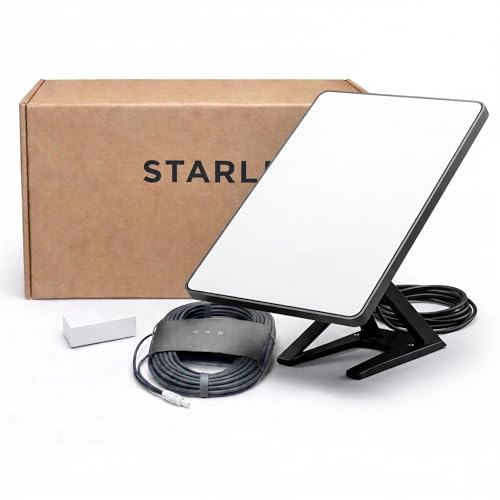
Portable Satellite Internet Mini Kit – Phased Array Antenna, with Integrated WiFi, Roam Travel Off-Grid Internet System for RV, Camping & Remote Areas
- Generation: 4th Generation Portable Satellite Kit
- Designed For: RV, Camping, Van Life, Remote Work
- Connectivity: Global Unlocked WiFi with Integrated Antenna
As an affiliate, we earn on qualifying purchases.
As an affiliate, we earn on qualifying purchases.
Atlas 5’s Service History and Transition to New Launch Vehicles
The Atlas 5, developed by Lockheed Martin and operated by ULA, was introduced in 2002 and became a mainstay for government and commercial satellite launches. Over its nearly two-decade career, it supported missions including military, scientific, and commercial satellites. The rocket’s design has been praised for its reliability, with a high success rate.
In recent years, ULA has been transitioning to the Vulcan Centaur rocket, designed to be more versatile and cost-effective. The Atlas 5’s final launch today marks the end of its operational phase, with ULA phasing it out in favor of newer launch systems that promise improved performance and lower costs.
“Today’s launch marks a historic milestone for ULA, closing a chapter that began nearly 20 years ago. The Atlas 5 has been a reliable workhorse, and we are proud to support Amazon’s important broadband mission with our final flight.”
— Tory Bruno, ULA President and CEO

Universal Single LNB 0.3db Polarized HD Digital Satellite Signal Receiver for Dish Antennas – High Gain, Low Noise, Weatherproof Design
- Universal Compatibility: Works with most satellite dishes worldwide
- Polarized Signal Reception: Supports horizontal and vertical polarization
- High Gain Performance: 50dB to 60dB signal strength
As an affiliate, we earn on qualifying purchases.
As an affiliate, we earn on qualifying purchases.
Remaining Questions About Future Launches and Satellite Deployment
It is not yet clear how the transition to ULA’s Vulcan Centaur will impact the scheduling and costs of future satellite launches. Details about the full deployment timeline of Amazon’s Leo constellation and whether additional Atlas 5 launches will occur for other clients remain uncertain. Additionally, the long-term performance of the Vulcan Centaur as a replacement is still being evaluated.

DIRECTV H25 High Definition MPEG-4 Satellite Receiver for use in SWM System
- HD Picture Quality: Crystal-clear 1080p HD display
- Multiple Connectivity Options: HDMI, composite, component, optical outputs
- SWM Network Compatible: Optimized for DIRECTV SWiM systems
As an affiliate, we earn on qualifying purchases.
As an affiliate, we earn on qualifying purchases.
Next Steps for ULA and Amazon Satellite Deployment
ULA is expected to continue transitioning to Vulcan Centaur for upcoming missions, with several launches scheduled over the next year. Amazon plans to deploy more satellites to complete its Leo constellation, with additional launches likely supported by ULA or other providers. The industry will monitor how the new launch vehicles perform compared to the Atlas 5, particularly in terms of cost and reliability.

STARLINK – Gen 3 Wi-Fi Router High Speed WiFi 6 Internet Dual Band WLAN Wireless for Gen 3, Gen4 4X V4, and Mini Kit Satellite
- Compatibility: Works with Gen 2, 3, Mini, and V4
- Water Resistance: IP56 rated for water resistance
- Optimal Performance: Use wired connection for best results
As an affiliate, we earn on qualifying purchases.
As an affiliate, we earn on qualifying purchases.
Key Questions
Why is this the final Atlas 5 launch?
ULA is retiring the Atlas 5 to transition to its newer Vulcan Centaur rocket, which offers improved performance and lower costs for future missions.
What is Amazon’s Leo satellite constellation?
Amazon’s Leo constellation is a network of low Earth orbit satellites designed to deliver high-speed internet worldwide, especially in underserved areas.
How does this launch impact satellite deployment timelines?
The transition to newer launch vehicles like Vulcan Centaur is expected to streamline future satellite deployments, though exact timelines depend on development and certification processes.
What other missions has the Atlas 5 supported?
The Atlas 5 has launched military, scientific, and commercial satellites, including NASA missions and national security payloads, over its 20-year service life.
What are the advantages of the Vulcan Centaur over Atlas 5?
The Vulcan Centaur is designed to be more versatile, cost-effective, and capable of launching larger payloads, supporting ULA’s future mission needs.
Source: google-trends