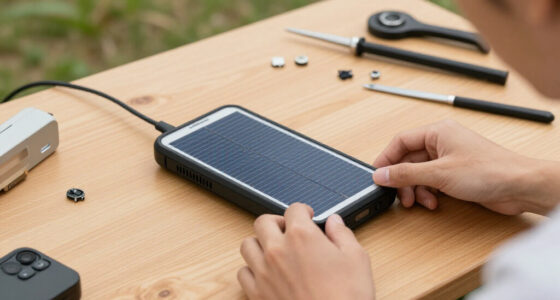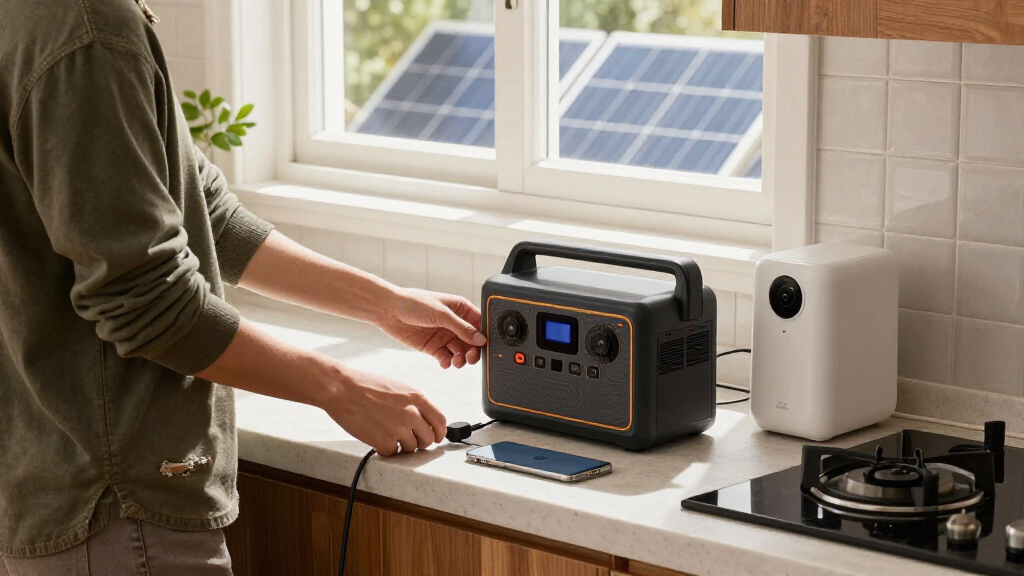

Home backup power stations have become the practical middle ground between a cheap gas generator and a permanently installed whole-home system — but capacity, inverter wattage, and expandability vary wildly at every price point. After comparing 11 leading models, the Jackery HomePower 3600 Plus earns my best overall pick for its combination of 3600W output, 3584Wh of LFP capacity, and expansion up to 21kWh, which covers everything from refrigerators to well pumps during extended outages. The PECron F3000LFP stands out as the value alternative with matching 3600W output and faster charging for less money, while the EcoFlow Delta 3 Classic is the smart pick if you only need to run essentials. The core tradeoff in this category is simple: bigger battery banks buy runtime but cost more and weigh more, so the right choice depends on which appliances you actually need to keep alive. Keep reading for the full breakdown, including who each model is for and who should skip it.

Get backup power and energy gear delivered free with Prime
- Fast, free delivery on millions of items
- Prime Video, Amazon Music and more included
- Member-only deals all year
Complete the kit


Key Takeaways
- The Jackery HomePower 3600 Plus beat the similarly-priced ABOK Ark3600 primarily on ecosystem maturity: 21kWh of expansion headroom versus 3840Wh fixed capacity makes it the only sub-$3,000-class option that can genuinely grow into a multi-day whole-home solution.
- The PECron F3000LFP delivered nearly identical 3600W/3072Wh specs to the Jackery HomePower 3000 for noticeably less money — the clearest value win in the lineup if brand-name app support matters less to you than raw watt-hours per dollar.
- Midsize 1kWh units (EcoFlow Delta 3 Classic, BLUETTI AC180, Anker SOLIX C1000, Jackery Explorer 1000 V2) are NOT whole-home backups — they’re fridge-and-lights emergency kits. Buying one and expecting to run a sump pump or space heater is the most common mistake in this category.
- The Anker SOLIX S2000 occupies the awkward middle: its 2010Wh capacity and 3000W surge handle heavy single appliances well, but it lacks the expansion options that make the 3kWh+ class worth its price premium.
- Solar panels rarely change the math for short outages but matter enormously for multi-day events — the bundled Jackery Solar Generator 1000 V2 and HomePower 3600 Plus solar kit only justify their premium if grid outages in your area typically last longer than 24 hours.
| Jackery HomePower 3000 Portable Power Station, 3072Wh, 3600W AC Output |  | Best Overall | Capacity: 3072Wh | AC Output: 3600W continuous, 7200W surge | Battery Type: LiFePO4, 4,000 cycles to 70% capacity | VIEW LATEST PRICE | See Our Full Breakdown |
| EcoFlow Portable Power Station Delta 3 Classic, 1024Wh, 1800W AC |  | Best for Apartment and Small-Home Backup | Capacity: 1024Wh | AC Output: 1800W continuous, 3600W surge | Battery Type: LiFePO4 | VIEW LATEST PRICE | See Our Full Breakdown |
| Jackery HomePower 3600 Plus Portable Power Station, 3600W AC Output, 3584Wh LFP Solar Generator |  | Best for Whole-Home Expansion | Capacity: 3584Wh, expandable to 21kWh | AC Output: 3600W | Voltage: 120V and 240V | VIEW LATEST PRICE | See Our Full Breakdown |
| PECRON Portable Power Station F3000LFP, 3072Wh Solar Generator, 3600W LiFePO4 Battery |  | Best Value in High Capacity | Capacity: 3072Wh, expandable to 10,752Wh | AC Output: 3600W pure sine wave | Battery Type: LiFePO4 | VIEW LATEST PRICE | See Our Full Breakdown |
| Jackery Solar Generator 1000 V2 with 200W Solar Panel, 1070Wh, 1500W AC |  | Best Budget Starter Kit with Solar Included | Capacity: 1070Wh | AC Output: 1500W running, 3000W starting | Battery Chemistry: Electric/solar, LiFePO4 platform | VIEW LATEST PRICE | See Our Full Breakdown |
| BLUETTI AC180 Portable Power Station 1152Wh 1800W LiFePO4 Solar Generator |  | Best Fast-Charging Midsize | Battery Capacity: 1152Wh LiFePO4 | Output Wattage: 1800W | Recharge Time: ~1 hour | VIEW LATEST PRICE | See Our Full Breakdown |
| Anker SOLIX S2000 Portable Power Station, 2010Wh, 3000W Peak, Home Backup |  | Best Longevity Pick | Battery Capacity: 2010Wh LiFePO4 | Continuous Output: 1500W | Peak Power: 3000W | VIEW LATEST PRICE | See Our Full Breakdown |
| ABOK Ark3600 Portable Power Station 3600W, 3840Wh LiFePO4 Battery |  | Best Expandable Workhorse | Battery Capacity: 3840Wh, expandable to 11,520Wh | Inverter Output: 3600W (4500W peak) | Solar Input: 2000W | VIEW LATEST PRICE | See Our Full Breakdown |
| Jackery Explorer 1000 v2 Portable Power Station, 1070Wh, 1500W |  | Best Portable Backup | Battery Capacity: 1070Wh LFP | Output Wattage: 1500W (3000W surge) | Recharge Time: ~1 hour | VIEW LATEST PRICE | See Our Full Breakdown |
| Jackery HomePower 3600 Plus Portable Power Station with Solar Panels |  | Best Complete Home Kit | Battery Capacity: 3584Wh LFP, expandable to 21kWh | Output Wattage: 3600W (240V capable in parallel) | Charging Options: AC, solar, gas generator, AC+DC | VIEW LATEST PRICE | See Our Full Breakdown |
| Anker SOLIX C1000 Gen 2 Portable Power Station, 1024Wh, 2000W |  | Best Compact Speed Demon | Capacity: 1024Wh | AC Output: 2000W continuous, 3000W peak | AC Recharge: ~49 minutes to 80% with HyperFlash | VIEW LATEST PRICE | See Our Full Breakdown |
| home backup power station | Weight | Outlets | Capacity | AC Output |
|---|---|---|---|---|
| Jackery HomePower 3000 Portabl | — | — | 3072Wh | 3600W continuous, 7200W surge |
| EcoFlow Portable Power Station | 26.7 lbs | 6 | 1024Wh | 1800W continuous, 3600W surge |
| Jackery HomePower 3600 Plus Po | 77.2 lbs | 2 | 3584Wh, expandable to 21kWh | 3600W |
| PECRON Portable Power Station | 63.3 lbs | 13 | 3072Wh, expandable to 10,752Wh | 3600W pure sine wave |
| Jackery Solar Generator 1000 V | 23.8 lbs | 3 (plus USB-C, USB-A, DC) | 1070Wh | 1500W running, 3000W starting |
| BLUETTI AC180 Portable Power S | 37.4 lbs | 11 (AC, USB-A, USB-C) | — | — |
| Anker SOLIX S2000 Portable Pow | 35.7 lbs | — | — | — |
| ABOK Ark3600 Portable Power St | 92 lbs | — | — | — |
| Jackery Explorer 1000 v2 Porta | 23.8 lbs | 7 (AC, USB-C, USB-A, DC) | — | — |
| Jackery HomePower 3600 Plus Po | 77.2 lbs | 4 | — | — |
| Anker SOLIX C1000 Gen 2 Portab | — | — | 1024Wh | 2000W continuous, 3000W peak |
More Details on Our Top Picks
Jackery HomePower 3000 Portable Power Station, 3072Wh, 3600W AC Output
The HomePower 3000 earns the top spot because it balances raw capability with genuine usability. Its 3072Wh capacity and 3600W output cover refrigerators, medical devices, and most household essentials without the awkward bulk of the larger Jackery HomePower 3600 Plus. Where the 3600 Plus leans on expandability you may never need, this model delivers a sub-20ms UPS switchover, meaning a running computer or CPAP machine won’t even blink when the grid fails — something smaller units like the EcoFlow Delta 3 Classic can match in speed but not in sustained wattage. Recharging is a real strength: 1.7 hours via hybrid AC/DC input means you can top up between outage windows, and the 4,000-cycle LiFePO4 cells should outlast a decade of occasional use.
Pros:- 3072Wh capacity runs refrigerators and essentials for a full day or more
- ≤20ms UPS switchover keeps computers and medical devices uninterrupted
- 1.7-hour hybrid recharge means you’re ready for the next outage quickly
- 4,000-cycle LiFePO4 battery rated for roughly a decade of use
Cons:- 120V-only output rules out 240V appliances like well pumps or dryers
- Ten ports and layered charging options may overwhelm casual users
- No published weight makes portability planning difficult
Best for: Homeowners who want whole-essential-circuit backup with fast recharging between outages
Not ideal for: Buyers who need 240V appliances like well pumps or dryers running — this unit is 120V only
- Capacity:3072Wh
- AC Output:3600W continuous, 7200W surge
- Battery Type:LiFePO4, 4,000 cycles to 70% capacity
- Recharge Time:1.7 hrs hybrid AC/DC, 2.2 hrs AC only
- Solar Recharge:Up to 80% in 9 hrs with 2x 200W panels
- Ports:10 (USB-C, USB-A, DC, AC)
- UPS Switchover:≤20ms, UL-certified
Our verdict“The strongest all-around choice for a household that wants dependable, fast-recovering backup for essentials without paying for expandability it won’t use.”
EcoFlow Portable Power Station Delta 3 Classic, 1024Wh, 1800W AC
Not everyone needs to run a refrigerator for two days. The Delta 3 Classic is my pick for apartment dwellers because it answers the question most big stations ignore: where do you store it? At 26.7 pounds and roughly shoebox-sized, it slides into a closet, and its 0-80% recharge in 45 minutes is the fastest in this lineup — you can refill it mid-outage from a car or a brief grid window. Compared with the Jackery Solar Generator 1000 V2 at similar capacity, the Delta 3 pushes 1800W continuous output versus Jackery’s 1500W, which is the difference between running a microwave or tripping the unit. The tradeoff is real, though: 1024Wh means roughly one evening of fridge-plus-router-plus-lights, not a weekend.
Pros:- Fastest recharge in the lineup at 0-80% in 45 minutes
- 1800W output handles microwaves and hair dryers that trip smaller units
- Compact 26.7-pound build stores easily in a closet or under a desk
- Smart app control for monitoring charge and usage remotely
Cons:- 1024Wh capacity limits runtime to hours, not days, with a fridge attached
- Not compatible with Delta 2 or Delta 3 extra batteries, so no capacity expansion path
Best for: Apartment renters and small-home owners who need a few hours of essential power and have limited storage
Not ideal for: Suburban households running full-size refrigerators through multi-day outages — capacity runs out fast
- Capacity:1024Wh
- AC Output:1800W continuous, 3600W surge
- Battery Type:LiFePO4
- Recharge Time:0-80% in 45 minutes (AC)
- Solar Recharge:2.5 hrs with 500W panel
- Outlets:6
- Weight:26.7 lbs
- Dimensions:7.9 x 11.1 x 15.7 inches
Our verdict“The right size for renters and small homes that need quick, compact backup for electronics and short-duration essentials.”
Jackery HomePower 3600 Plus Portable Power Station, 3600W AC Output, 3584Wh LFP Solar Generator
The HomePower 3600 Plus is the only station in this batch built to grow into a 21kWh system — enough to genuinely back up a house rather than a room. Its standout trick over the HomePower 3000 is 240V support, which unlocks well pumps, electric dryers, and other appliances that 120V-only units simply can’t touch. Unlike the PECRON F3000LFP, which stops expanding at 10,752Wh, this one scales further and adds wheels plus a telescopic handle, which matters when you’re moving 77 pounds around a garage. The compromises are hard to ignore, though: only two built-in outlets means you’ll want a transfer switch or heavy-duty power strip, and the premium price plus expansion batteries adds up quickly.
Pros:- Expandable to 21kWh for true multi-day whole-home backup
- 240V output supports well pumps, dryers, and other high-voltage appliances
- Wheels and telescopic handle make 77 pounds manageable to reposition
- Charges via solar, AC, or even a gas generator for flexibility in extended outages
Cons:- Only 2 built-in outlets, forcing reliance on transfer switches or power distribution
- 77.2 pounds despite portability features, and expansion batteries cost substantially more
Best for: Homeowners planning a staged whole-home backup system, including 240V appliances, built up over time
Not ideal for: Budget-conscious buyers or anyone who just needs essentials covered for a night — the base unit alone is overkill
- Capacity:3584Wh, expandable to 21kWh
- AC Output:3600W
- Voltage:120V and 240V
- Battery Type:LiFePO4
- Outlets:2
- Weight:77.2 lbs
- Dimensions:15.2 x 12.2 x 19.3 inches
Our verdict“Choose this if you’re building toward whole-home backup in stages and need 240V — skip it if a single-outage solution is all you want.”
PECRON Portable Power Station F3000LFP, 3072Wh Solar Generator, 3600W LiFePO4 Battery
The PECRON F3000LFP matches the Jackery HomePower 3000 almost spec for spec — 3072Wh, 3600W, LiFePO4 chemistry, two-hour recharge — but typically at a friendlier price, and it throws in 13 outlets where the 3600 Plus gives you two. That port count is the quiet advantage here: you can plug in a fridge, router, lamps, phones, and a fan simultaneously without hunting for power strips mid-outage. Its 1600W solar input ceiling also beats most of this lineup, so a proper panel array can refill it in a long sunny day. The tradeoffs are fit and finish: it’s a chunky 63.3 pounds with no wheels, and expanding capacity requires buying a separate cable — a small but annoying extra step PECRON doesn’t make obvious at checkout.
Pros:- 13 outlets let you power a dozen devices without a power strip
- 1600W max solar input recharges faster than most competitors with a full panel array
- Full 2-hour AC recharge on par with pricier rivals
- Expandable to 10,752Wh for longer outages
Cons:- 63.3 pounds with no wheels or handle makes repositioning a two-person job
- Extra battery expansion requires a separately purchased cable
Best for: Value-focused buyers who want Jackery-level capacity and outlet variety without the brand premium
Not ideal for: Anyone who needs to move the unit frequently — 63.3 pounds with no wheels gets old fast
- Capacity:3072Wh, expandable to 10,752Wh
- AC Output:3600W pure sine wave
- Battery Type:LiFePO4
- Recharge Time:2 hours (AC)
- Max Solar Input:1600W (25-120V)
- Outlets:13
- Weight:63.3 lbs
- Dimensions:19.3 x 11.6 x 11.1 inches
Our verdict“The smart pick for buyers who compare spec sheets and want maximum outlets and solar input per dollar in the 3kWh class.”
Jackery Solar Generator 1000 V2 with 200W Solar Panel, 1070Wh, 1500W AC
This is the only entry that ships with a solar panel in the box, which makes it the lowest-friction way to get started with backup power and understand how solar recharging actually works. At 23.8 pounds, it’s the lightest station here by a wide margin — you can carry it one-handed, unlike the PECRON F3000LFP at nearly triple the weight. Compared with the EcoFlow Delta 3 Classic, it gives up 300W of continuous output and the faster recharge, but the bundled 200W panel means you can trickle-charge indefinitely during a sunny extended outage rather than watching the battery drain with no refill option. Be realistic about scope, though: roughly two hours at full load means it covers a router, some lights, and phone charging — not a refrigerator through the night.
Pros:- Bundled 200W solar panel gives a refill option during extended sunny outages
- Lightest unit in the lineup at 23.8 pounds — genuinely one-hand portable
- 1500W output handles power tools and small appliances
- 1-hour emergency fast-charge mode for quick top-ups
Cons:- About 2 hours of runtime at full load — essentials only, no fridge overnight
- 1-hour fast charge requires enabling a special mode and may stress battery longevity
Best for: First-time buyers and campers who want an affordable all-in-one kit with solar included to learn the ropes
Not ideal for: Anyone backing up refrigeration or medical equipment — 1070Wh drains in hours under real loads
- Capacity:1070Wh
- AC Output:1500W running, 3000W starting
- Battery Chemistry:Electric/solar, LiFePO4 platform
- Fast Charging:1-hour emergency charge mode
- Outlets:3 (plus USB-C, USB-A, DC)
- Runtime:~2 hours at full load
- Weight:23.8 lbs
- Dimensions:12.87 x 8.82 x 9.72 inches
Our verdict“The best low-commitment entry point into solar backup for campers and casual preparedness — just don’t expect it to run a kitchen.”
BLUETTI AC180 Portable Power Station 1152Wh 1800W LiFePO4 Solar Generator
The AC180’s headline trick is its one-hour full recharge, which matters more for home backup than most buyers realize — after a storm, wall power windows are short and unpredictable, and a station that refills in 60 minutes is ready for the next outage far sooner than competitors. With 1152Wh of capacity and 1800W of output, it handles refrigerators, microwaves, and coffee makers without the surge tripping common on smaller units. Compared with the Jackery Explorer 1000 v2, the BLUETTI offers more continuous wattage and eleven outlets versus seven, though both share the same quick-recharge philosophy. The tradeoff is portability: at 37.4 pounds it’s a two-handed lift, and unlike the Anker SOLIX S2000, capacity cannot be expanded later. The five-year warranty is unusually long for this price class and adds real peace of mind for emergency use.
Pros:- Full recharge in about one hour — fastest in this capacity class
- 1800W continuous output runs most kitchen appliances
- 11 outlets including USB-C for simultaneous device charging
- 5-year warranty, among the longest here
Cons:- 37.4 pounds with no wheels or handle makes it awkward to move during an emergency
- Capacity is fixed — no battery expansion for longer outages
Best for: Suburban homeowners who want a fridge-and-essentials backup that recharges quickly between outages
Not ideal for: Anyone planning multi-day outages or off-grid living — 1152Wh runs a refrigerator roughly a day, and there’s no expansion path
- Battery Capacity:1152Wh LiFePO4
- Output Wattage:1800W
- Recharge Time:~1 hour
- Outlets:11 (AC, USB-A, USB-C)
- Weight:37.4 lbs
- Warranty:5 years
Our verdict“This pick makes the most sense for buyers who value rapid recharging and appliance-grade output over raw capacity.”
Anker SOLIX S2000 Portable Power Station, 2010Wh, 3000W Peak, Home Backup
Where most stations in this roundup promise 3,000–4,000 charge cycles before meaningful degradation, the S2000 claims 10,000 cycles — a battery that could outlast the house it’s backing up. That longevity, paired with 2010Wh of capacity, positions it between the midsize BLUETTI AC180 and the big expandable units like the ABOK Ark3600, offering near-double the BLUETTI’s runtime in a package that’s actually lighter at 35.7 pounds and more compact. The 1500W continuous output (3000W peak) covers refrigerators, CPAP machines, and routers comfortably, though it won’t run a heavy microwave-plus-kettle combo the way the ABOK can. The missing piece is a 12V DC port, which will annoy RV owners and anyone with car-powered accessories. For pure sit-in-the-closet-and-work-when-needed backup duty, this is the low-maintenance choice.
Pros:- 10,000-cycle LiFePO4 rating far exceeds typical rivals
- 2010Wh capacity in a compact 35.7-pound frame
- Solar input supported for off-grid recharging
- 35-hour rated runtime for low-draw essentials
Cons:- No 12V DC port limits compatibility with car-style devices
- 1500W continuous output trails the BLUETTI AC180 despite the larger battery
Best for: Buy-and-forget planners who want a set-it-in-the-closet unit that stays healthy for a decade or more
Not ideal for: RV owners and users with 12V DC accessories — the missing DC port forces adapters or workarounds
- Battery Capacity:2010Wh LiFePO4
- Continuous Output:1500W
- Peak Power:3000W
- Cycle Life:10,000 cycles
- Weight:35.7 lbs
- Dimensions:8.19 x 11.1 x 12.7 in
Our verdict“This model is better suited to homeowners prioritizing battery lifespan and runtime over maximum wattage.”
ABOK Ark3600 Portable Power Station 3600W, 3840Wh LiFePO4 Battery
The Ark3600 plays in a different league from the 1kWh-class units like the EcoFlow Delta 3 Classic — its 3840Wh capacity expands to 11,520Wh, enough to carry a household through multi-day outages rather than a single evening. With 15 output ports and 2000W of solar input, it can run essentially a whole floor of essentials simultaneously, something the Anker SOLIX S2000 simply cannot attempt. The Bluetooth app for remote monitoring is genuinely useful here, because a unit this size tends to live in a garage or utility room where you’re not standing next to it. The costs are obvious: 92 pounds means it stays where you put it, the higher price stings, and the sheer number of ports and settings can overwhelm a first-time buyer who just wants the fridge to stay cold. This is a whole-home strategy, not a grab-and-go box.
Pros:- Expandable from 3840Wh to 11,520Wh for multi-day outages
- 15 output ports run many devices at once
- 2000W solar input enables fast off-grid recharging
- Bluetooth app for remote monitoring and control
Cons:- 92 pounds makes repositioning a two-person job
- Premium price and complex setup intimidate casual users
Best for: Rural homeowners and frequent-outage areas needing multi-day, whole-house essential power with room to grow
- Battery Capacity:3840Wh, expandable to 11,520Wh
- Inverter Output:3600W (4500W peak)
- Solar Input:2000W
- Output Ports:15
- Cycle Life:4,000+ cycles
- Weight:92 lbs
- Battery Type:LiFePO4
Our verdict“Compared with similar options, this one is the serious whole-home investment for buyers who’ve outgrown 1–2kWh stations.”
Jackery Explorer 1000 v2 Portable Power Station, 1070Wh, 1500W
At 23.8 pounds, the Explorer 1000 v2 is the lightest station in this lineup by a wide margin — the BLUETTI AC180 weighs over 13 pounds more for barely more capacity, and the ABOK Ark3600 is nearly four times heavier. That makes this the unit you’ll actually carry to a neighbor’s house, into an RV, or upstairs during an outage instead of leaving it in the garage. The one-hour full recharge and 10-year LFP battery lifespan mean it won’t feel dated in half a decade. The catch is ecosystem lock-in: solar charging only works with Jackery’s own panels, which are sold separately, so budget accordingly rather than assuming the listed price is all-in. And like every 1kWh-class unit, it’s an essentials-only solution — fridge, phones, lights, medical devices — not a whole-house answer.
Pros:- Lightest in class at 23.8 pounds with a carry-friendly footprint
- 0–100% recharge in about one hour
- LFP battery rated for 10+ years of use
- 7 ports including 100W-class USB-C for modern devices
Cons:- Solar charging limited to separately sold Jackery panels
- ~42 minutes runtime at full 1500W load — fine for essentials, short for heavy appliances
Best for: Renters, campers, and anyone who needs to carry their backup power rather than station it
Not ideal for: Homeowners wanting a set-and-forget whole-home system — capacity and ecosystem lock-in cap its ambitions
- Battery Capacity:1070Wh LFP
- Output Wattage:1500W (3000W surge)
- Recharge Time:~1 hour
- Outlets:7 (AC, USB-C, USB-A, DC)
- Weight:23.8 lbs
- Battery Lifespan:10+ years
Our verdict“This option stands out for people who prioritize portability and quick top-ups over maximum capacity.”
Jackery HomePower 3600 Plus Portable Power Station with Solar Panels
Unlike most entries here that ship as a bare station, the HomePower 3600 Plus arrives bundle-style with solar panels included, making it one of the few genuinely turnkey home backup packages. Its 3584Wh capacity matches the ABOK Ark3600 on paper, but the Jackery stretches further — expandable to 21kWh versus the ABOK’s 11.5kWh — and adds 240V parallel output for running well pumps or larger appliances. The wheels and telescopic handle matter at 77.2 pounds, a thoughtful touch the ABOK lacks entirely. Charging flexibility is a differentiator too: it’s the rare station that accepts input from a gas generator, letting you combine fuel and solar during extended grid failures. The tradeoffs: only four outlets means you’ll want a power strip for smaller devices, and expansion requires buying additional battery units, so the true 21kWh setup costs far more than the base kit.
Pros:- Solar panels included — no separate panel purchase needed
- Expandable to 21kWh, the highest ceiling in this roundup
- Wheels and telescopic handle ease the 77.2-pound load
- Accepts AC, solar, and even gas-generator input
Cons:- Only 4 built-in outlets, fewer than the 15-port ABOK Ark3600
- Solar panels ship separately and may arrive days apart from the station
Best for: Homeowners who want a solar-included, ready-to-deploy backup system they can expand toward whole-house coverage
Not ideal for: Buyers on a strict budget — full 21kWh expansion requires costly additional battery units
- Battery Capacity:3584Wh LFP, expandable to 21kWh
- Output Wattage:3600W (240V capable in parallel)
- Charging Options:AC, solar, gas generator, AC+DC
- Outlets:4
- Cycle Life:6,000 cycles / 10 years
- Weight:77.2 lbs
Our verdict“This pick makes the most sense for buyers who want everything in one purchase and a realistic path to whole-home backup.”
Anker SOLIX C1000 Gen 2 Portable Power Station, 1024Wh, 2000W
Most power stations in this roundup make you choose between fast recharging and portability — the C1000 Gen 2 refuses that tradeoff. Its HyperFlash charging hits 80% in roughly 49 minutes, which matters enormously during an outage when grid power flickers on and off unpredictably. Compared with the similarly-sized EcoFlow Delta 3 Classic, the Anker pushes more output (2000W vs 1800W) in a chassis that’s smaller and lighter than typical 1kWh units, and it can even accept 600W of solar for full off-grid recharge in under two hours. The sub-10ms UPS switchover also makes it genuinely usable as a desktop backup for a router and PC, not just a camping battery.
The catch: 1024Wh won’t run a refrigerator, lights, and medical device simultaneously through a long storm. That’s where the Jackery HomePower 3000 or the PECRON F3000LFP earn their bulk and price. Think of the C1000 as the right-sized backup for essentials-plus, not whole-home triage.
Pros:- HyperFlash recharge reaches 80% in about 49 minutes, far quicker than most 1kWh rivals
- 2000W continuous output (3000W peak) beats the EcoFlow Delta 3 Classic’s 1800W in the same size class
- Compact and lighter than comparable models, easy to move between rooms or car
- Sub-10ms UPS switchover protects sensitive electronics like desktops and network gear
Cons:- 1024Wh capacity limits runtime when running a refrigerator alongside other essentials
- Solar input capped at 600W (60V max) means you need Anker-compatible panels to hit the fastest off-grid recharge
- Premium price per watt-hour compared with larger expandable units like the PECRON F3000LFP
Best for: Apartment dwellers and small-home owners who want fast-recharging backup for a fridge-adjacent essentials kit — router, phones, laptop, CPAP, a few lamps — without hauling around a 60-pound unit
Not ideal for: Households trying to bridge multi-day outages with a refrigerator, freezer, and well pump running together — 1024Wh runs dry fast under that load, and the higher-capacity picks in this guide cost less per watt-hour
- Capacity:1024Wh
- AC Output:2000W continuous, 3000W peak
- AC Recharge:~49 minutes to 80% with HyperFlash
- Solar Input:600W max (60V), full solar recharge in ~1.8 hours
- Ports:10 total
- UPS Backup:Yes, switchover under 10 ms
- Size / Weight:14% smaller and 11% lighter than comparable 1kWh models
Our verdict“Buy this if you want the fastest-refilling, easiest-to-move 1kWh backup for electronics and short outages; skip it if your outage plan includes multiple high-draw appliances.”
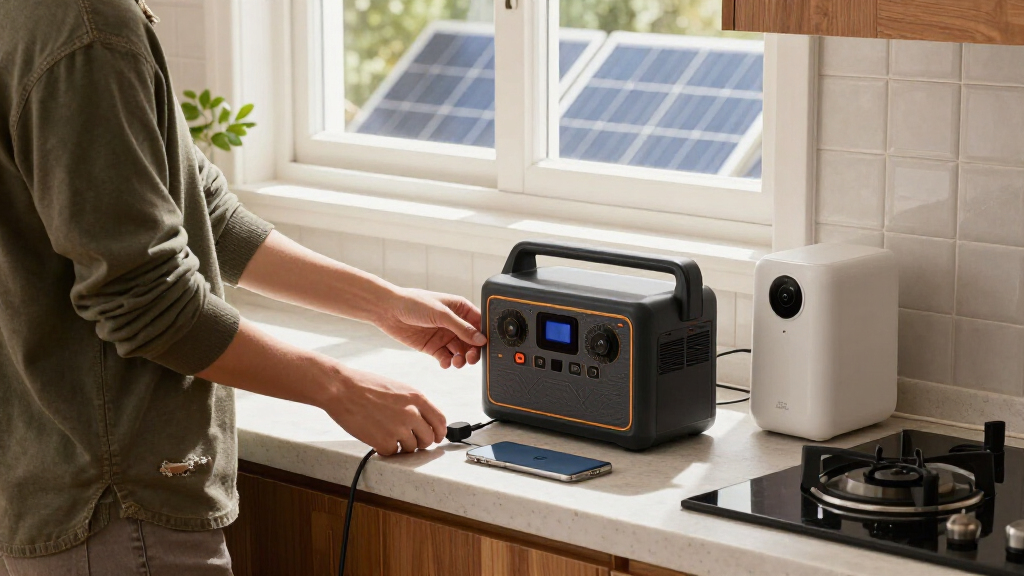
How We Picked
I evaluated each power station through the lens of home backup specifically — not camping, not van life. That meant prioritizing three things: continuous AC output high enough to start and run a refrigerator, microwave, or well pump (1,800W is the realistic floor; 3,000W+ is the sweet spot); battery chemistry rated for years of sitting unused, which is why LiFePO4 models dominate the top of this list; and expandability, since a fixed 1kWh unit runs out of usefulness the moment an outage stretches past a day. I also weighed charging speed, because a station that refills in two hours after a partial outage is far more practical than one that needs overnight.
Ranking then came down to capacity per dollar within each size class, plus intangibles like warranty length, app reliability, and whether the manufacturer actually stocks expansion batteries. Where two models tied closely — the Jackery HomePower 3000 versus the PECron F3000LFP, for example — the tiebreaker was long-term ownership cost, not the sticker price. Models with fixed, non-expandable capacity were capped in ranking regardless of specs, because backup needs almost always grow after the first real outage.
Factors to Consider When Choosing Home Backup Power Stations
Before committing to a specific model, it helps to understand the broader patterns in this category — the sizing mistakes, the chemistry tradeoffs, and the hidden costs that product pages don’t highlight.Size Your Battery to Real Outages, Not Marketing Math
The most common buying error is trusting runtime charts. A 1,000Wh station will run a full-size refrigerator for roughly 8–14 hours in practice, not the 20+ hours some charts suggest, because compressors surge at 3–5x their running wattage and inverter efficiency eats 10–15%. I recommend auditing your actual outage history: if your area loses power for hours, a 1–2kWh unit covers a fridge, phone charging, and lights comfortably. If outages run a day or more — ice storms, wildfire safety shutoffs, hurricane aftermath — you need 3kWh minimum, and ideally an expandable system. Remember that you don’t need to back up your whole house; the goal is keeping food cold, communication alive, and one or two rooms functional.
Why Battery Chemistry Matters More Than Watt-Hours
Every model in this lineup above the budget tier uses LiFePO4 chemistry, and that’s not a coincidence. A backup battery’s worst enemy is calendar aging — it sits charged at 100% for months, which destroys older NMC cells but barely touches LiFePO4. Expect 3,000+ charge cycles (roughly 8–10 years of standby duty) from LiFePO4 versus 500–800 from NMC. This is also why a 1,000Wh LiFePO4 unit can be a better long-term buy than a 1,500Wh NMC unit at the same price. If a listing doesn’t state the chemistry, assume the worse one. For a device you hope to rarely use, longevity per dollar beats raw capacity.
Inverter Wattage: The Spec People Undersize
Watt-hours tell you how long you can run things; inverter wattage tells you what you can run at all. The number to watch is continuous output, not peak/surge rating — surge only lasts seconds and exists to handle motor startup. A household running a refrigerator (700W running, 2,000W+ surge), a few lights, and a TV needs at least a 1,800W inverter with a healthy surge rating. Add a microwave (1,200W alone), a sump pump, or any 120V heating appliance and you’re into 3,000W+ territory. Undersizing here means tripped overload alarms in the middle of a storm, which is exactly when you don’t want to troubleshoot. When in doubt, buy more inverter than you need today — loads only grow.
Expandability Is Cheaper Bought Up Front
Several models here — the Jackery HomePower 3600 Plus and PECron F3000LFP especially — accept extra battery modules that multiply capacity without buying a second inverter and charge controller. The pattern worth knowing: expansion batteries are expensive per watt-hour, but the platform you attach them to is not. Buyers who buy a fixed-capacity station and later want more runtime end up paying nearly double to buy a whole second unit. My advice is to buy into an expandable platform even if you only afford the base unit now, provided the manufacturer has a track record of keeping expansion batteries in stock. Check the maximum expandable capacity spec: a 3.6kWh base that grows to 21kWh is a different product category than one capped at 7kWh.
Solar Charging: Insurance or Gimmick?
A 200W panel barely dents a 3kWh battery — expect 8–12 hours of full sun for a complete recharge — so bundled solar kits make more sense on small stations than large ones, unless you buy panels by the kilowatt. Where solar genuinely earns its cost is multi-day outages where the grid and gas stations are both down; even a slow trickle of 200–400W can extend a fridge’s runtime indefinitely. Skip solar if your outages are short and grid-rechargeable fast charging (the PECron and EcoFlow models here excel at this) covers your needs. If you do buy panels, verify the included charge controller’s input ceiling — overpaying for panels a station can’t fully absorb is wasted money.
The Hidden Costs: Transfer, UPS Mode, and Warranty
A power station on the shelf helps nobody during an outage — you need a plan to connect it. Look for UPS/pass-through mode with sub-30ms switchover (the EcoFlow and Anker models here are strong on this) if you want devices plugged in and seamlessly protected, or budget for a manual transfer switch if you intend to back up fixed circuits like a furnace blower. Never backfeed a household outlet through a power station — it’s dangerous and illegal. Finally, compare warranty terms carefully: 5-year warranties are now standard on LiFePO4 models from Jackery, EcoFlow, Anker, and BLUETTI, and shorter warranties on comparable hardware usually signal lower-grade cells inside.
Frequently Asked Questions
How big of a power station do I need to run my refrigerator during an outage?
A modern full-size refrigerator draws roughly 100–200W while running but surges to 800–2,000W when the compressor kicks on, so you need an inverter rated for at least 1,500W continuous with a strong surge rating — the EcoFlow Delta 3 Classic, BLUETTI AC180, and Anker SOLIX C1000 all handle this comfortably. For runtime, expect a 1,000–1,200Wh station to keep a fridge cold for 8–14 hours, accounting for inverter losses and duty cycling. If you want to run the fridge overnight plus lights, phones, and a CPAP machine, step up to a 2kWh class like the Anker SOLIX S2000. A 3kWh+ expandable model like the Jackery HomePower 3600 Plus can stretch a single fridge past two days, and recharges via solar in the meantime.
Is it worth paying extra for an expandable power station if I only need backup today?
In most cases, yes, and here’s the math: expansion battery modules cost a premium per watt-hour, but the base station you’d otherwise outgrow becomes nearly worthless the moment your needs exceed it. Buyers who outgrow a fixed 1kWh unit typically end up buying a second complete station — inverter, charge controller, and all — for close to double the cost of having bought into an expandable platform initially. The Jackery HomePower 3600 Plus (expandable to 21kWh) and PECron F3000LFP (to 10.7kWh) are the two standouts here because you can start with the base unit and add capacity only after a real outage teaches you what you actually needed. One caveat: confirm the manufacturer actively stocks expansion batteries, because a platform with discontinued modules is just a fixed station with extra steps.
Can a portable power station replace a gas generator for whole-home backup?
For outages under 24–48 hours, a large battery station is arguably better — silent, fume-free, instantly available, and usable indoors during storms. Beyond that, the math changes: even a fully expanded 21kWh Jackery HomePower 3600 Plus delivers less total energy than five gallons of gasoline through a mid-size inverter generator, and gas refuels in minutes while batteries need hours of sun or grid power. The realistic answer for most homes is hybrid — a 3kWh+ battery station covering essentials automatically, with a generator as the long-duration fallback. Also note that all the stations in this roundup are 120V only; running a 240V well pump, central AC, or electric dryer still requires a whole-home inverter system like a fixed solar battery install.
Why do LiFePO4 power stations cost more, and is the premium worth it?
LiFePO4 cells cost more to manufacture than older NMC cells, but for a backup application the premium pays for itself. Backup batteries spend most of their life sitting fully charged, and that standby condition is precisely what degrades NMC chemistry fastest — expect 500–800 cycles versus 3,000+ for LiFePO4, which translates to roughly 8–10 years of reliable standby versus 3–4. LiFePO4 is also more thermally stable, which matters for a device stored in a garage or basement. Every full-size model in this lineup uses LiFePO4 for exactly these reasons. The only scenario where an older-chemistry unit makes sense is a rarely-used portable station bought at a steep discount — and even then, expect to replace it sooner.
Do I need solar panels with my home backup power station?
Only if your outages routinely exceed a day or you’re preparing for scenarios where the grid and fuel supply are both disrupted. For short outages, fast AC charging is far more useful — the PECron F3000LFP and EcoFlow models recharge from a wall outlet in a couple of hours, so the station is ready again before the next event. Solar earns its cost as outage insurance: even a modest 400W array can keep a refrigerator running indefinitely during a multi-day grid failure, which no amount of battery capacity alone can do. Be realistic about output, though — a bundled 200W panel (like the one with the Jackery Solar Generator 1000 V2) delivers maybe 150W in good sun, meaning a full day of charging adds just 1–1.2kWh. If solar matters to you, budget for 400W minimum on any station above 2kWh.
Conclusion
After comparing all 11 models, the right choice depends less on specs and more on your outage profile. For best overall, the Jackery HomePower 3600 Plus stands out for combining serious 3600W output with expansion up to 21kWh — it’s the model that handles both a four-hour blackout and a four-day grid failure without being replaced. The PECron F3000LFP takes best value: nearly the same capability as the Jackery HomePower 3000 for less money, with fast charging and expandability to 10.7kWh. For best premium, the Jackery HomePower 3600 Plus with solar panels bundle makes sense if you want the off-grid recharge option baked in from day one.
For beginners and smaller budgets, the EcoFlow Delta 3 Classic is the smartest entry point — simple, fast-charging, and honestly scoped to essentials rather than pretending to be a whole-home solution. The BLUETTI AC180 and Anker SOLIX C1000 are strong alternatives in that same class if you find either at a better price. For specific needs: the Anker SOLIX S2000 suits buyers bridging the gap between small and large with its 3000W surge handling, and the Jackery Explorer 1000 V2 with its Solar Generator 1000 V2 sibling fit campers and RV owners who want dual-purpose hardware. Whatever you choose, buy into a platform sized for the outage you fear, not the one you’ve had.
Fall Picks
fall essentials
As an affiliate, we earn on qualifying purchases.