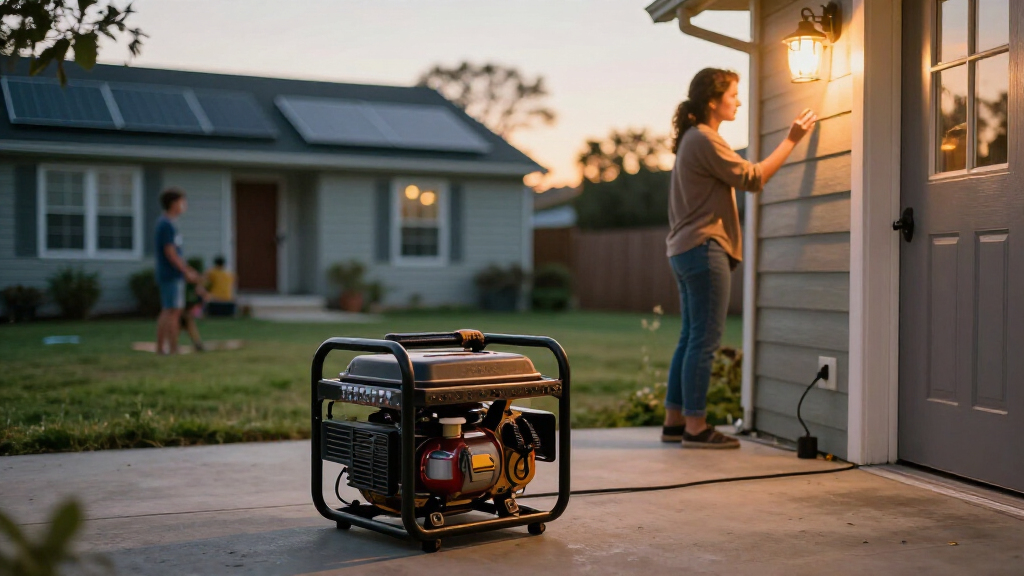

The best dual-fuel portable generator for most buyers is the WEN DF680iX, pairing useful output with inverter technology and gasoline-or-propane flexibility. For heavy home-backup loads, the DuroStar DS13000MX and DuroMax XP13000HX offer a different class of power, while compact inverter models such as the WEN DF360iX suit lighter, more portable needs. The main tradeoffs are power versus portability, inverter refinement versus conventional-generator output, and runtime or convenience versus the fuel and load you actually need. I compare all 15 models by those practical differences rather than treating their wattage figures as interchangeable. Continue reading for the full breakdown, selection criteria, and guidance on matching a generator to your essential loads.

Get backup power and energy gear delivered free with Prime
- Fast, free delivery on millions of items
- Prime Video, Amazon Music and more included
- Member-only deals all year
Complete the kit


Key Takeaways
- The WEN DF680iX leads the lineup for balanced use: it combines inverter design with more output than the smaller WEN DF360iX and DF480iX, without moving into the very large conventional-generator class.
- High-output models solve a different problem: the DuroStar DS13000MX and DuroMax XP13000HX are aimed at larger backup loads, but their size and operating demands make them less suitable for buyers prioritizing easy transport.
- Inverter models are the clearer fit for noise-sensitive or electronics-focused use: the WEN, PowerSmart, ERAYAK, and BILT HARD inverter options trade some maximum output for a design better suited to varied portable-power settings.
- Peak watts do not tell the whole story: buyers should compare running watts on each fuel, startup demands from motors, and the loads they plan to use at the same time.
- Dual-fuel is useful only when both fuel paths fit the plan: propane storage and connection needs, gasoline availability, generator placement, and transfer arrangements affect real-world usefulness as much as the headline wattage.
| WEN DF480iX 4800-Watt Dual-Fuel Portable Inverter Generator |  | Best Overall Inverter Pick | Engine displacement: 224 cc | Fuel types: Gasoline and propane (LPG) | Surge output: 4,800 W gasoline; 4,320 W propane | VIEW LATEST PRICE | See Our Full Breakdown |
| Westinghouse WGen11500DFc Dual-Fuel Portable Generator with Remote Electric Start | 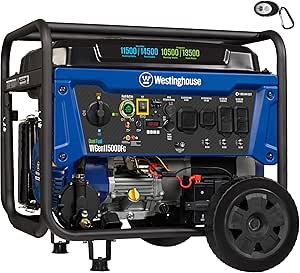 | Best for High-Load Home Backup | Engine: 550 cc 4-stroke OHV | Fuel types: Gasoline, propane, and natural gas | Running output: 11,500 W gasoline; 10,500 W propane | VIEW LATEST PRICE | See Our Full Breakdown |
| PowerSmart 4400-Watt Dual-Fuel Portable Inverter Generator |  | Best for Extended Light-Load Runtime | Engine: 223 cc 4-stroke | Fuel types: Gasoline and LPG | Starting output: 4,400 W gasoline; 4,000 W LPG | VIEW LATEST PRICE | See Our Full Breakdown |
| PowerSmart 3800-Watt Dual-Fuel Inverter Generator | 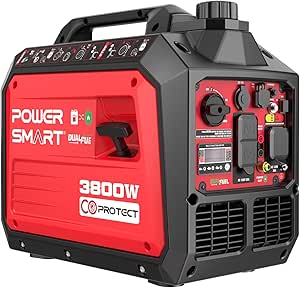 | Best Compact and Lightweight Pick | Engine displacement: 149 cc | Fuel types: Gasoline and propane | Starting output: 3,800 W gasoline; 3,500 W propane | VIEW LATEST PRICE | See Our Full Breakdown |
| Westinghouse WGen9500DF Dual Fuel Portable Generator |  | Best Mid-Range Home Backup | Engine: 457 cc 4-stroke OHV | Fuel types: Gasoline and propane | Running output: 9,500 W gasoline; 8,500 W propane | VIEW LATEST PRICE | See Our Full Breakdown |
| DuroStar DS13000MX 13,000-Watt Dual Fuel Portable Generator |  | Best for High-Demand Home Backup | Peak output: 13,000 watts | Running output: 10,500 watts | Engine: 500cc 4-stroke OHV | VIEW LATEST PRICE | See Our Full Breakdown |
| WEN DF475T 4,750-Watt Dual-Fuel Portable Generator |  | Best for Straightforward Transfer-Switch Backup | Gasoline output: 4,750 surge watts; 3,800 running watts | Propane output: 4,350 surge watts; 3,500 running watts | Engine: 224cc 4-stroke OHV | VIEW LATEST PRICE | See Our Full Breakdown |
| WEN DF680iX 6800-Watt Dual-Fuel Inverter Generator |  | Best for Cleaner Power and Versatile Loads | Gasoline output: 6,800 surge watts; 5,100 rated watts | Propane output: 6,000 surge watts; 4,500 rated watts | Engine: 224cc | VIEW LATEST PRICE | See Our Full Breakdown |
| WEN DF360iX Dual-Fuel Portable Inverter Generator, 3600-Watt |  | Best Compact Pick for RV Trips | Gasoline surge output: 3,600 watts | Propane surge output: 3,500 watts | Engine: 149cc 4-stroke | VIEW LATEST PRICE | See Our Full Breakdown |
| Westinghouse 6500-Watt Dual-Fuel Portable Generator |  | Best for Balanced Home and RV Backup | Gasoline output: 6,500 peak watts; 5,300 running watts | Propane output: 5,800 peak watts; 4,800 running watts | Engine: 274cc 4-stroke OHV | VIEW LATEST PRICE | See Our Full Breakdown |
| Generac GP9500E Tri-Fuel Portable Generator, 12,500 Starting Watts, Electric Start |  | Best for Three-Fuel Flexibility | Fuel types: Gasoline, liquid propane, and natural gas | Running power: 9,500 watts | Starting power: 12,500 watts on gasoline | VIEW LATEST PRICE | See Our Full Breakdown |
| DuroMax XP13000HX 13,000-Watt Dual-Fuel Portable Generator |  | Best for Maximum Listed Dual-Fuel Output | Fuel types: Gasoline or propane | Running wattage: 10,500 watts | Starting wattage: 13,000 watts | VIEW LATEST PRICE | See Our Full Breakdown |
| Westinghouse 4650 Peak Watt Dual-Fuel Portable Generator |  | Best for RV and Household Basics | Fuel types: Gasoline and propane | Peak output: 4,650 watts on gasoline and propane | Engine: 212cc 4-stroke OHV | VIEW LATEST PRICE | See Our Full Breakdown |
| ERAYAK 4500W Dual-Fuel Portable Inverter Generator |  | Best for Automatic Fuel Switching | Fuel types: Gasoline and propane | Peak wattage: 4,500 watts | Weight: 54 pounds | VIEW LATEST PRICE | See Our Full Breakdown |
| BILT HARD 4500W Dual-Fuel Inverter Generator |  | Best for Parallel-Ready Expansion | Fuel types: Gasoline and propane | Peak output: 4,500 watts on gasoline; 4,150 watts on propane | Engine: 141cc 4-stroke OHV | VIEW LATEST PRICE | See Our Full Breakdown |
| dual fuel portable generator | Fuel types | Outlets | Engine | Runtime |
|---|---|---|---|---|
| WEN DF480iX 4800-Watt Dual-Fue | Gasoline and propane (LPG) | Four 120 V NEMA 5-20R, one 120 V TT-30R RV, one 12 V DC, and two 5 V USB | — | Up to 7 hours at half load on gasoline; up to 20 hours at half load on a 20-pound LPG tank |
| Westinghouse WGen11500DFc Dual | Gasoline, propane, and natural gas | L14-30R 30 A and 14-50R 50 A | 550 cc 4-stroke OHV | Up to 19 hours on gasoline |
| PowerSmart 4400-Watt Dual-Fuel | Gasoline and LPG | 120 V 30 A L5-30R, 120 V 20 A 5-20R duplex, and 12 V 8 A DC | 223 cc 4-stroke | Up to 8 hours on gasoline or 24 hours on a 20-pound propane tank at 25% load |
| PowerSmart 3800-Watt Dual-Fuel | Gasoline and propane | 120 V 30 A L5-30R, 120 V 20 A 5-20R duplex, 12 V 8 A DC, and dual 5 V 2.1 A USB | — | Gasoline: conflicting 4-hour and 8-hour listings; propane: up to 24 hours on a 20-pound tank |
| Westinghouse WGen9500DF Dual F | Gasoline and propane | 6 | 457 cc 4-stroke OHV | Up to 12 hours |
| DuroStar DS13000MX 13,000-Watt | Gasoline and propane | — | 500cc 4-stroke OHV | — |
| WEN DF475T 4,750-Watt Dual-Fue | Gasoline and propane | Two 120V GFCI, one 120V/240V NEMA L14-30R, and one 12V DC | 224cc 4-stroke OHV | — |
| WEN DF680iX 6800-Watt Dual-Fue | Gasoline and propane | 120V/240V L14-30R, two 120V outlets, TT-30R RV, 12V DC, and two 5V USB | 224cc | — |
| WEN DF360iX Dual-Fuel Portable | Gasoline and propane | — | 149cc 4-stroke | Up to 5 hours at half load on gasoline; up to 14 hours at half load with a 20-pound propane tank |
| Westinghouse 6500-Watt Dual-Fu | Gasoline and propane | 120V duplex, TT-30R 30A, and L14-30R 30A | 274cc 4-stroke OHV | — |
| Generac GP9500E Tri-Fuel Porta | Gasoline, liquid propane, and natural gas | — | 500cc Generac OHV | — |
| DuroMax XP13000HX 13,000-Watt | Gasoline or propane | Four 120V GFCI household outlets, one 120V 30A, one 120/240V 30A twist-lock, and one 120/240V 50A | 500cc OHV, 4-stroke | 17 hours; load and conditions not specified in supplied data |
| Westinghouse 4650 Peak Watt Du | Gasoline and propane | One 5-20R 120V household duplex, one TT-30R 30A RV-ready, and one L5-30R 30A | 212cc 4-stroke OHV | Up to 14 hours per tank |
| ERAYAK 4500W Dual-Fuel Portabl | Gasoline and propane | Two 120V/20A, one 30A RV (L5-30P), USB-A, and USB-C | — | — |
| BILT HARD 4500W Dual-Fuel Inve | Gasoline and propane | 120V 20A duplex, 120V 30A TT-30R, dual USB ports, and 12V 8A DC output | 141cc 4-stroke OHV | 13 hours |
More Details on Our Top Picks
WEN DF480iX 4800-Watt Dual-Fuel Portable Inverter Generator
The WEN DF480iX earns my best-overall inverter spot by balancing useful output, portable features, and fuel choice. Its 4,800-watt gasoline surge rating and 4,320-watt propane surge rating give it more starting headroom than the PowerSmart 3800, while its inverter output is a better fit for sensitive electronics than conventional high-output models such as the Westinghouse WGen9500DF. The 62 dB rating at quarter load and wheels with a telescoping handle also suit campsite or backup use where sound and repositioning matter.
The tradeoff is that surge watts are not continuous power, and the 1.9-gallon tank limits gasoline capacity. Propane can stretch runtime, but the parallel kit is separate if you want to expand output. I’d choose it for flexible, cleaner power—not for running a whole home’s largest loads.
Pros:- Gasoline and propane operation gives buyers a choice of readily available fuel or stored LPG.
- Low stated total harmonic distortion suits sensitive electronics.
- Electric start with recoil backup offers two ways to start the generator.
- Wheels and a telescoping handle make repositioning easier than on larger standby-style portable units.
Cons:- The 4,800-watt figure is surge output, not continuous gasoline output.
- The 1.9-gallon gasoline tank means frequent refueling compared with the Westinghouse WGen9500DF’s 6.6-gallon tank.
- The parallel connection kit is sold separately.
Best for: Campers and homeowners seeking inverter power for electronics, with enough starting capacity for a few essential appliances and the option to run on propane.
Not ideal for: Buyers who need high continuous wattage for multiple large home loads or want to expand capacity without buying a separate parallel kit.
- Engine displacement:224 cc
- Fuel types:Gasoline and propane (LPG)
- Surge output:4,800 W gasoline; 4,320 W propane
- Runtime:Up to 7 hours at half load on gasoline; up to 20 hours at half load on a 20-pound LPG tank
- Noise level:62 dB at quarter load
- Gasoline tank capacity:1.9 gallons
- Outlets:Four 120 V NEMA 5-20R, one 120 V TT-30R RV, one 12 V DC, and two 5 V USB
- Starting system:Electric start with recoil backup
- Warranty:3-year limited
Our verdict“Choose the WEN DF480iX for a versatile, electronics-friendly inverter generator, but look to a larger conventional model if whole-home output is the priority.”
Westinghouse WGen11500DFc Dual-Fuel Portable Generator with Remote Electric Start
For buyers who need substantial backup capacity, I’d put the Westinghouse WGen11500DFc ahead of the inverter models in this group. Its 11,500 running watts on gasoline and 10,500 on propane can support far more household equipment than the WEN DF480iX or PowerSmart 4400, and its 240-volt output and transfer-switch outlets are suited to home backup connections. It also adds natural gas as a third fuel option, a distinction none of those smaller dual-fuel picks offers.
Convenience is a strong part of the case: the remote key fob, push-button start, fuel gauge, and up-to-19-hour gasoline runtime reduce hands-on monitoring. The tradeoff is size and weight; this is a heavy-duty machine, not a generator to move around a campsite. Its less-than-5% THD rating is also not as low as the WEN DF480iX’s stated figure, so sensitive electronics deserve a check against their power requirements.
Pros:- High running output can serve more large household loads than the inverter models in this batch.
- Three fuel choices add flexibility beyond gasoline-and-propane-only models.
- Remote key-fob and push-button electric starting simplify startup.
- 9.5-gallon tank supports up to 19 hours of gasoline runtime under stated conditions.
Cons:- Its heavy-duty size makes frequent repositioning and compact storage difficult.
- Less-than-5% THD is a higher stated distortion level than the WEN DF480iX’s listed figure.
- Runtime depends on fuel and operating conditions, so the maximum gasoline figure should not be assumed for every load.
Best for: Homeowners who want substantial transfer-switch-ready backup capacity, remote starting, and the option to use gasoline, propane, or natural gas.
Not ideal for: Campers, apartment dwellers, or buyers who need a quiet, lightweight inverter generator for small loads and sensitive electronics.
- Engine:550 cc 4-stroke OHV
- Fuel types:Gasoline, propane, and natural gas
- Running output:11,500 W gasoline; 10,500 W propane
- Peak output:14,500 W gasoline; 13,500 W propane
- Fuel tank capacity:9.5 gallons
- Runtime:Up to 19 hours on gasoline
- Voltage:240 V
- Outlets:L14-30R 30 A and 14-50R 50 A
- Starting system:Push-button electric start and remote key fob
Our verdict“Pick the WGen11500DFc when home backup capacity and three fuel choices matter more than easy transport or inverter-level power quality.”
PowerSmart 4400-Watt Dual-Fuel Portable Inverter Generator
The PowerSmart 4400 is the runtime-focused choice among the smaller inverter generators here. At 25% load, its listed propane runtime reaches 24 hours on a 20-pound tank, giving it an advantage for sustained light use over the WEN DF480iX’s listed 20 hours at half load. Those different test loads matter, so the numbers are not a direct like-for-like comparison; still, the PowerSmart’s propane specification makes it appealing for overnight or extended low-demand use. Its 4,400-watt gasoline starting output also edges above the PowerSmart 3800.
It retains inverter power, Eco mode, a CO sensor, and a useful mix of outlets, including a 30 A connection. The compromises are a small 1.6-gallon gas tank, a 68-pound weight, and a two-year warranty—shorter than the three years listed for the WEN DF480iX. I’d favor it when LPG runtime matters more than easy lifting or longer warranty coverage.
Pros:- Listed propane runtime reaches 24 hours at 25% load on a 20-pound tank.
- Inverter technology and less-than-3% THD are suitable for many sensitive electronics.
- Includes a 120 V 30 A outlet alongside duplex 20 A outlets.
- CO sensing, low-oil shutdown, overload protection, and Eco mode add useful operating safeguards and controls.
Cons:- The 1.6-gallon gasoline tank is small for extended operation on gas.
- At 68 pounds, it is heavier than the PowerSmart 3800 despite its similar portable-generator role.
- Its two-year limited warranty is shorter than the WEN DF480iX’s three-year coverage.
Best for: RV users and campers who expect long periods of light-load operation and can bring a 20-pound propane tank.
Not ideal for: Buyers who need a lightweight unit to carry alone, longer gasoline intervals between refills, or the longer warranty listed for the WEN DF480iX.
- Engine:223 cc 4-stroke
- Fuel types:Gasoline and LPG
- Starting output:4,400 W gasoline; 4,000 W LPG
- Running output:3,600 W gasoline; 3,300 W LPG
- Runtime:Up to 8 hours on gasoline or 24 hours on a 20-pound propane tank at 25% load
- Gasoline tank capacity:1.6 gallons
- Outlets:120 V 30 A L5-30R, 120 V 20 A 5-20R duplex, and 12 V 8 A DC
- Weight:68 pounds
- Warranty:2-year limited manufacturer warranty
Our verdict“Choose the PowerSmart 4400 if extended, low-load propane operation is your priority and its weight and small gasoline tank fit your plans.”
PowerSmart 3800-Watt Dual-Fuel Inverter Generator
At 50.7 pounds, the PowerSmart 3800 is the easiest choice in this batch for buyers who need to move a generator without stepping up to a heavier machine like the 68-pound PowerSmart 4400. Its 3,800-watt gasoline starting output and 3,500-watt propane starting output are lower, so I’d treat it as a compact power source for selected essentials rather than a home-backup workhorse. In return, it offers inverter operation, a 59 dBA rating at 25% load in Eco Mode, and AC, DC, and USB outlets.
The stated propane runtime of up to 24 hours on a 20-pound tank suits low-load use, but the gasoline tank holds just 1.3 gallons. There is also a data conflict: the supplied product information lists both four hours and eight hours at 25% load on gasoline. Compared with the WEN DF480iX, this model is lighter and quieter by its listed rating, but has less starting output and a shorter warranty.
Pros:- At 50.7 pounds, it is lighter than the PowerSmart 4400 and easier to reposition.
- Listed 59 dBA operation at 25% load in Eco Mode suits noise-sensitive settings.
- Propane runtime is listed at up to 24 hours on a 20-pound tank.
- CO, low-oil, overload, and short-circuit protections are included.
Cons:- Lower starting and running output than the WEN DF480iX and PowerSmart 4400.
- The 1.3-gallon gas tank is small.
- Gasoline runtime information conflicts, listing both four hours and eight hours at 25% load.
Best for: Campers and occasional backup users who value a lighter generator, quieter listed Eco-mode operation, and propane availability for extended low-load use.
Not ideal for: Households needing higher continuous output, buyers who rely on predictable gasoline runtime, or users who want the WEN DF480iX’s longer warranty.
- Engine displacement:149 cc
- Fuel types:Gasoline and propane
- Starting output:3,800 W gasoline; 3,500 W propane
- Running output:3,300 W gasoline; 3,100 W propane
- Noise level:59 dBA at 25% load in Eco Mode
- Gas tank capacity:1.3 gallons
- Runtime:Gasoline: conflicting 4-hour and 8-hour listings; propane: up to 24 hours on a 20-pound tank
- Weight:50.7 pounds
- Outlets:120 V 30 A L5-30R, 120 V 20 A 5-20R duplex, 12 V 8 A DC, and dual 5 V 2.1 A USB
Our verdict“Choose the PowerSmart 3800 for a lighter, quieter-running inverter option, but verify gasoline runtime expectations and keep loads modest.”
Westinghouse WGen9500DF Dual Fuel Portable Generator
The Westinghouse WGen9500DF is a practical step down from the WGen11500DFc for homeowners who need substantial backup output but do not need its natural-gas capability or higher wattage. It delivers 9,500 running watts on gasoline and 8,500 on propane, while remote, electric, and recoil starting give buyers more startup options than the smaller PowerSmart inverter models. A 6.6-gallon tank and up-to-12-hour runtime also make it better suited to longer backup sessions than compact generators with tanks around 1–2 gallons.
Transfer-switch-ready outlets, wheels, and a handle support a home-backup role, but the unit’s heavy-duty footprint calls for dedicated storage and planned positioning. It runs on gasoline or propane, not natural gas like the WGen11500DFc, and the supplied specs list 120 V without outlet details beyond six outlets. I’d choose it for strong household output without moving to the larger three-fuel model.
Pros:- 9,500 running watts on gasoline can support larger backup loads than the inverter models in this batch.
- Runs on gasoline or propane, with substantial output on both fuels.
- Remote, electric, and recoil starting provide multiple startup options.
- A 6.6-gallon tank supports up to 12 hours of stated runtime.
Cons:- Its heavy-duty construction requires more storage space than the compact inverter picks.
- It does not offer natural-gas operation like the WGen11500DFc.
- The supplied specifications do not identify the individual outlet types, limiting connection planning from this data alone.
Best for: Homeowners seeking high-output gasoline-or-propane backup, remote starting, and transfer-switch-ready connections without needing natural gas.
Not ideal for: Campers or buyers with limited storage who want a light, quiet inverter generator, or households that need the WGen11500DFc’s natural-gas option.
- Engine:457 cc 4-stroke OHV
- Fuel types:Gasoline and propane
- Running output:9,500 W gasoline; 8,500 W propane
- Peak output:12,500 W gasoline; 11,200 W propane
- Fuel tank capacity:6.6 gallons
- Runtime:Up to 12 hours
- Outlets:6
- Starting methods:Remote, electric, and recoil
- Warranty:3-year limited
Our verdict“Choose the WGen9500DF for robust gasoline-or-propane home backup when the WGen11500DFc’s extra output and natural-gas support are unnecessary.”
DuroStar DS13000MX 13,000-Watt Dual Fuel Portable Generator
The DuroStar DS13000MX is the capacity pick here: its 10,500 running watts and 50-amp outlet suit larger backup loads and transfer-switch setups better than the WEN DF475T or Westinghouse 6500. Gasoline and propane provide fuel flexibility, while the 8.3-gallon tank is listed for up to 17 hours of runtime; actual runtime varies with load and fuel. Electric start and a remote control reduce the effort of starting this large open-frame unit, and its CO sensor adds automatic shutdown protection.
The tradeoff is scale: this much output calls for more fuel and a larger setup than the inverter-style WEN DF680iX. It also requires gasoline or propane, so it cannot serve as a fuel-free backup source. I’d choose it for substantial home loads, not for quiet camping or a compact, easy-to-store power supply.
Pros:- 10,500 running watts provide more capacity than the WEN DF475T and Westinghouse 6500.
- Gasoline and propane operation offers a choice of fuel for backup use.
- 50-amp outlet supports connection to a compatible transfer-switch setup.
- Electric start, remote control, and CO shutdown sensor add convenience and safety features.
Cons:- Large-output capacity comes with a less compact setup than the inverter generators in this lineup.
- The listed 17-hour runtime depends on load and fuel conditions.
- Requires gasoline or propane and ongoing fuel storage for operation.
Best for: Homeowners seeking high-output dual-fuel backup for a transfer-switch setup and multiple substantial loads.
Not ideal for: Campers and buyers prioritizing low noise, compact storage, or a smaller generator for occasional electronics and light appliances.
- Peak output:13,000 watts
- Running output:10,500 watts
- Engine:500cc 4-stroke OHV
- Fuel types:Gasoline and propane
- Fuel tank capacity:8.3 gallons
- Listed runtime:Up to 17 hours
- Voltage:240 volts
- Starting system:Electric start
- Safety features:CO sensor and low-oil shutdown
Our verdict“Choose the DS13000MX if high running wattage and a 50-amp connection matter more than compact size or inverter-style portability.”
WEN DF475T 4,750-Watt Dual-Fuel Portable Generator
The WEN DF475T offers a practical middle ground for buyers who want dual-fuel backup without moving up to a large frame generator like the DuroStar DS13000MX. Its 120V/240V output and 30A twist-lock outlet make it suited to compatible transfer-switch connections, while the selection dial makes changing fuel type straightforward. Electric start and the included wheel kit also help with everyday setup.
Output drops on propane, from 3,800 running watts on gasoline to 3,500 on propane, so buyers should size their expected loads around the lower figure if propane is their planned backup fuel. The listed 11-hour runtime applies at half load on gasoline, not propane. Compared with the inverter WEN DF680iX, this model lacks stated low-distortion power specifications for sensitive electronics, but it offers a simpler conventional-generator setup and useful 240V output.
Pros:- 120V/240V output and a 30A twist-lock outlet support compatible backup connections.
- Gasoline and propane operation provides fuel flexibility.
- Electric start and an included wheel and handle kit aid setup and movement.
- Four-gallon tank is listed for up to 11 hours at half load on gasoline.
Cons:- Running output falls to 3,500 watts on propane.
- The runtime figure is specified for gasoline at half load, not propane.
- No noise level or weight information is provided in the product details.
Best for: Homeowners who need a manageable dual-fuel generator with 120V/240V output and a 30A transfer-switch connection.
Not ideal for: Buyers who need high running wattage, verified low-distortion inverter output for sensitive equipment, or a runtime figure on propane.
- Gasoline output:4,750 surge watts; 3,800 running watts
- Propane output:4,350 surge watts; 3,500 running watts
- Engine:224cc 4-stroke OHV
- Fuel types:Gasoline and propane
- Fuel tank capacity:4 gallons
- Listed runtime:Up to 11 hours at half load on gasoline
- Voltage:120V/240V
- Outlets:Two 120V GFCI, one 120V/240V NEMA L14-30R, and one 12V DC
- Warranty:2 years
Our verdict“Pick the DF475T for conventional 120V/240V backup with a simple fuel selector, provided its lower propane output covers your loads.”
WEN DF680iX 6800-Watt Dual-Fuel Inverter Generator
The WEN DF680iX stands apart from the conventional WEN DF475T with inverter output and stated low total harmonic distortion, making it the stronger fit for sensitive electronics. It also brings more capacity: 5,100 rated watts on gasoline and 4,500 on propane, plus a 120V/240V outlet and an RV receptacle. The bonded-neutral 240V configuration is listed as supporting low-power Level 2 EV charging, which adds a use case the smaller WEN DF360iX does not match on output.
Its 64 dB rating at quarter load and wheeled, telescoping-handle design make it more adaptable than a large open-frame backup generator. The tradeoff is limited gasoline runtime: up to 6.1 hours at half load from a 2.9-gallon tank. Propane is listed for up to nine hours at half load with a 20-pound tank, which is not included. I’d favor it for mixed electronics, RV, and backup use—not extended high-load operation without refueling.
Pros:- Low stated total harmonic distortion suits sensitive electronic equipment.
- Higher output than the WEN DF360iX, with both 120V and 240V capability.
- Includes an RV receptacle, USB ports, and 12V DC output.
- CO shutdown sensor, fuel shutoff, wheels, and telescoping handle add useful features.
Cons:- Gasoline runtime is listed as up to 6.1 hours at half load.
- The propane tank is not included.
- Parallel connection kit is sold separately.
Best for: RV owners and homeowners who want inverter-style power for electronics, with 120V/240V output and useful portability.
Not ideal for: Buyers who need long gasoline runtime at substantial loads or want a propane tank and parallel kit included.
- Gasoline output:6,800 surge watts; 5,100 rated watts
- Propane output:6,000 surge watts; 4,500 rated watts
- Engine:224cc
- Fuel types:Gasoline and propane
- Noise level:64 dB at quarter load
- Gasoline runtime:Up to 6.1 hours at half load
- Propane runtime:Up to 9 hours at half load with a 20-pound tank
- Power quality:THD under 0.3% at no load; under 1.2% at full load
- Outlets:120V/240V L14-30R, two 120V outlets, TT-30R RV, 12V DC, and two 5V USB
Our verdict“Choose the DF680iX for cleaner inverter power and broader outlet options, as long as its gasoline runtime suits your plans.”
WEN DF360iX Dual-Fuel Portable Inverter Generator, 3600-Watt
At 49 pounds, the WEN DF360iX is the compact choice in this group, especially for RV users who want a TT-30R receptacle and clean power without hauling a larger unit such as the WEN DF680iX. Its inverter design is suited to sensitive electronics, and gasoline or propane operation lets owners choose between a small onboard tank and an external propane supply. CO shutdown protection and fuel shutoff add useful safeguards for travel and occasional backup.
The limit is capacity: its 3,600-watt gasoline surge output is well below the DF680iX and far below the Westinghouse 6500, so it is not the pick for several large household loads at once. Gasoline runtime is listed at only five hours at half load; the longer 14-hour figure applies to a 20-pound propane tank at half load. I’d choose this for portability and RV use, not sustained high-demand home backup.
Pros:- 49-pound listed weight makes it easier to transport than the larger WEN DF680iX.
- Inverter output is suitable for sensitive electronics.
- Gasoline and propane operation gives flexibility, with a longer listed runtime on a 20-pound propane tank.
- Includes an RV receptacle, USB ports, CO shutdown, and fuel shutoff.
Cons:- Gasoline runtime is listed at up to five hours at half load.
- Lower output than the WEN DF680iX limits the number of larger loads it can support.
- Parallel connection kit is sold separately.
Best for: RV travelers and campers who need a relatively light dual-fuel inverter generator for an RV receptacle, electronics, and modest loads.
Not ideal for: Homeowners who need 240V output, high running capacity, or longer gasoline operation between refills.
- Gasoline surge output:3,600 watts
- Propane surge output:3,500 watts
- Engine:149cc 4-stroke
- Fuel types:Gasoline and propane
- Noise level:65 dB at quarter load
- Fuel tank capacity:1.5 gallons
- Runtime:Up to 5 hours at half load on gasoline; up to 14 hours at half load with a 20-pound propane tank
- Voltage:120V
- Weight:49 lbs
Our verdict“Choose the DF360iX for RV travel and lighter loads where low weight and inverter power matter more than high capacity.”
Westinghouse 6500-Watt Dual-Fuel Portable Generator
The Westinghouse 6500 balances household backup and RV use more neatly than the smaller WEN DF475T: it provides 5,300 running watts on gasoline, a 120/240V selector, a TT-30R RV outlet, and an L14-30R outlet for a compatible transfer-switch connection. It also runs on propane, though output falls to 4,800 running watts. That makes it a flexible conventional generator for buyers who want one unit for home outages and recreational use.
The listed runtime reaches 14.5 hours, but the product data does not specify the load and fuel conditions behind that figure, so I would not use it as a direct comparison with the WEN DF475T’s half-load gasoline estimate. Unlike the inverter WEN DF680iX, this model does not list low-distortion output, making that inverter a better fit for buyers focused on sensitive electronics. Assembly is required, and runtime varies with load and fuel.
Pros:- Offers household, RV, and L14-30R transfer-switch-ready outlets.
- Gasoline and propane operation provides a backup fuel choice.
- CO shutdown and low-oil shutdown add automatic safety protections.
- Wheel kit and setup accessories are included.
Cons:- Requires some assembly before use.
- Runtime varies by load and fuel, and the listed maximum has no stated load condition.
- No inverter or low-distortion power specification is provided.
Best for: Households that want midrange dual-fuel capacity with household, RV, and transfer-switch-ready outlets in one conventional generator.
Not ideal for: Buyers who prioritize inverter-style power for sensitive electronics, want a no-assembly setup, or need a clearly load-qualified runtime estimate.
- Gasoline output:6,500 peak watts; 5,300 running watts
- Propane output:5,800 peak watts; 4,800 running watts
- Engine:274cc 4-stroke OHV
- Fuel types:Gasoline and propane
- Fuel tank capacity:4.7 gallons
- Listed runtime:Up to 14.5 hours; load and fuel conditions vary
- Voltage:120/240V selector switch
- Outlets:120V duplex, TT-30R 30A, and L14-30R 30A
- Safety features:Automatic low-oil shutdown and carbon monoxide shutdown
Our verdict“Pick the Westinghouse 6500 for versatile home and RV connections, but choose the WEN DF680iX if inverter power is a priority.”
Generac GP9500E Tri-Fuel Portable Generator, 12,500 Starting Watts, Electric Start
For buyers who want backup options beyond gasoline and propane, the Generac GP9500E’s tri-fuel capability is its main distinction: it can also run on natural gas, which may suit a home with a compatible supply during a prolonged outage. On gasoline, its 9,500 running watts and 50-amp outlet give it substantial backup capacity, while electric start and COsense shutdown add convenience and a safety feature. Compared with the DuroMax XP13000HX, it gives up some listed gasoline output but weighs less and offers a third fuel choice. That flexibility comes with a substantial portability tradeoff: at 219 pounds, it is a wheeled machine to relocate, not one to carry. Runtime also varies by load and fuel, so buyers should plan around their intended setup.
Pros:- Runs on gasoline, propane, or natural gas for multiple backup fuel options.
- 9,500 running watts and a 50-amp outlet support substantial home backup loads.
- Electric start reduces the effort needed to start the generator.
- COsense shutdown, GFCI outlets, and AVR add safety and voltage regulation features.
Cons:- At 219 pounds, it is difficult to move without using its wheels and handle.
- The stated gasoline runtime varies with load and does not describe runtime on propane or natural gas.
Best for: Homeowners seeking a high-output backup generator who can use natural gas as well as gasoline or propane and want electric start.
Not ideal for: Buyers who need a generator they can lift or frequently move alone, or who want the highest listed gasoline running wattage in this group.
- Fuel types:Gasoline, liquid propane, and natural gas
- Running power:9,500 watts
- Starting power:12,500 watts on gasoline
- Engine:500cc Generac OHV
- Fuel tank:7.5 gallons
- Gasoline runtime:Up to 9.5 hours at 50% load; up to 14 hours at 25% load
- Starting method:Electric start with included 12V battery
- Weight:219 pounds
Our verdict“Choose the Generac if access to natural gas is a priority and you can accommodate a heavy, high-output generator.”
DuroMax XP13000HX 13,000-Watt Dual-Fuel Portable Generator
The DuroMax XP13000HX is the high-output choice here for buyers who want gasoline-or-propane operation and substantial backup capacity. Its 10,500 running watts exceed the Generac GP9500E’s listed 9,500 running watts, making it the stronger fit when the intended loads call for more continuous power. A 50-amp outlet is transfer-switch-ready, and electric start plus CO Alert add practical features for emergency use. The tradeoff is physical scale: at 245 pounds, it is heavier than the Generac and far less suited to frequent relocation. The supplied data also lists a 0.5-gallon tank volume alongside a 17-hour runtime, so buyers should verify the runtime conditions and fuel-tank details before relying on that figure. This is a capacity-first pick, not a compact one.
Pros:- 10,500 running watts provide the highest listed running output among these five products.
- Runs on gasoline or propane, allowing a choice of fuel source.
- Includes electric start, CO Alert, and a 50-amp transfer-switch-ready outlet.
- Multiple household and 30-amp outlets provide connection options for different loads.
Cons:- At 245 pounds, it is the heaviest option in this set.
- The listed 0.5-gallon tank volume makes the stated 17-hour runtime difficult to interpret without additional operating details.
Best for: Homeowners planning to power several substantial loads and who have a suitable place to keep a heavy generator near a transfer-switch connection.
Not ideal for: Campers, buyers with limited storage, or anyone who needs to move a generator often; its 245-pound weight makes portability a real limitation.
- Fuel types:Gasoline or propane
- Running wattage:10,500 watts
- Starting wattage:13,000 watts
- Engine:500cc OHV, 4-stroke
- Starting system:Electric start
- Runtime:17 hours; load and conditions not specified in supplied data
- Weight:245 pounds
- Outlets:Four 120V GFCI household outlets, one 120V 30A, one 120/240V 30A twist-lock, and one 120/240V 50A
Our verdict“Pick the XP13000HX when listed running wattage matters more than weight and you can confirm that its fuel and runtime details suit your backup plan.”
Westinghouse 4650 Peak Watt Dual-Fuel Portable Generator
The Westinghouse 4650 scales the roundup down from large home-backup machines to a simpler gasoline-or-propane option for RV users and modest household needs. Its TT-30R RV-ready outlet and household duplex make the connection choices clearer for common recreational and basic backup use, while the 4-gallon tank is listed for up to 14 hours per tank. That peak output is well below the Generac GP9500E and DuroMax XP13000HX, so this is not the pick for buyers trying to cover a large set of home loads. In exchange, it avoids competing on heavyweight backup capacity and includes low-oil and carbon monoxide shutdown features. It does require minimal assembly, and the 14-hour figure is not tied to a stated load in the supplied details, so treat it as a guide rather than a guaranteed run time.
Pros:- Gasoline and propane operation gives RV users a choice of fuel.
- Includes an RV-ready TT-30R outlet plus household and 30-amp outlets.
- The 4-gallon tank is listed for up to 14 hours of runtime per tank.
- Automatic low-oil and carbon monoxide shutdown provide useful protection features.
Cons:- Its 4,650-watt peak output is far below the larger Generac and DuroMax options.
- Minimal assembly is required, and the stated runtime does not specify a load.
Best for: RV owners and households seeking a dual-fuel generator for an RV connection and a limited set of essential appliances.
Not ideal for: Buyers who need high running wattage for broad home backup or require a runtime estimate tied to a specific load.
- Fuel types:Gasoline and propane
- Peak output:4,650 watts on gasoline and propane
- Engine:212cc 4-stroke OHV
- Fuel tank:4 gallons
- Runtime:Up to 14 hours per tank
- Outlets:One 5-20R 120V household duplex, one TT-30R 30A RV-ready, and one L5-30R 30A
- Safety features:Automatic low-oil and carbon monoxide shutdown; outlet rubber covers
- Warranty:3-year limited service, labor, and parts coverage
Our verdict“Choose this Westinghouse for RV connections and moderate power needs, not for high-capacity household backup.”
ERAYAK 4500W Dual-Fuel Portable Inverter Generator
The ERAYAK’s clearest differentiator is its listed automatic fuel switching: it can change fuel sources to help avoid an interruption when one runs out, a feature not specified for the BILT HARD 4500W inverter. Its 54-pound weight and 58 dBA noise rating also make it more practical for camping and RV use than the 219-pound Generac GP9500E, though the tradeoff is a much lower peak output. Inverter output with listed THD of 0.2%–1.2% suits buyers powering sensitive electronics, and its outlet mix includes a 30A RV connection plus USB-A and USB-C. The propane runtime depends on the capacity of an external tank, so it cannot be treated like a fixed built-in-tank estimate. Buyers should also account for the stated cooling period before refueling.
Pros:- Automatic fuel switching can help maintain power when a fuel source runs out.
- At 54 pounds, it is far easier to transport than the large Generac and DuroMax models.
- 58 dBA operation and low listed THD suit camping and sensitive electronics.
- Includes a 30A RV outlet, USB-A, and USB-C connections.
Cons:- Its 4,500-watt peak output is not suited to the larger backup loads handled by the Generac GP9500E or DuroMax XP13000HX.
- Propane runtime depends on the external tank, and refueling requires a cooling period.
Best for: RV travelers and campers who value low weight, quieter operation, clean inverter power, and the option to switch automatically between gasoline and propane.
Not ideal for: Households seeking high-wattage outage backup or buyers who need a self-contained propane runtime estimate without sizing an external tank.
- Fuel types:Gasoline and propane
- Peak wattage:4,500 watts
- Weight:54 pounds
- Noise level:58 dBA
- Gasoline runtime:Up to 16 hours at 25% load
- Propane runtime:20+ hours; dependent on external tank capacity
- THD:0.2%–1.2%
- Outlets:Two 120V/20A, one 30A RV (L5-30P), USB-A, and USB-C
Our verdict“Choose the ERAYAK if you want a light inverter generator with automatic fuel switching for RV or camping loads rather than whole-home backup.”
BILT HARD 4500W Dual-Fuel Inverter Generator
The BILT HARD 4500W is a compact gasoline-or-propane inverter option with a useful path to more capacity: parallel capability lets buyers pair it with a compatible generator, although the kit is sold separately. That makes it a different kind of small-generator choice from the ERAYAK 4500W, whose supplied details instead highlight automatic fuel switching and lower listed THD. BILT HARD provides less than 3% THD, a 30A TT-30R outlet, USB ports, and a 12V DC output, covering a range of RV and electronics connections. Its gasoline peak is 4,500 watts, but propane peak falls to 4,150 watts, so buyers should size loads around the fuel they plan to use. At 57.7 pounds it remains portable, but its 13-hour runtime and modest 141cc engine place it well below the Generac and DuroMax for home backup.
Pros:- Runs on gasoline or propane and lists up to 4,500 watts on gasoline.
- Parallel capable, offering a route to more capacity with compatible equipment.
- Less than 3% THD and multiple AC, USB, and DC connections support varied devices.
- CO sensor shutoff and an enclosed design with a listed 58 dBA noise level add practical features.
Cons:- Propane peak output is lower than gasoline output at 4,150 watts.
- The parallel kit is not included, adding equipment buyers need to obtain separately.
- Its 141cc engine and 13-hour listed runtime make it a poor match for large backup loads.
Best for: RV owners and portable-power users who want an inverter generator with a 30A RV outlet and may add compatible parallel capacity later.
Not ideal for: Buyers seeking high-output home backup, automatic switching between fuels, or a ready-to-use parallel setup without buying extra equipment.
- Fuel types:Gasoline and propane
- Peak output:4,500 watts on gasoline; 4,150 watts on propane
- Engine:141cc 4-stroke OHV
- Noise level:58 dBA at 23 feet
- Total harmonic distortion:Less than 3%
- Runtime:13 hours
- Weight:57.7 pounds
- Outlets:120V 20A duplex, 120V 30A TT-30R, dual USB ports, and 12V 8A DC output
- Parallel capability:Yes; parallel kit not included
Our verdict“Pick the BILT HARD if you want a portable inverter with RV connections and may expand capacity through a separately purchased parallel kit.”

How We Picked
I ranked these dual-fuel portable generators by how well their design and output match common jobs: essential home backup, larger household loads, recreational power, and general portable use. I weighed inverter design, stated wattage, fuel flexibility, starting and operating convenience, and the practical burden of moving and maintaining each type. I treated generator class as a meaningful distinction: a compact inverter unit should not be judged by the same priorities as a high-output conventional model.
The order reflects usefulness across likely buyer needs, not a simple wattage ladder. Models that combine a broadly useful output range with a more versatile design rank ahead of units that excel at only one demanding job. I also account for tradeoffs: bigger generators can support more loads but are less portable, while smaller inverter models are easier to place and carry but may not cover major appliances together. Before buying, confirm the exact running and starting watt figures for both fuels, since output can vary by fuel and model specification.
| dual fuel portable generator | Fuel types |
|---|---|
| WEN DF480iX 4800-Watt Dual-Fue | Gasoline and propane (LPG) |
| Westinghouse WGen11500DFc Dual | Gasoline, propane, and natural gas |
| PowerSmart 4400-Watt Dual-Fuel | Gasoline and LPG |
| PowerSmart 3800-Watt Dual-Fuel | Gasoline and propane |
| Westinghouse WGen9500DF Dual F | Gasoline and propane |
| DuroStar DS13000MX 13,000-Watt | Gasoline and propane |
| WEN DF475T 4,750-Watt Dual-Fue | Gasoline and propane |
| WEN DF680iX 6800-Watt Dual-Fue | Gasoline and propane |
| WEN DF360iX Dual-Fuel Portable | Gasoline and propane |
| Westinghouse 6500-Watt Dual-Fu | Gasoline and propane |
| Generac GP9500E Tri-Fuel Porta | Gasoline, liquid propane, and natural gas |
| DuroMax XP13000HX 13,000-Watt | Gasoline or propane |
| Westinghouse 4650 Peak Watt Du | Gasoline and propane |
| ERAYAK 4500W Dual-Fuel Portabl | Gasoline and propane |
| BILT HARD 4500W Dual-Fuel Inve | Gasoline and propane |
Factors to Consider When Choosing Dual Fuel Portable Generators
Choosing a generator is easier when you start with the job, then work back to wattage, fuel, and form factor. These factors can prevent a mismatch between the generator’s advertised output and what your home, campsite, or worksite can safely use.
Start With Loads, Not the Biggest Wattage Number
List the appliances or tools you expect to run together, then find both their running watts and their startup requirements. Refrigerators, pumps, and air conditioners can draw a brief surge when their motors start, so a generator that appears adequate by running watts alone may still struggle with simultaneous starts. Separate must-have loads from conveniences and plan a practical order for starting them. Check the manufacturer’s output figures for both gasoline and propane rather than assuming they are identical. A larger generator can reduce load juggling, but it may add bulk, fuel use, and noise that your actual needs do not justify. If you need to power a home circuit, have a qualified professional confirm the transfer equipment and connection method.
Choose Between Inverter Design and Conventional Output
Inverter generators are often the better match when portability, quieter operation, or power for sensitive electronics matters more than maximum output. Conventional portable generators tend to serve buyers who prioritize high wattage for household equipment or jobsite tools. Do not treat the word “inverter” as a guarantee that a unit will meet every noise or electronics requirement; check its specifications and follow the guidance for your devices. The mistake is buying an inverter model for loads that exceed its capacity, or choosing a high-output conventional unit for a setting where its operating sound and size will be unwelcome. Think about where it will run, how close people will be, and which loads need power before deciding which design suits you.
Compare Fuel Output and Plan Your Fuel Supply
Dual-fuel capability gives you a choice between gasoline and propane, but it does not mean the generator produces the same output or runtime on both. Read the model’s fuel-specific ratings and runtime conditions, then compare them with the load you expect to carry. Propane can be convenient to store for backup, while gasoline may be easier to obtain in some situations; each requires suitable storage and careful handling. Buyers sometimes focus on having two fuel options but overlook whether they own compatible cylinders, have enough fuel for an outage, or can safely connect and store it. Consider which fuel you can replenish reliably and how you will manage it during an extended interruption.
Check Portability Against Your Actual Setup
“Portable” covers a wide range, from compact inverter units to heavy machines that are moved only occasionally. Before choosing, measure the route from storage to the operating area, including steps, doorways, and uneven ground. Wheels and handles can make a large generator easier to reposition, but they do not make it light enough for every person or vehicle. A smaller unit may be the better choice for camping or frequent relocation, even if it cannot power as many appliances. For home backup, a heavier model can make sense if it will stay in a prepared outdoor location and the extra output has a clear purpose. Never run a fuel-powered generator indoors, in a garage, or in another enclosed space.
Plan for Starting, Connections, and Safe Backup
Electric or remote starting can simplify operation, but buyers should check what the starting system needs, including battery care and any remote-control range limits. Identify the outlets and connection method required by your equipment before purchase; a high wattage rating is of little help if the generator lacks the right supported connection. For household circuits, use a properly installed transfer switch or other approved connection method instead of feeding power through a standard wall outlet. Plan where the generator will sit so exhaust stays away from doors, windows, and occupied spaces, and use working carbon-monoxide alarms as recommended by safety authorities. A short practice run and a written load plan can reveal setup problems before an outage.
Budget for Maintenance and Long-Term Storage
Generator ownership includes more than fueling: oil checks and changes, air-filter care, battery upkeep where applicable, and periodic operation all affect readiness. Follow the model’s manual for service intervals and storage preparation, since procedures vary by machine and fuel system. Gasoline can degrade during long storage, so use the maker’s guidance on fuel treatment or draining; propane storage needs its own safe handling practices. Buyers who want a backup unit but rarely run it should favor a maintenance routine they can realistically keep. A more powerful model is not automatically a better value if its upkeep, storage footprint, and exercise schedule exceed what the household needs. Confirm warranty terms and parts support before committing to a model intended for frequent or emergency use.
Frequently Asked Questions
How do I know whether a dual-fuel generator can run my refrigerator and other essentials at the same time?
Write down the running watts for each planned appliance and add them to estimate the steady load. Then account for the largest startup surge, especially from refrigerators, pumps, and air conditioners, which may briefly demand more than their running rating. Compare that combined requirement with the generator’s ratings on the fuel you expect to use; propane output may differ from gasoline output. Avoid relying on peak watts as if they were available continuously. If the numbers are close, stagger motor starts or choose a model with more headroom.
Is propane a better backup fuel than gasoline for an outage?
Neither fuel is universally better; the right choice depends on what you can safely store and replenish. Propane can be kept in suitable cylinders for longer-term readiness, while gasoline may be more accessible for some households and can offer different output or runtime. Check the generator’s fuel-specific ratings and the manual’s approved connection and storage instructions. Keep enough fuel for your expected load, not just a full tank or cylinder, and plan for supply interruptions. A dual-fuel model is most useful when you have a realistic plan for both fuel options.
Should I choose an inverter generator or a high-output conventional model?
Choose based on the loads and setting rather than assuming one design is always superior. Inverter models in this roundup are a better starting point for buyers who value portable use and power for electronics, while high-output conventional choices such as the DuroStar DS13000MX and DuroMax XP13000HX target heavier backup demands. Compare operating sound, weight, output, and the manufacturer’s power-quality specifications for the devices you intend to connect. A large conventional model can be excessive for light recreational loads, while a compact inverter may not handle several major appliances at once. Match the generator to the highest-priority job you need it to perform.
Can I connect a portable dual-fuel generator directly to my home’s electrical panel?
Do not connect a portable generator to a home circuit through a standard wall outlet or improvised wiring. Home backup generally requires appropriately rated transfer equipment installed by a qualified professional, with a connection compatible with the generator and the circuits you plan to power. Confirm the generator’s outlet and output specifications before arranging that installation. Follow local electrical rules and the manufacturer’s instructions, and keep the generator outdoors with exhaust directed away from the home. A safe connection plan should be settled before an outage, not assembled under pressure.
What should I prioritize if I want one generator for occasional camping and emergency home use?
Start by deciding which use has the stricter requirement: portability and sound for camping, or starting and running capacity for home essentials. Inverter options such as the WEN DF480iX or DF680iX represent a more flexible middle ground than the largest conventional models, while a smaller unit may be easier to transport but cover fewer home loads. Check the actual dimensions, weight, handles, outlets, fuel-specific output, and noise information in the specifications. Also confirm that the generator can connect safely to any planned home backup setup. If the needs are far apart, two purpose-built units may serve better than one oversized compromise.
Conclusion
For the broadest mix of portable use and meaningful backup capability, I’d start with the WEN DF680iX as the best overall pick. The PowerSmart 3800W is a sensible value-oriented choice for buyers with lighter loads, while the DuroMax XP13000HX is the premium fit for shoppers who need high output and can accommodate a larger conventional generator. For beginners who want a manageable inverter-style starting point, the WEN DF360iX is a more approachable choice, provided its output covers the planned essentials. Choose the DuroStar DS13000MX when heavy backup loads take priority over easy transport, or the Westinghouse 4650 when a simpler mid-output conventional option better fits the job. Before deciding, verify fuel-specific wattage, load-starting needs, connection requirements, and the space and safety plan for operation.
Halloween Picks
halloween
As an affiliate, we earn on qualifying purchases.