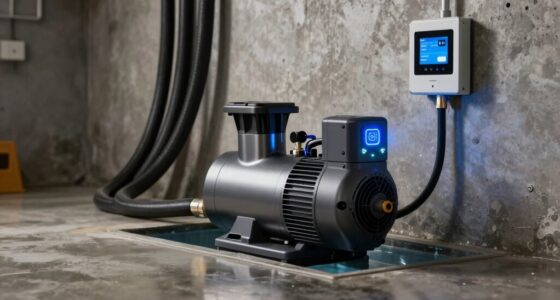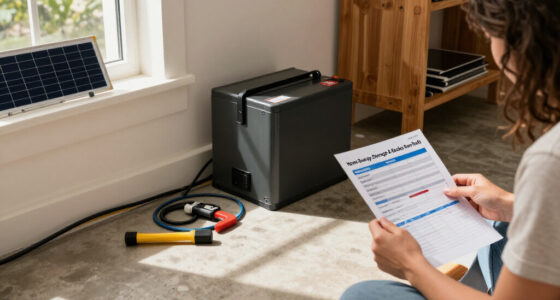

The best home solar panels overall in this roundup are the Renogy 400W Premium Solar Kit, which pairs panels with an MPPT controller for a more integrated small-system setup. For modular panel buyers, the ECO-WORTHY 400W N-Type set offers four separate 100W panels, while the PluggedSolar 800W system stands out for its included micro-inverter and plug-and-play format. The main tradeoffs are whether you need panels alone or a complete power system, how much output and storage your household requires, and how much installation work you can take on. Larger kits bring more capacity but also require more space, equipment planning, and careful electrical checks. Read on for the full comparison and guidance on matching a kit to your home, cabin, or backup-power plan.

Get backup power and energy gear delivered free with Prime
- Fast, free delivery on millions of items
- Prime Video, Amazon Music and more included
- Member-only deals all year
Key Takeaways
- The Renogy 400W kit is the clearest small-system starting point because it includes an MPPT charge controller; many panel sets in this lineup require buyers to source compatible system components separately.
- Panel-only kits and complete power systems solve different problems. The 450W and 590W multi-panel sets supply generation hardware, while the large ECO-WORTHY kits bundle inverters and battery storage for off-grid use.
- Modularity is a meaningful distinction: ECO-WORTHY’s four 100W panels can suit layouts that benefit from smaller units, while paired 400W or 425W panels offer fewer, larger modules to position and wire.
- Bifacial and N-type labels do not replace site planning. Their potential value depends on installation conditions, mounting, shade, and system compatibility—not the panel specification alone.
- The biggest kits are not automatically the best home choice. The 12 kW and 10 kW systems include substantial equipment, but their scale makes usable roof or ground space, household load, and installation requirements central to the decision.
| Renogy 400W Premium Solar Kit with 40A MPPT Charge Controller |  | Best Complete 12V Kit | Panel configuration: 4 × 100W monocrystalline panels | Charge controller: 40A MPPT Rover | System voltage: 12V | VIEW LATEST PRICE | See Our Full Breakdown |
| ECO-WORTHY 400W N-Type Monocrystalline Solar Panel Set, 4 × 100W |  | Best Compact Panel Set | Panel configuration: 4 × 100W | Cell type: N-type bifacial monocrystalline | Conversion efficiency: Up to 25% | VIEW LATEST PRICE | See Our Full Breakdown |
| ECO-WORTHY 590W N-Type Bifacial Monocrystalline Solar Panels, 10-Pack |  | Best for High-Output Roof Arrays | Panel quantity: 10 | Maximum bifacial output: Up to 738W per panel | Module efficiency: Up to 23.23% | VIEW LATEST PRICE | See Our Full Breakdown |
| SUNGOLDPOWER 450W Monocrystalline Solar Panels, 10-Pack |  | Best for Multi-Voltage Battery Systems | Panel quantity: 10 | Listed maximum power: 4500W | Cell type: Monocrystalline silicon | VIEW LATEST PRICE | See Our Full Breakdown |
| JJN Bifacial N-Type Solar Panels, 2-Pack, 425 W Each (850 W Total) |  | Best Two-Panel Bifacial Pick | Panel count: 2 | Cell type: N-type monocrystalline, 16BB | Efficiency: Up to 25% | VIEW LATEST PRICE | See Our Full Breakdown |
| Callsun 450W Bifacial Solar Panels, 2-Pack, N-Type 16BB |  | Best Bifacial Panel Pair | Quantity: 2 panels | Cell technology: N-Type monocrystalline, 16BB | Efficiency: 25.6% | VIEW LATEST PRICE | See Our Full Breakdown |
| 12 kW 48 V Hybrid Solar Power System Kit with 12 kWh LiFePO4 Battery and 26 Solar Panels |  | Best Complete Hybrid Kit | Maximum inverter power: 12,000W | Inverter output: 120/240V split phase, pure sine wave | Solar panels: 26 × 120W; 3,120W total | VIEW LATEST PRICE | See Our Full Breakdown |
| PluggedSolar 800W Plug-and-Play Solar Panel System with Micro-Inverter |  | Best for Simple Grid-Tie Entry | Total panel power: 800W (4 × 200W) | Inverter: Micro grid-tie inverter with built-in Wi-Fi power monitor | Cord length: 50 ft | VIEW LATEST PRICE | See Our Full Breakdown |
| ECO-WORTHY 4.68KWH Solar Power Complete Kit 1200W 48V with Lithium Battery and Inverter for Home |  | Best Small Off-Grid Starter Kit | Solar panel array: 6 × 195W; 1,170W total | Panel cell technology: N-Type bifacial, 18BB | Panel efficiency: 25% | VIEW LATEST PRICE | See Our Full Breakdown |
| ECO-WORTHY 10 kW Off-Grid Solar Panel Kit with Split-Phase Inverter and 32.2 kWh Battery Storage |  | Best High-Capacity Off-Grid System | Inverter continuous output: 10,000W | Inverter peak output: 20,000W | Output voltage: 120/240V split phase | VIEW LATEST PRICE | See Our Full Breakdown |
| DOKIO 800W Solar Panel Set, 2 × 400W Monocrystalline Panels |  | Best for a Simple Off-Grid Array | Total maximum power: 800 W | Panel count: 2 | Power per panel: 400 W | VIEW LATEST PRICE | See Our Full Breakdown |
| SUNGOLDPOWER UL 61730 10PCS 450W Solar Panels Monocrystalline, Grade A Solar Cell, Waterproof IP68, Total 4500W | | Best for Large Panel Arrays | Panel count: 10 | Power per panel: 450 W | Total stated maximum power: 4,500 W | VIEW LATEST PRICE | See Our Full Breakdown |
| ECO-WORTHY 10 kW Off-Grid Solar System Kit with 2,340 W Panels, 10 kW Inverter, and 10.24 kWh Batteries |  | Best Complete Off-Grid System | Solar panel quantity: 12 | Solar panel wattage: 195 W each; 2,340 W total | Panel type: Bifacial N-type monocrystalline | VIEW LATEST PRICE | See Our Full Breakdown |
| home solar panel | Panel dimensions |
|---|---|
| Renogy 400W Premium Solar Kit | 41.8 × 20.9 × 1.38 in |
| ECO-WORTHY 400W N-Type Monocry | 35.63 × 23.03 × 1.18 in each |
| ECO-WORTHY 590W N-Type Bifacia | 89.7 × 44.6 × 1.4 in |
| SUNGOLDPOWER 450W Monocrystall | 75.2 × 44.65 × 1.38 in |
| JJN Bifacial N-Type Solar Pane | 44.7 × 1.2 × 67.8 in |
| Callsun 450W Bifacial Solar Pa | — |
| 12 kW 48 V Hybrid Solar Power | — |
| PluggedSolar 800W Plug-and-Pla | 4.5 × 2.2 ft each |
| ECO-WORTHY 4.68KWH Solar Power | 58.86 × 26.18 × 1.18 in |
| ECO-WORTHY 10 kW Off-Grid Sola | 89.68 × 44.65 × 1.18 in |
| DOKIO 800W Solar Panel Set | — |
| SUNGOLDPOWER UL 61730 10PCS 45 | — |
| ECO-WORTHY 10 kW Off-Grid Sola | — |
More Details on Our Top Picks
Renogy 400W Premium Solar Kit with 40A MPPT Charge Controller
Renogy’s main advantage is that it bundles the pieces needed to build a basic 12V off-grid solar setup: four 100W monocrystalline panels, a 40A MPPT controller, mounting brackets, cables, an adapter kit, and Bluetooth monitoring. That reduces the separate component choices a buyer must make compared with the ECO-WORTHY 400W N-Type set, which supplies panels but not a charge controller or mounting kit. The phone-connected module also makes system monitoring more accessible, though it does not change the kit’s core limitation: it is specified for 12V systems, so buyers planning around a 24V or 48V battery bank should look elsewhere. At 56.4 pounds for the kit, it is also a substantial shipment to handle. I’d rank it ahead of panel-only options for buyers who value a coordinated starter package over newer bifacial panel technology.
Pros:- Includes four 100W monocrystalline panels and a 40A MPPT charge controller.
- Mounting brackets, cables, and an adapter kit reduce the need to source basic installation parts separately.
- Bluetooth module supports phone-based system monitoring and adjustment.
- MC4 connectors suit common solar wiring setups.
Cons:- Specified for 12V systems, limiting fit for buyers building around higher-voltage battery banks.
- The 56.4-pound kit takes more effort to transport and handle than a small panel-only purchase.
- Its included controller and accessories make it less appealing to buyers who already have those components.
Best for: Cabin, RV, or shed owners building a 12V off-grid setup who want panels, controller, mounting hardware, and monitoring in one package.
Not ideal for: Buyers designing a 24V or 48V system, or those who already own a compatible MPPT controller and would rather pay for panels alone.
- Panel configuration:4 × 100W monocrystalline panels
- Charge controller:40A MPPT Rover
- System voltage:12V
- Panel dimensions:41.8 × 20.9 × 1.38 in
- Kit weight:56.4 lb
- Connector type:MC4
- Panel warranty:5 years
Our verdict“Choose the Renogy kit for a coordinated 12V off-grid build; skip it if your system needs 24V or 48V compatibility.”
ECO-WORTHY 400W N-Type Monocrystalline Solar Panel Set, 4 × 100W
This four-panel set is a space-conscious way to add 400W of solar capacity, with each panel measuring 35.63 × 23.03 inches. Its N-type bifacial cells and stated efficiency of up to 25% give it a more performance-focused design than the Renogy 400W Premium Solar Kit, while MC4 connectors and pre-drilled mounting holes help simplify panel installation. The IP68-rated junction boxes and bypass diodes can help limit the effect of shading on output, a useful detail for roofs or sites with intermittent obstructions. Unlike Renogy, though, ECO-WORTHY supplies panels rather than a complete kit: buyers need to arrange a controller, wiring, and other system components separately. Each panel weighs 23.8 pounds, and the set ships in two boxes that may arrive at different times. I’d choose it when compact panel dimensions matter more than bundled hardware.
Pros:- Four panels provide 400W total rated output.
- Compact 35.63 × 23.03-inch dimensions suit installations with limited panel space.
- N-type bifacial cells are specified with up to 25% conversion efficiency.
- IP68 junction boxes, bypass diodes, pre-drilled holes, and MC4 connectors support practical installation.
Cons:- Panel-only set; charge controller, mounting hardware, and other system components are not listed as included.
- The two shipping boxes may arrive at different times.
- Each panel weighs 23.8 pounds, which may make solo handling awkward.
Best for: RV, boat, garden, or small-roof owners who need a 400W panel set with compact individual panels and already have system components.
Not ideal for: First-time off-grid buyers who want a controller, mounting hardware, and system wiring included with their panels.
- Panel configuration:4 × 100W
- Cell type:N-type bifacial monocrystalline
- Conversion efficiency:Up to 25%
- Panel dimensions:35.63 × 23.03 × 1.18 in each
- Panel weight:23.8 lb each
- Compatibility:12V and 24V systems
Our verdict“Pick this set for compact, high-efficiency panels if you already have the equipment needed to complete your solar system.”
ECO-WORTHY 590W N-Type Bifacial Monocrystalline Solar Panels, 10-Pack
For a large fixed installation, this ten-panel set prioritizes output per panel: each module is rated at 590W, with up to 23.23% efficiency and bifacial construction that can capture light from the rear when the mounting surface allows it. The stated maximum bifacial output reaches 738W per panel, but that figure depends on site and installation conditions, so I would not treat it as a guaranteed everyday yield. Compared with the SUNGOLDPOWER 450W 10-pack, ECO-WORTHY uses larger, higher-output modules and lists a 30-year linear performance guarantee, while SUNGOLDPOWER offers more battery-voltage flexibility in its stated specs. These panels measure 89.7 × 44.6 inches, making roof layout, structural suitability, and delivery access serious planning needs. They ship by palletized truck, so this is a poor match for buyers without a suitable delivery location or help handling large panels.
Pros:- Each panel is rated at 590W, supporting high capacity with fewer modules than lower-output panels.
- Bifacial dual-glass construction can collect light from both sides when the installation permits rear-side exposure.
- N-type half-cut cells and stated low-light performance suit a range of outdoor conditions.
- Lists a 10-year workmanship warranty and 30-year linear performance guarantee.
Cons:- Large 89.7 × 44.6-inch panels require substantial mounting area and careful layout planning.
- Palletized truck delivery requires an address with suitable vehicle access.
- The stated maximum bifacial output depends on installation conditions and should not be treated as guaranteed panel output.
Best for: Property owners planning a substantial fixed solar array with room for large panels, suitable mounting, and truck delivery access.
Not ideal for: Apartment dwellers, small-roof owners, or buyers who need lightweight panels that can be carried and installed without help.
- Panel quantity:10
- Maximum bifacial output:Up to 738W per panel
- Module efficiency:Up to 23.23%
- Cell technology:N-type half-cut monocrystalline
- Construction:Bifacial dual glass, 2.0mm front and back
- Panel dimensions:89.7 × 44.6 × 1.4 in
- Warranty:10-year workmanship; 30-year linear performance
Our verdict“Choose this set for a large, well-planned array where high output per panel outweighs the handling and delivery demands.”
SUNGOLDPOWER 450W Monocrystalline Solar Panels, 10-Pack
SUNGOLDPOWER stands out for its stated compatibility with 12V, 24V, 36V, and 48V battery systems, making this ten-panel set a flexible option for buyers designing an off-grid array around different system voltages. Its 450W monocrystalline panels use half-cell technology, tempered glass, and an anodized aluminum frame; together, those details support a durable installation, while the half-cell design is intended to help with partial shade. Compared with the ECO-WORTHY 590W 10-pack, each SUNGOLDPOWER panel produces less rated power and is smaller, but the listed battery-voltage range may better suit varied system plans. Handling is still demanding: each panel weighs 49.2 pounds and measures 75.2 × 44.65 inches. The product data also lists a 4500W maximum for ten 450W panels, a total that does not match the stated per-panel rating, so I’d verify the system specification before planning around it.
Pros:- Ten 450W panels provide substantial rated capacity for a larger array.
- Stated support for 12V, 24V, 36V, and 48V battery systems offers broad system-planning flexibility.
- Half-cell technology is intended to improve shade tolerance.
- Tempered glass, an anodized aluminum frame, and pre-drilled mounting holes suit fixed installations.
Cons:- Each panel weighs 49.2 pounds, making transport and roof installation difficult without help.
- The listed 4500W maximum does not match the stated total of ten panels at 450W each.
- Panels measure over six feet long, which limits fit on smaller roofs and structures.
Best for: Off-grid system builders who want ten monocrystalline panels and stated compatibility across 12V, 24V, 36V, and 48V battery setups.
Not ideal for: Buyers who need lightweight, compact panels or want to plan an array without first clarifying the conflicting total-power listing.
- Panel quantity:10
- Listed maximum power:4500W
- Cell type:Monocrystalline silicon
- Voltage at maximum power:34.67V
- Current at maximum power:12.98A
- Panel dimensions:75.2 × 44.65 × 1.38 in
- Panel weight:49.2 lb
- Warranty:5 years at 95% output; 10 years at 90%; 25 years at 80%
Our verdict“Consider this set for a large multi-voltage system, but confirm the stated array power and plan for heavy panel handling.”
JJN Bifacial N-Type Solar Panels, 2-Pack, 425 W Each (850 W Total)
JJN’s two-panel bundle offers 850W of stated capacity without committing to a ten-panel shipment, making it a more manageable starting point for a smaller roof or an expandable off-grid system. Each panel uses N-type monocrystalline cells with a bifacial design and stated efficiency of up to 25%; the rear-side generation potential is most useful when the installation leaves room for reflected light to reach the back. Compared with the ECO-WORTHY 400W N-Type set, JJN supplies fewer, higher-output panels and lists a transferable 30-year power output warranty, but it does not include a controller or mounting system. The two panels weigh 94.6 pounds each according to the supplied specifications, a substantial handling burden that makes help and suitable roof access important. Wind and snow load ratings add useful planning information, though buyers should still match the mounting hardware to their site.
Pros:- Two panels provide 850W of stated total power in a smaller bundle than a ten-panel array.
- N-type bifacial cells are rated at up to 25% efficiency and can collect light from both sides.
- The stated wind and snow load ratings help buyers assess site suitability.
- A transferable 30-year power output warranty is listed.
Cons:- Panels are sold without a charge controller or mounting system.
- The listed weight is 94.6 pounds per panel, creating a significant transport and installation challenge.
- Bifacial gains depend on mounting conditions and rear-side light exposure.
Best for: Homeowners or off-grid builders who need a two-panel, 850W-rated addition and can supply compatible mounting and electrical equipment.
Not ideal for: Solo installers or buyers seeking a turnkey solar kit with a charge controller, mounting hardware, and other system components included.
- Panel count:2
- Cell type:N-type monocrystalline, 16BB
- Efficiency:Up to 25%
- Output voltage:31.05V
- Amperage:13.78A
- Panel dimensions:44.7 × 1.2 × 67.8 in
- Warranty:30-year transferable power output warranty
Our verdict“Choose JJN for a compact two-panel bifacial array if you have the equipment and help to install its heavy panels.”
Callsun 450W Bifacial Solar Panels, 2-Pack, N-Type 16BB
I’d pick the Callsun pair for a buyer who wants high-output panels and can make use of light reaching the rear side. Each panel is rated at 450W, and its N-Type cells, 16-busbar design, and stated 25.6% efficiency make it a higher-output option than the smaller panels in the PluggedSolar 800W kit. That can mean fewer modules for a given array size, though actual output depends on site conditions. The bifacial design has a real tradeoff: rear-side gains rely on reflected light and panel placement, so a close-fitting or shaded installation may not benefit much. Double-glass construction and IP68 protection suit outdoor exposure, but I’d check voltage and controller compatibility before buying; these are not a plug-in household outlet kit.
Pros:- 450W rated output per panel can reduce the number of modules needed.
- Bifacial construction can capture reflected light from behind the panel.
- Double-glass construction and IP68 rating are suited to outdoor exposure.
- N-Type 16BB cells and stated 25.6% efficiency offer a high-output panel format.
Cons:- Rear-side generation depends on installation height, surface reflectivity, and available light.
- Large panel dimensions can complicate transport, handling, and placement.
- Compatibility with existing high-voltage equipment should be checked before purchase.
Best for: Homeowners or cabin builders assembling a compatible MPPT-based array who have space for large panels and a bright, reflective mounting surface.
Not ideal for: Buyers seeking a ready-to-use outlet system or those whose existing charge controller and inverter may not match the panels’ electrical requirements.
- Quantity:2 panels
- Cell technology:N-Type monocrystalline, 16BB
- Efficiency:25.6%
- Maximum voltage:30.08 V
- Amperage capacity:14.97 A
- Dimensions:69.37 × 44.65 × 1.18 in
- Ingress protection:IP68
- Output commitment:25-year commitment to at least 84.5% output
Our verdict“Choose the Callsun pair for a compatible array where bifacial placement can pay off, not for a simple plug-in setup.”
12 kW 48 V Hybrid Solar Power System Kit with 12 kWh LiFePO4 Battery and 26 Solar Panels
This kit is aimed at buyers who want the core parts of a home backup or off-grid system bundled together: inverter, battery, and panels. Its 12,000W split-phase inverter can supply 120/240V output, while the 12kWh-class LiFePO4 battery provides storage for using energy beyond sunny hours. Compared with the ECO-WORTHY 4.68KWH kit, it offers a larger stated inverter and much more battery capacity, but its 26 panels total only 3,120W, so panel production may be the limiting part of the system. The supplied panels are also much smaller in wattage than the 590W modules in the ECO-WORTHY 10 kW Off-Grid Kit. I’d treat this as a substantial electrical installation, not a consumer plug-in system: a qualified electrician is required, and the battery capacity is listed as both 12 and 11.8kWh.
Pros:- Bundles inverter, battery, and 26 solar panels in one system.
- Pure sine wave 120/240V split-phase output supports common household circuits.
- LiFePO4 battery includes a built-in BMS and is rated for 8,000+ cycles.
- System supports inverter and battery parallel expansion.
Cons:- Qualified electrician installation is called for, adding planning and labor needs.
- The 12kWh and 11.8kWh battery figures conflict in the listing.
- The included panels total 3,120W, modest relative to the inverter’s 12,000W rating.
Best for: Homeowners planning professionally installed backup or off-grid power who value a bundled split-phase inverter and battery over a high panel wattage per module.
Not ideal for: DIY beginners, buyers who need a compact system, or households expecting the included 3,120W array to support high loads without careful energy planning.
- Maximum inverter power:12,000W
- Inverter output:120/240V split phase, pure sine wave
- Solar panels:26 × 120W; 3,120W total
- Battery chemistry:LiFePO4
- Battery capacity:12kWh stated; 11.8kWh also listed
- Battery voltage and capacity:51.2V, 230Ah
- MPPT controllers:Dual 200A
- Expansion:Up to 6 inverters and 16 batteries in parallel
- Item weight:910 lb
Our verdict“Choose this bundled hybrid kit when you need split-phase backup and battery storage, and have an electrician plan around its 3,120W array.”
PluggedSolar 800W Plug-and-Play Solar Panel System with Micro-Inverter
The PluggedSolar kit is the most approachable option here for someone who wants panels and a micro-inverter without adding a battery. Four 200W modules, Wi-Fi monitoring, and a 50-foot cord make it a simpler package than the component-based Callsun pair, which needs compatible charge-control and inverter equipment. That convenience has limits: this is a grid-tie setup for a suitable 110/120V outlet, not an off-grid backup system, and it cannot supply stored power after sunlight fades. I would also verify the kit’s actual output before planning around it, since the data lists 800W of panel capacity but also a 320W maximum power figure. The panels arrive separately from the inverter, so delivery may not be synchronized. This is a modest entry point, not a substitute for the larger storage kits.
Pros:- Includes four panels, a micro-inverter, and a 50-foot cord.
- Built-in Wi-Fi monitoring provides visibility into system output.
- Avoids battery sizing and battery installation for a grid-tie use case.
- Four separate panels offer more placement flexibility than a single large module.
Cons:- Requires a suitable 110/120V outlet and grid-tie compatibility.
- Listing gives conflicting figures of 800W total panel power and 320W maximum power.
- No battery is included, so it does not provide stored energy during an outage.
Best for: A grid-connected homeowner who wants a small solar setup with included monitoring and does not need battery backup.
Not ideal for: Off-grid users, buyers who need outage power, or anyone unwilling to clarify the conflicting output figures and check local interconnection requirements.
- Total panel power:800W (4 × 200W)
- Inverter:Micro grid-tie inverter with built-in Wi-Fi power monitor
- Cord length:50 ft
- Outlet voltage:110/120V
- Panel dimensions:4.5 × 2.2 ft each
- Maximum voltage:120V
- Listed maximum power:320W
- Output voltage:120V AC
Our verdict“Pick PluggedSolar for a small, grid-tied starter setup only after confirming the output rating and local connection rules.”
ECO-WORTHY 4.68KWH Solar Power Complete Kit 1200W 48V with Lithium Battery and Inverter for Home
I see this ECO-WORTHY kit as a compact starting point for a shed, cabin, or carefully planned essential-load system: it combines six 195W bifacial panels, a 48V battery, and a 3,500W inverter with an 80A MPPT controller. Unlike the PluggedSolar kit, it includes storage and is designed to run AC loads off-grid; unlike the 12 kW hybrid kit, it is a much smaller system with only 2.56kWh of stated usable battery energy. The inverter’s 3,500W rating should not be confused with the amount of energy the battery can deliver over time. The listing estimates 4.68kWh per day under four hours of full sun, which depends on conditions, and its phrasing around daily output is inconsistent. I’d choose it for modest loads, not as a whole-home power solution.
Pros:- Includes panels, inverter, LiFePO4 battery, and system accessories.
- Bifacial N-Type panels may gain output from reflected light at a suitable site.
- 3,500W inverter includes an 80A MPPT controller and 20ms UPS switching.
- Battery weighs 58.4 lb, making it easier to handle than many larger storage units.
Cons:- The 2.56kWh usable battery capacity limits runtime for sustained household loads.
- The stated daily generation estimate depends on four hours of full sun and site conditions.
- Multiple packages may arrive separately, so the full system may not be available at once.
Best for: Cabin and shed owners or homeowners building a modest off-grid system for selected appliances, with realistic expectations about battery runtime.
Not ideal for: Buyers seeking whole-home backup, extended cloudy-weather autonomy, or a large battery reserve for high-demand appliances.
- Solar panel array:6 × 195W; 1,170W total
- Panel cell technology:N-Type bifacial, 18BB
- Panel efficiency:25%
- Inverter output:110/120V AC
- MPPT controller:80A
- Battery:48V, 50Ah LiFePO4; 2,560Wh usable energy
- Panel dimensions:58.86 × 26.18 × 1.18 in
Our verdict“Choose this kit for modest off-grid loads where a bundled inverter and battery matter more than long-duration whole-home backup.”
ECO-WORTHY 10 kW Off-Grid Solar Panel Kit with Split-Phase Inverter and 32.2 kWh Battery Storage
For buyers planning substantial off-grid household power, this ECO-WORTHY kit has the strongest stated combination of panel capacity and storage in this group: 10.62kW of panels, a 10kW split-phase inverter, and 32.2kWh of LiFePO4 batteries. That gives it far more storage than the 12 kW hybrid kit, whose battery is listed around 12kWh, and a much larger array than the ECO-WORTHY 4.68KWH kit. Its 120/240V output suits a broader set of household circuits, but this scale also brings installation demands: professional installation is recommended, and the large panels and battery components call for substantial delivery and handling arrangements. The listed daily generation of up to 39.36kWh is under optimal conditions, not a guaranteed daily yield. I’d reserve this for a site with room, load needs, and electrical support to match.
Pros:- Combines 10.62kW of panel capacity with 32.2kWh of LiFePO4 storage.
- 10kW inverter provides 120/240V split-phase output for household circuits.
- Dual MPPT controllers support management of the included solar array.
- Monitoring support includes Wi-Fi, Bluetooth, and a display.
Cons:- Professional installation is recommended, making this a major electrical project.
- Large panels and heavy system components require considerable space and delivery access.
- The stated 39.36kWh daily generation applies only under optimal conditions.
Best for: Households planning a professionally installed off-grid system with high energy use, room for a large array, and a need for substantial battery storage.
Not ideal for: Small homes, renters, or buyers who need a light, DIY-friendly system or cannot accommodate large panels and pallet-scale components.
- Inverter continuous output:10,000W
- Inverter peak output:20,000W
- Output voltage:120/240V split phase
- Solar panels:18 × 590W
- Total PV capacity:10,620W
- Battery storage:32.2kWh total
- Battery configuration:2 × 48V, 314Ah LiFePO4
- MPPT controllers:Dual
- Panel dimensions:89.68 × 44.65 × 1.18 in
Our verdict“Choose this system for a large, professionally installed off-grid home setup; skip it if your site or energy needs are modest.”
DOKIO 800W Solar Panel Set, 2 × 400W Monocrystalline Panels
I’d shortlist this DOKIO set for buyers who want 800 W from two panels without wiring a larger collection of small modules. Compared with the ECO-WORTHY 400W N-Type Monocrystalline Solar Panel Set, it provides twice the stated total panel wattage in fewer panels, which can mean fewer panel connections to manage. Its MC4 leads, tempered glass, aluminum frames, and IP65 junction boxes suit outdoor off-grid installations, while compatibility with AGM, Gel, and LiFePO₄ batteries leaves battery choice open.
The tradeoff is that this is a panel set, not a complete power system: you still need a suitable charge controller, battery, and installation hardware. I’d favor an MPPT controller for the setup, and buyers must check controller limits and wiring compatibility before connecting the panels. With panels measuring nearly 68 by 45 inches apiece, it also takes substantial mounting space.
Pros:- 800 W total output from two 400 W panels
- Fewer panel connections than an array of eight 100 W panels
- 9.84 ft MC4 leads allow more flexible panel placement
- Tempered glass, aluminum frames, and IP65-rated junction boxes suit outdoor use
Cons:- Charge controller, batteries, and other system components are not included
- Controller must be rated for the array’s current and configuration
- Large panel dimensions demand substantial mounting space
Best for: Off-grid cabin or shed owners who already have compatible batteries and want two high-output panels for a 12 V or 24 V system.
Not ideal for: Buyers seeking a complete, ready-to-run home solar kit, or anyone without room to mount two large panels and a controller sized for the array.
- Total maximum power:800 W
- Panel count:2
- Power per panel:400 W
- Output voltage:31 V DC
- Dimensions:67.8 × 44.6 × 2.4 in per panel
- Cable length:9.84 ft per panel
- Connector type:MC4
- Battery compatibility:AGM, Gel, and LiFePO₄
Our verdict“Choose this set if you want a two-panel, 800 W foundation for a compatible off-grid system and are prepared to source the controller and batteries separately.”
SUNGOLDPOWER UL 61730 10PCS 450W Solar Panels Monocrystalline, Grade A Solar Cell, Waterproof IP68, Total 4500W
I’d put this SUNGOLDPOWER pack on the list for buyers planning a large, panel-only array: ten 450 W modules provide 4,500 W of stated peak capacity. That is a much larger panel supply than the DOKIO 800W Solar Panel Set, but it also calls for more roof or ground-mount space and a system designed around the array’s electrical characteristics. The listing specifies Grade A monocrystalline cells, a scratch-resistant anodized aluminum frame, and IP68-rated connectors—details that suit buyers prioritizing robust outdoor components.
These are panels, not a complete household system. You’ll need compatible inverter or charge-controller equipment, mounting, and careful string design; the listed Vmp and current figures should be checked against the equipment you plan to use. The substantial module size also makes installation and handling a bigger job than with smaller panels. I’d choose this over a small starter kit only when the site and balance-of-system equipment can support a ten-panel array.
Pros:- Ten 450 W panels provide 4,500 W of stated peak panel capacity
- Grade A monocrystalline cells
- IP68-rated connectors and a corrosion-resistant aluminum frame
- Pre-drilled mounting holes support installation planning
Cons:- Panels are sold without an inverter, charge controller, batteries, or full system components
- Ten large modules require considerable mounting area and installation effort
- Electrical design must account for panel voltage and current limits
Best for: Homeowners, farm operators, or cabin owners planning a professionally designed, high-capacity array who already have—or will source—the inverter, mounting, and wiring.
Not ideal for: Beginners seeking a complete plug-and-play system, or homeowners with limited roof area or no equipment matched to a ten-panel array.
- Panel count:10
- Power per panel:450 W
- Total stated maximum power:4,500 W
- Voltage at Pmp (Vmp):34.2 V
- Open-circuit voltage:41.72 V
- Optimum circuit current (Imp):13.16 A
- Dimensions:75.2 × 44.7 × 1.4 in
Our verdict“Pick this ten-panel pack for a large array when you can match the panels with suitable system equipment and have space for their installation.”
ECO-WORTHY 10 kW Off-Grid Solar System Kit with 2,340 W Panels, 10 kW Inverter, and 10.24 kWh Batteries
Unlike the DOKIO and SUNGOLDPOWER panel-only sets, this ECO-WORTHY package brings together panels, a 10,000 W inverter, and 10.24 kWh of stated battery capacity. That makes it the more integrated choice for a household or remote property being planned around off-grid power, with 120 V/240 V output for compatible appliances. Its twelve bifacial N-type panels have a stated combined output of 2,340 W, so the inverter’s 10 kW rating should not be confused with the solar array’s panel capacity.
I’d favor this kit over the ECO-WORTHY 10 kW Off-Grid Solar Panel Kit with Split-Phase Inverter and 32.2 kWh Battery Storage when the listed 10.24 kWh storage better matches the project, rather than treating it as equivalent battery capacity. Bluetooth and Wi-Fi monitoring add visibility, but professional installation is recommended, and actual daily energy depends on sunlight and site conditions. This is a larger commitment than buying panels alone, but it reduces the need to assemble core components separately.
Pros:- Includes panels, inverter, batteries, and mounting accessories
- 10,000 W inverter provides 120 V/240 V AC output
- Two 48 V, 100 Ah batteries provide 10.24 kWh stated storage
- Bluetooth and Wi-Fi battery monitoring plus multiple charging modes
Cons:- Professional installation is recommended
- The 2,340 W panel array is substantially smaller in stated wattage than the 10,000 W inverter rating
- Daily energy production depends on sunlight and site conditions
Best for: Owners of cabins or homes planning off-grid 120 V/240 V power who want panels, an inverter, and lithium storage in one coordinated kit.
Not ideal for: Buyers who only need panels, have a modest power requirement, or need more than the included 10.24 kWh battery capacity without confirming expansion compatibility.
- Solar panel quantity:12
- Solar panel wattage:195 W each; 2,340 W total
- Panel type:Bifacial N-type monocrystalline
- Solar panel efficiency:25%
- Inverter output:10,000 W
- Inverter output voltage:120 V/240 V AC
- Battery capacity:Two 48 V, 100 Ah batteries; 10.24 kWh total
- Battery communication:CAN/RS485, Bluetooth, and Wi-Fi
- Certifications:UL 1741 inverter; UL 1973 and UL 9540A batteries
Our verdict“Choose this kit if you want a bundled off-grid system with split-phase output and included battery storage, and have the site and professional support for installation.”

How We Picked
I compared these products by how well their included hardware matches a clearly defined home-energy use. I looked at stated panel output and configuration, whether a charge controller, inverter, or battery is included, and how much system planning a buyer would still need to do. I also weighed modularity, stated construction and certification details, and the practical difference between a compact starter kit, a panel bundle, a plug-and-play setup, and a large off-grid system.
The ranking favors options with a clear role and fewer gaps between the advertised kit and the buyer’s likely next step. The Renogy kit leads for its included controller and manageable scale; modular and plug-and-play picks follow for buyers prioritizing layout flexibility or simpler integration. Larger packages rank according to their capacity and included storage, but their size does not make them a better fit for a typical household by default. Panel-only bundles remain useful for buyers who already have compatible equipment, though they require more system knowledge than complete kits.
Factors to Consider When Choosing Best Home Solar Panels
Before choosing among these kits, I would work backward from the job the system needs to do. A panel’s wattage is only one part of the decision: the inverter, battery, wiring, mounting, location, and household load determine whether the system can deliver useful power. These checks can prevent a mismatch between an attractive panel bundle and the equipment or installation your home actually needs.
Match System Size to Your Actual Loads
Start by listing the appliances you want to run, their wattage, and how many hours a day they operate. Daily energy use is measured in kilowatt-hours, while inverter capacity describes how much power can be supplied at one time; confusing the two can lead to buying a system that handles everyday use but not a high-startup appliance. Allow for cloudy periods and seasonal changes rather than sizing only around a clear summer day. A small kit may suit charging and modest loads, but it is not a substitute for a whole-home system. For a grid-connected house, a qualified installer can compare your usage history with roof conditions and local rules before you commit.
Check Whether the Kit Is Complete for Your Setup
A product called a solar kit can mean panels alone, panels plus a controller, or a broader package with an inverter and batteries. Before ordering, check the exact included components and whether you still need racking, cables, fuses, disconnects, grounding hardware, and permits. Match panel voltage and current to the charge controller and inverter limits; a mismatch can prevent proper operation or create an unsafe installation. Do not assume that a bundled inverter makes a system ready to connect to household wiring. The more components a kit includes, the fewer separate purchases may be needed, but compatibility and installation requirements still need review.
Treat Battery Capacity and Inverter Output as Separate Decisions
Battery capacity affects how much stored energy is available after sunset or during an outage, while inverter output limits which devices can run at once. A larger battery does not compensate for an undersized inverter, and a powerful inverter does not provide energy if the battery is depleted. Compare the battery’s usable capacity, voltage, chemistry, and expected charging limits with the rest of the system. For backup, prioritize the circuits and appliances you need to keep running instead of assuming that a kit will power an entire home. This approach can help avoid paying for storage that does not match your backup goals.
Plan for Roof Space, Shade, and Panel Layout
Panel count and rated wattage do not tell you whether a system fits your roof. Measure usable area, account for setbacks and obstructions, and check where shade falls throughout the day. Smaller modules can give more layout options around obstacles, while larger panels may reduce the number of units needed but require clear uninterrupted space. Bifacial panels need a suitable installation that lets light reach the rear surface; mounting them flat against an opaque roof can limit that potential advantage. Ground mounting can offer more placement flexibility, but it may require additional structure, wiring, and site work.
Verify Installation, Permits, and Grid-Connection Rules
Electrical and building requirements vary by location, system type, and whether the equipment connects to the utility grid. A plug-and-play label does not mean every outlet or home is suitable, and a grid-connected inverter may require utility approval and an electrician’s work. Off-grid kits also need safe mounting, appropriately rated wiring and protection, and a plan for battery placement. Check the manufacturer’s documentation and local authority requirements before purchasing, especially for large systems or permanent roof installations. If you are unsure about wiring or interconnection, get a qualified professional to review the design rather than relying on the product name alone.
Compare Expandability and Long-Term Support
If you expect to add panels or storage later, confirm that the controller and inverter can accept the planned expansion and that new components will match the existing electrical specifications. Adding panels is not always as simple as connecting another set: string design, current limits, mounting space, and battery charging capacity can all constrain growth. Ask how replacement parts, manuals, and warranty support are handled before choosing a kit with specialized components. A lower-component-count starter system can be easier to understand, while a bundled system may reduce compatibility guesswork at the outset. Choose a system with a realistic expansion path only if you have a likely future need, rather than buying extra capacity on speculation.
Frequently Asked Questions
Should I buy panels only or a complete solar kit?
Panel-only bundles make sense if you already have a compatible inverter, charge controller, batteries, and mounting plan. A complete kit can reduce the work of sourcing components, but its included equipment still needs to match your loads and installation. Check whether the package includes the parts needed for your intended use; the word “complete” may not mean it includes racking, permits, or every cable and safety device. If you are new to system design, a kit with a clearly specified controller or inverter can simplify component matching. For a grid-connected home, have the full design checked against local requirements before purchase.
Can an 800W solar kit power my whole house?
An 800W panel rating describes potential peak output under specified conditions, not a guaranteed continuous supply or a complete home-power solution. Actual energy varies with sunlight, orientation, shade, season, and system losses. The household’s total daily use and the capacity of the inverter and battery matter just as much. An 800W system may suit limited loads, supplemental generation, or a small setup, but it should not be assumed to run a typical home independently. Compare your appliance loads and expected daily energy production before treating it as whole-home power.
Are bifacial panels worth choosing for a home installation?
Bifacial panels can collect light from both sides, but the rear-side contribution depends on how the panels are mounted and what is beneath them. A raised installation over a reflective surface may give them more opportunity to capture additional light than a close, opaque roof mount. Site conditions, shade, spacing, and mounting costs can outweigh the benefit of the panel design. Compare the full installed setup rather than selecting a panel solely because it is bifacial. If your mounting plan offers little light to the back of the module, a conventional panel may be a simpler fit.
Do I need batteries with home solar panels?
Batteries are useful when you want to store solar energy for nighttime use or backup during an outage, but they add cost, equipment, and installation needs. A grid-connected system may be designed to operate without batteries, subject to local rules and the system’s configuration. Off-grid use generally requires storage or another dependable source of power when sunlight is unavailable. Size storage around the loads you want to cover and the length of backup you need, not just the panel rating. Confirm that the battery chemistry, voltage, and inverter are compatible before combining components.
What should I verify before connecting a plug-and-play solar system?
Read the system’s connection instructions and confirm that its inverter and electrical connection method are permitted for your home and location. Check the circuit’s capacity, grounding and protection requirements, and whether utility approval or inspection applies. Do not treat “plug-and-play” as permission to connect equipment to any outlet or to bypass an electrician. Confirm the system’s output limits and what happens during a grid outage, since many grid-connected inverters shut down for safety. If any requirement is unclear, ask the manufacturer or a qualified electrician before connecting it.
Conclusion
For most buyers seeking a smaller, more integrated starting point, I would choose the Renogy 400W Premium Solar Kit as the best overall option because it includes an MPPT controller. My best-value direction is the ECO-WORTHY 400W N-Type set for buyers who want four modular panels and already understand the remaining system requirements. For a premium, high-capacity off-grid setup, compare the 12 kW 48 V Hybrid System with the larger ECO-WORTHY off-grid packages, matching battery storage and panel output to your actual loads rather than choosing by headline capacity alone. Beginners who want a simpler connection format can look at PluggedSolar’s 800W system, after checking local electrical and utility rules. For specific needs, the 590W bifacial set suits buyers planning a compatible multi-panel installation, while the smaller paired-panel options may fit projects with tighter layouts. The right choice is the one whose components, scale, and installation demands match the job you need done.
Fall Picks
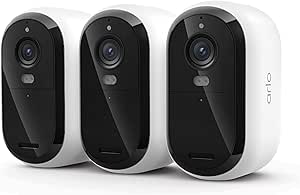
Arlo Essential Wireless Security Camera 2K (3rd Gen) – 3-Cam Kit with Yard Sign
As an affiliate, we earn on qualifying purchases.