TL;DR
Maxxen Energy opened its 20,000-square-meter battery storage factory in Aydın, Türkiye, in 2026. The plant has a stated annual nameplate capacity of 5 GWh and is currently producing at 1.5 GWh per year, using Hithium-supplied cells in systems assembled in Europe.
Maxxen Energy’s utility-scale battery factory in Aydın, Türkiye, has begun operating in 2026, with a stated 5 GWh annual nameplate capacity and current production utilization of 1.5 GWh per year. An open day at the 20,000-square-meter site offered a view of how the company assembles containerized battery systems using cells supplied by China’s Hithium for projects in Europe and other markets.

Get backup power and energy gear delivered free with Prime
- Fast, free delivery on millions of items
- Prime Video, Amazon Music and more included
- Member-only deals all year
Maxxen, headquartered in Switzerland and wholly owned by Turkish renewable energy company Kontek Energy, makes a 5 MWh direct-current container system called the DC Box. It also offers an optional MV Box power station, with stated output configurations of 2.5 MW, 5 MW or 10 MW. The company said it sold 664 MWh across 21 global projects between January and September 2026.
The factory was built with a reported $35 million investment. Hithium currently supplies the 314 Ah battery cells used in production. According to the report, the companies have a layered supply and manufacturing agreement but neither has an ownership stake in the other. Maxxen representatives said the facility is expected to move to 587 Ah cells by the end of 2027.
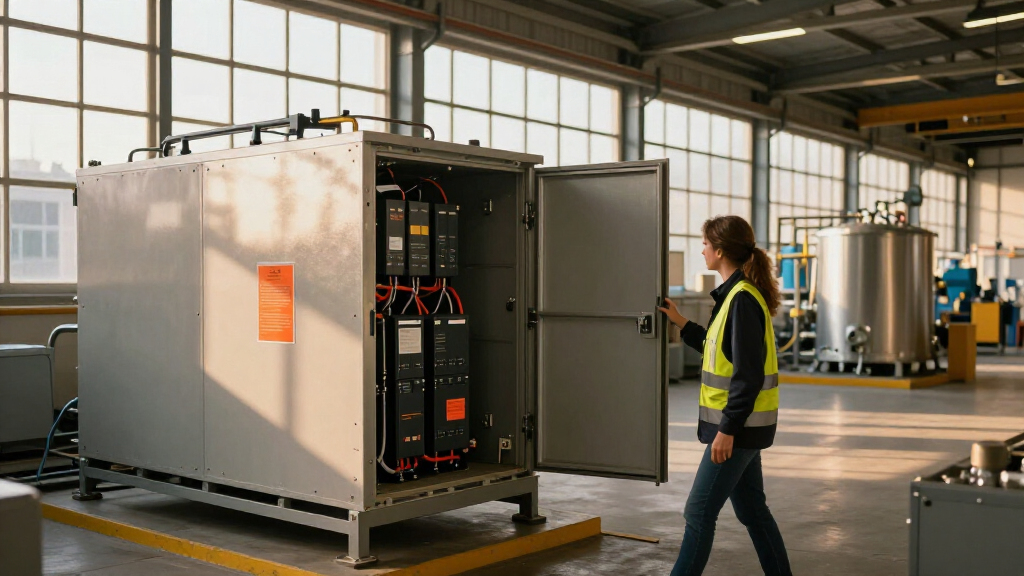
Production combines automated processes and staff inspections. Cells are scanned and tested before robotic arms stack them into modules; the modules are welded, inspected and checked for electrical safety, then undergo cooling-system leak tests. In the final stage, overhead cranes and automated guided vehicles help position the modules inside 20-foot containers, where power electronics, cooling equipment, HVAC and fire-protection systems are integrated before load testing.
How the Factory Supports Delivery
The plant’s output and inventory strategy matter to utility-scale storage developers seeking equipment for grid and renewable-energy projects. Maxxen says it keeps 200–250 MWh of cells and raw materials at the site as a buffer against shipping delays from Asia. The company says the stock can support deliveries by truck within one to two weeks across its main markets, although the source does not specify which destinations or whether that timing applies to every order.
Local assembly can place more of the manufacturing and final integration process near European and regional customers, while the cell supply remains tied to Hithium in China. That distinction matters when evaluating what “Made in Europe” means for the product: the report describes European assembly, not European-made cells. Production capacity also exceeds current utilization, so the factory’s ability to supply larger volumes depends on its ramp-up and confirmed orders.
Products Worth Considering

Levoit Core 400S-P Smart Air Purifier for Large Rooms

eufy Security Essential 7-Piece Alarm System

Ring Alarm 8-Piece Home Security System Kit
As an affiliate, we earn on qualifying purchases.
From Cell Testing to Container
The open day, covered by Energy Storage News, included a tour of the factory and interviews with Maxxen Managing Director Ruben Valiente, staff and Kontek Energy leadership. The account describes a four-stage process, beginning with automated open-circuit voltage tests, pre-charging and barcode or QR-code scanning for traceability. The cell-testing area is described as a clean room with positive ventilation and a system intended to remove oxygen in the event of a fire.
In the module line, 104 cells are assembled into a 2P52S configuration. The finished module weighs about 667 kilograms. Cooling components are bonded to the modules, which are then checked for leaks before container integration. Maxxen says energy used during cell testing is captured in the site’s storage system, with solar generation helping offset charging and discharging losses. The report also lists TÜV accreditation, ISO 27001 and LEED certification among the facility’s credentials.
Capacity, Orders and Cell Supply
The report does not say how quickly Maxxen expects to raise utilization from 1.5 GWh per year toward the plant’s 5 GWh nameplate capacity, or what proportion of capacity is already covered by contracts. The announced 664 MWh in sales covers nine months and 21 projects, but the account does not provide delivery schedules, project locations or a breakdown by product.
It is also unclear whether the planned switch to 587 Ah cells will apply to all production, how the change will affect system specifications, or whether the supply agreement with Hithium includes any sourcing alternatives. The source describes the factory’s certifications and safety systems but does not provide independent audit findings or performance data from operating installations.
Maxxen’s Production Ramp-Up
The next stated manufacturing milestone is the planned adoption of 587 Ah cells by the end of 2027. In the nearer term, Maxxen will need to convert its current production into deliveries against projects and show how utilization changes as orders progress. The company’s on-site inventory is intended to reduce exposure to shipping delays, but actual delivery performance will depend on order volume, transport and production schedules.
Further updates to watch include changes in annual output, new project announcements and details on the cell transition. The source provides no specific timetable for reaching full nameplate capacity.
Key Questions
Where is Maxxen’s battery factory?
The 20,000-square-meter factory is in Aydın, Türkiye. Maxxen is headquartered in Switzerland and is wholly owned by Turkish company Kontek Energy.
How much can the factory produce?
Maxxen gives the plant a nameplate capacity of 5 GWh per year and says current utilization is 1.5 GWh per year. The report does not state when it expects to reach full capacity.
Where do the battery cells come from?
Hithium, a Chinese battery and energy storage manufacturer, currently supplies the 314 Ah cells used at the plant. Maxxen representatives said the factory plans to use 587 Ah cells by the end of 2027.
What products does Maxxen make?
The company makes a 5 MWh DC Box containerized system and offers an optional MV Box power station with 2.5 MW, 5 MW or 10 MW output configurations.
How does Maxxen say it is addressing shipping delays?
Maxxen says it holds 200–250 MWh of cells and raw materials at the factory as buffer stock. The company says this can support truck deliveries within one to two weeks across its main markets; the report does not list the destinations or conditions for that estimate.
Source: rss