
TL;DR

Get backup power and energy gear delivered free with Prime
- Fast, free delivery on millions of items
- Prime Video, Amazon Music and more included
- Member-only deals all year
Pennsylvania’s two federally backed hydrogen hubs have not moved into the expected development phase: MACH2 says its award is active but partners are proceeding cautiously, while ARCH2 has gone quiet. The Department of Energy has not clarified the status of the awards, leaving project investment and promised jobs uncertain.
Pennsylvania’s two federally backed hydrogen hubs are stalled as project partners wait for clarity on federal funding, putting planned investment and job creation in doubt. MACH2’s chief executive says its award remains active, but partners are proceeding cautiously; ARCH2’s current status is less clear, with former partners reportedly denying involvement or not responding to inquiries.
The hubs were selected for federal support under a $7 billion Department of Energy program announced during the Biden administration. MACH2, the Mid-Atlantic Clean Hydrogen Hub, was awarded $750 million and was planned to link producers, users and researchers across Pennsylvania, Delaware and New Jersey. Its proposal included green hydrogen, made using electricity from clean energy sources, and projected more than 20,000 jobs in the Delaware Valley.
ARCH2, the Appalachian Regional Clean Hydrogen Hub, was slated for $925 million to develop blue hydrogen made from fossil fuels with carbon capture. Its proposed network centered on Western Pennsylvania and the region’s steel industry, extending into West Virginia and Ohio. The original plans aimed to connect hydrogen production with industrial users and other potential customers.
Manny Cintron, MACH2’s chief executive, told Inside Climate News by email that the hub’s “award is active”, while saying partners are proceeding cautiously because of budget uncertainty. As of late September, MACH2 was still circulating a request originally issued in January for prospective partners. The Department of Energy did not respond to repeated requests for comment, according to the report. No updated construction schedule or confirmed investment commitment was provided.
Funding uncertainty puts projects on hold
The uncertainty matters because the hubs depend on public support to attract companies willing to build production facilities, pipelines and equipment, as well as to find buyers for hydrogen. Without confidence in federal grants and related incentives, partners may delay spending or leave the projects. The near-term consequences for Pennsylvania include uncertainty around proposed employment, industrial investment and the hubs’ potential contribution to emissions reduction.
The projects also sit within a broader debate about which uses of hydrogen make sense. The source report says clean hydrogen is more expensive than conventional hydrogen and can lose substantial energy during production, storage and conversion. That makes it a contested option for cars, public transit and building heat. Industrial uses that require hydrogen as a chemical input, including ammonia production, may offer a stronger case for replacing existing fossil-fuel-based supply.
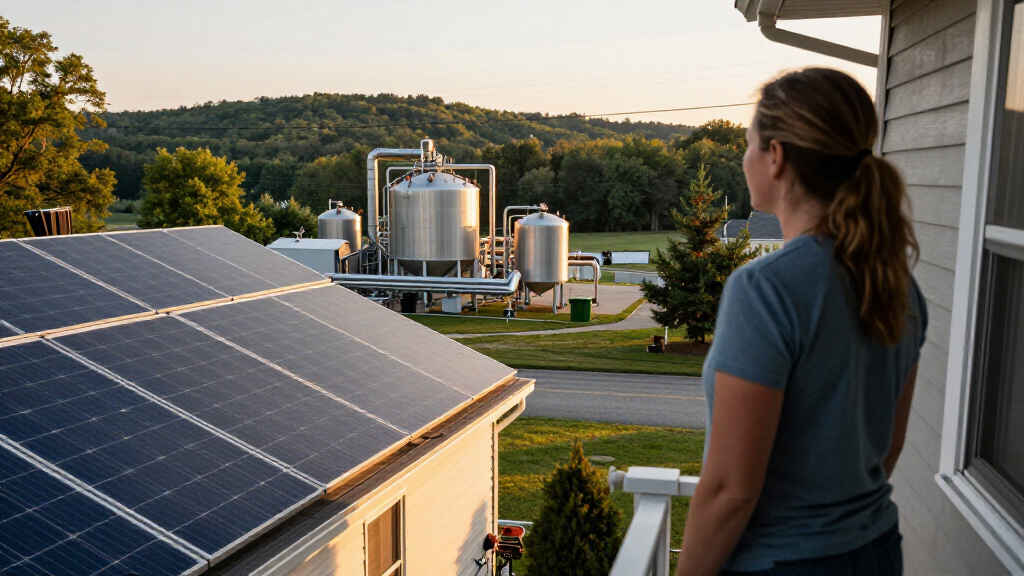
green hydrogen production equipment
As an affiliate, we earn on qualifying purchases.
As an affiliate, we earn on qualifying purchases.
Two hubs, different hydrogen plans
The Biden administration announced $7 billion for seven regional hubs in 2023. Pennsylvania became a central part of two proposals backed by a bipartisan group of state and regional supporters. Then-Gov. Josh Shapiro and Sen. Dave McCormick supported the state’s hub effort. In 2023, Shapiro’s office said the projects would “ensure Pennsylvania continues to be an energy leader for decades to come.”
The hubs’ plans reflected competing approaches. MACH2 proposed green hydrogen made through electrolysis, which separates hydrogen from water using electricity. ARCH2 proposed blue hydrogen from fossil fuels, paired with carbon capture and storage. Before the change in administration, the projects were already facing delays: a dispute over eligibility for the federal 45V tax credit, worth up to $3 per kilogram of hydrogen, slowed investment decisions. Industry and environmental groups disagreed over which production methods should qualify.
The broader industry also faces practical and economic hurdles. The United States produces about 10 million metric tons of hydrogen a year, according to the source report, mostly using oil and gas. Clean hydrogen costs more, and its production and handling raise efficiency and leakage concerns. Those challenges have fueled opposition from environmental groups, including criticism that some proposed hydrogen applications could prolong fossil-fuel use.
““award is active””
— Manny Cintron, MACH2 chief executive, in an email to Inside Climate News
As an affiliate, we earn on qualifying purchases.
Awards and project timelines remain unclear
The Department of Energy has not publicly clarified the current status of the awards in response to the report’s inquiries. It is not clear whether either hub will receive the full announced amount, whether the federal government plans to change or end its support, or when partners could make final investment decisions. An award described as active does not, by itself, confirm that funds have been disbursed or that construction will proceed.
ARCH2’s status is particularly difficult to assess: the report says former partners denied involvement or did not respond to media requests, but it does not establish that the project has been formally canceled. For MACH2, the partner request still circulating in late September suggests the network remained in formation, not that planned facilities had entered construction. Updated schedules, committed private financing and final project locations were not confirmed in the source material.
As an affiliate, we earn on qualifying purchases.
Federal clarity is the next milestone
The next meaningful development would be an official statement from the Department of Energy on the hubs’ awards and any conditions attached to them. Project partners would also need to clarify whether they intend to continue, revise or withdraw their plans and whether they can secure funding without the expected federal support.
Until those details emerge, MACH2’s active-award statement and its continued search for partners are the clearest available indicators of its position. For ARCH2, the public record described in the report is thinner. No confirmed construction start, final investment decision or cancellation was reported for either hub.
As an affiliate, we earn on qualifying purchases.
Key Questions
What are Pennsylvania’s two hydrogen hubs?
MACH2 is the Mid-Atlantic Clean Hydrogen Hub, planned across Pennsylvania, Delaware and New Jersey. ARCH2 is the Appalachian Regional Clean Hydrogen Hub, planned around Western Pennsylvania and extending into West Virginia and Ohio.
Have the hubs been canceled?
The source report does not confirm that either hub has been formally canceled. MACH2’s chief executive says its award is active, while ARCH2’s status is less clear and the Department of Energy has not provided a public clarification in the reported inquiries.
How much federal funding was announced?
MACH2 was selected for a $750 million award, and ARCH2 for a $925 million award. The reported figures are announced awards; the source material does not establish how much has been paid out.
Why are the projects stalled?
Partners are waiting for clarity about federal budget support before committing to investment. The projects also faced earlier delays over eligibility rules for the 45V hydrogen tax credit, while clean hydrogen production costs and technical challenges remain concerns.
When will construction begin?
No confirmed construction start date was included in the source report. The hubs’ schedules depend on federal funding clarity, partner commitments and final investment decisions.
Source: rss
Fall Picks
fall essentials
As an affiliate, we earn on qualifying purchases.