TL;DR

Get backup power and energy gear delivered free with Prime
- Fast, free delivery on millions of items
- Prime Video, Amazon Music and more included
- Member-only deals all year
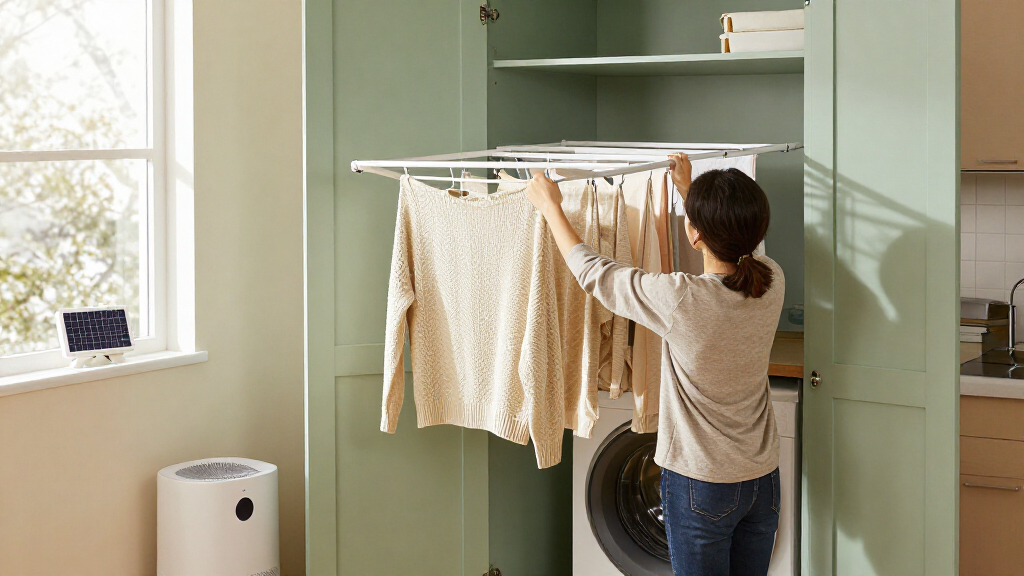
Ideal Home reported on a drying cupboard designed by London homeowner Hatty Parker, combining pull-out hanging rails, ventilation, a dehumidifier and low-wattage heat. The arrangement is intended to dry clothes while keeping them out of the way, but drying times, costs and performance will depend on the setup and are not documented in the report.
Ideal Home has reported on a built-in drying cupboard in London homeowner Hatty Parker’s renovated home, where pull-out rails, ventilation, a dehumidifier and a low-wattage heating element create a dedicated place for wet clothes. The design is presented as a way to keep laundry out of sight during winter drying, though the report does not provide measured drying times or energy costs.
Parker, a web designer renovating a Victorian terraced house in London, created a small laundry room after combining a bathroom with an adjoining box bedroom. The drying cupboard sits beside a stacked washing machine and tumble dryer, putting clothes washing and indoor air-drying equipment in one area.
According to Parker, the cupboard was intended to combine the function of a traditional airing cupboard with a dedicated place where clothes could dry without remaining on display. Its fittings include pull-out rails for hanging clothes, a dehumidifier connected to the washing machine and tumble dryer waste, and a low-wattage heating element. Ventilation grilles cut into the doors allow air to circulate.
Parker told Ideal Home that her household had already used a dehumidifier alongside a heated clothes airer and found the combination worked well for them. That experience informed the permanent installation. Ideal Home’s senior digital editor Jenny McFarlane advised allowing enough ventilation and clearance for a dehumidifier to operate; the report does not provide product testing or comparative results for the cupboard itself.
The design addresses two everyday problems at once: slow indoor drying in cold or damp weather and the space taken up by a freestanding clothes rack. Keeping damp clothes on pull-out rails inside a cupboard may help households preserve usable floor space and maintain a tidier-looking laundry area.
The cupboard also shows how a drying setup can be planned around existing laundry appliances rather than treated as a separate furnishing. A dehumidifier and some heat are part of Parker’s arrangement, but the report does not establish that every cupboard will dry clothes faster or use less energy. Results may depend on the dehumidifier, airflow, room conditions, load size and how the equipment is operated.
For readers considering a similar project, the practical takeaway is not simply to shut a clothes rack behind doors. Ventilation and clearance matter, and the equipment needs a suitable place to operate. Parker’s installation also uses a connection to appliance waste, so the details of that configuration may not transfer directly to every home.
Products Worth Considering

LEVOIT Vital 200S-P Smart Air Purifier for Large Rooms

Sonos Era 100 SL Compact, Microphone-Free Speaker – Black

Philips Hue Festavia 130-Foot Indoor/Outdoor Smart String Lights, 500 LEDs
As an affiliate, we earn on qualifying purchases.
How Parker Designed the Cupboard
The cupboard grew out of a broader renovation. Parker said she and her family reconfigured their bathroom and the adjoining box bedroom to make a larger bathroom, giving up a fifth bedroom to create a small laundry room. Locating laundry near a bedroom or bathroom can make the household routine more convenient, although the report does not compare different room layouts.
Parker said she found a drying cupboard on Pinterest and used it as inspiration. Her design brought together familiar elements—a clothes rail, dehumidifier and low-level heat—in a built-in enclosure. The cupboard is therefore a reported example from one home, not a tested product or a set of universally applicable installation specifications.
Ideal Home also included shopping suggestions for dehumidifiers, including models from SmartAir, Meaco and Pro Breeze. These are editorial product mentions, not evidence that a particular model is required. The report gives no independent performance comparison or detailed guidance on installation, operating costs or the suitability of each appliance for a closed cupboard.
“The idea for the drying cupboard … came from wanting a cross between a traditional airing cupboard and a dedicated space where clothes could dry efficiently, but remain neatly out of sight.”
— Hatty Parker, homeowner, speaking to Ideal Home
Performance and Installation Details
The report does not say how long clothes take to dry in Parker’s cupboard, how much electricity the dehumidifier and heating element use, or how performance compares with a heated airer, an ordinary airing cupboard or a tumble dryer. Parker’s description of the setup working well reflects her household’s experience; no independent measurements are provided.
It is also unclear what plumbing, electrical work or cupboard dimensions are required to reproduce the design. The report does not give a full installation plan, technical specifications for the heating element, or details about how the equipment is controlled. Homeowners would need to assess their own room and appliance requirements rather than assume the pictured arrangement will suit every property.
Planning a Similar Drying Space
The report outlines the design but does not announce a product launch, formal installation guide or follow-up test. Readers considering the idea can use Parker’s example as inspiration and check the dehumidifier’s clearance and ventilation needs before planning cupboard dimensions. They should also confirm that the equipment and any waste connection are suitable for their home and follow the relevant manufacturer instructions.
Further useful information would include measured drying times, energy use, humidity levels and details of how the cupboard performs with different loads and room conditions. Those figures are not in the supplied report, so the main next step for readers is to evaluate the design against their own space and drying needs rather than treat its claimed advantages as guaranteed.
Key Questions
What is the laundry cupboard design?
It is a built-in cupboard with pull-out clothes rails, ventilation grilles, a dehumidifier and a low-wattage heating element, as described by homeowner Hatty Parker to Ideal Home.
Is it proven to dry clothes faster?
Parker told Ideal Home that her household found a dehumidifier and heated airer worked well for drying clothes. The report gives no measured drying times or independent test of the cupboard, so faster drying is not established for all homes.
Why does the cupboard have ventilation grilles?
Parker said grilles were cut into the doors to allow air to circulate. Ideal Home editor Jenny McFarlane also advised leaving enough ventilation and clearance around the dehumidifier.
Does the design require a particular dehumidifier?
The report mentions several models but does not say that one specific product is required. Check a chosen unit’s manufacturer guidance, dimensions and clearance needs; the article does not provide a comparative test.
What is not known about the setup?
The report does not provide the cupboard’s full measurements, installation specifications, energy use or verified drying times. Its performance and operating costs in other homes remain unclear.
Source: idealhome.co.uk