
The best sodium-ion batteries depend on the job: for a broad automotive pick, I’d start with the CSI Group 31 with Jump Start Button, while the Limitless Lithium NoLi-50AH stands out for higher-capacity applications and the Acoucou YTX7A-Na targets motorcycle fitment. These products are not interchangeable: their formats, capacities and intended uses vary, and a battery that suits an audio system may not be a safe match for a vehicle’s starter circuit. Check dimensions, terminal layout, voltage range and charging compatibility before choosing by capacity alone. This roundup weighs application fit and stated specifications alongside practical tradeoffs. Read on for the full breakdown and a guide to matching a sodium-ion battery to your setup.

Get backup power and energy gear delivered free with Prime
- Fast, free delivery on millions of items
- Prime Video, Amazon Music and more included
- Member-only deals all year
Key Takeaways
- Application fit separates the field: the Acoucou is aimed at a YTX7A-style motorcycle replacement, while the Down4Sound models are dedicated car-audio options.
- The NoLi-50AH is the capacity-focused pick: its stated 50Ah rating exceeds the smaller audio-focused Down4Sound options, but buyers still need to verify installation and charging requirements.
- The two Down4Sound batteries serve different system sizes: DNA-27 offers more stated capacity than DNA-13, while the smaller model may suit a more space-constrained audio setup.
- The CSI Group 31 adds a distinctive convenience feature: its jump-start button may appeal to users who want that function, though compatibility and the exact operating procedure need checking.
- The YGSAM listing calls out 10,000mAh, not a complete fit guarantee: buyers should confirm cranking needs, physical dimensions and terminal arrangement rather than relying on universal-fit wording.
| YGSAM H6 Sodium-Ion Car Battery, 12V, 10,000mAh, Universal Fit |  | Best Universal-Fit ATV Pick | Battery type: Sodium-ion | Voltage: 12V | Capacity: 10,000mAh | VIEW LATEST PRICE | See Our Full Breakdown |
| Acoucou YTX7A-Na Sodium-Ion Motorcycle Battery |  | Best Lightweight Motorcycle Pick | Battery type: Sodium-ion | Voltage: 12V | Capacity: 3.4Ah | VIEW LATEST PRICE | See Our Full Breakdown |
| Limitless Lithium NoLi-50AH Sodium Battery, 50Ah, 10–16V |  | Best for Motorsport Power | Battery chemistry: Sodium-ion (SIB) | Capacity: 50Ah | Voltage range: 10–16V | VIEW LATEST PRICE | See Our Full Breakdown |
| Down4Sound DNA-27 27Ah 12V Sodium-Ion Car Audio Battery |  | Best for Larger High-Output Audio Systems | Chemistry: Sodium-ion | Voltage and capacity: 12V; 27Ah | Maximum pulse discharge: 800A for 3 seconds | VIEW LATEST PRICE | See Our Full Breakdown |
| Down4Sound DNA-13 13.5Ah 12V Sodium-Ion Car Audio Battery |  | Best Compact Audio Pick | Chemistry: Sodium-ion | Voltage and capacity: 12V; 13.5Ah | Maximum pulse discharge: 400A for 3 seconds | VIEW LATEST PRICE | See Our Full Breakdown |
| CSI Group 31 12V Sodium-Ion Battery with Jump Start Button |  | Best for Heavy-Duty Starting | Battery type: Sodium-ion | Group size: 31 | Voltage: 12 V | VIEW LATEST PRICE | See Our Full Breakdown |
| sodium-ion batterie | Capacity | Weight | Battery type | Voltage |
|---|---|---|---|---|
| YGSAM H6 Sodium-Ion Car Batter | 10,000mAh | About 14.3 pounds | Sodium-ion | 12V |
| Acoucou YTX7A-Na Sodium-Ion Mo | 3.4Ah | — | Sodium-ion | 12V |
| Limitless Lithium NoLi-50AH So | 50Ah | — | — | — |
| Down4Sound DNA-27 27Ah 12V Sod | — | 10 pounds in description; 11.1 pounds in item details | — | — |
| Down4Sound DNA-13 13.5Ah 12V S | — | 6.1 pounds | — | — |
| CSI Group 31 12V Sodium-Ion Ba | 68 Ah | 24 lb | Sodium-ion | 12 V |
More Details on Our Top Picks
YGSAM H6 Sodium-Ion Car Battery, 12V, 10,000mAh, Universal Fit
The YGSAM H6 is the most general-purpose fit in this group: it is listed as a universal-fit 12V battery for ATV use, with 10,000mAh capacity and a stated 1,500-cycle life. That makes it a candidate for riders seeking sodium-ion chemistry without moving into a specialized audio or motorsport setup. Its claimed low-temperature discharge capacity may also appeal to owners who ride in colder conditions, though it is not a substitute for checking vehicle requirements. Compared with the Acoucou YTX7A-Na, the H6 is heavier and does not list a starting-current figure; Acoucou, by contrast, is a lighter motorcycle-specific option with 200A starting power. The H6 listing also gives conflicting dimensions, so I would verify fit and terminal layout before buying.
Pros:- Sodium-ion chemistry in a 12V format
- 10,000mAh stated capacity
- Listed cycle life of 1,500 cycles to at least 70% capacity
- Gold-plated terminals and claimed low-temperature discharge capacity of at least 80%
Cons:- Product description and specifications conflict on dimensions, making fit harder to confirm
- No starting-current figure is provided
- At 14.3 pounds, it is much heavier than the 2.4-pound Acoucou motorcycle battery
Best for: ATV owners seeking a 12V sodium-ion replacement and willing to confirm the battery tray dimensions and electrical requirements.
Not ideal for: Motorcycle riders who need a clearly specified starting-current rating, or buyers who cannot verify fit because the listing’s dimensions conflict.
- Battery type:Sodium-ion
- Voltage:12V
- Capacity:10,000mAh
- Number of cells:6
- Cycle life:1,500 cycles to at least 70% capacity
- Low-temperature discharge capacity:At least 80% of initial capacity
- Dimensions:6.89 × 9.53 × 7.48 inches (D × W × H); listing dimensions conflict
- Weight:About 14.3 pounds
Our verdict“Choose the YGSAM H6 for an ATV application when its dimensions and electrical fit are confirmed, but choose the Acoucou if low weight and a stated starting-current rating matter more.”
Acoucou YTX7A-Na Sodium-Ion Motorcycle Battery
For a motorcycle buyer focused on low weight and cold-weather range, the Acoucou YTX7A-Na is the clearest fit here. It weighs 2.4 pounds, lists 200A starting power, and is rated for operation from -40°F to 176°F. Its stated 3,000-plus-cycle life is also higher than the YGSAM H6’s 1,500-cycle figure, although the products target different vehicles and should not be treated as interchangeable. The main ownership catch is charging: Acoucou calls for a dedicated sodium-ion charger, so an existing charger may not be suitable. Buyers also need to check case dimensions and terminal polarity against their motorcycle. Compared with the much larger Limitless Lithium NoLi-50AH, this is a compact starting-battery choice, not a high-output motorsport or audio power source.
Pros:- Lightweight at 2.4 pounds
- Lists 200A starting power
- Rated for more than 3,000 cycles
- Wide stated operating range from -40°F to 176°F
Cons:- Requires a dedicated sodium-ion charger
- Dimensions and terminal polarity must be checked before purchase
- Its 3.4Ah capacity is aimed at motorcycle starting, not high-output audio or motorsport loads
Best for: Motorcycle owners who want a light sodium-ion starting battery, have confirmed terminal polarity and dimensions, and can use a dedicated sodium-ion charger.
Not ideal for: Riders who need a drop-in fit without checking polarity, or who want to keep using a charger not rated for sodium-ion batteries.
- Battery type:Sodium-ion
- Voltage:12V
- Capacity:3.4Ah
- Starting current:200A
- Energy:40.8Wh
- Cycle life:3,000+ cycles
- Operating temperature:-40°F to 176°F (-40°C to 80°C)
- Dimensions and weight:5.91 × 3.4 × 3.7 inches; 2.4 pounds
- Charging requirement:Dedicated sodium-ion charger; 14.8V ± 0.2V charging voltage
Our verdict“Pick the Acoucou for a weight-conscious motorcycle setup if its fit and charging requirements match your bike.”
Limitless Lithium NoLi-50AH Sodium Battery, 50Ah, 10–16V
The Limitless Lithium NoLi-50AH is the specialist choice for motorsport builds that need substantial burst output, not a simple replacement for an everyday vehicle battery. Its 50Ah capacity, stated 3,000 CA and 2,250 CCA, and 10–16V operating range give it a different job from the compact Acoucou YTX7A-Na. The headline output—up to 15,000W—depends on running at 16V with a 250A high-output alternator, so buyers should treat that figure as a system-dependent ceiling rather than an out-of-box guarantee. A more consequential drawback is the lack of an installed battery management system; installation and charging need expertise. Its stated 4,000 cycles at 80% depth of discharge is strong on paper, but the charging-current limits also call for careful system matching.
Pros:- 50Ah capacity and stated 3,000 CA / 2,250 CCA
- Supports a 10–16V operating range
- Rated for 4,000 cycles at 80% depth of discharge
- Can deliver up to 1,000A for 10 seconds under the stated 16V conditions
Cons:- No battery management system is installed
- The 15,000W burst figure depends on 16V operation and a 250A high-output alternator
- Charging above 450A shortens cycle life
Best for: Motorsport builders with a compatible 10–16V electrical system, high-output alternator, and the technical knowledge to manage a battery without an installed BMS.
Not ideal for: Everyday drivers seeking a straightforward replacement, or buyers without the alternator and electrical setup required for its advertised peak output.
- Battery chemistry:Sodium-ion (SIB)
- Capacity:50Ah
- Voltage range:10–16V
- Cranking amps:3,000 CA; 2,250 CCA
- Cycle life:4,000 cycles at 80% depth of discharge
- Maximum burst output:15,000W at 16V with a 250A high-output alternator
- Maximum burst amperage:1,000A for 10 seconds at 16V
- Charging current:300A recommended; 450A maximum
- Dimensions and weight:6.75 × 7.75 × 6.50 inches; 14.4 pounds
Our verdict“Choose the NoLi-50AH for a properly engineered motorsport system that can use its voltage range and burst output, not as a casual battery swap.”
Down4Sound DNA-27 27Ah 12V Sodium-Ion Car Audio Battery
For a car-audio system in the stated 6,000–9,000W range, the Down4Sound DNA-27 offers more capacity and pulse current than the smaller DNA-13. Its 27Ah rating and up-to-800A discharge for three seconds are aimed at short, heavy demand rather than long-duration power delivery. The claimed 10,000-plus full-power pulse cycles give audio-focused buyers a useful durability target, while side-mounting can give installers more placement options. This battery is not a substitute for upgrading the rest of the charging system: Down4Sound recommends a high-output alternator and Big 3 upgrade. The stated weight is also inconsistent—10 pounds in one source detail and 11.1 pounds in another. Compared with the Limitless Lithium NoLi-50AH, the DNA-27 has a narrower 12V audio role and less stated capacity, but its use case is more specific.
Pros:- Designed for 6,000–9,000W car-audio systems
- Up to 800A for three-second pulses
- Rated for more than 10,000 full-power pulse cycles
- Side-mounting can widen installation options
Cons:- High-output alternator and Big 3 upgrade are recommended
- Maximum pulse discharge is specified for only three seconds
- Listed weight conflicts between 10 and 11.1 pounds
Best for: Car-audio builders running a system rated around 6,000–9,000W who need short high-current pulses and are upgrading the charging system.
Not ideal for: Drivers seeking a general-purpose starting battery, or audio installers who cannot add the recommended alternator and Big 3 charging-system upgrade.
- Chemistry:Sodium-ion
- Voltage and capacity:12V; 27Ah
- Maximum pulse discharge:800A for 3 seconds
- Supported audio system power:6,000–9,000W
- Voltage floor:Above 10.4V
- Pulse cycle life:10,000+ full-power cycles
- Maximum charging voltage:15.8V
- Weight:10 pounds in description; 11.1 pounds in item details
- Installation:Side-mounting capable
Our verdict“Choose the DNA-27 for a high-output audio build that needs stronger short bursts than the DNA-13 and has the charging-system upgrades to support it.”
Down4Sound DNA-13 13.5Ah 12V Sodium-Ion Car Audio Battery
The Down4Sound DNA-13 is the compact choice for car-audio systems rated at 3,500–5,500W. At 6.1 pounds, it weighs substantially less than the DNA-27, while its 400A three-second pulse rating fits builds that do not need the larger model’s 800A burst. Both Down4Sound batteries list more than 10,000 full-power pulse cycles and a voltage floor above 10.4V; the difference is how much short-duration current the system demands. The DNA-13’s smaller 13.5Ah capacity makes it less suited to the higher power range covered by the DNA-27. Like its larger sibling, it calls for a high-output alternator and Big 3 upgrade, so the battery alone will not resolve an undersized charging system. The pulse rating is brief, not a continuous output figure.
Pros:- Compact 6.1-pound form compared with the DNA-27
- Rated for 3,500–5,500W audio systems
- Up to 400A for three-second pulses
- Rated for more than 10,000 full-power pulse cycles
Cons:- A high-output alternator and Big 3 upgrade are recommended
- 400A output is specified for three-second pulses, not continuous use
- Smaller 13.5Ah capacity is less suited to the DNA-27’s higher audio-power range
Best for: Installers building a space- or weight-conscious 3,500–5,500W car-audio system that can support the recommended charging-system upgrades.
Not ideal for: Owners of systems near or above the DNA-27’s 6,000–9,000W range, or anyone expecting sustained 400A output.
- Chemistry:Sodium-ion
- Voltage and capacity:12V; 13.5Ah
- Maximum pulse discharge:400A for 3 seconds
- Supported audio system power:3,500–5,500W
- Voltage floor:Above 10.4V
- Pulse cycle life:10,000+ full-power cycles
- Maximum charging voltage:15.8V
- Weight:6.1 pounds
- Installation:Side-mounting capable
Our verdict“Pick the DNA-13 for a lighter, lower-capacity audio setup within its stated power range; step up to the DNA-27 when your system needs stronger bursts.”
CSI Group 31 12V Sodium-Ion Battery with Jump Start Button
The CSI Group 31 stands out for buyers who need high starting power more than a compact auxiliary battery. Its 1,500 CCA rating is aimed at starting demanding engines, while the 68Ah capacity and Group 31 format suit trucks, RVs, marine use, generators, and equipment when the fit is confirmed. Compared with the Down4Sound DNA-27, which is designed around car-audio use, this battery is the more direct choice for engine starting; it is also much heavier-duty in purpose than the smaller Acoucou YTX7A-Na motorcycle battery. At 24 pounds, it is stated to be 60% lighter than lead-acid or AGM equivalents, and its built-in protections and jump start button add practical safeguards. The tradeoffs are its substantial Group 31 footprint and the need to verify vehicle and charging-system compatibility.
Pros:- 1,500 CCA is suited to starting heavy-duty engines
- 24-pound weight is stated to be 60% lighter than comparable lead-acid or AGM batteries
- Built-in battery management protections cover thermal events, overcharge, over-discharge, short circuit, and over-current
- Maintenance-free design includes a jump start button
Cons:- Group 31 dimensions may not fit every vehicle or equipment battery tray, so compatibility needs checking
- Its starter-focused design may be a poor match for buyers prioritizing a compact car-audio or auxiliary battery
Best for: Truck, RV, marine, and equipment owners who need a sodium-ion battery with strong cold-start output and have confirmed Group 31 fitment.
Not ideal for: Motorcycle owners, compact-car drivers with limited battery space, and buyers seeking a dedicated car-audio battery rather than an engine starter.
- Battery type:Sodium-ion
- Group size:31
- Voltage:12 V
- Cold cranking amps:1,500 CCA
- Capacity:68 Ah
- Weight:24 lb
- Dimensions:6.8 × 13 × 9.4 in (D × W × H)
- Terminal type:Standard battery terminal
- Warranty:3 years
Our verdict“Choose the CSI Group 31 if your priority is strong sodium-ion starting performance for a compatible truck, RV, marine setup, or piece of equipment.”
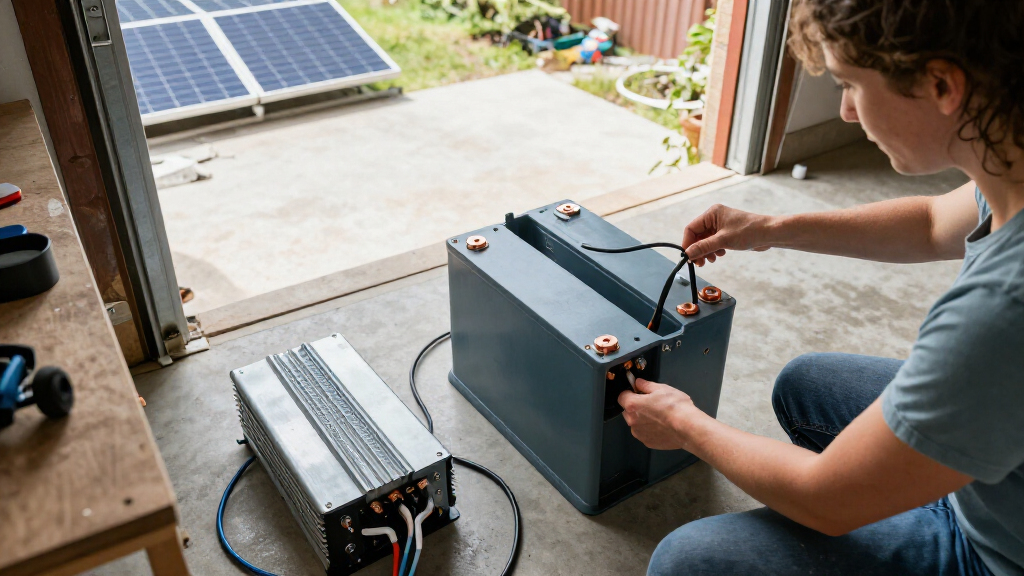
How We Picked
I ranked these six options by how clearly their stated format and intended use align with a buyer’s likely application. I compared listed capacity, voltage range where supplied, form factor cues, and distinguishing features such as the CSI’s jump-start button. Fit and system compatibility carry more weight than a headline capacity: a battery designed for car audio should not automatically be treated as a starter replacement, and a motorcycle-format battery needs a matching tray and terminals.
The order favors options with a clear use case and useful versatility, then more specialized or less fully specified listings. The CSI Group 31 leads as the most broadly useful choice in this particular lineup, while the NoLi-50AH ranks strongly for buyers who need a higher stated capacity. The Acoucou and Down4Sound models earn their places through narrower vehicle or audio applications. Product listings alone do not establish real-world performance, charging behavior, or compatibility with every vehicle, so I treat those as items buyers must verify rather than assume.
Factors to Consider When Choosing Best Sodium-ion Batteries
Choosing a sodium-ion battery starts with the equipment it must power, not the chemistry label or capacity number. I’d verify the required battery type and charging system first, then compare dimensions, terminals and the role the battery is expected to perform. These checks can prevent a promising specification from becoming an incompatible installation.
Match the battery to the job
Starter batteries, motorcycle batteries and car-audio batteries face different demands, even when their nominal voltage looks similar. A starter application needs suitable cranking performance, while an audio setup may place greater emphasis on supplying the system under sustained load. Do not assume an audio battery can replace a vehicle’s starting battery, or that a starter battery is the right choice for an auxiliary sound system. Check the vehicle or equipment manual for the required battery class and performance specifications. If the manufacturer does not identify sodium-ion as compatible, ask the battery seller or vehicle maker before installing one.
Check fitment beyond the label
Names such as YTX7A and Group 31 provide useful fitment clues, but they do not confirm every dimension or terminal arrangement. Measure the battery compartment and compare length, width, height, polarity and terminal style with the replacement you have now. Leave room for cables, hold-downs and any protective cover; a battery that barely fits can create strain or block access. Universal-fit language is not a substitute for checking those details. If the listing omits measurements, obtain them before ordering rather than planning to modify the tray or cables.
Read capacity alongside load requirements
A larger amp-hour figure can suggest more stored energy, but it does not tell the whole story about whether a battery can handle a particular load. Buyers should also look for discharge limits, cranking specifications when relevant, and the manufacturer’s stated continuous and peak current. Audio users need to account for amplifier demand and how long the system will run with the engine off. Compare figures measured under the same conditions; capacity numbers may not be directly comparable when test methods differ or the listing leaves them unspecified. Avoid choosing solely by the biggest number.
Confirm charging-system compatibility
Battery chemistry can affect charging requirements, so a sodium-ion model should not be assumed to work with every existing charger or alternator. Check the battery maker’s recommended voltage range and charging profile, then compare it with the vehicle’s charging system and any external charger. The NoLi-50AH listing states a 10–16V range, but that range alone does not explain every charging condition or prove suitability for a particular installation. Ask for the manufacturer’s full charging guidance if it is not supplied. Using an unsupported charger can shorten service life or create a safety risk.
Weigh convenience features against installation needs
Features such as a jump-start button can add useful flexibility, but they do not replace correct wiring, safe operating instructions or a suitable battery match. Read the manual to learn how the feature works, what conditions it supports and whether it requires a separate procedure. For a fixed audio installation, a simpler battery with appropriate capacity and connections may be a better fit than paying attention to an extra function you will not use. Also check whether the battery includes protection or monitoring features, rather than assuming they come with the chemistry. Prioritize features that solve a real problem in your setup.
Account for support, warranty and replacement plans
A less common battery chemistry can make clear documentation and seller support especially valuable. Before buying, check the warranty terms, return conditions, availability of technical support and how the maker handles a battery that does not fit the stated application. Ask whether replacement charging equipment or compatible accessories are required. These details matter more when adapting a vehicle or audio system than when replacing a familiar battery with the same type. If specifications or support channels are unclear, a well-documented option may be a safer choice than a battery with a more attractive headline capacity.
Frequently Asked Questions
Can I replace my car’s lead-acid starter battery with any sodium-ion battery?
No. The replacement must match the vehicle’s required size, terminal layout, voltage and starting performance, and its charging system must be compatible with the battery maker’s instructions. The products in this roundup span starter, motorcycle and audio-oriented uses, so their similar chemistry does not make them interchangeable. Check the vehicle manual and ask the battery manufacturer to confirm the exact application. If the listing does not provide the specifications your car requires, do not treat a broad fit claim as proof.
Is a higher amp-hour rating always better for car audio?
No. Capacity is only one part of matching a battery to an audio system; current delivery, amplifier demand, wiring, available space and charging support matter too. A larger battery may offer more stored energy, but it can still be a poor fit if its terminals or dimensions do not work with the installation. Compare the system’s expected draw with the battery’s published discharge limits and ask the installer to verify the design. The DNA-27 and DNA-13 differ in stated capacity, but that alone does not identify the right choice for every audio setup.
Can I charge a sodium-ion battery with my existing charger?
Only if the charger’s output and charging profile match the battery manufacturer’s instructions. A charger that works with another battery chemistry may not be suitable, even if its voltage setting appears close. Check both the battery documentation and the charger manual, including any required cutoff or maintenance settings. The NoLi-50AH listing gives a voltage range, but buyers should seek the full charging guidance before connecting it. When the information is missing, ask the manufacturer rather than experimenting.
What should I verify before choosing a motorcycle sodium-ion battery?
Confirm the motorcycle’s specified battery type, case dimensions, terminal positions and polarity, then compare those details with the replacement listing. Also check the required starting performance and whether the bike’s charging system is approved for that battery. The Acoucou YTX7A-Na is the lineup’s motorcycle-focused option, but the model designation alone does not guarantee fit across every motorcycle using a similar label. Check the owner’s manual or a qualified mechanic if the original battery specification is unclear. Do not force a battery into a tray or stretch cables to make it fit.
Should I choose the CSI Group 31 because it has a jump-start button?
Choose it for that feature only if the battery’s Group 31 format and electrical specifications also suit your application. A jump-start button can add convenience, but buyers should read the instructions to understand its limits and operating steps. It does not resolve a mismatch in battery size, wiring or charging compatibility. Compare the feature with the higher-capacity NoLi-50AH and the more specialized Down4Sound options based on the job the battery must do. If you need a battery primarily for audio, confirm that the CSI is rated for that use before selecting it.
Conclusion
For the broadest fit across buyers seeking a general-purpose option in this lineup, I’d choose the CSI Group 31, provided its format and specifications match the application; its jump-start button is a differentiator, not a substitute for fit checks. For best value by capacity-focused use, the Limitless Lithium NoLi-50AH is the clearest candidate, though the charging guidance and installation details deserve close review. The Down4Sound DNA-27 is my pick for audio users who need more stated capacity than the DNA-13, while the DNA-13 suits a smaller or more space-limited audio setup. Beginners should start with the Acoucou YTX7A-Na only when replacing a compatible motorcycle battery and should verify fitment against the manual. For a car-battery replacement with a universal-fit listing, the YGSAM H6 calls for extra checks on cranking performance, dimensions and terminals. My final advice: choose by application and verified compatibility first, then use capacity and convenience features to break a tie.