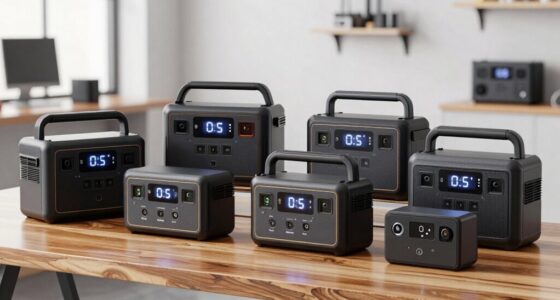
Among these portable inverter generators, my best overall pick is the WEN DF480iX, which balances useful output with gas-and-propane flexibility. The Westinghouse iGen8200TFc stands out for buyers who want tri-fuel capability and more power, while the compact Westinghouse iGen1500c suits lighter-duty needs where easy transport matters more than running large loads. The main tradeoffs are power versus weight, fuel flexibility versus simplicity, and extra capacity versus storage and noise. I compare all 15 options by intended use, output, and practical ownership considerations. Read on for the full breakdown and guidance on choosing a generator that fits your loads.

Get backup power and energy gear delivered free — and shop member deals
- Fast, free delivery on millions of items
- Access to Prime Big Deal Days deals on October 6–7
- Prime Video, Amazon Music and more included
Complete the kit


Key Takeaways
- The WEN DF480iX leads as a balanced choice: Its dual-fuel setup gives buyers a practical middle ground between compact models and higher-output machines.
- Tri-fuel models target a different kind of backup plan: The Westinghouse iGen8200TFc and iGen12000TFc offer more fuel-source flexibility, but their larger output is most useful when buyers have substantial loads and a plan for safe placement.
- Output numbers do not tell the whole portability story: The 1500c and 2800-watt Oxseryn suit lighter needs, while the larger WEN and Westinghouse models call for more storage space and effort to move.
- RV-ready and household-backup needs are not interchangeable: RV-oriented models such as the Champion 4000-Watt and WEN 4800-Watt may fit travel setups, while home backup requires checking the exact outlets, running watts, and starting demands.
- The lineup favors matching capacity to actual loads: Buyers who mainly need electronics or a few small appliances can avoid carrying excess generator, while users with multiple appliances should prioritize sustained output and fuel planning.
| WEN DF480iX 4800-Watt Dual-Fuel Portable Inverter Generator |  | Best Overall | Engine: 224cc | Fuel types: Gasoline and propane | Gasoline output: 4,800 surge watts; 4,000 rated watts | VIEW LATEST PRICE | See Our Full Breakdown |
| Westinghouse iGen8200TFc Tri-Fuel Portable Inverter Generator |  | Best for Multi-Fuel Home Backup | Fuel types: Gasoline, propane, and natural gas | Peak output: 8,200 watts gasoline; 7,380 watts propane; 6,560 watts natural gas | Running output: 6,600 watts gasoline; 5,940 watts propane; 5,280 watts natural gas | VIEW LATEST PRICE | See Our Full Breakdown |
| Oxseryn 4400-Watt Gas-Powered Inverter Generator |  | Best Lightweight Open-Frame Pick | Fuel type: Gasoline | Peak output: 4,400 watts | Running output: 3,400 watts | VIEW LATEST PRICE | See Our Full Breakdown |
| Champion 4000-Watt RV-Ready Portable Inverter Generator |  | Best for Lighter RV Loads | Engine: 149cc gasoline | Starting power: 4,000 watts | Running power: 3,000 watts | VIEW LATEST PRICE | See Our Full Breakdown |
| PowerSmart 3800-Watt Dual-Fuel Inverter Generator |  | Best for Quiet Propane Runtime | Fuel types: Gasoline and propane | Gasoline output: 3,800 starting watts; 3,300 running watts | Propane output: 3,500 starting watts; 3,100 running watts | VIEW LATEST PRICE | See Our Full Breakdown |
| ERAYAK 4500W Portable Inverter Generator |  | Best Lightweight Power-to-Output Balance | Starting wattage: 4,500 watts | Running wattage: 3,500 watts | Fuel type: Gasoline | VIEW LATEST PRICE | See Our Full Breakdown |
| WEN DF680iX 6800-Watt Dual-Fuel Portable Inverter Generator |  | Best for High-Load, Dual-Fuel Use | Engine: 224cc dual-fuel | Gasoline output: 6,800 surge watts; 5,100 rated watts | Propane output: 6,000 surge watts; 4,500 rated watts | VIEW LATEST PRICE | See Our Full Breakdown |
| WEN 4800-Watt RV-Ready Portable Inverter Generator with CO Shutdown Sensor (56477i) |  | Best for RV Convenience and Safety | Model: 56477i | Surge output: 4,800 watts | Engine: 224cc | VIEW LATEST PRICE | See Our Full Breakdown |
| Westinghouse iGen12000TFc Tri-Fuel Portable Inverter Generator |  | Best for Whole-Home Backup Flexibility | Fuel types: Gasoline, propane, natural gas | Gasoline output: 12,000 peak watts; 9,000 running watts | Propane output: 11,000 peak watts; 8,100 running watts | VIEW LATEST PRICE | See Our Full Breakdown |
| WEN 3600-Watt Portable Inverter Generator (56360i) |  | Best Compact Pick for Lighter Loads | Engine: 149cc | Surge power: 3,600 watts | Weight: 46 pounds | VIEW LATEST PRICE | See Our Full Breakdown |
| WEN DF360iX Dual-Fuel Portable Inverter Generator |  | Best Dual-Fuel RV Pick | Gasoline output: 3,600 surge watts; 2,900 rated watts | Propane output: 3,500 surge watts; 2,600 rated watts | Fuel types: Gasoline and propane | VIEW LATEST PRICE | See Our Full Breakdown |
| Aceup Energy 4000-Watt Portable Gas Inverter Generator |  | Best for Output on a Compact Fuel Supply | Engine: 149cc 4-stroke OHV | Starting method: Recoil | Fuel tank capacity: 1.32 gallons | VIEW LATEST PRICE | See Our Full Breakdown |
| Oxseryn 2800-Watt Portable Inverter Generator |  | Best Lightweight Runtime Pick | Peak and running output: 2,800 peak watts; 2,000 running watts | Engine: 79.8cc 4-stroke OHV | Fuel type and tank capacity: Gasoline; 1.1 gallons | VIEW LATEST PRICE | See Our Full Breakdown |
| Westinghouse iGen1500c Portable Inverter Generator |  | Best for Lightweight, Quiet Essentials | Weight: 32 pounds | Noise level: As low as 52 dBA | Runtime: Up to 12 hours | VIEW LATEST PRICE | See Our Full Breakdown |
| Westinghouse 5000 Peak Watt Quiet Portable Inverter Generator |  | Best for Higher-Capacity RV and Backup Power | Fuel type and tank capacity: Gasoline; 3.4 gallons | Maximum runtime: Up to 18 hours | Noise output: As low as 52 dBA | VIEW LATEST PRICE | See Our Full Breakdown |
| portable inverter generator | Noise level | Runtime | Outlets | Engine |
|---|---|---|---|---|
| WEN DF480iX 4800-Watt Dual-Fue | 62 dB at quarter load | Up to 7 hours at half load on gasoline; up to 20 hours at half load on a 20-pound LPG tank | Four 120V NEMA 5-20R, one 120V TT-30R, one 12V DC, and two 5V USB | 224cc |
| Westinghouse iGen8200TFc Tri-F | Around 60 dBA at 25% load | Up to 17 hours at 25% load | 120/240V 14-50R 50A; 120V TT-30R 30A; 120V 5-20R 20A GFCI duplex | 298cc 4-stroke OHV |
| Oxseryn 4400-Watt Gas-Powered | Under 72 dBA at 23 feet | Up to 14 hours at 25% load with ECO mode | Two 120V AC, one 12V DC, and one RV port | — |
| Champion 4000-Watt RV-Ready Po | 64 dBA at 23 feet | Up to 10 hours at 25% load | 120V 25A TT-30R, 120V 20A 5-20R duplex, 12V automotive-style, and parallel outlets | 149cc gasoline |
| PowerSmart 3800-Watt Dual-Fuel | 59 dBA at 25% load in Eco Mode | Up to 8 hours on gasoline at 25% load; up to 24 hours on a standard 20-pound propane tank | — | — |
| ERAYAK 4500W Portable Inverter | 60.5 dB(A) | Up to 16 hours | — | — |
| WEN DF680iX 6800-Watt Dual-Fue | 64 dB at quarter load | — | L14-30R 120V/240V, two 120V receptacles, TT-30R RV, 12V DC, two 5V USB ports | 224cc dual-fuel |
| WEN 4800-Watt RV-Ready Portabl | 62 dB at quarter load | Up to 7 hours at half load | — | 224cc |
| Westinghouse iGen12000TFc Tri- | As low as 64 dBA | Up to 19 hours at 25% load | — | 457cc 4-stroke OHV |
| WEN 3600-Watt Portable Inverte | — | — | — | 149cc |
| WEN DF360iX Dual-Fuel Portable | — | — | Two 120V three-prong receptacles, one TT-30R RV receptacle, one 12V DC receptacle, and two 5V USB ports | — |
| Aceup Energy 4000-Watt Portabl | About 60 dB at 23 feet in Eco mode at 25% load | Up to 5 hours at half load | One 120V 20A outlet, one RV receptacle, and one 12V 8.3A car-charger outlet | 149cc 4-stroke OHV |
| Oxseryn 2800-Watt Portable Inv | Under 58 dBA at 23 feet | Up to 9 hours at 25% load | Two 120V AC, one 12V DC, one USB, and one USB-C | 79.8cc 4-stroke OHV |
| Westinghouse iGen1500c Portabl | As low as 52 dBA | Up to 12 hours | Two 120V 20A outlets and two USB outlets | — |
| Westinghouse 5000 Peak Watt Qu | — | — | 5–20R 120V duplex, TT-30R 30A RV outlet, and two USB outlets | — |
More Details on Our Top Picks
WEN DF480iX 4800-Watt Dual-Fuel Portable Inverter Generator
I rank the WEN DF480iX first for buyers who want useful RV output, dual-fuel flexibility, and a strong mix of safeguards without moving to a much larger backup unit. On gasoline, its 4,000 rated watts exceed the Champion 4000-Watt’s 3,000 running watts, leaving more capacity for several appliances or a heavier RV load. Propane offers a longer stated runtime—up to 20 hours at half load on a 20-pound tank—but reduces rated output to 3,600 watts. At 62 dB at quarter load, it is a quieter-style inverter choice, though the Oxseryn 4400 is lighter at 56 pounds and the DF480iX’s listed weight is not provided. Electric start, CO shutdown, and wheel-and-handle portability add convenience. Its main compromise is that the parallel kit is sold separately, and it is still more generator than buyers seeking a compact, light carry need.
Pros:- Dual-fuel operation lets buyers choose between gasoline availability and propane storage.
- 4,000 rated gasoline watts provide more continuous output than the Champion 4000-Watt’s 3,000 watts.
- Includes a 120V TT-30R RV outlet, USB ports, and four household outlets.
- CO shutdown, electric start, wheels, and telescoping handle support safer, easier operation.
Cons:- Parallel connection kit is sold separately.
- Propane output drops to 3,600 rated watts compared with 4,000 on gasoline.
- The stated gasoline runtime is up to 7 hours at half load, shorter than the propane figure.
Best for: RV owners and households wanting a mid-capacity generator with gasoline-or-propane flexibility, electric start, and a dedicated TT-30R outlet.
Not ideal for: Buyers who prioritize the lightest carry or need to connect two generators immediately without purchasing a separate parallel kit.
- Engine:224cc
- Fuel types:Gasoline and propane
- Gasoline output:4,800 surge watts; 4,000 rated watts
- Propane output:4,320 surge watts; 3,600 rated watts
- Noise level:62 dB at quarter load
- Runtime:Up to 7 hours at half load on gasoline; up to 20 hours at half load on a 20-pound LPG tank
- Outlets:Four 120V NEMA 5-20R, one 120V TT-30R, one 12V DC, and two 5V USB
- Safety features:CO shutdown sensor, low-oil and low-fuel shutdown, overload protection
Our verdict“Choose the WEN DF480iX for a flexible RV-ready inverter with more gasoline running capacity than the Champion 4000-Watt, provided you can accept a separate parallel kit.”
Westinghouse iGen8200TFc Tri-Fuel Portable Inverter Generator
The Westinghouse iGen8200TFc is the capacity pick here: its 6,600 gasoline running watts and 50A 120/240V outlet make it more suited to a home backup connection than the WEN DF480iX or the other mid-capacity models in this batch. Tri-fuel capability is its defining advantage. Gasoline, propane, and natural gas give owners more ways to keep power available, although output falls with each fuel change: natural gas is rated at 5,280 running watts. The inverter design pairs that capacity with less than 3% THD, useful for sensitive electronics, and the listed noise is around 60 dBA at quarter load. Its size and output make it a less natural choice for buyers who mainly need a generator to move between campsites. Runtime also depends on fuel and load, so the 17-hour figure at 25% load is not a promise for heavier backup use.
Pros:- Three fuel options offer flexibility when one fuel source is unavailable.
- 6,600 gasoline running watts and a 50A 120/240V outlet suit larger backup loads.
- Less than 3% THD supports use with sensitive electronics.
- Listed runtime reaches up to 17 hours at 25% load, with noise around 60 dBA at that load.
Cons:- Running output varies substantially by fuel, dropping to 5,280 watts on natural gas.
- The 3.9-gallon tank and 17-hour runtime figure are specified at only 25% load.
- Its higher backup capacity is unnecessary bulk and capability for buyers who only need basic campsite power.
Best for: Homeowners seeking a portable inverter with a 50A outlet and the option to run on gasoline, propane, or natural gas.
Not ideal for: Campers or RV owners who value low carry weight and simple, modest-capacity operation over home-backup output and fuel choices.
- Fuel types:Gasoline, propane, and natural gas
- Peak output:8,200 watts gasoline; 7,380 watts propane; 6,560 watts natural gas
- Running output:6,600 watts gasoline; 5,940 watts propane; 5,280 watts natural gas
- Engine:298cc 4-stroke OHV
- Fuel tank capacity:3.9 gallons
- Runtime:Up to 17 hours at 25% load
- Noise level:Around 60 dBA at 25% load
- Total harmonic distortion:Less than 3%
- Outlets:120/240V 14-50R 50A; 120V TT-30R 30A; 120V 5-20R 20A GFCI duplex
Our verdict“Pick the iGen8200TFc when home-backup connections and access to three fuel types matter more than a compact generator for routine RV trips.”
Oxseryn 4400-Watt Gas-Powered Inverter Generator
At 56 pounds, the Oxseryn 4400 is the most clearly specified carry-friendly option in this group, making it a practical fit for buyers who can lift a generator into a vehicle without help. Its 3,400 running watts give it more continuous capacity than the Champion 4000-Watt’s 3,000, while the 14-hour runtime at 25% load stretches a small two-gallon tank when ECO mode is in use. The tradeoff is an open-frame design and a listed noise level under 72 dBA at 23 feet; that is a poor match for campsites where sound is a priority. It also runs only on gasoline, unlike the dual-fuel WEN DF480iX and PowerSmart 3800. I’d favor it for straightforward RV or backup use where weight and output matter more than quiet operation or fuel choice.
Pros:- 56-pound listed weight makes it easier to handle than larger-capacity backup models.
- 3,400 running watts exceed the Champion 4000-Watt’s 3,000 running watts.
- ECO mode supports up to 14 hours of runtime at 25% load.
- Includes AC, 12V DC, and an RV port.
Cons:- Open-frame construction and a noise rating under 72 dBA at 23 feet make it a less suitable choice for quiet settings.
- Gasoline-only operation offers less fuel flexibility than the WEN DF480iX and PowerSmart 3800.
- The two-gallon tank’s long runtime is stated only at 25% load with ECO mode.
Best for: RV travelers and occasional backup users who need a 3,400-watt-running generator they can lift and move themselves.
Not ideal for: Campers in noise-sensitive areas or buyers who want propane operation and the quieter listed sound figures of the WEN DF480iX or PowerSmart 3800.
- Fuel type:Gasoline
- Peak output:4,400 watts
- Running output:3,400 watts
- Fuel tank capacity:2 gallons
- Runtime:Up to 14 hours at 25% load with ECO mode
- Noise level:Under 72 dBA at 23 feet
- Weight:56 pounds
- Outlets:Two 120V AC, one 12V DC, and one RV port
Our verdict“Choose the Oxseryn 4400 if manageable carry weight and solid running output outweigh noise control and dual-fuel convenience.”
Champion 4000-Watt RV-Ready Portable Inverter Generator
The Champion 4000-Watt makes the most sense for RV owners who want a relatively light, gasoline-powered inverter with a TT-30R connection, rather than the higher output and dual-fuel flexibility of the WEN DF480iX. At less than 49 pounds, it is the lightest option with a stated weight in this batch, and its 3,000 running watts can cover many moderate RV and campsite needs. Clean power under 3% THD, CO Shield, and low-oil shutoff add useful protection for electronics and nearby users. Runtime reaches up to 10 hours, but only at 25% load, and the 1.54-gallon tank limits fuel reserve compared with the WEN’s 1.9-gallon tank. Champion also advises against emergency home backup, so I would keep this focused on portable recreational power. Its parallel outlets allow expansion, but the kit is optional.
Pros:- At less than 49 pounds, it is lighter than the listed 56-pound Oxseryn 4400.
- TT-30R RV outlet and household duplex simplify campsite connections.
- Less than 3% THD is suitable for sensitive electronics.
- CO Shield and low-oil shutoff provide automatic protective features.
Cons:- 3,000 running watts are lower than the WEN DF480iX’s 4,000 and Oxseryn 4400’s 3,400.
- The 1.54-gallon tank and up-to-10-hour figure are specified at 25% load.
- Not recommended for emergency home backup; parallel kit is sold separately.
Best for: RV travelers who need a lighter generator for moderate loads, clean power, and an RV-ready TT-30R outlet.
Not ideal for: Households looking for emergency home backup or buyers whose appliances require more than 3,000 running watts.
- Engine:149cc gasoline
- Starting power:4,000 watts
- Running power:3,000 watts
- Fuel tank capacity:1.54 gallons
- Runtime:Up to 10 hours at 25% load
- Weight:Less than 49 pounds
- Noise level:64 dBA at 23 feet
- Total harmonic distortion:Less than 3%
- Outlets:120V 25A TT-30R, 120V 20A 5-20R duplex, 12V automotive-style, and parallel outlets
Our verdict“Choose the Champion for lighter RV and campsite duty, but skip it if you need stronger backup capacity or a generator intended for home emergencies.”
PowerSmart 3800-Watt Dual-Fuel Inverter Generator
The PowerSmart 3800 is the quieter dual-fuel choice for buyers who care more about extended, lower-load operation than maximum output. Its listed 59 dBA at 25% load in Eco Mode is lower than the WEN DF480iX’s 62 dB figure at quarter load, while propane runtime reaches up to 24 hours on a 20-pound tank. That long interval can reduce refueling interruptions at a campsite, but it comes with a lower 3,100-watt propane running rating; gasoline raises that to 3,300 watts. Compared with the Oxseryn 4400, the PowerSmart trades some running capacity for propane support and a lower listed noise figure. Its 1.3-gallon gasoline tank is small, and the two-year limited warranty is shorter than the WEN and Champion’s three-year terms. This is a focused choice for quieter, modest loads, not a high-capacity backup unit.
Pros:- Gasoline and propane operation gives fuel choice for travel and storage.
- 59 dBA at 25% load in Eco Mode is a relatively low listed noise level.
- Up to 24 hours on a 20-pound propane tank can reduce refueling stops at light loads.
- Includes a 30A twist-lock outlet, household duplex, DC port, and USB ports.
Cons:- Running output is 3,300 watts on gasoline and 3,100 watts on propane, below the WEN DF480iX.
- The 1.3-gallon gasoline tank is smaller than the WEN DF480iX’s 1.9-gallon tank.
- Two-year limited warranty is shorter than the three-year terms listed for the WEN and Champion.
Best for: Campers and RV owners who want a dual-fuel inverter for modest loads, especially those planning to run it for long stretches on propane.
Not ideal for: Buyers who need higher continuous output, a larger gasoline reserve, or the three-year limited warranty listed for the WEN DF480iX and Champion.
- Fuel types:Gasoline and propane
- Gasoline output:3,800 starting watts; 3,300 running watts
- Propane output:3,500 starting watts; 3,100 running watts
- Noise level:59 dBA at 25% load in Eco Mode
- Gasoline tank capacity:1.3 gallons
- Runtime:Up to 8 hours on gasoline at 25% load; up to 24 hours on a standard 20-pound propane tank
- AC outlets:120V 30A L5-30R twist-lock and 120V 20A 5-20R duplex
- Other ports:12V 8A DC port and dual 5V 2.1A USB ports
- Safety and certifications:Overload, short-circuit, CO sensor, and low-oil protection; ANSI/PGMA G300, ANSI/UL2201, and EPA
Our verdict“Pick the PowerSmart 3800 for quiet, long-running propane use at modest loads, not for maximum output or extended gasoline operation.”
ERAYAK 4500W Portable Inverter Generator
I’d shortlist the ERAYAK 4500W for buyers who want more capacity than a small camping generator without moving up to a much heavier dual-fuel unit. At 55.12 pounds, it supplies 3,500 running watts and has a 30A outlet, giving it useful headroom for RV appliances and select home essentials. Its stated 0.2%–1.2% THD also suits sensitive electronics, while Eco Mode and a claimed runtime of up to 16 hours can reduce refueling on lighter loads. Compared with the WEN 56477i, it offers more running watts and a larger stated runtime, but the WEN adds wheels and a telescoping handle. The ERAYAK’s compromises are manual starting, a gasoline-only fuel choice, and setup needs: add engine oil before first use, and buy the parallel kit separately.
Pros:- 3,500 running watts provide more capacity than compact, lower-output inverter generators.
- Low stated THD is suitable for sensitive electronics.
- 55.12-pound listed weight is manageable compared with larger high-output models.
- Parallel capability allows two units to be linked for additional output.
Cons:- Manual starting is less convenient than the electric start on the WEN DF680iX.
- Runs on gasoline only, unlike dual-fuel alternatives.
- Engine oil must be added before first use, and the parallel kit and mobility accessories are separate purchases.
Best for: RV owners and home-backup buyers who need 3,500 running watts in a comparatively light, gasoline-powered package.
Not ideal for: People who want electric start, dual-fuel flexibility, or built-in wheeled transport; its manual start and separately sold mobility accessories may frustrate frequent movers.
- Starting wattage:4,500 watts
- Running wattage:3,500 watts
- Fuel type:Gasoline
- Weight:55.12 lbs
- Fuel tank capacity:2.25 gallons
- Runtime:Up to 16 hours
- Noise level:60.5 dB(A)
- Total harmonic distortion:0.2%–1.2%
Our verdict“Choose the ERAYAK if you want substantial 120V output in a relatively light package and can live with manual starting and gasoline-only operation.”
WEN DF680iX 6800-Watt Dual-Fuel Portable Inverter Generator
The WEN DF680iX is the lineup’s high-output choice for buyers who need more than a typical RV-ready inverter can supply. It produces up to 5,100 rated watts on gasoline or 4,500 on propane, and its 120V/240V outlet options suit transfer-switch connections and some higher-demand equipment. Propane adds a practical backup fuel option, while electric start, wheels, and a telescoping handle make this larger machine easier to operate and reposition than the manual-start ERAYAK 4500W. The tradeoff is a short gasoline runtime—up to 6.1 hours at half load—and a 64 dB reading at quarter load, so it is not the pick for long, quiet campsite use. Its 240V outlet supports low-power EV charging only; buyers should not mistake that for fast vehicle charging. The parallel kit is also sold separately.
Pros:- Dual-fuel operation offers gasoline and propane flexibility.
- 5,100 rated watts on gasoline exceed the running output of the ERAYAK 4500W.
- Electric start, wheels, and telescoping handle help with operation and repositioning.
- Includes CO shutdown protection and a 120V/240V L14-30R outlet.
Cons:- Gasoline runtime is up to 6.1 hours at half load, limiting time between refuels under sustained use.
- The 240V outlet is described as suitable only for low-power EV charging.
- Parallel connection kit is sold separately.
Best for: Homeowners or RV users who need 120V/240V connections, higher running output, and the option to fuel with propane during outages.
Not ideal for: Campers prioritizing long runtimes between refuels or buyers seeking a light, simple generator; its output comes with a larger wheeled format and gasoline runtime of up to 6.1 hours at half load.
- Engine:224cc dual-fuel
- Gasoline output:6,800 surge watts; 5,100 rated watts
- Propane output:6,000 surge watts; 4,500 rated watts
- Fuel capacity:2.9 gallons
- Gasoline runtime:Up to 6.1 hours at half load
- Noise level:64 dB at quarter load
- Outlets:L14-30R 120V/240V, two 120V receptacles, TT-30R RV, 12V DC, two 5V USB ports
- Starting:Electric and recoil
Our verdict“Pick the DF680iX when higher output, 240V access, and propane operation matter more than compact size or extended gasoline runtime.”
WEN 4800-Watt RV-Ready Portable Inverter Generator with CO Shutdown Sensor (56477i)
I’d favor the WEN 56477i when easy campsite use and built-in safety features matter more than fuel flexibility. Its 4,000 rated watts and dedicated TT-30R outlet give many RV users a direct connection, while onboard wheels and a telescoping handle simplify moving it around a campsite or driveway. The CO shutdown sensor, low-oil shutdown, and overload protection add useful safeguards for portable operation. Compared with the ERAYAK 4500W, the WEN lists higher running output and wheeled transport, but its 1.9-gallon tank supports up to seven hours at half load, not the ERAYAK’s stated 16-hour maximum under unspecified conditions. At 62 dB at quarter load, it is pitched for quieter use, though the figure depends on load. Skip it if you need dual-fuel operation or want to expand capacity without buying a separate parallel kit.
Pros:- 4,000 rated watts and a TT-30R outlet make it a practical RV-focused option.
- CO shutdown sensor adds a safety measure for portable generator use.
- Wheels and telescoping handle ease transport compared with the ERAYAK 4500W.
- Low-oil and overload shutdown features provide additional protection.
Cons:- The 1.9-gallon tank may mean more frequent refueling during sustained use.
- Parallel connection kit is sold separately.
- Gasoline-only operation lacks the fuel choice offered by the WEN DF680iX.
Best for: RV travelers and occasional backup-power users who want a dedicated TT-30R connection, wheels, and CO protection in one unit.
Not ideal for: Buyers needing propane as a backup fuel source or extended operation at heavier loads; its gasoline tank is 1.9 gallons and the parallel kit is separate.
- Model:56477i
- Surge output:4,800 watts
- Engine:224cc
- Noise level:62 dB at quarter load
- Fuel tank capacity:1.9 gallons
- Runtime:Up to 7 hours at half load
- RV outlet:120V TT-30R
Our verdict“Choose the WEN 56477i for wheeled, RV-ready convenience and CO protection, but look elsewhere for dual-fuel flexibility or longer heavy-load operation.”
Westinghouse iGen12000TFc Tri-Fuel Portable Inverter Generator
The Westinghouse iGen12000TFc occupies a different category from the smaller portable picks: it is for buyers who need substantial backup output and want three fuel choices. Its gasoline rating reaches 9,000 running watts, with lower output on propane and natural gas, so it can support a broader set of household loads than the WEN DF680iX. Natural-gas compatibility can be especially useful when a home connection is available and storing gasoline is inconvenient. Remote start, a CO sensor, and transfer-switch-ready outlets suit outage planning, while up to 19 hours at 25% load reduces refueling on light demand. The cost of that capacity is physical bulk: its 457cc engine and 7.9-gallon tank make it a poor match for frequent solo transport. Its stated THD is ≤3%, higher than the low-distortion figures listed for the WEN models.
Pros:- Tri-fuel operation provides gasoline, propane, and natural-gas choices.
- 9,000 running watts on gasoline offer more capacity than the WEN DF680iX.
- Remote start and transfer-switch-ready outlets support home backup setups.
- Up to 19 hours at 25% load can reduce refueling during lighter-demand operation.
Cons:- The 457cc engine and 7.9-gallon tank make portability less convenient than smaller inverter generators.
- Running output drops by fuel type, reaching 7,200 watts on natural gas.
- Stated THD of ≤3% is higher than the figures provided for the WEN 56477i and DF680iX.
Best for: Homeowners planning transfer-switch backup who want high output and the ability to use gasoline, propane, or natural gas.
Not ideal for: Campers, tailgaters, or anyone who must frequently lift and move a generator; its large engine and 7.9-gallon tank prioritize backup capacity over easy handling.
- Fuel types:Gasoline, propane, natural gas
- Gasoline output:12,000 peak watts; 9,000 running watts
- Propane output:11,000 peak watts; 8,100 running watts
- Natural gas output:9,800 peak watts; 7,200 running watts
- Engine:457cc 4-stroke OHV
- Runtime:Up to 19 hours at 25% load
- Fuel tank capacity:7.9 gallons
- Noise level:As low as 64 dBA
- Total harmonic distortion:≤3%
Our verdict“Choose the iGen12000TFc for fuel flexibility and substantial home-backup output, not for frequent transport or compact camping use.”
WEN 3600-Watt Portable Inverter Generator (56360i)
For buyers who value lifting and storage ease over running several large appliances, the WEN 56360i is the most compact-minded choice in this batch. Its 46-pound weight is lighter than the ERAYAK 4500W, and the 149cc engine supplies up to 2,900 rated watts—enough to serve modest camping needs or a limited set of essential devices, depending on their draw. A TT-30R outlet gives it an RV connection the smaller output might not suggest, and USB ports add convenient charging options. Fuel shutoff uses remaining carburetor fuel before shutdown, which can help with storage. The tradeoff is clear: it has less running capacity than the WEN 56477i and no listed runtime, noise figure, or CO sensor. I’d skip it for heavier backup loads or buyers who need those safety and performance details.
Pros:- At 46 pounds, it is lighter than the ERAYAK 4500W and easier to lift or store.
- Clean inverter power is intended for sensitive electronics.
- Includes a TT-30R RV outlet alongside 120V, 12V DC, and USB connections.
- Fuel shutoff uses remaining carburetor fuel before shutdown.
Cons:- 2,900 rated watts provide less capacity than the WEN 56477i or ERAYAK 4500W.
- No CO shutdown sensor is listed in the supplied product details.
- Runtime and noise specifications are not provided, making extended-use planning harder.
Best for: Campers, RV owners with modest electrical demand, and buyers who need a lighter generator for occasional device and essential-load use.
Not ideal for: Households intending to run multiple high-draw appliances or buyers who require a CO shutdown sensor; its rated output is 2,900 watts and no CO sensor is listed.
- Engine:149cc
- Surge power:3,600 watts
- Weight:46 pounds
- 120V outlets:Two three-prong receptacles
- RV outlet:One TT-30R
- Additional outlets:One 12V DC receptacle and two 5V USB ports
- Warranty:Three years
Our verdict“Pick the WEN 56360i when low weight and modest-load portability matter more than high output or listed CO protection.”
WEN DF360iX Dual-Fuel Portable Inverter Generator
I’d put the WEN DF360iX near the top for campers who want RV-ready output without committing to one fuel. Its TT-30R outlet connects directly to compatible RVs, while gasoline provides 2,900 rated watts and propane provides 2,600. That gives it more flexibility than the gas-only Aceup Energy 4000-Watt, though the Aceup offers higher rated output on gasoline. The WEN also adds a CO shutdown sensor and fuel shut-off, useful protections for portable-generator use, plus clean inverter power for electronics. The tradeoff is that its propane output is lower than its gasoline output, and buyers seeking the most capacity in this group should look at the larger Westinghouse 5000 Peak Watt model. I’d choose this WEN for fuel choice and RV compatibility, not maximum wattage.
Pros:- Runs on gasoline or propane, offering fuel flexibility
- TT-30R outlet supports compatible RV connections
- CO shutdown sensor and fuel shut-off add useful safety and storage features
- Clean inverter power is suited to sensitive electronics
Cons:- Rated output falls from 2,900 watts on gasoline to 2,600 watts on propane
- The Aceup Energy 4000-Watt provides more rated gasoline output
- Does not match the higher capacity of the Westinghouse 5000 Peak Watt model
Best for: RV owners and campers who want a direct TT-30R connection, cleaner inverter power, and the option to use either gasoline or propane.
Not ideal for: Buyers who need the highest rated output for several demanding appliances, or who want the lower-maintenance simplicity of a single-fuel generator.
- Gasoline output:3,600 surge watts; 2,900 rated watts
- Propane output:3,500 surge watts; 2,600 rated watts
- Fuel types:Gasoline and propane
- Outlets:Two 120V three-prong receptacles, one TT-30R RV receptacle, one 12V DC receptacle, and two 5V USB ports
- Safety feature:CO Watchdog shutdown sensor
- Fuel feature:Fuel shut-off
- Warranty:Three years
Our verdict“Choose the WEN DF360iX if RV-ready dual-fuel flexibility matters more than the highest available output.”
Aceup Energy 4000-Watt Portable Gas Inverter Generator
The Aceup Energy 4000-Watt is a sensible choice for buyers who want 3,200 rated watts from a gas-powered inverter without stepping up to the larger Westinghouse 5000 Peak Watt. Its reported under-1.5% THD supports use with sensitive electronics, and the output gauge tracks operating information that can help manage loads. Eco mode is rated at about 60 dB from 23 feet at 25% load, but its 1.32-gallon tank runs for only up to five hours at half load. That short stated runtime makes it less suited to long stretches between refueling than the Oxseryn 2800-Watt, which lists up to nine hours at a lighter load. I’d favor the Aceup when higher rated output is the priority; skip it if extended runtime or dual-fuel operation matters more.
Pros:- Provides 3,200 rated watts for a range of moderate power needs
- Less than 1.5% THD is a strong specification for sensitive electronics
- Output gauge reports voltage, runtime, fuel, frequency, and power
- Parallel capability allows connection to a second generator with a separate kit
Cons:- Listed runtime is up to five hours at half load on a 1.32-gallon tank
- Parallel kit is sold separately
- Gasoline-only operation offers less fuel flexibility than the WEN DF360iX
Best for: Campers and homeowners who want 3,200 rated watts, monitored output, and inverter power for electronics in a gas-only package.
Not ideal for: Buyers who need long runtime between refills, dual-fuel capability, or a generator specified with a longer low-load run time.
- Engine:149cc 4-stroke OHV
- Starting method:Recoil
- Fuel tank capacity:1.32 gallons
- Runtime:Up to 5 hours at half load
- Outlets:One 120V 20A outlet, one RV receptacle, and one 12V 8.3A car-charger outlet
- Noise level:About 60 dB at 23 feet in Eco mode at 25% load
- Total harmonic distortion:Below 1.5%
- Warranty:2-year limited warranty
Our verdict“Pick the Aceup for comparatively strong rated output and detailed monitoring, but look elsewhere if refueling intervals are a priority.”
Oxseryn 2800-Watt Portable Inverter Generator
At about 40 pounds, the Oxseryn is the portable option I’d favor when lifting and carrying matter as much as keeping small devices powered. It pairs 2,000 running watts with a stated up to nine hours at 25% load, a useful combination for light camping loads that don’t demand sustained high output. The Westinghouse iGen1500c is lighter at 32 pounds and lists up to 12 hours of runtime, but has only 1,000 rated watts; the Oxseryn offers more running capacity and adds USB-C. Its under-58 dBA noise figure and less-than-3% THD are also appealing on paper. The tradeoffs are gasoline-only operation, limited running output beside larger options such as the Aceup, and inconsistent listed weight: the title says 39 pounds while the description says about 40.
Pros:- About 40 pounds, making it easier to transport than larger, higher-output models
- Lists up to nine hours of runtime at 25% load
- Includes USB-C alongside AC, DC, and USB connections
- Parallel capability offers a route to greater output with a compatible second unit
Cons:- 2,000 running watts is below the Aceup Energy 4000-Watt’s 3,200 rated watts
- Runs on gasoline only
- Weight is inconsistent in the supplied listing, and a high-altitude kit is not included
Best for: Campers and tailgaters who need a carryable generator for modest loads, longer low-load operation, and USB-C device charging.
Not ideal for: RV owners or households needing substantial continuous output, or buyers who want propane operation or a confirmed weight specification.
- Peak and running output:2,800 peak watts; 2,000 running watts
- Engine:79.8cc 4-stroke OHV
- Fuel type and tank capacity:Gasoline; 1.1 gallons
- Runtime:Up to 9 hours at 25% load
- Outlets:Two 120V AC, one 12V DC, one USB, and one USB-C
- Noise level:Under 58 dBA at 23 feet
- Total harmonic distortion:Less than 3%
- Weight:39 pounds in title; about 40 pounds in description
- Features:ECO mode, parallel function, fuel indicator, and fuel shutoff
Our verdict“Choose the Oxseryn for portable, light-load power with USB-C and extended stated runtime, not for large appliances.”
Westinghouse iGen1500c Portable Inverter Generator
The Westinghouse iGen1500c suits buyers who value easy handling and quiet operation over appliance-level capacity. At 32 pounds, it is the lightest specified model in this batch, and its noise rating starts as low as 52 dBA. The tradeoff is its modest 1,000 rated watts: the Oxseryn 2800-Watt offers twice the running output, while the iGen1500c counters with a longer stated maximum runtime of up to 12 hours. Two 120V outlets and two USB ports cover small-device charging and basic loads, but won’t make this a fit for high-demand equipment. Compatible Westinghouse generators can be linked in parallel, though the required cord is not specified as included. I’d choose this for simple, low-load trips rather than as a broad backup-power solution.
Pros:- At 32 pounds, it is easy to carry compared with higher-output options
- Noise output is rated as low as 52 dBA
- Lists up to 12 hours of runtime from a 0.79-gallon tank
- Parallel capable with compatible Westinghouse generators
Cons:- 1,000 rated watts limits the equipment it can run
- Parallel operation requires a Westinghouse parallel cord, not specified as included
- Gasoline-only fuel limits flexibility compared with the WEN DF360iX
Best for: Solo campers and travelers who need a light generator for phones, small electronics, and other low-wattage essentials.
Not ideal for: RV owners running multiple appliances or households seeking enough rated output for demanding backup loads.
- Weight:32 pounds
- Noise level:As low as 52 dBA
- Runtime:Up to 12 hours
- Fuel tank capacity:0.79 gallons
- Outlets:Two 120V 20A outlets and two USB outlets
- Total harmonic distortion:Less than 3%
- Parallel capability:Yes; requires a Westinghouse parallel cord
- Warranty:3-year limited service, labor, and parts coverage
Our verdict“Pick the iGen1500c for quiet, lightweight power for essentials, and move up to the Oxseryn if you need more running watts.”
Westinghouse 5000 Peak Watt Quiet Portable Inverter Generator
For buyers who need more than a compact camping unit can supply, the Westinghouse 5000 Peak Watt brings 3,900 rated watts, a TT-30R RV outlet, and household and USB connections. It outpowers the WEN DF360iX and Aceup Energy 4000-Watt on rated output, making it better suited to several moderate loads or an RV setup with greater demand. Remote, electric, and recoil starting also provide more ways to get it running, while the digital display shows operating information that can help track fuel and load. Its listed runtime reaches up to 18 hours on a 3.4-gallon tank, though actual duration depends on load. This is the largest and less carry-friendly choice in this set; the 32-pound iGen1500c is a much better fit when portability matters more than capacity. It also runs on gasoline only.
Pros:- 3,900 rated watts exceed the other generators in this batch
- Remote, electric, and recoil starting provide multiple start options
- TT-30R RV outlet sits alongside household and USB outlets
- Digital display reports fuel level, output, runtime, voltage, and lifetime hours
Cons:- Gasoline-only operation lacks the flexibility of the WEN DF360iX
- Larger capacity comes with less carry-friendly portability than the iGen1500c
- Residual oil or fuel odor may be present from factory testing
Best for: RV owners and homeowners who need higher inverter output, multiple starting options, and a display for tracking generator operation.
Not ideal for: Campers prioritizing low weight or buyers who want propane or other fuel options instead of gasoline.
- Fuel type and tank capacity:Gasoline; 3.4 gallons
- Maximum runtime:Up to 18 hours
- Noise output:As low as 52 dBA
- Starting methods:Remote, electric, and recoil
- Outlets:5–20R 120V duplex, TT-30R 30A RV outlet, and two USB outlets
- Total harmonic distortion:Less than 3%
- Display:Digital readout for fuel level, power output, runtime, voltage, and lifetime hours
- Warranty:3-year limited service, labor, and parts coverage
Our verdict“Choose the Westinghouse 5000 Peak Watt when RV or backup loads call for more output than the smaller portable models provide.”
How We Picked
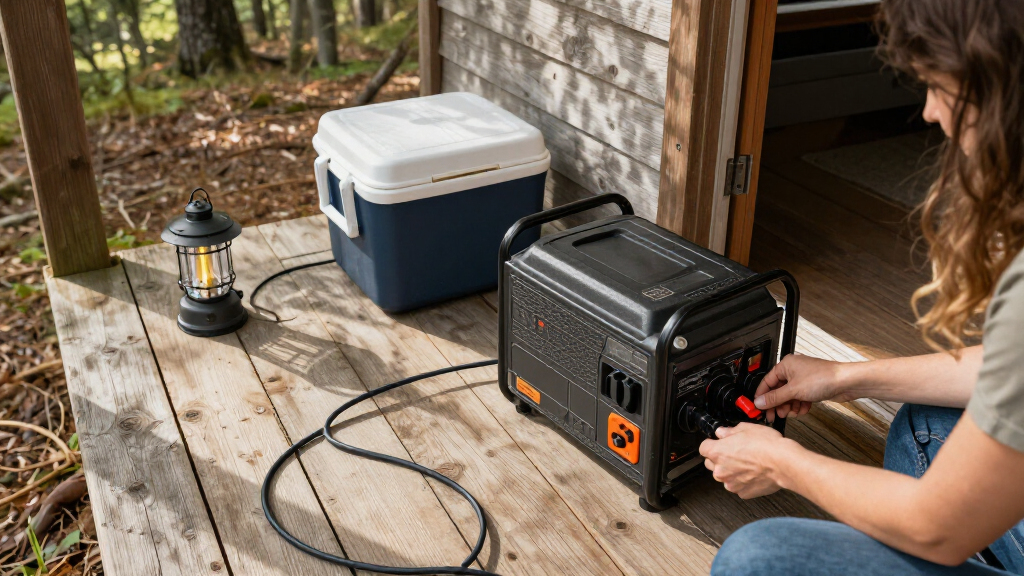
I compared the 15 generators by the questions that affect ownership: usable output for likely loads, fuel options, portability, outlet and RV usefulness, safety features, and the complexity of routine care. I treated peak wattage as only part of the picture; buyers should verify running watts, outlet limits, and startup demands before choosing. Fuel flexibility earned credit when it offered a useful backup option, but it did not automatically outrank a simpler or easier-to-carry unit.
The order reflects the breadth of buyers each model can serve, not a claim that one generator is best for every task. The WEN DF480iX ranks first for its balanced dual-fuel proposition, while larger tri-fuel models rise for high-demand backup and smaller units rank higher for compact, lighter-duty use. RV-ready design, CO shutdown features, and higher capacity matter most when they solve a buyer’s specific problem; weight, storage needs, and added operating complexity count against them when they do not.
Factors to Consider When Choosing Portable Inverter Generators
Before choosing from this lineup, I would start with the equipment you need to power, then work backward to generator size and fuel. A model with the biggest wattage label may be a poor fit if it is difficult to move, awkward to store, or more complicated than your use requires.
Size for Running Loads and Startup Surges
List the appliances or tools you expect to run at the same time, using their running watts and startup demands rather than relying on a single headline figure. Motors in refrigerators, pumps, and air conditioners can draw extra power when they start, so a generator that handles their steady load may still struggle with the initial surge. Add only the loads you truly need to run together; oversizing for every possible appliance can add weight and fuel use without improving day-to-day usefulness. Check the generator’s running output and the capacity of each outlet, since total wattage does not mean every receptacle can supply that amount. If you plan to connect a home transfer switch, confirm compatibility with a qualified electrician before buying.
Choose Fuel Options for Your Backup Plan
Gas-only models can keep operation straightforward, while dual-fuel and tri-fuel designs offer more ways to source fuel during an outage or trip. Extra fuel choices do not remove the need to store fuel safely, check availability, or follow the manufacturer’s connection instructions. Propane can be convenient for longer storage, but output and runtime may differ by fuel, so compare the model’s specifications for each option. Tri-fuel capability makes the most sense when you already have a safe, approved supply arrangement; otherwise, it may add connections and decisions without much benefit. Avoid choosing a fuel type based only on assumed runtime: operating load and the generator’s published fuel-specific figures matter.
Treat Portability as More Than a Product Label
“Portable” can describe a generator that is manageable for one person or one that needs wheels, a ramp, or help to move. Compare listed weight, handles, wheel design, and the path from storage to where the generator will operate. A larger unit may be easier to reposition if it has suitable wheels, yet still be too heavy for frequent loading into a vehicle. For camping and occasional travel, storage dimensions can matter as much as output because the generator competes with luggage and other gear. If it will stay at home for outages, prioritize a safe outdoor operating location and accessible storage over the smallest possible footprint.
Match Outlets and RV Features to Your Equipment
Check the exact outlet types and amperage against your RV connection, transfer equipment, chargers, and appliances. “RV-ready” is useful only if the included receptacle matches your setup or can be adapted with a manufacturer-approved solution. Buyers should also check whether an adapter changes the available current; an adapter cannot create more capacity than the outlet and generator provide. For home backup, receptacle compatibility and a safe transfer method matter more than a general claim of high wattage. Make a short list of plugs and loads before ordering so a mismatch does not turn into an extra project.
Plan for Safe Placement, Noise, and Exhaust
Inverter technology can support quieter operation than many conventional generators, but sound still varies with load, distance, and surroundings. A CO shutdown sensor is a useful safeguard, not permission to operate a generator indoors, in a garage, or near open windows. Set up outdoors in a location that follows the manual’s clearance and exhaust-direction guidance, and use working carbon-monoxide alarms in occupied spaces. For campsites or close neighbors, check the manufacturer’s noise information and local rules instead of assuming that “quiet” means inaudible. A safe location should be part of the plan before an outage, not chosen in a hurry after one begins.
Account for Maintenance and Long-Term Storage
Routine care affects reliability: oil checks, air-filter service, spark-plug inspection, and fuel-system care should follow the specific manual. Gasoline left in a carbureted engine can cause starting problems, so plan for the manufacturer’s storage procedure and use any approved stabilizing steps. Dual- and tri-fuel flexibility does not eliminate maintenance; the engine still needs scheduled service and correct fuel handling. Check whether the manual is clear about service intervals, oil type, and storage preparation before treating a generator as emergency-ready. A unit that is tested and maintained on a schedule is a safer bet than one bought for backup and left untouched.
Frequently Asked Questions
How much generator capacity do I need to run a refrigerator and a few essentials?
Start by checking the refrigerator’s running and startup wattage, then add the running demand of the other items you want powered at the same time. If those items have motors or compressors, include their startup surges and avoid starting several high-surge loads together. Compare your total against the generator’s running watts, not only its peak figure. Leave some headroom so the machine is not pushed to its limit continuously. If your essential-load list includes a pump, space heater, or air conditioner, calculate those separately because they can change the required size sharply.
Is dual-fuel or tri-fuel worth choosing if I already have a gasoline generator?
It can be worthwhile when another fuel source is reliably available and fits your storage or outage plan. Dual- and tri-fuel models give you alternatives if gasoline is scarce, but output can vary by fuel and the extra connections add setup steps. If you already maintain gasoline safely and only need occasional portable power, a gas-only model may be easier to operate. Check fuel-specific wattage and the approved connection method rather than assuming every fuel delivers identical performance. The deciding factor is whether the additional fuel source solves a real supply problem for you.
Can I use an inverter generator to power my house during an outage?
A portable inverter generator can power selected household loads, but connecting it to home wiring requires an approved transfer method installed or set up according to local rules. Never connect a generator directly to a wall outlet, since that can create a dangerous backfeed hazard. Identify which circuits matter and confirm their combined running and startup demands fit the generator. A larger model is not automatically compatible with a home panel; outlet type and transfer equipment matter too. Ask a qualified electrician to check the setup before an outage.
Does an RV-ready generator work with every camper?
No. RV-ready describes a useful outlet configuration, not universal compatibility with every camper’s plug, amperage, or electrical system. Check your RV’s shore-power connection and the generator’s receptacle and output, then confirm whether any adapter is approved and what capacity it allows. An adapter cannot increase the generator’s available power, and air conditioners may have high startup demands. Also compare the generator’s running output with the loads you expect to use while camping. These checks can prevent buying a model that connects physically but cannot run the equipment you need.
Should I buy a larger generator for extra headroom, or choose a lighter model?
Choose extra capacity when your planned loads include high-startup appliances, several simultaneous devices, or a realistic chance of expanding your backup needs. Choose the lighter model when loads are modest and you will carry or load it often; a generator that is difficult to move may be less useful in practice. More output can also mean a larger footprint, more storage demands, and additional fuel planning. Calculate your current essential loads first, then decide whether the margin of a larger unit justifies those tradeoffs. Avoid paying for capacity that you cannot use through the available outlets or safe connection method.
Conclusion
For the broadest mix of home backup and portable use, I recommend the WEN DF480iX as best overall, with its dual-fuel flexibility and middle-ground output. Buyers seeking a more accessible, lower-output choice can look to the Oxseryn 2800-Watt or WEN 3600-Watt as value-oriented options, after checking their load requirements. For a best premium, high-capacity fit, the Westinghouse iGen12000TFc makes more sense for substantial backup needs and buyers prepared for its larger size and fuel planning. Beginners may prefer a simpler setup such as the Champion 4000-Watt RV-Ready, especially when its outlet arrangement suits their equipment. For lighter travel, consider the Westinghouse iGen1500c; for a household with multiple large loads, compare the higher-output tri-fuel models and verify the electrical setup first. My final choice would depend on a written load list, the available fuel sources, and how often the generator needs to be moved.
Halloween Picks
halloween
As an affiliate, we earn on qualifying purchases.