
TL;DR

Get backup power and energy gear delivered free with Prime
- Fast, free delivery on millions of items
- Prime Video, Amazon Music and more included
- Member-only deals all year
A new home failed four duct-leakage tests, with testing revealing unsealed connections and damaged ductwork. The case, reported by building-performance tester Randy Williams, illustrates why duct testing and repairs matter, especially when ducts run through unconditioned attic space.
A new home failed four duct-leakage tests, revealing unsealed connections and damaged ducts, according to building-performance tester Randy Williams. His report describes how repeated testing helped identify problems in a duct system planned for an unconditioned attic, a location where leakage can send conditioned air outside the home’s living space.
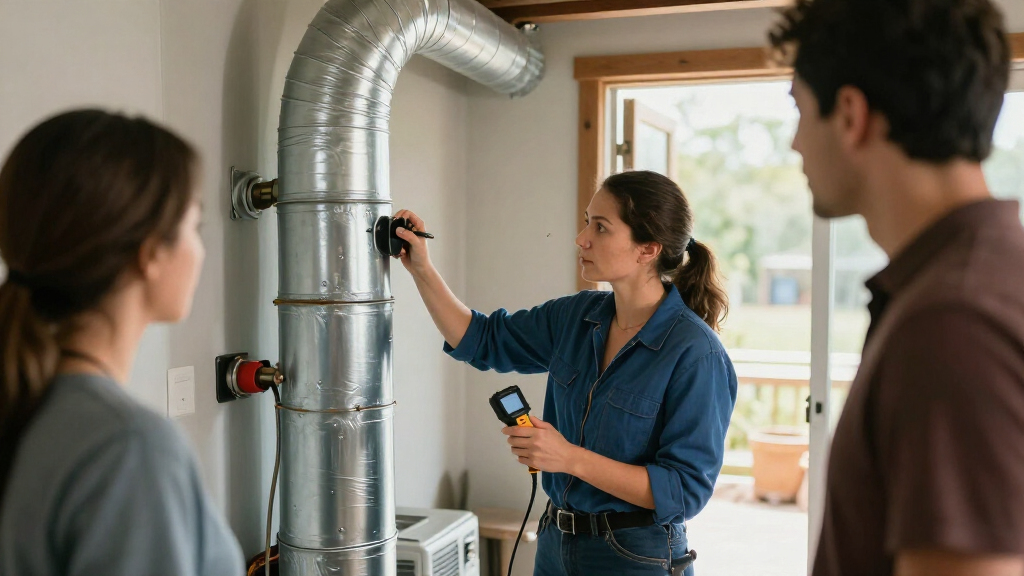
Williams said he was asked to conduct both blower-door and duct-tightness tests on a newly built home measuring just over 1,150 square feet. The home had a slab-on-grade foundation, and the contractor planned to install its ducts in the unconditioned attic. City officials requested the test results. Williams reported that the duct system failed four leakage tests; the available report summary identifies unsealed connections and damaged ducts as problems uncovered during testing.
The home also failed its blower-door test under the ACH50 metric. Its measured result was 3.56 air changes per hour at 50 Pascals, above the state requirement of 3 ACH50 or less. That result concerns the home’s overall air leakage through its enclosure, not duct leakage alone. Williams noted that the 2021 International Energy Conservation Code introduced an optional blower-door metric for homes under 1,500 square feet, based on airflow per square foot of enclosure area. He said his state was still using a version of the 2012 IECC.
Williams did not attribute the change in local enforcement to a specific cause. He wrote that officials had begun requiring duct testing even though the state’s requirements had been in place for more than a decade. He said he could not say why enforcement had increased, suggesting that education or observed field problems might be factors. Those possibilities were not confirmed.
Duct leakage matters because ducts carry heated or cooled air from equipment to rooms. When ducts leak in an unconditioned attic or crawlspace, some of that air can escape outside the home’s conditioned area instead of reaching the intended rooms. The report describes defects found in one home; it does not provide a measured energy loss, utility-bill impact, or estimate of how common similar failures are.
The case also shows why a test result is more than a pass-or-fail record. Repeated testing can help a contractor or tester locate connections that were not sealed and sections that were damaged, so the system can be repaired and retested. For buyers and homeowners, documented testing can provide information about installation quality that may not be visible once ducts are enclosed or otherwise difficult to access.
Blower-door and duct-leakage tests measure different things. A blower-door test measures air leakage through the building enclosure under a defined pressure; a duct test evaluates leakage in the duct system. The home’s reported 3.56 ACH50 result should not be treated as its duct-leakage result. Keeping those measures distinct helps readers understand what failed and what each test can diagnose.
Products Worth Considering

Philips Hue White and Color Ambiance Smart Retrofit Recessed LED Downlights, 5/6-Inch, 4-Pack

Dyson Omni-Glide Cordless Stick Vacuum, Gold/Iron

Philips Hue Festavia 65-Foot Smart LED String Lights, 250 Color-Changing Mini LEDs
As an affiliate, we earn on qualifying purchases.
Code Testing and the Home’s Results
Williams said duct testing had been required by code in his state for more than a decade, though local officials had only recently begun enforcing the requirement more actively. He described the increase in testing as an opportunity to improve his own testing and diagnostic work. The report does not identify the state or provide a complete account of its adopted code provisions.
For the blower-door test, Williams said the applicable state requirement was no more than 3 ACH50. The home recorded 3.56 ACH50, exceeding that limit. He also discussed an optional approach in the 2021 IECC for smaller homes, using CFM50 per square foot of building-enclosure area. According to Williams, his state had not moved beyond a version of the 2012 IECC. He said he persuaded officials to consider the newer option, but the available material does not state the final ruling or whether the home passed under that alternative.
The report focuses on ducts located in unconditioned spaces, including attics and vented, unconditioned crawlspaces. Such placement makes duct tightness a practical concern because leakage can occur beyond the conditioned boundary. The account does not give the duct system’s measured leakage rate, the test standard used, or the repair details.
“I can’t say.”
— Randy Williams, building-performance tester
Repair Status and Test Details
The report summary does not state whether the duct system was repaired after the four failed tests, whether it later passed, or what its measured leakage rate was. It also does not describe the individual test results, the exact testing procedure, or the cost and timing of repairs. The home’s final status under the blower-door requirement is unclear as well: Williams said he sought to use the optional metric for smaller homes, but the available account does not give the officials’ final decision.
The reason for more active local enforcement is also unconfirmed. Williams raised education and field problems as possibilities, not established explanations. The account concerns one home and does not establish how often duct systems fail in the area.
Repairs and Retesting Remain
The immediate next step for the home would be to address the identified duct defects and test the system again, but the report excerpt does not say whether that work occurred or set out a schedule. Any final compliance decision would depend on the applicable local code requirements and the officials’ determination of which blower-door metric applies.
For builders and officials, the case puts attention on verifying duct tightness rather than relying only on visual inspection, particularly where ducts are routed through unconditioned space. Further reporting would be needed to confirm the home’s post-repair results, the official decision on the blower-door test, and whether local enforcement changes are linked to a broader review or training effort.
Key Questions
What happened to the new home’s duct system?
Tester Randy Williams reported that it failed four duct-leakage tests. The report summary says testing exposed unsealed connections and damaged ducts.
Did the home also fail a blower-door test?
Yes. It measured 3.56 ACH50, above the state limit of 3 ACH50 or less described by Williams. A blower-door test measures enclosure leakage, not duct leakage.
Why does duct leakage matter in an attic?
If ducts leak in an unconditioned attic, heated or cooled air can escape outside the home’s conditioned area rather than reaching rooms. The report does not quantify the energy loss for this home.
Were the ducts repaired and retested?
The available report material does not say whether repairs were completed or whether the system later passed. The final duct-test result is not reported.
Source: greenbuildingadvisor.com