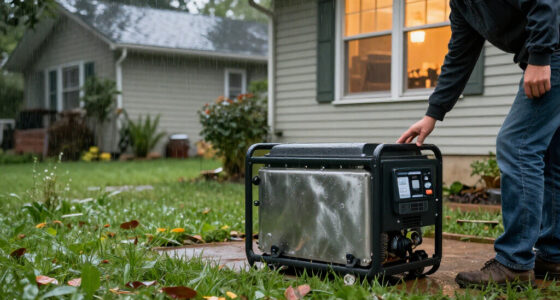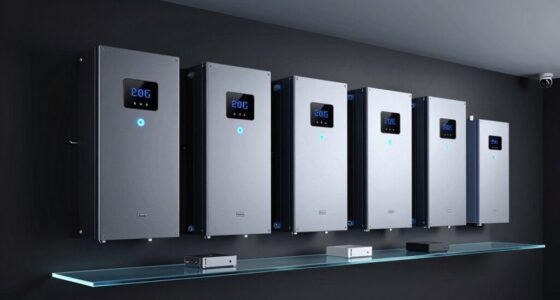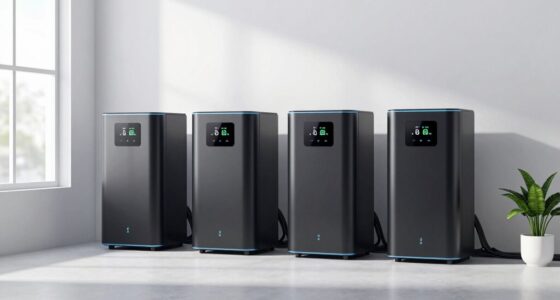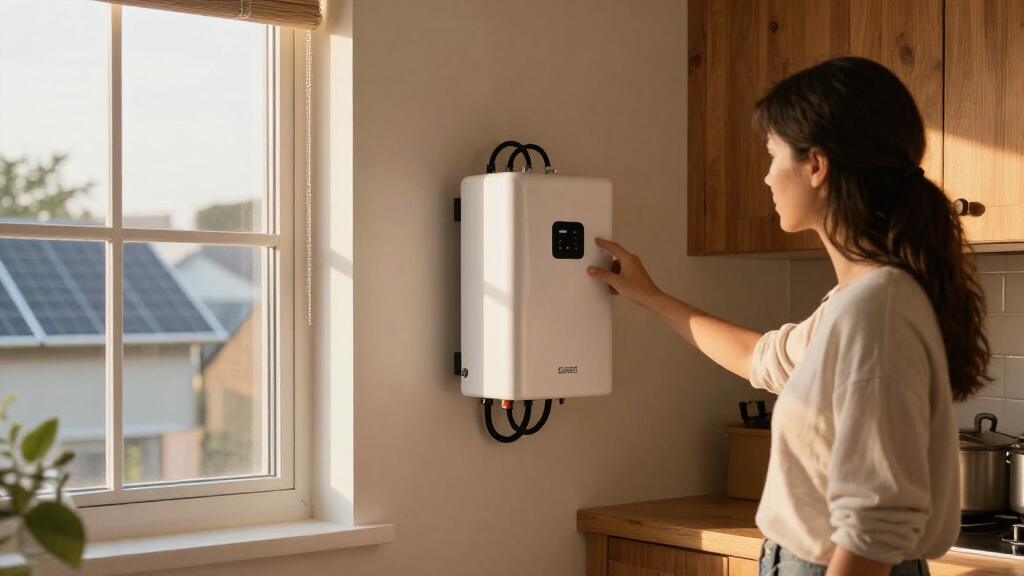
The best home energy storage systems depend on whether you need a few hours of backup, a solar-ready home system, or substantial off-grid capacity. My best overall pick is the ECO-WORTHY 32 kWh Solar Backup System, which pairs a large storage bank with panels and a 10 kW hybrid inverter. For a simpler portable option, the Jackery HomePower 3600 Plus offers a more approachable starting point, while the Anker SOLIX E10 stands out for buyers seeking a system that can scale across a wide capacity range. The main tradeoffs are storage size, output, installation complexity, and how much of the system is included. Read on for the full comparison and guidance on matching a system to your home and backup needs.

Get backup power and energy gear delivered free with Prime
- Fast, free delivery on millions of items
- Prime Video, Amazon Music and more included
- Member-only deals all year
Key Takeaways
- Complete solar packages differ from expandable batteries: the ECO-WORTHY 32 kWh system includes panels, batteries, and a hybrid inverter, while the PowerMega 16.07 kWh battery is a storage component rather than a full solar setup.
- Portable stations prioritize simpler setup over whole-home integration: options such as the Jackery HomePower 2000 Plus v2 and EcoFlow DELTA Pro are easier to position as standalone backup, but their stated capacities are far below the largest packaged systems.
- Capacity alone does not determine what a system can run: inverter output matters too; the 10 kW hybrid-inverter systems are aimed at heavier simultaneous loads than compact stations rated at 2,400W or 3,600W.
- EcoFlow TITAN configurations serve different use cases: the 5 kWh extra-battery bundle adds storage, while the TITAN paired with Smart Home Panel 10 is the more home-integration-focused configuration.
- Expandable systems trade convenience for planning: the Anker SOLIX E10’s stated 12–90 kWh range suits buyers planning growth, while a fixed-capacity portable unit is simpler for people with a defined, smaller backup load.
| HumsiENK 10.24 kWh Home Backup Kit with Two 48V 100Ah LiFePO₄ Batteries and 8000W Hybrid Inverter |  | Best Overall for a Scalable Hardwired Backup | Battery chemistry: LiFePO₄ | Total storage capacity: 10.24 kWh | Battery configuration: 2 × 48V 100Ah | VIEW LATEST PRICE | See Our Full Breakdown |
| ECO-WORTHY 32 kWh Solar Backup System with Six 590W Panels, Two LiFePO4 Batteries, and 10 kW Hybrid Inverter |  | Best Complete Solar Package | Included solar panels: 6 × 590W N-type bifacial monocrystalline | Battery configuration: 2 × 48V 314Ah LiFePO₄ | Usable energy: 30 kWh+ | VIEW LATEST PRICE | See Our Full Breakdown |
| Jackery HomePower 2000 Plus v2 Portable Power Station, 2048Wh, 2400W |  | Best Compact Portable Backup | Battery capacity: 2048Wh | Expandable capacity: Up to 12 kWh | AC output: 2400W | VIEW LATEST PRICE | See Our Full Breakdown |
| EF ECOFLOW TITAN Portable Power Station with 5 kWh Extra Battery |  | Best Premium Portable Split-Phase System | Capacity: 10,017Wh | Continuous output: 7200W | Output voltage: 120V/240V AC | VIEW LATEST PRICE | See Our Full Breakdown |
| EF EcoFlow TITAN 5000 Classic Power Station, 5017Wh, 4000W AC Output |  | Best Quieter Essential-Load Station | Capacity: 5017Wh | AC output: 4000W | Voltage: 120V | VIEW LATEST PRICE | See Our Full Breakdown |
| EF ECOFLOW TITAN 5017Wh Power Station with Smart Home Panel 10 |  | Best for Whole-Home Circuit Backup | Capacity: 5,017Wh | Expandable capacity: 5kWh–30kWh | Continuous output: 7,200W | VIEW LATEST PRICE | See Our Full Breakdown |
| ECO-WORTHY 10 kW Off-Grid Solar Power System with 2,950 W Solar Panels and 48 V 314 Ah Battery |  | Best Starter Complete Off-Grid System | System output: 10,000W continuous; up to 20,000W peak | Solar panels: 5 bifacial panels | Total PV capacity: 2,950W | VIEW LATEST PRICE | See Our Full Breakdown |
| ECO-WORTHY Powermega 51.2V 314Ah LiFePO4 Battery, 16.07kWh |  | Best Expandable Battery-Only Storage | Battery chemistry: LiFePO₄ | Voltage: 51.2V | Capacity: 314Ah | VIEW LATEST PRICE | See Our Full Breakdown |
| EcoFlow DELTA Pro Portable Power Station 3600Wh | 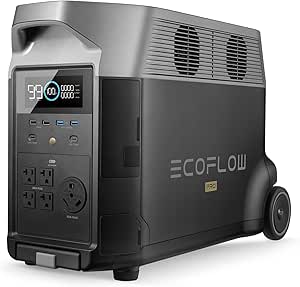 | Best Portable Home Backup | Capacity: 3,600Wh; expandable to 25kWh | AC output: 3,600W; up to 4,500W with X-Boost | Battery type: LiFePO₄ (LFP) | VIEW LATEST PRICE | See Our Full Breakdown |
| ECO-WORTHY 10 kW Off-Grid Solar Panel Kit with 32.2 kWh Battery Storage |  | Best for High-Capacity Off-Grid Storage | Solar panel count: 18 | Total PV capacity: 10,620W | Maximum daily generation: 39.36kWh under optimal conditions | VIEW LATEST PRICE | See Our Full Breakdown |
| ECO-WORTHY PowerMega 48V 314Ah LiFePO4 Energy Storage System with 10kW Hybrid Inverter |  | Best High-Output Off-Grid System | Battery chemistry: LiFePO4 | Battery capacity: 314Ah at 51.2V | Usable energy: 16.1kWh | VIEW LATEST PRICE | See Our Full Breakdown |
| Jackery HomePower 3600 Plus Portable Power Station, 3584Wh, 3600W |  | Best Portable and Expandable Backup | Battery capacity: 3,584Wh | Battery type: LFP | Output wattage: 3,600W | VIEW LATEST PRICE | See Our Full Breakdown |
| Anker SOLIX E10 Power Dock and Extra Battery, 12–90 kWh |  | Best for Whole-Home Backup Expansion | Included battery capacity: 12kWh with two B6000 battery modules | Expandable capacity: Up to 90kWh | Battery chemistry: LFP | VIEW LATEST PRICE | See Our Full Breakdown |
More Details on Our Top Picks
HumsiENK 10.24 kWh Home Backup Kit with Two 48V 100Ah LiFePO₄ Batteries and 8000W Hybrid Inverter
I rank the HumsiENK kit first for buyers who want a substantial home backup foundation rather than a portable power station. Its 10.24 kWh of LiFePO₄ storage and 8000W split-phase inverter are included together, so it can serve 120V and 240V loads without assembling a separate battery-and-inverter package. Compared with the Jackery HomePower 2000 Plus v2, it offers far more storage and output in its base configuration, but gives up portability and simple plug-in use. The 10,000W MPPT controller and expansion support also leave room for a larger solar-backed system. The tradeoff is installation: each battery weighs about 96 pounds, and rack space, compatible wiring, and appropriate electrical setup are part of the commitment. I would choose it for a fixed home system, not a grab-and-go outage unit.
Pros:- Includes two LiFePO₄ batteries and an 8000W hybrid inverter in one kit.
- 120/240V split-phase output supports a broader range of household circuits than the 120V Jackery HomePower 2000 Plus v2.
- 10,000W MPPT solar controller and support for additional batteries and inverters allow substantial system growth.
- App monitoring and CAN, RS232, and RS485 communications support system oversight and integration.
Cons:- Each battery weighs 96.45 pounds, making delivery, positioning, and installation difficult without help.
- Rack-mount batteries and inverter require dedicated space and a more involved setup than portable power stations.
Best for: Homeowners building a fixed 120/240V backup system who want included batteries and inverter hardware with room to expand.
Not ideal for: Renters or buyers seeking a lightweight, plug-in station; the rack batteries are heavy and the system calls for dedicated installation space.
- Battery chemistry:LiFePO₄
- Total storage capacity:10.24 kWh
- Battery configuration:2 × 48V 100Ah
- Inverter output:8000W, 120/240V split phase
- Inverter surge capacity:16000W
- Solar charge controller:10,000W MPPT
- Transfer switching:≤10 ms
- Maximum battery expansion:20 batteries, up to 102.4 kWh
- Warranty:10-year limited warranty
Our verdict“Choose the HumsiENK kit for a scalable, fixed home backup system with split-phase output, and skip it if portability or easy setup matters more.”
ECO-WORTHY 32 kWh Solar Backup System with Six 590W Panels, Two LiFePO4 Batteries, and 10 kW Hybrid Inverter
The ECO-WORTHY package is my pick for buyers who want solar generation, storage, and conversion hardware together instead of sourcing each part separately. Its six 590W bifacial panels, two 48V 314Ah batteries, and 10 kW hybrid inverter make it a more generation-focused bundle than the HumsiENK kit, which includes a powerful inverter but no panels. The stated usable energy is 30 kWh+, giving this system a much larger storage base than the Jackery HomePower 2000 Plus v2. That capacity can support longer backup periods, though actual runtime depends on loads and solar conditions. The tradeoff is scale: panels are nearly 90 inches long and weigh about 73 pounds each, and the package ships on a pallet. Buyers should also confirm the inverter version and system compatibility before installation, since the listed inverter version may vary.
Pros:- Bundles six 590W panels, two large LiFePO₄ batteries, a 10 kW inverter, and cables.
- 30 kWh+ usable energy offers much more storage than the Jackery HomePower 2000 Plus v2.
- Panel, battery, and inverter package supports solar generation as well as stored backup power.
- Bluetooth and Wi-Fi monitoring, multiple battery protocols, and built-in battery protection features support system management.
Cons:- Panels and batteries create a large, heavy shipment that requires substantial installation space and handling.
- The inverter version is selected at random, so buyers may receive differing exterior versions.
- A bundled system still requires careful site planning and installation; it is not a portable, plug-in backup unit.
Best for: Homeowners planning a substantial solar-backed system who want panels, batteries, inverter, and cables bundled together.
Not ideal for: Apartment residents, buyers with limited roof or ground-mount area, or anyone needing a compact system that can be installed without handling heavy freight.
- Included solar panels:6 × 590W N-type bifacial monocrystalline
- Battery configuration:2 × 48V 314Ah LiFePO₄
- Usable energy:30 kWh+
- Inverter power:10 kW
- Output voltage:120V and 240V
- Solar panel efficiency:25%
- Battery cycle life:9000+ cycles at 80% DoD
- Monitoring:Bluetooth, Wi-Fi, and LCD screen
Our verdict“Pick this ECO-WORTHY bundle if you have room for a large solar installation and want generation and storage hardware in one package.”
Jackery HomePower 2000 Plus v2 Portable Power Station, 2048Wh, 2400W
The Jackery HomePower 2000 Plus v2 earns its place for buyers who value easy relocation over whole-home scale. At 2048Wh and 2400W, it is better suited to selected appliances, electronics, and smaller backup needs than the HumsiENK kit or ECO-WORTHY 32 kWh system, both of which are designed around much larger storage and fixed installations. Its 40.6-pound form is still a lift, but it is far easier to reposition than those rack-based or pallet-scale systems. Expansion to 12 kWh gives buyers a path to more reserve capacity without starting with a 10 kWh-class base unit. Priority routing can help direct power to essential circuits, while 140W USB-C is useful for compatible devices. The main limits are its 120V output and modest starting capacity; solar panels are also sold separately.
Pros:- More portable than the HumsiENK rack batteries and ECO-WORTHY pallet-scale package.
- Capacity can expand from 2048Wh to as much as 12 kWh.
- LFP battery is rated for 6000+ cycles.
- Priority routing and 140W USB-C output support essential-load planning and compatible device charging.
Cons:- The 2048Wh starting capacity is far below the HumsiENK and ECO-WORTHY systems.
- 120V AC output does not provide the listed 120/240V split-phase service of the larger systems.
- Solar panels are optional rather than included.
Best for: Households, RV owners, and emergency-preparedness buyers who need a movable power station for selected essential loads.
Not ideal for: Homeowners seeking built-in 120/240V split-phase service or substantial whole-home storage from the base unit.
- Battery capacity:2048Wh
- Expandable capacity:Up to 12 kWh
- AC output:2400W
- Voltage:120V AC
- Battery type:LFP
- Weight:40.6 lb
- USB-C output:140W
Our verdict“Choose the Jackery for portable backup and gradual capacity growth, but not as a ready-made split-phase whole-home system.”
EF ECOFLOW TITAN Portable Power Station with 5 kWh Extra Battery
The TITAN bundle is the strongest portable-style choice here for buyers who need high output and 240V capability without building a rack-based system. Its 7200W continuous split-phase output and listed 10,017Wh capacity put it much closer to the HumsiENK kit’s home-power role than the 120V Jackery, while retaining AC, solar, and generator charging options. The included extra battery gives it a substantial starting reserve, and expansion to 30 kWh can support longer outages. Unlike the ECO-WORTHY package, it does not include solar panels, so solar generation requires separately sourced equipment. At 119 pounds, it is portable in the sense that it is not a fixed battery installation, not in the sense of an easy one-person carry. Its 20 ms UPS transfer time is also slower than HumsiENK’s listed ≤10 ms switching.
Pros:- 7200W continuous 120/240V split-phase output supports more demanding household loads than the Jackery HomePower 2000 Plus v2.
- Includes an extra battery and supports expansion from 5 kWh to 30 kWh.
- Accepts AC, solar, and generator charging, giving buyers several ways to replenish storage.
- Wi-Fi, Bluetooth, and app-based energy management support system monitoring.
Cons:- At 119 pounds, the unit is difficult to move and needs a dedicated storage location.
- The 20 ms UPS transfer time is slower than the HumsiENK kit’s listed ≤10 ms transfer.
- Solar panels are not included, unlike the ECO-WORTHY 32 kWh bundle.
Best for: Homeowners who need high-output 120/240V backup in a movable system and want the option to charge from AC, solar, or a generator.
Not ideal for: Buyers who need a light, frequently carried station, or those who want panels included in the package.
- Capacity:10,017Wh
- Continuous output:7200W
- Output voltage:120V/240V AC
- Battery chemistry:LFP
- Expandable capacity:5–30 kWh
- Maximum solar input:4 kW
- UPS transfer time:20 ms
- Weight:119 lb
- Certification:UL 9540 certified; tested to UL 9540A
Our verdict“Choose the TITAN bundle for substantial split-phase power in an expandable, non-fixed system, provided its weight and separate solar-panel needs fit your plans.”
EF EcoFlow TITAN 5000 Classic Power Station, 5017Wh, 4000W AC Output
The TITAN 5000 Classic makes more sense for essential-load backup than the larger TITAN bundle: it starts with 5017Wh and 4000W output, rather than the other TITAN’s listed 10,017Wh and 7200W split-phase output. That smaller starting capacity can be easier to match to a targeted backup plan, and its under-30 dB operation is useful when the station will sit near occupied indoor space. It can expand to 30 kWh, but automatic switchover requires the Smart Home Panel 10, so this is not a complete automatic home-backup setup by itself. Compared with the HumsiENK kit, it is a simpler 120V power station with less output and no included hybrid inverter. The 102.5-pound weight remains a real handling challenge despite its portable-station format.
Pros:- Under-30 dB operation suits indoor placement better than a noisy generator.
- 5017Wh capacity and 4000W output provide a substantial base for selected essential loads.
- Expandable capacity reaches 30 kWh with compatible batteries.
- UL 9540 certification and UL 1741 compliance are listed.
Cons:- 120V output lacks the split-phase capability offered by the larger TITAN bundle and HumsiENK kit.
- Automatic switchover under 20 ms requires a compatible Smart Home Panel 10.
- At 102.5 pounds, it is difficult to move without assistance.
Best for: Buyers planning quiet backup for selected 120V household loads who may add compatible batteries or a Smart Home Panel 10.
Not ideal for: Households that require split-phase 120/240V output or automatic backup switching without purchasing compatible panel hardware.
- Capacity:5017Wh
- AC output:4000W
- Voltage:120V
- Battery type:LiFePO₄ (LFP)
- Expandable capacity:5–30 kWh
- Noise level:Under 30 dB
- Automatic switchover:Under 20 ms with Smart Home Panel 10
- Weight:102.5 lb
- Warranty:5 years
Our verdict“Pick the TITAN 5000 Classic for quiet, expandable 120V essential-load backup, and choose another system if you need split-phase output or automatic switching out of the box.”
EF ECOFLOW TITAN 5017Wh Power Station with Smart Home Panel 10
The EF ECOFLOW TITAN with Smart Home Panel 10 is the strongest fit here for buyers who want a portable-battery system wired into selected home circuits. Its 7,200W split-phase output can serve 120V and 240V loads, while the prewired panel assigns backup to as many as 10 circuits—more direct home integration than the portable EcoFlow DELTA Pro offers on its own. The 5,017Wh starting capacity is substantial, and expansion to 30kWh leaves room to extend outage coverage later.
The tradeoff is that this is not a lightweight grab-and-go station: at 119 lb, it is better treated as a fixed backup setup. Buyers also need extra batteries to reach the maximum capacity, and installation planning matters for the panel. I would choose it over the DELTA Pro for circuit-level backup, but not for a system that needs to move often.
Pros:- 7,200W continuous split-phase output supports both 120V and 240V loads.
- Smart Home Panel 10 provides backup for up to 10 circuits.
- Capacity can expand from 5,017Wh to 30kWh with additional batteries.
- LFP chemistry and app-based energy management support monitored home backup.
Cons:- At 119 lb, moving the power station is difficult.
- Maximum capacity requires purchasing and installing additional batteries.
- The home panel setup is less suited to buyers who want a simple plug-in backup.
Best for: Homeowners who want selected household circuits backed up through a prewired panel, with a path to add battery capacity later.
Not ideal for: Buyers seeking a frequently portable power station or a ready-made system with its full 30kWh capacity included.
- Capacity:5,017Wh
- Expandable capacity:5kWh–30kWh
- Continuous output:7,200W
- Output voltage:120V/240V split phase
- Battery chemistry:Lithium iron phosphate (LFP)
- Smart Home Panel circuits:10
- AC input:Up to 7.6kW
- Solar input:Up to 4kW
- Weight:119 lb
Our verdict“Choose the TITAN with Smart Home Panel 10 if you want expandable battery backup connected to selected home circuits rather than a portable-only station.”
ECO-WORTHY 10 kW Off-Grid Solar Power System with 2,950 W Solar Panels and 48 V 314 Ah Battery
The ECO-WORTHY 10 kW Off-Grid Solar Power System bundles panels, inverter, and a roughly 16.1kWh LiFePO₄ battery, so buyers can plan around a coordinated off-grid setup instead of sourcing the main components separately. Its 10kW split-phase inverter and 120V/240V output make it more capable of serving household loads than the EcoFlow DELTA Pro, which is a portable 120V station. The battery can also expand by connecting additional units, and monitoring options include Bluetooth, Wi-Fi, PC, RS485, and CAN.
Its main limit is the comparatively modest 2,950W of included solar; the stated daily generation of up to 11.8kWh depends on favorable conditions. The five large glass panels and freight delivery call for suitable site access, while professional installation is recommended. I would pick the larger ECO-WORTHY 32.2kWh kit for heavier storage needs, but this package is the more restrained starting point.
Pros:- Includes five bifacial panels, a 10kW inverter, and a 16.076kWh battery.
- Split-phase inverter supplies 120V or 120V/240V output.
- Battery monitoring supports multiple wired and wireless connection methods.
- Battery capacity can expand through parallel connections.
Cons:- The included 2,950W solar array is smaller than the array in the ECO-WORTHY 32.2kWh kit.
- Professional installation is recommended, adding planning and labor needs.
- Large glass panels and palletized freight delivery require suitable site access.
Best for: Rural homeowners planning an off-grid system who want panels, a split-phase inverter, and a substantial battery in one package.
Not ideal for: Buyers who need high daily solar production from the included array, lack space for large panels, or want a plug-and-play backup unit.
- System output:10,000W continuous; up to 20,000W peak
- Solar panels:5 bifacial panels
- Total PV capacity:2,950W
- Estimated daily generation:Up to 11.8kWh under optimal conditions
- Battery:48V, 314Ah LiFePO₄
- Battery energy capacity:16.076kWh
- Maximum battery expansion:15 units; up to 241kWh
- Inverter output:120V or 120V/240V split phase
- Solar panel efficiency:23.23%
Our verdict“Choose this ECO-WORTHY package for a bundled off-grid foundation with moderate solar capacity, but select the 32.2kWh kit if your storage and generation needs are larger.”
ECO-WORTHY Powermega 51.2V 314Ah LiFePO4 Battery, 16.07kWh
The ECO-WORTHY Powermega 51.2V battery suits buyers who already have a compatible inverter and want to add substantial storage without replacing their broader system. Its 16.07kWh capacity is far beyond the 3.6kWh starting battery in the EcoFlow DELTA Pro, and parallel expansion to as many as 15 units gives it a different role: a building block for a larger stationary setup, not an all-in-one backup station.
The battery includes a 200A active-balancing BMS, a circuit breaker, aerosol fire-suppression modules, and a touchscreen with Wi-Fi and Bluetooth monitoring. Those features help owners track and manage a large battery, but they do not supply an inverter, solar panels, or a complete backup system. Compatibility and installation planning are the buyer’s responsibility, and palletized truck delivery makes receiving it less convenient than a portable power station. I would skip it if you need a ready-to-use system.
Pros:- Provides 16.07kWh of LiFePO₄ storage in one battery.
- Supports expansion to 15 units, with up to 241kWh total capacity.
- 200A smart BMS includes active cell balancing and a two-pole circuit breaker.
- Touchscreen, Wi-Fi, Bluetooth, RS485, and CAN offer multiple monitoring and communication options.
Cons:- Battery-only package requires a compatible inverter and other system components.
- Large format and palletized truck delivery require suitable receiving arrangements.
- Compatibility and system integration need to be checked before purchase.
Best for: Solar-system owners with a compatible 51.2V inverter who need a large battery bank that can grow in parallel.
Not ideal for: First-time backup buyers who need an inverter, solar panels, or an integrated circuit-level home backup solution.
- Battery chemistry:LiFePO₄
- Voltage:51.2V
- Capacity:314Ah
- Energy:16.07kWh
- BMS:200A smart BMS with active cell balancing
- Expansion:Up to 15 units; 241kWh total
- Safety features:Two-pole circuit breaker and aerosol fire-suppression modules
- Monitoring:7-inch HD touchscreen, Wi-Fi, and Bluetooth
- Communication ports:RS485 and CAN
Our verdict“Choose the Powermega battery if you already have compatible system hardware and want expandable storage, not a complete home energy system in one purchase.”
EcoFlow DELTA Pro Portable Power Station 3600Wh
The EcoFlow DELTA Pro is the most portable-oriented choice in this group: it combines a 3,600Wh LFP battery, 3,600W AC output, and 15 output ports in a single station. That makes it practical for powering individual appliances, electronics, or RV loads without the installation work required by the ECO-WORTHY 10 kW Off-Grid Solar Power System. Fast wall and solar charging can help restore stored energy between outages or trips, while app control gives owners a way to monitor power use.
For whole-home storage, its limits are clear. The standard output is 120V, and the 3.6kWh starting capacity is much smaller than the TITAN’s 5,017Wh or the ECO-WORTHY battery’s 16.07kWh. Expansion to 25kWh requires additional batteries, and at 99 lb this is portable only in a limited sense. I would favor it for flexible, movable backup—not for directly replacing a split-phase home system.
Pros:- 3,600W AC output supports a range of individual household and RV loads.
- Expandable from 3,600Wh to as much as 25kWh with additional batteries.
- Supports fast recharging by wall power and solar.
- 15 output ports and app control allow flexible device use and monitoring.
Cons:- 99 lb weight makes frequent solo transport difficult.
- 120V output does not match the split-phase capability of the TITAN or ECO-WORTHY systems.
- Reaching the maximum capacity requires additional batteries.
Best for: RV owners and households seeking a movable station for essential appliances and electronics, with optional capacity expansion.
Not ideal for: Homeowners who need 240V split-phase output or high starting storage without adding extra batteries.
- Capacity:3,600Wh; expandable to 25kWh
- AC output:3,600W; up to 4,500W with X-Boost
- Battery type:LiFePO₄ (LFP)
- Voltage:120V
- Output ports:15
- Charging time:1.8 hours via 240V; 2.7 hours at 1,800W; 2.8 hours via solar
- Weight:99 lb
- Dimensions:25 × 11.2 × 16.4 in
Our verdict“Choose the DELTA Pro for movable, fast-recharging backup for appliances and devices, but choose a split-phase system for broader household circuit coverage.”
ECO-WORTHY 10 kW Off-Grid Solar Panel Kit with 32.2 kWh Battery Storage
For buyers prioritizing stored energy and solar array size, the ECO-WORTHY 10 kW Off-Grid Solar Panel Kit leads this batch. It pairs 32.2kWh of LiFePO₄ storage with 18 panels rated at 10,620W total and a 10kW split-phase inverter. That is double the included battery capacity of the ECO-WORTHY 16.076kWh system, making this the stronger match for households with larger off-grid energy needs and the site area to support a substantial array.
The scale brings real planning demands: the panels are large glass units, the system calls for professional installation, and the stated maximum daily generation of 39.36kWh depends on optimal conditions. Compared with the EF ECOFLOW TITAN, this package offers far more included storage and PV capacity, but it is a fixed installation rather than a portable station with a prewired home panel. I would not choose it for a small property or a buyer seeking a simple backup appliance.
Pros:- Includes 32.2kWh of battery storage with two 48V 314Ah LiFePO₄ batteries.
- 18 panels provide 10,620W total PV capacity.
- 10kW inverter supports 120V or 120V/240V split-phase output.
- Dual MPPT controllers and monitoring options support system management.
Cons:- Professional installation is recommended, so this is not a simple plug-in backup.
- The 18 large glass panels require substantial installation area and handling.
- Stated daily generation depends on optimal solar and installation conditions.
Best for: Households planning a substantial off-grid installation with high storage needs, room for 18 panels, and access to professional installation.
Not ideal for: Small properties, renters, or buyers who need compact backup equipment or cannot accommodate large panels and installation work.
- Solar panel count:18
- Total PV capacity:10,620W
- Maximum daily generation:39.36kWh under optimal conditions
- Battery configuration:2 × 48V 314Ah LiFePO₄
- Total energy storage:32.2kWh
- Inverter continuous output:10,000W
- Inverter peak output:20,000W
- Output voltage:120V or 120V/240V split phase
- Panel dimensions:89.68 × 44.65 × 1.18 in
Our verdict“Choose this kit when high included storage and a large solar array matter more than portability or a simple installation.”
ECO-WORTHY PowerMega 48V 314Ah LiFePO4 Energy Storage System with 10kW Hybrid Inverter
I’d shortlist the ECO-WORTHY PowerMega for buyers who want substantial fixed storage and an inverter sized for heavy household loads. Its 16.1kWh usable capacity and 10kW output put it well ahead of portable options such as the Jackery HomePower 3600 Plus for sustained, whole-house-style backup. The 120V single-phase or 240V split-phase output also suits a wider range of appliances than a 120V-only setup.
That capability comes with a more involved installation and delivery process than a wheeled power station. Wi-Fi and Bluetooth monitoring, multiple communications protocols, and built-in battery safety features add useful control, while reinforced casters help with positioning. I’d plan around the package’s limits: it includes one battery and inverter, but parallel cables are not included, and the inverter exterior version is selected at random. This is a stronger fit for a planned home energy system than grab-and-go backup.
Pros:- 16.1kWh usable energy paired with 10kW inverter output supports larger loads than portable units such as the Jackery HomePower 3600 Plus.
- 120V single-phase and 240V split-phase output can serve a broader mix of household equipment.
- Wi-Fi and Bluetooth monitoring plus RS485, CAN, and RS232 support offer multiple monitoring and inverter communication options.
- Active-balancing BMS, built-in breaker, and aerosol fire suppression module provide several layers of battery protection.
Cons:- Parallel connection cables are not included, adding a separate requirement for buyers planning to expand.
- The battery ships by truck freight on a pallet and may arrive separately from other packages.
- The exterior version of the inverter is selected at random.
Best for: Homeowners building an off-grid or solar-backed system who need 240V support, 10kW inverter output, and around 16kWh of usable storage.
Not ideal for: Buyers who want a plug-and-play portable backup unit, or who need an expandable multi-battery setup ready to connect without sourcing separate parallel cables.
- Battery chemistry:LiFePO4
- Battery capacity:314Ah at 51.2V
- Usable energy:16.1kWh
- Inverter output:10,000W
- Output voltage:120V single-phase or 240V split-phase
- Battery cycle life:9,000+ cycles at 80% DoD
- Communications:RS485, CAN, RS232, Wi-Fi, and Bluetooth
- Safety features:Active-balancing BMS, circuit breaker, aerosol fire suppression module, and buzzer alarm
- Warranty:10 years
Our verdict“Choose the PowerMega if you want high-output, 240V-capable fixed storage and can accommodate a more involved installation and delivery.”
Jackery HomePower 3600 Plus Portable Power Station, 3584Wh, 3600W
The Jackery HomePower 3600 Plus is the portable pick in this group: its 3,584Wh battery and 3,600W output offer meaningful backup without committing to a fixed battery-and-inverter installation. Wheels and a telescopic handle make relocation more practical than moving a stationary system, though at 77.2 pounds it is still a substantial piece of equipment. Four charging methods, including solar and a gas generator, give owners options when grid power is unavailable.
Compared with the ECO-WORTHY PowerMega, Jackery trades capacity and continuous output for portability and a simpler all-in-one format. Its expansion claims make it more adaptable than a basic portable station, and parallel operation can provide 240V output. Still, one unit supplies 120V, and solar panels are optional. I’d choose it for flexible outage backup or occasional off-grid use, not as the first choice for a fixed system intended to cover demanding household loads for long periods.
Pros:- 3,584Wh capacity and 3,600W output provide more stored energy and power than smaller portable options such as the Jackery HomePower 2000 Plus v2.
- Wheels and a telescopic handle make it easier to reposition than a conventional stationary battery system.
- AC, hybrid AC-plus-DC, solar, and gas-generator charging offer flexibility during outages.
- Expandable capacity and parallel operation support larger storage needs and 240V output.
Cons:- At 77.2 pounds, it is heavy despite its wheeled design.
- 240V operation requires parallel use rather than coming from a single unit.
- Solar panels are optional, so solar charging requires a separate purchase.
Best for: Households that want a movable backup station for outages, RV use, or occasional off-grid power, with the option to add capacity later.
Not ideal for: Buyers seeking a fixed whole-home system with high storage from the outset, or anyone unable to manage a 77.2-pound unit.
- Battery capacity:3,584Wh
- Battery type:LFP
- Output wattage:3,600W
- Parallel output:7,200W
- Voltage:120V; 240V in parallel
- Expandable capacity:Up to 21kWh per unit or 43kWh with multiple units
- Charging options:Hybrid AC+DC, AC, solar, and gas generator
- Weight:77.2 pounds
- Warranty:5 years
Our verdict“Pick the HomePower 3600 Plus if portability and multiple recharge options matter more than the higher fixed-system output and storage of the ECO-WORTHY PowerMega.”
Anker SOLIX E10 Power Dock and Extra Battery, 12–90 kWh
For buyers planning whole-home backup rather than a portable station, I’d put the Anker SOLIX E10 near the top of the shortlist. The included Power Dock and two B6000 battery modules provide 12kWh to start, with expansion up to 90kWh. Its 200A whole-home coverage and automatic switchover in 20 milliseconds or less are aimed at keeping backed-up circuits supplied with minimal interruption. The weatherproof design also allows indoor or outdoor installation.
Compared with the ECO-WORTHY PowerMega, the E10 offers much greater stated expansion and a dock-based whole-home approach, while the PowerMega pairs a larger inverter output with a single included battery. The E10’s 7.6kW continuous output and 10kW turbo output may suit many homes, but buyers should check their load requirements rather than assume every appliance can run together. The Power Dock and extra battery ship separately, and professional installation may be needed, making this a planned residential project rather than a quick backup purchase.
Pros:- Starts with 12kWh of storage and supports expansion up to 90kWh, exceeding the included storage of the ECO-WORTHY PowerMega.
- 200A whole-home coverage is designed for residential backup rather than powering a few portable loads.
- Automatic switchover of 20 milliseconds or less helps limit interruption when grid power fails.
- Weatherproof construction supports indoor or outdoor installation.
Cons:- The Power Dock and extra battery ship separately, which can complicate delivery and installation planning.
- Professional installation may be needed, so it is less suited to buyers seeking a portable or simple plug-in backup option.
- Continuous output is 7.6kW, below the ECO-WORTHY PowerMega’s 10kW inverter rating.
Best for: Homeowners seeking a professionally installed whole-home backup system with fast automatic switchover and room to expand storage substantially.
Not ideal for: Renters, buyers who need a portable system, or households seeking a simple self-installed unit with all components arriving together.
- Included battery capacity:12kWh with two B6000 battery modules
- Expandable capacity:Up to 90kWh
- Battery chemistry:LFP
- Continuous output:7.6kW
- Turbo output:10kW
- Whole-home coverage:200A
- Solar input:9kW per unit
- Switchover time:20ms or less
- Operating temperature:-4°F to 131°F
Our verdict“Choose the E10 if you want expandable, dock-based whole-home backup and can plan for separate deliveries and installation.”
How We Picked
I compared the 13 systems by the practical questions a homeowner needs answered: how much energy storage is stated, how much power the inverter or station can supply, whether solar panels and conversion equipment are included, and how directly the product is positioned for home backup. I also considered portability, expansion potential, and the likely installation effort implied by a standalone station versus a battery-and-inverter kit. Those differences affect whether a product can serve as a small emergency power source, a larger solar-backed setup, or a building block in an off-grid system.
The ranking favors systems that combine useful capacity with a clear path to household backup, rather than treating the largest battery figure as an automatic win. Complete solar packages rank well for buyers seeking a coordinated setup, while portable stations earn their place for simpler deployment and narrower backup needs. Expandable and panel-integrated options are recognized for flexibility, but their added planning or installation demands keep them from being the best fit for every home. Product specifications supplied for this roundup do not establish compatibility with every home, circuit, or utility connection, so buyers should confirm those details before purchase.
Factors to Consider When Choosing Best Home Energy Storage Systems
Before choosing a system, I would work backward from the loads you need to keep running and the way you expect to recharge the batteries. The right choice can change sharply depending on whether you want portable emergency power, solar charging, or backup connected to household circuits.
1. Size storage around essential loads and outage length
List the appliances you want to power during an outage, then estimate their energy use over the number of hours or days you need covered. A refrigerator, lights, and communications equipment create a very different demand from heating, cooking, or central air conditioning. Battery capacity indicates stored energy, but it does not guarantee that every appliance can run for the duration you expect. Leave room for conversion losses and avoid counting on a battery to cover high-draw equipment continuously without checking its actual consumption. A large system can be unnecessary if you only need short-term essentials, while a compact station may fall short during a long outage. The useful target is the smallest capacity that meets your realistic backup plan, with a clear way to recharge it.
2. Match continuous output and surge capacity to appliances
Storage capacity answers how long a system may supply energy; inverter output answers which loads it can run at once. Check the running wattage of each appliance and account for motors or compressors that draw more power at startup. Add the loads likely to operate simultaneously rather than assuming you will use only one appliance at a time. A system with a large battery but modest output may keep essentials going yet be unable to start a demanding pump or operate several appliances together. Also verify whether published output applies to one outlet, the whole unit, or a specific operating mode. That check can prevent the common mistake of buying by kilowatt-hours alone.
3. Decide whether you need a complete solar system or storage only
A solar package may include panels, a battery, and a hybrid inverter, while a battery-only product still needs compatible charging and conversion equipment. The included panel wattage and inverter rating shape how quickly the system can replenish storage and what loads it can serve, but sunlight, roof orientation, and seasonal conditions affect real-world charging. Compare the full equipment list rather than relying on a system name that emphasizes a headline capacity. If you already own panels or an inverter, check electrical compatibility before paying for duplicated equipment. If you need a coordinated off-grid setup, an all-in-one package can reduce sourcing work, though it may leave less freedom to choose each component independently.
4. Choose portable backup or fixed home integration
Portable power stations suit renters, occasional backup, and households that want a unit they can move or recharge in different ways. Connecting a storage system to home circuits can make backup more convenient, but it may require a compatible panel, transfer equipment, professional installation, and local permits. Do not assume that a power station can safely feed a house through a standard outlet or that it can energize every circuit. Decide which circuits need backup and ask a qualified installer how the proposed system will isolate from the grid. A more integrated arrangement can reduce manual setup during an outage, while a portable unit keeps the initial configuration less involved.
5. Check expansion, compatibility, and future replacement
Expansion claims matter only if additional batteries, inverters, and control hardware remain compatible with the original system. Ask which components can be added, what capacity limits apply, and whether expansion changes output as well as storage. A modular design can suit a household whose needs may grow, but later additions may require matching equipment or installer work. Check the battery chemistry, operating environment, warranty terms, and support arrangements before committing to a long-term system. Also consider what happens if one component fails: a system built from replaceable parts may be easier to service than a tightly integrated unit. Compare the cost and effort of growth against buying the capacity you need at the outset.
6. Compare the full installation and operating requirements
The equipment list is only part of a home energy system’s requirements. Large battery banks and hybrid inverters need suitable space, electrical connections, ventilation or temperature management as specified by the manufacturer, and a safe mounting location. Confirm whether the system requires a licensed electrician, utility approval, permits, or changes to your main electrical panel. These requirements can affect the project more than the difference between two battery capacities. Ask for a complete installation scope before choosing between a portable station and a fixed solar backup system. A lower-complexity product may be the better fit if you want backup soon without a substantial home electrical project.
Frequently Asked Questions
Can a portable power station run my whole house during an outage?
Usually, a portable station is better treated as backup for selected appliances than as a whole-home solution. Its capacity affects runtime, while its output limits the appliances it can power at the same time. Whole-home backup also depends on how the unit connects safely to household circuits and whether that connection is supported by the product. Make a list of essential loads and ask an electrician whether a transfer setup or compatible home panel is needed. If you need to run multiple large appliances, compare higher-output hybrid systems rather than relying on portability alone.
Is a solar kit a better choice than buying a battery by itself?
A solar kit makes more sense when you need panels, storage, and an inverter as a coordinated system and do not already own compatible equipment. A battery by itself can be a better fit if your home already has solar or you want to select the inverter separately. The kit’s panel capacity affects how quickly it can recharge storage under suitable conditions, but it does not promise a fixed daily energy supply. Check the included components, electrical compatibility, and installation requirements before comparing headline storage figures. The best route depends on what you already have and whether you prioritize a single package or component choice.
How much battery capacity do I need for an overnight outage?
Start by identifying the appliances that must stay on overnight and estimating their energy use for that period. A refrigerator, router, and a few lights may require far less storage than electric heating, air conditioning, or cooking equipment. Add together the expected energy use, then allow extra capacity for conversion losses and unexpected runtime. Check output separately, since a battery can have enough stored energy yet still be unable to run a high-wattage appliance. If you are unsure of your household’s use, measuring essential loads before buying can help avoid paying for capacity you will not use or choosing a station that falls short.
Can I add more batteries later if my needs grow?
Some systems are designed for expansion, but the stated capacity range does not by itself confirm that every battery can be added to every configuration. Verify the supported battery models, maximum capacity, inverter limits, and any required control hardware. Expansion may increase runtime without raising the amount of power the system can deliver, so check both storage and output. Ask whether added batteries need to match the original unit and whether installation must be handled by a professional. If future growth is likely, compare the complete expansion path with buying a larger system now.
Do I need an electrician to connect a home battery system?
A standalone portable station used with its supported outlets may not require changes to household wiring, but connecting backup power to home circuits is a different job. A fixed battery or hybrid inverter may need electrical work, a transfer device, permits, or utility coordination, depending on the design and local rules. Never feed a home circuit through an improvised connection, which can create a serious shock and fire hazard. Ask the manufacturer and a qualified local electrician about the exact model, connection method, and installation scope. Include this work in your planning before choosing between a portable unit and a home-integrated system.
Conclusion
For the broadest mix of stored energy and included solar equipment, I recommend the ECO-WORTHY 32 kWh Solar Backup System as the best overall pick, provided you are prepared for a larger installation. The Jackery HomePower 2000 Plus v2 is my best value-style choice for buyers who want a more contained portable backup setup, while the Anker SOLIX E10 is the best premium fit for households planning substantial capacity growth. Beginners who want a straightforward portable unit should look at the Jackery HomePower 3600 Plus rather than starting with a multi-component off-grid kit. For a high-demand off-grid build, compare the ECO-WORTHY 10 kW systems; for panel integration with home backup, the EcoFlow TITAN paired with Smart Home Panel 10 is the more targeted option. Choose by your essential loads, recharge plan, and connection needs—not by battery capacity alone.