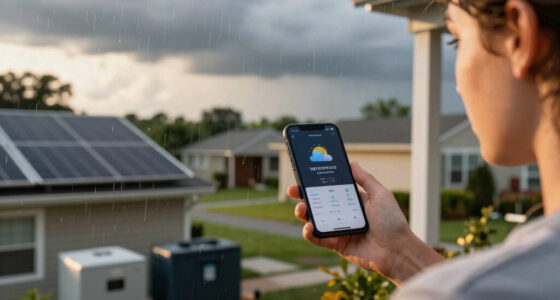
To prepare for heatwave-related grid stress, focus on upgrading infrastructure with reinforced lines, smarter technology, and expanded capacity to handle increased demand. Use advanced forecasting and real-time monitoring to anticipate issues early. Encourage energy efficiency and demand response strategies to reduce peak loads. Promoting decentralized energy sources like solar can also lessen grid vulnerability. Continue exploring ways to bolster your power systems’ resilience and ensure reliable electricity during extreme heat events.

Get backup power and energy gear delivered free with Prime
- Fast, free delivery on millions of items
- Prime Video, Amazon Music and more included
- Member-only deals all year
Key Takeaways
- Upgrade infrastructure to reinforce transmission lines and handle higher temperatures.
- Implement real-time monitoring and advanced weather forecasting for proactive management.
- Promote energy efficiency and demand response programs to reduce peak load during heatwaves.
- Incorporate decentralized energy sources like solar and storage to lessen grid stress.
- Develop policies supporting resilient infrastructure and consumer practices for climate adaptation.

Have you ever wondered how extreme heat impacts our power grids? When temperatures soar, the demand for electricity skyrockets as people crank up air conditioning and fans to stay cool. This surge strains the entire system, pushing it toward its limits and risking outages. As heatwaves become more frequent and intense, it’s vital to understand how to bolster our infrastructure to handle these stresses. Building climate resilience into our power systems isn’t just a good idea; it’s essential for maintaining reliable electricity during these extreme conditions. Upgrading existing infrastructure, such as reinforcing transmission lines, installing smarter grid technologies, and expanding capacity, helps guarantee the grid can withstand higher temperatures and increased load. These upgrades allow for better management of energy flow and reduce the risk of failures during peak times.
Investing in climate resilience involves more than just physical upgrades. It requires planning that anticipates future heatwave scenarios and adapts accordingly. For example, incorporating advanced weather forecasting and real-time monitoring enables grid operators to prepare for and respond to heat-related stresses more effectively. This proactive approach can prevent small issues from escalating into widespread outages. Additionally, integrating decentralized energy sources, like solar panels and energy storage, reduces the load on centralized grids. When local generation and storage are in place, communities become less vulnerable to grid stress, especially when traditional infrastructure is pushed to its limits. Moreover, implementing flexible grid management strategies can enhance system adaptability during peak conditions.
Another key aspect of preparing for heatwave-induced grid stress is implementing policies that promote sustainable energy practices. Encouraging energy efficiency, demand response programs, and the adoption of smart appliances can help reduce overall consumption during peak times. When consumers and utilities work together to shift usage to cooler hours or utilize less electricity during heatwaves, the pressure on the grid diminishes. These measures not only enhance resilience but also contribute to long-term sustainability goals.
Ultimately, preparing for heatwave challenges involves a combination of infrastructure upgrades, innovative technology, and proactive policies. It’s about designing a power system that’s adaptable and resilient in the face of climate change. By investing in these areas, you help create a more reliable grid that can withstand extreme heat, minimizing outages and keeping your community powered when you need it most. Recognizing the importance of climate resilience today ensures that future heatwaves won’t catch us off guard, and our energy systems remain robust no matter how hot it gets. Enhancing grid flexibility is crucial for accommodating the increased demand during heatwaves and ensuring continuous power supply.
Frequently Asked Questions
How Do Heatwaves Affect Renewable Energy Sources Differently?
Heatwaves impact renewable energy sources differently by increasing solar variability and wind intermittency. During intense heat, solar panels may become less efficient due to high temperatures, causing reduced energy output. Meanwhile, wind patterns can shift unpredictably, leading to inconsistent wind power generation. You might notice fluctuations in both sources, making it vital to plan for energy storage or backup systems to guarantee a reliable power supply during extreme heat events.
What Role Does Energy Storage Play During Grid Stress?
During grid stress, energy storage plays a crucial role by providing backup power when demand peaks. Your battery capacity helps store excess energy generated during low demand, ensuring supply during high usage. It also aids in grid balancing, smoothing out fluctuations caused by heatwaves. By releasing stored energy efficiently, your storage system prevents outages and maintains stability, making it an indispensable tool for managing stress on the grid.
How Can Consumers Reduce Their Electricity Use During Peak Times?
During peak times, you can cut electricity use with demand management strategies. Turn off non-essential appliances, delay laundry, and set your thermostat higher. Take advantage of consumer incentives like rebates for energy-efficient upgrades. Your efforts can make a difference—reducing strain on the grid is like easing a mountain of stress. By actively managing your energy, you help prevent outages and keep the power flowing smoothly for everyone.
Are There Specific Regions More Vulnerable to Heatwave-Induced Grid Failures?
Yes, some regions are more vulnerable to heatwave-induced grid failures. Urban heat islands intensify temperature spikes, increasing electricity demand and stressing the grid. Meanwhile, rural areas face vulnerabilities due to limited infrastructure and resources. You should stay aware of local heatwave warnings and prepare by reducing energy use during peak times, especially in these vulnerable regions, to help ease grid stress and prevent outages.
What Policies Are Being Implemented to Enhance Grid Resilience?
You should know that over 50 countries have adopted policies to boost grid resilience. These include grid modernization efforts like upgrading infrastructure and integrating smart technology. Policy incentives encourage utilities to invest in renewable energy sources and energy storage, reducing stress during heatwaves. By prioritizing these policies, you help guarantee your energy supply remains reliable, even during extreme weather, protecting your community from outages and disruptions.
Conclusion
As you brace for future heatwaves, remember that proactive steps can keep the grid steady, much like a seasoned captain steering through a storm. Stay informed, conserve energy during peak times, and support sustainable practices. Think of it as planting seeds for tomorrow’s cool shade—like an ancient oaken tree standing firm against the sun. With your awareness and effort, you help prevent the lights from dimming and the grid from faltering, ensuring comfort even in the hottest days ahead.
Halloween Picks
halloween
As an affiliate, we earn on qualifying purchases.