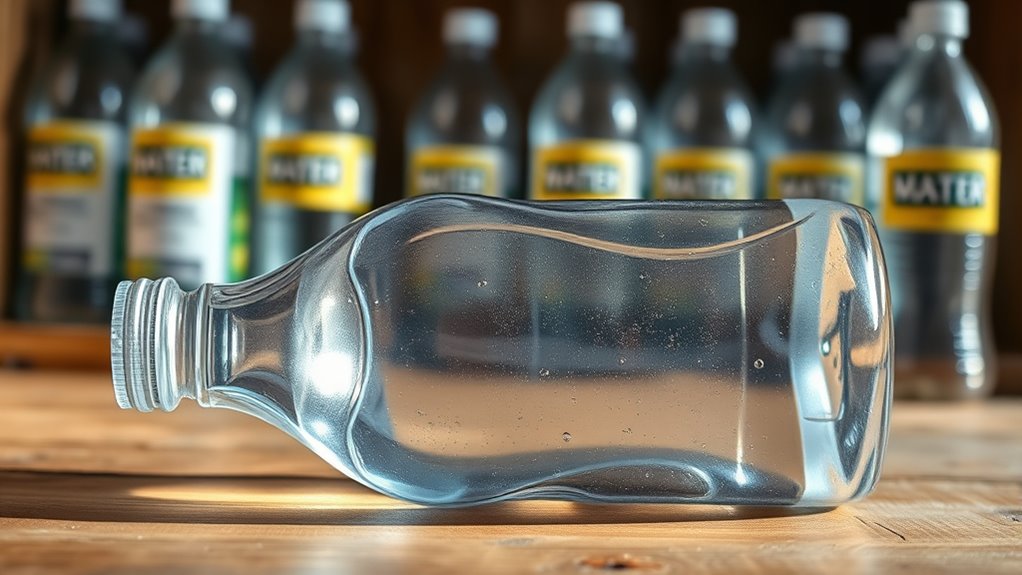

Bottled water doesn’t last forever; its shelf life depends on storage conditions and water quality. Keep bottles in a cool, dark place away from sunlight, heat, and chemicals to extend freshness. Check for changes in smell, taste, or appearance, as these indicate potential contamination. Proper storage can help water stay safe longer than the expiration date suggests. If you want to know more about how to protect your bottled water, keep exploring helpful tips and guidelines.

Get backup power and energy gear delivered free with Prime
- Fast, free delivery on millions of items
- Prime Video, Amazon Music and more included
- Member-only deals all year
Key Takeaways
- Proper storage in a cool, dark environment extends bottled water’s safety beyond the printed expiration date.
- Exposure to sunlight, heat, or chemicals can degrade plastic and compromise water quality.
- Regularly inspect bottles for damage or changes in smell, taste, or appearance to ensure safety over time.
- The initial purity and mineral content influence how long bottled water remains fresh and safe.
- Even with proper storage, bottled water typically remains safe for 1-2 years, but signs of contamination should prompt disposal.

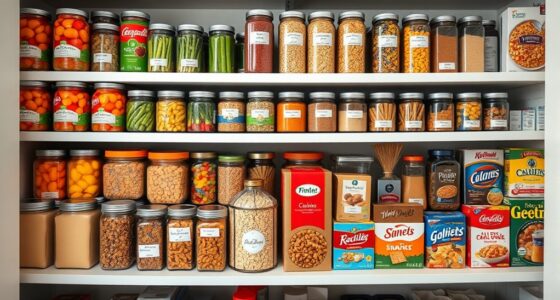
Have you ever wondered how long bottled water stays safe to drink? The answer depends on several factors, but most importantly, how it’s stored and the quality of the water itself. Proper storage conditions can substantially extend the shelf life of bottled water, making sure it remains safe and invigorating when you want it. When you buy bottled water, it’s essential to pay attention to how you store it at home or on the go. Keep bottles in a cool, dark place away from direct sunlight, heat sources, and chemicals. Exposure to sunlight and heat can degrade the plastic, potentially releasing chemicals into the water and compromising its quality. Likewise, storing bottles near cleaning products, paints, or other chemicals can lead to contamination, which you definitely want to avoid. When stored correctly, bottled water can last for quite a long time—sometimes years—without losing its safety or taste. However, improper storage conditions can accelerate deterioration, making the water unsafe or unpleasant to drink sooner than expected. Additionally, the plastic container itself can influence how long the water remains safe, as certain plastics are more prone to degradation over time. The water quality itself also plays an essential role in determining shelf life. Bottled water that starts out with high purity and good mineral balance tends to last longer. Manufacturers generally treat and filter water thoroughly to guarantee it’s free of harmful bacteria and contaminants. Still, once bottled, the water can pick up impurities if the bottle is compromised or stored improperly. Over time, plastic bottles can develop micro-cracks or degrade, allowing bacteria or mold to enter. This can reduce water quality and pose health risks if consumed. To maintain water quality, always check for any changes in smell, taste, or appearance before drinking bottled water that’s been stored for a long period. If the water smells off or has a strange taste, it’s best to discard it, even if the expiration date hasn’t passed. While most bottled water has a ‘best by’ date printed on the label, it’s more of a guideline than a strict expiration date. Proper storage can extend its usability well beyond that date, but neglecting storage conditions can shorten it considerably. If you’re keeping bottled water for emergencies or long-term use, regularly inspect the bottles for signs of damage or contamination. Remember, water quality can diminish if the bottle is exposed to heat, sunlight, or chemicals. So, your best bet is to store bottled water in a cool, dark, and clean environment, and to always check the water’s condition before drinking. Doing so guarantees you enjoy safe, clean water whenever you need it.
bottled water storage containers
As an affiliate, we earn on qualifying purchases.
As an affiliate, we earn on qualifying purchases.
Frequently Asked Questions
Can Bottled Water Go Bad if Unopened?
Unopened bottled water can go bad over time, but usually it stays fresh for quite a while. The bottled water freshness depends on storage conditions, so if you keep it in a cool, dark place, its unopened water longevity extends. While it might not spoil like food, over years, bottles may develop a stale taste or leach chemicals. To enjoy the best quality, check the expiration date and store it properly.
Does the Type of Bottle Affect Water Shelf Life?
The type of bottle definitely affects water shelf life. Plastic bottles, especially those made from PET, can degrade over time, especially if exposed to heat or sunlight, which accelerates leaching and bacterial growth. Glass bottles generally preserve water longer because they’re inert. You should store bottles in a cool, dark environment regardless of material, as improper storage speeds up spoilage and reduces water quality.
How Does Storage Temperature Impact Bottled Water Longevity?
You should store bottled water at a stable temperature, ideally between 50-70°F, to maximize its longevity. Temperature fluctuations can compromise water quality and accelerate spoilage. Follow storage guidelines by keeping bottles away from direct sunlight, heat sources, and extreme cold. Consistent temperature stability helps prevent bacterial growth and maintains taste. Proper storage guarantees your bottled water remains safe and fresh for as long as possible, protecting your health and hydration needs.
Is It Safe to Drink Expired Bottled Water?
Don’t throw caution to the wind when it comes to expired bottled water. Drinking it isn’t usually safe because water contamination or packaging degradation can occur over time, leading to potential health risks. Even if it looks and tastes fine, bacteria or chemicals might have seeped in. It’s better to play it safe and replace old bottles, rather than risk health issues—after all, an ounce of prevention is worth a pound of cure.
Do Mineral or Flavored Waters Have Different Shelf Lives?
Mineral and flavored waters do have different shelf lives due to their unique compositions. Mineral water’s shelf stability remains longer because it contains natural minerals that resist spoilage. Flavored water, often containing additives and natural or artificial flavors, may have a shorter shelf life as these additives can degrade or cause microbial growth over time. Always check the best-by date, and store both types in a cool, dark place to preserve quality.
water bottle cleaning and inspection kit
As an affiliate, we earn on qualifying purchases.
As an affiliate, we earn on qualifying purchases.
Conclusion
Think about it—bottled water isn’t just about quenching your thirst; it’s about safety and freshness. Some say it lasts forever, but science suggests otherwise. Imagine drinking water that’s been sitting too long, risking bacteria or chemical leaching. Don’t let a simple mistake spoil your health. Stay mindful of your bottled water’s shelf life, and trust your instincts. After all, your well-being is worth more than a quick sip.
long-term bottled water storage solutions
As an affiliate, we earn on qualifying purchases.
As an affiliate, we earn on qualifying purchases.
Fall Picks
fall essentials
As an affiliate, we earn on qualifying purchases.