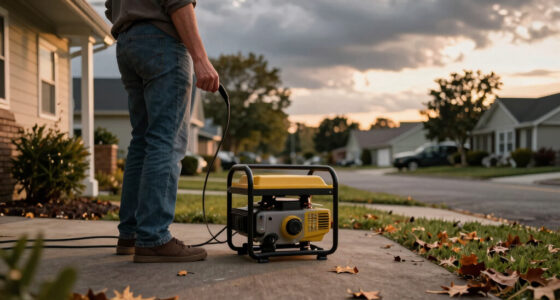
To safely store fuel for your emergency generator, choose a well-ventilated, cool, shaded area away from heat sources, sparks, or flames. Use approved, sealed containers designed for fuel storage and keep them on stable, non-combustible surfaces. Regularly inspect the containers for corrosion or leaks, and label them clearly. Keep a fire extinguisher nearby and minimize stored quantities for added safety. Learning more about proper storage methods can help prevent accidents and guarantee your fuel stays safe.

Get backup power and energy gear delivered free with Prime
- Fast, free delivery on millions of items
- Prime Video, Amazon Music and more included
- Member-only deals all year
Key Takeaways
- Store fuel in approved, clearly labeled containers designed for fuel storage.
- Keep fuel in a cool, well-ventilated area away from heat sources and living spaces.
- Regularly inspect containers for leaks, corrosion, or damage, and replace as needed.
- Ensure storage area has proper ventilation or natural airflow to prevent fumes buildup.
- Keep a suitable fire extinguisher nearby and minimize stored quantities to reduce risks.

Storing fuel safely is essential to prevent fires, leaks, and health hazards. When handling fuel for your emergency generator, proper ventilation plays a critical role in reducing the risk of dangerous fumes accumulating and igniting. Choose a well-ventilated space for storage, such as a shed with windows or a designated outdoor container area. Avoid enclosed rooms or basements where vapors can build up unnoticed. Adequate airflow helps dissipate fumes, decreasing the chance of fire or explosion. Always ensure that the storage area has a working ventilation system or natural airflow to keep vapors at safe levels.
Fire safety is your top priority when storing fuel. Keep fuel containers away from heat sources, sparks, open flames, or electrical equipment that could ignite vapors. Use approved containers made of durable, non-reactive materials, and ensure they are tightly sealed to prevent leaks. Store them on a stable, non-combustible surface, away from living spaces or high-traffic areas. Never store fuel inside your home or garage unless the container is specifically designed for indoor use and complies with safety standards. Regularly inspect containers for signs of corrosion, leaks, or damage, and replace compromised containers immediately. Label each container clearly to avoid accidental misuse or mixing of different fuels.
In addition to proper ventilation and fire safety measures, consider the location of your fuel storage. Keep containers in a cool, shaded area, as heat accelerates vaporization and increases fire risk. Never store large quantities of fuel in close proximity to your generator or other equipment that might generate heat or sparks during operation. It’s also wise to keep a fire extinguisher nearby, rated for flammable liquids, so you can act quickly if a fire occurs. Remember, the goal is to minimize the chance of accidental ignition while ensuring that any vapors are safely vented away from potential ignition sources.
As an affiliate, we earn on qualifying purchases.
Frequently Asked Questions
Can I Store Fuel in My Basement Safely?
You shouldn’t store fuel in your basement because it poses fire safety risks. Basements often lack proper ventilation requirements, increasing the danger of fuel fumes accumulating. Instead, you should store fuel in approved containers outside your home, in well-ventilated, secure areas away from heat or flames. Always follow fire safety measures, keep fuel away from living spaces, and never store it indoors to prevent accidents or health hazards.
How Long Can Fuel Be Stored Without Degradation?
Fuel can last up to a year with proper storage, but it’s no match for time’s relentless march. To extend its life, you should use fuel stabilizers, which substantially boost the storage duration and prevent degradation. Keep your fuel in a cool, dry place, in airtight containers, and avoid exposure to sunlight. Regularly check and top off your supply to guarantee it stays fresh and ready when you need it most.
Are There Specific Containers Recommended for Long-Term Storage?
You should use approved, airtight containers designed for fuel storage to guarantee container safety. Look for containers made from materials like high-density polyethylene or metal that resist corrosion. To maintain fuel quality, incorporate fuel stabilization additives and store containers in a cool, dry, well-ventilated place away from heat sources. Properly sealed, these containers help prevent leaks and deterioration, ensuring your fuel remains safe and ready when you need it most.
Is It Safe to Mix Different Types of Fuel?
Mixing different fuel types is risky, like blending oil and water; it can cause engine issues. Always use fuel stabilizers and guarantee proper tank ventilation to keep fuels stable and prevent contamination. If you must combine fuels, do so only if compatible and approved for your generator. Otherwise, stick to a single fuel type for safety, efficiency, and to avoid damaging your equipment.
What Are the Legal Regulations for Storing Fuel at Home?
You must follow local fire safety regulations when storing fuel at home. Make certain your storage area has proper ventilation requirements to prevent dangerous vapor buildup. Keep fuel containers away from heat sources, open flames, and electrical outlets. Additionally, store fuel in approved, clearly labeled containers, and never exceed recommended quantities. Regularly check your storage area for leaks or damage, and always adhere to safety guidelines to protect yourself and your property.
flammable liquid fire extinguisher
As an affiliate, we earn on qualifying purchases.
As an affiliate, we earn on qualifying purchases.
Conclusion
Remember, storing fuel safely is vital for your emergency generator’s reliability. Some might think it’s risky or complicated, but with proper containers, storage locations, and regular checks, you can minimize hazards. Don’t let fear hold you back—being prepared guarantees peace of mind when you need it most. Take these simple steps today, and you’ll be ready to power through any emergency confidently and safely.
As an affiliate, we earn on qualifying purchases.
As an affiliate, we earn on qualifying purchases.
Halloween Picks
halloween
As an affiliate, we earn on qualifying purchases.